Understanding measurements Worksheets for Ages 4-7 - Page 2
27 filtered results
-
From - To
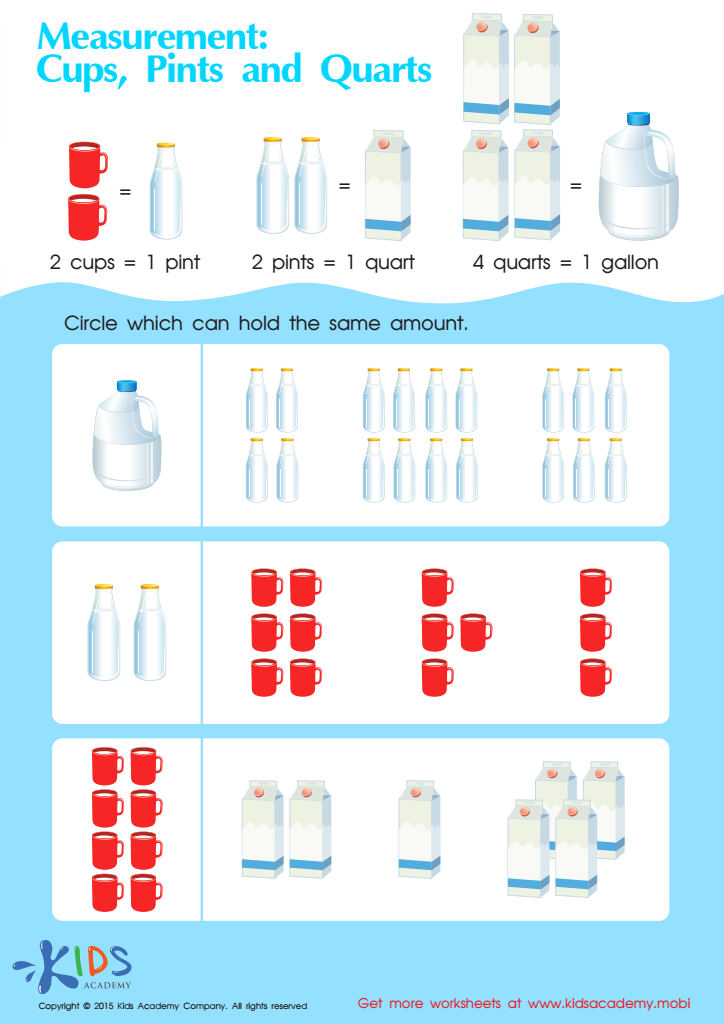
Cups, Pints and Quarts 2 Worksheet
 Assign to My Students
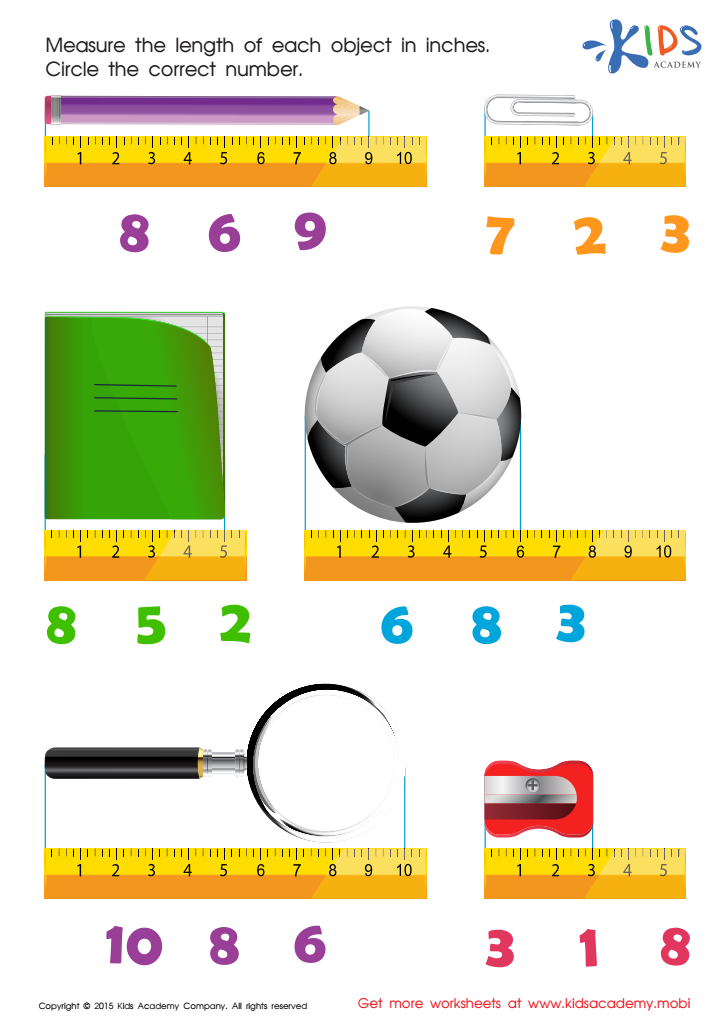
Learning measuring objects in inches Worksheet







Understanding measurements is crucial for children aged 4-7 as it forms the foundation for various cognitive and practical skills. At this stage, children begin to explore their environment, making measurement an essential part of their learning. Mastering concepts like size, volume, weight, and time encourages critical thinking and problem-solving abilities.
Being able to measure helps children in their everyday life, such as in cooking, playing, or even organizing their toys. It enhances their understanding of quantity and comparison, essential skills for later math and science courses. Furthermore, measurement activities promote fine motor skills and hand-eye coordination, contributing to their overall physical development.
Moreover, measurement lays the groundwork for essential life skills, fostering a sense of independence. Engaging in playful and practical measurement experiences allows parents and teachers to instill a love for math from an early age. By integrating tools like rulers, scales, and measuring cups into everyday activities, caregivers can make learning enjoyable and relate it to real-life situations. This early engagement not only boosts confidence but sets the stage for future academic success, demonstrating the value of measurement in overall childhood development.








