Understanding more/less concept Worksheets for Ages 4-7
3 filtered results
-
From - To
Enhance your child's mathematical abilities with our engaging "Understanding More/Less Concept Worksheets" for ages 4-7. Designed to foster early numeracy skills, these worksheets help young learners grasp the fundamental concepts of comparison. Through vibrant illustrations and age-appropriate activities, children will explore quantities, identify more or less, and develop critical thinking abilities. With an array of exercises, from counting objects to comparing images, our resources provide a comprehensive foundation for mastering essential math skills. Perfect for both classroom and home learning, these worksheets ensure a fun and interactive approach to understanding the world of numbers. Download now to start learning!
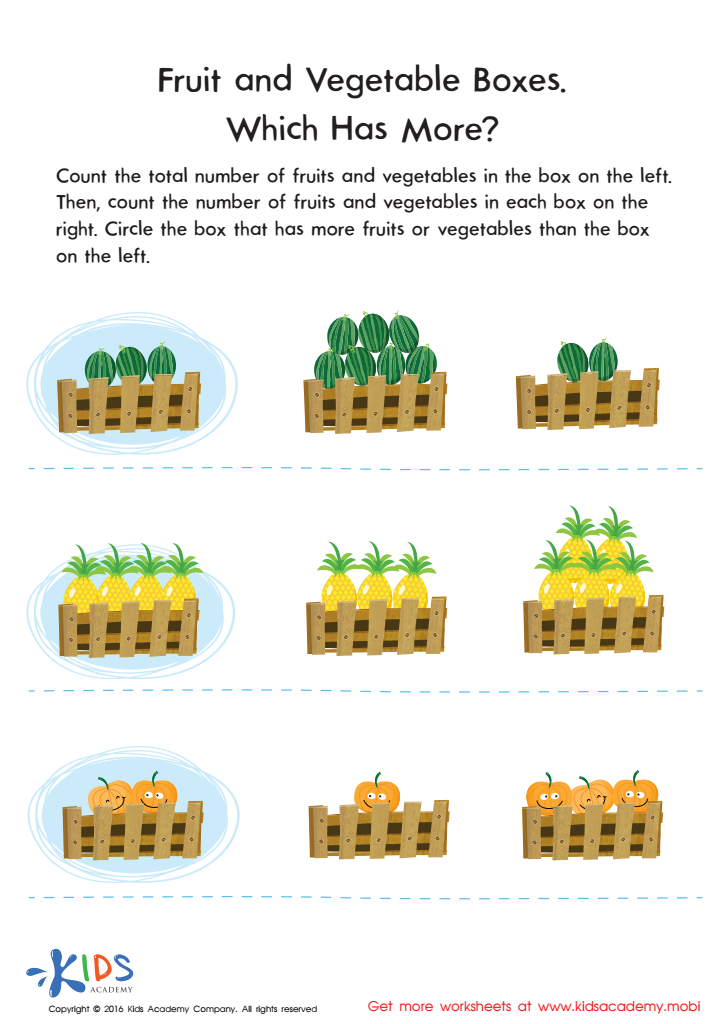
Which Has More? Size Worksheet
 Assign to My Students
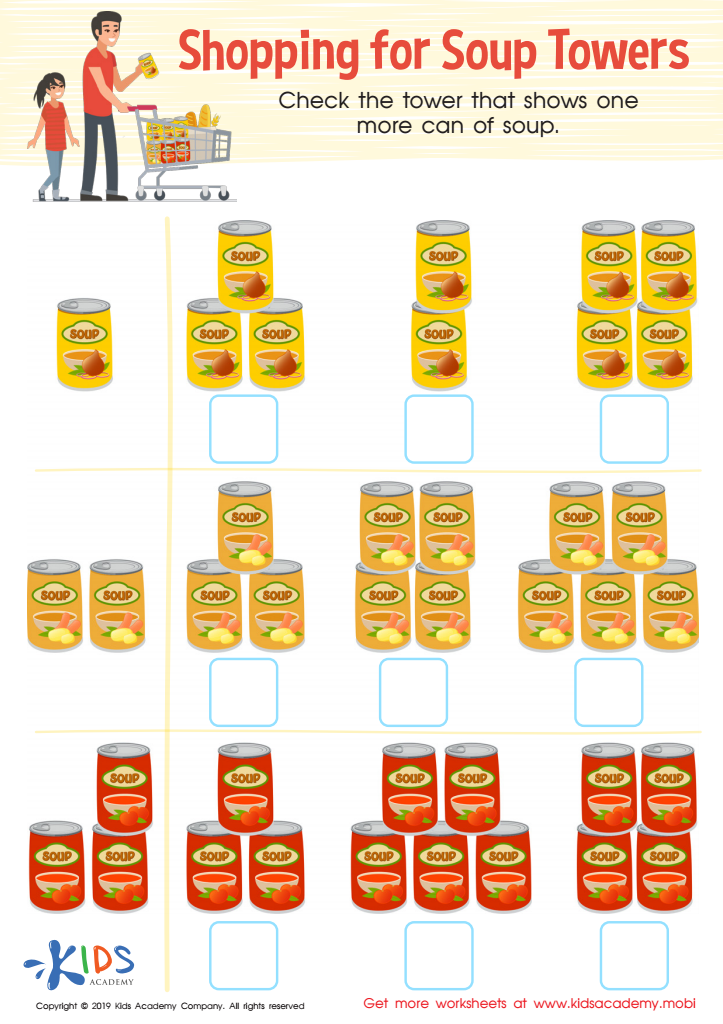
Soup Towers Worksheet
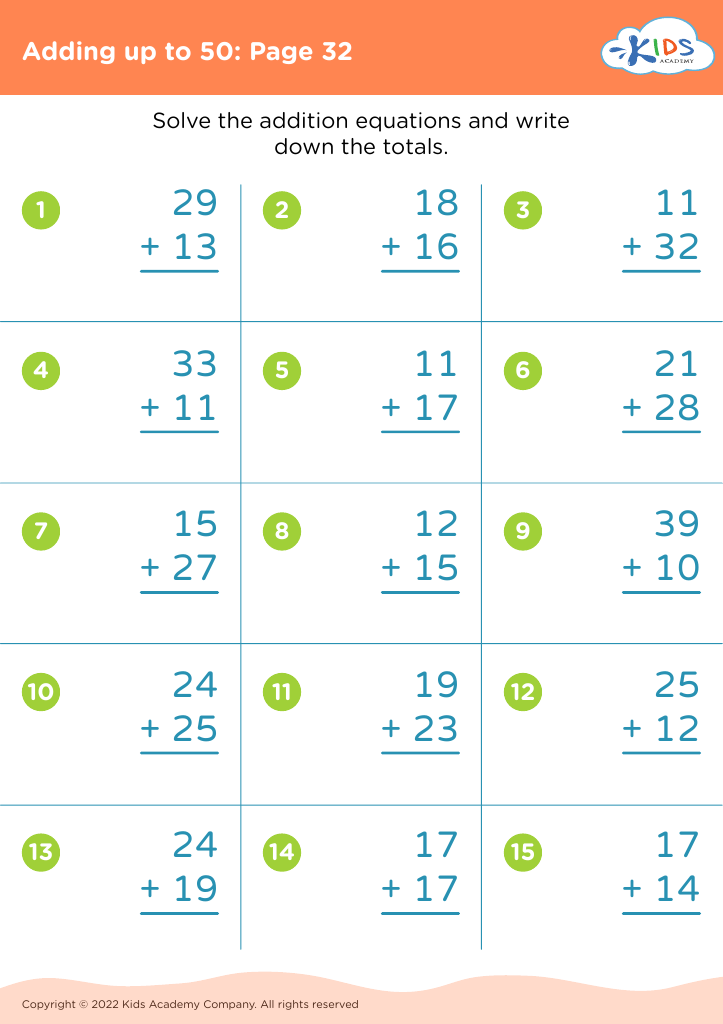








Understanding basic math concepts such as more and less is crucial for children aged 4-7 as it lays the foundation for their future mathematical comprehension. At this age, children begin to explore numbers, quantities, and comparisons, which are essential skills for their academic growth.
Parents and teachers should care about promoting these concepts because they are not only vital for mathematics but also for critical thinking and everyday decision-making. Recognizing "more" and "less" helps children develop the ability to compare items, quantify their surroundings, and make choices—skills they'll rely on throughout their lives.
Additionally, grasping these concepts can enhance children's social interactions, as they learn to describe their preferences and negotiate with peers. Engaging children through playful activities like sorting objects or counting items can make learning enjoyable, fostering a positive attitude towards math.
Involving parents in this learning by using everyday situations encourages the connection between home and school experiences. Ultimately, instilling a strong understanding of more and less contributes to building confidence in math, paving the way for more complex mathematical skills they will encounter later in their education.








