Understanding ordinal numbers Worksheets for Ages 4-7
3 filtered results
-
From - To
Unlock your child's potential with our "Understanding Ordinal Numbers Worksheets for Ages 4-7." Tailored for young learners, these engaging and interactive worksheets offer a fun and effective way to grasp ordinal numbers. Designed to align with fundamental learning skills, they inspire kids to identify position and order, making math a delightful experience. Through vibrant illustrations and thoughtfully structured exercises, your child will confidently master concepts like "first," "second," and "third." Empower early learners to excel academically while enjoying learning. Download these essential resources today to make ordinal numbers both exciting and educational for your little one!
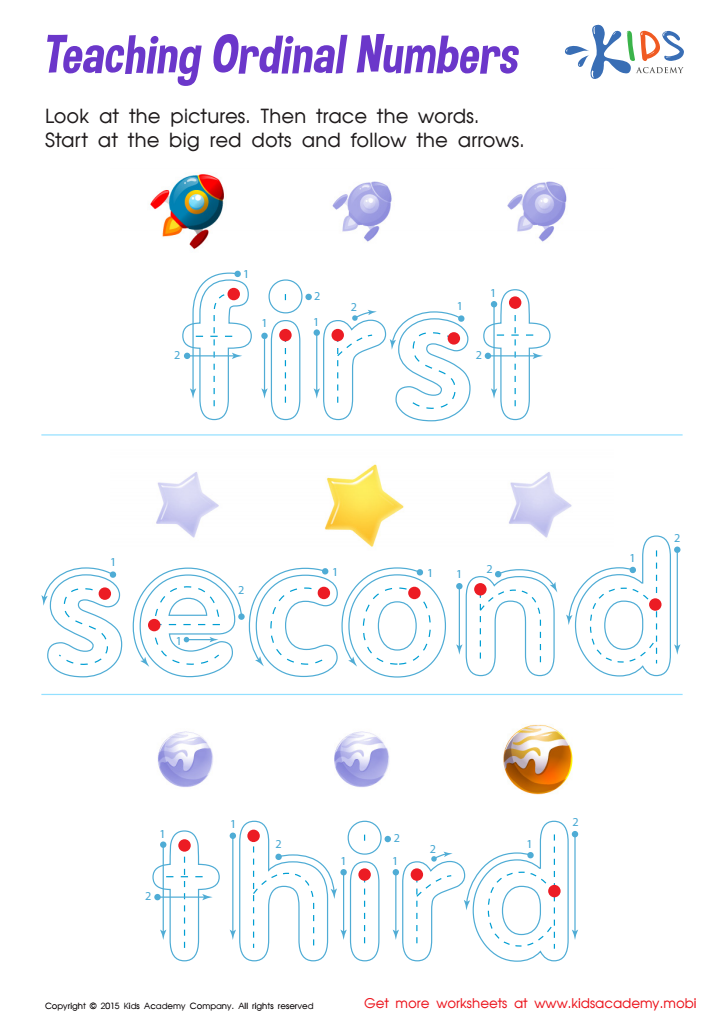
Ordinal Numbers: Teaching Ordinal Numbers Printable
 Assign to My Students
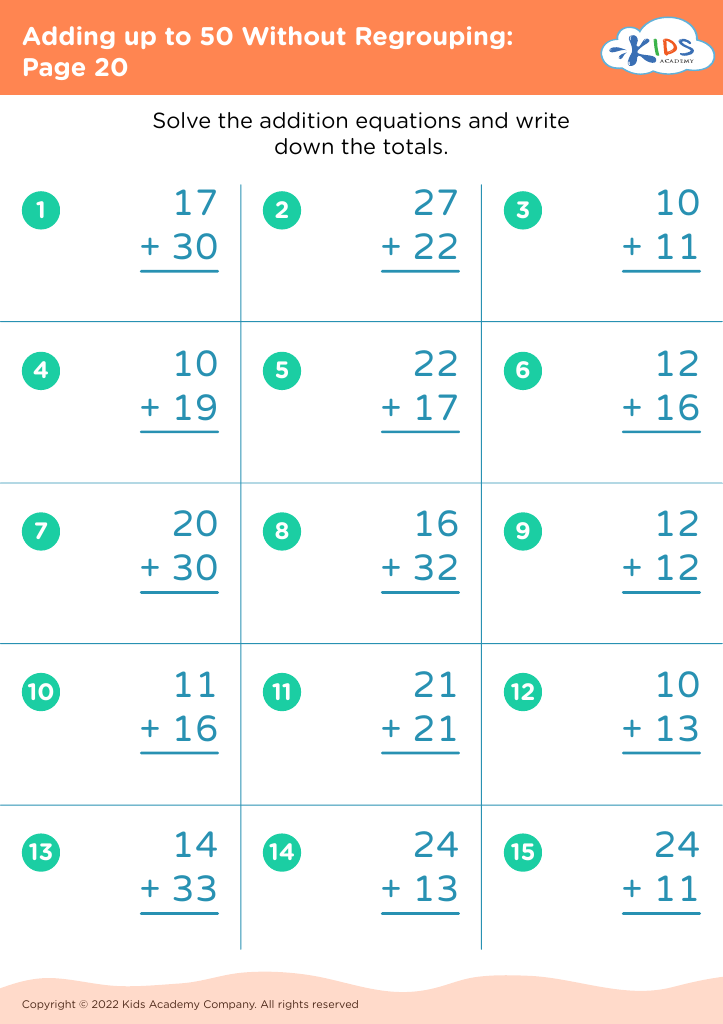
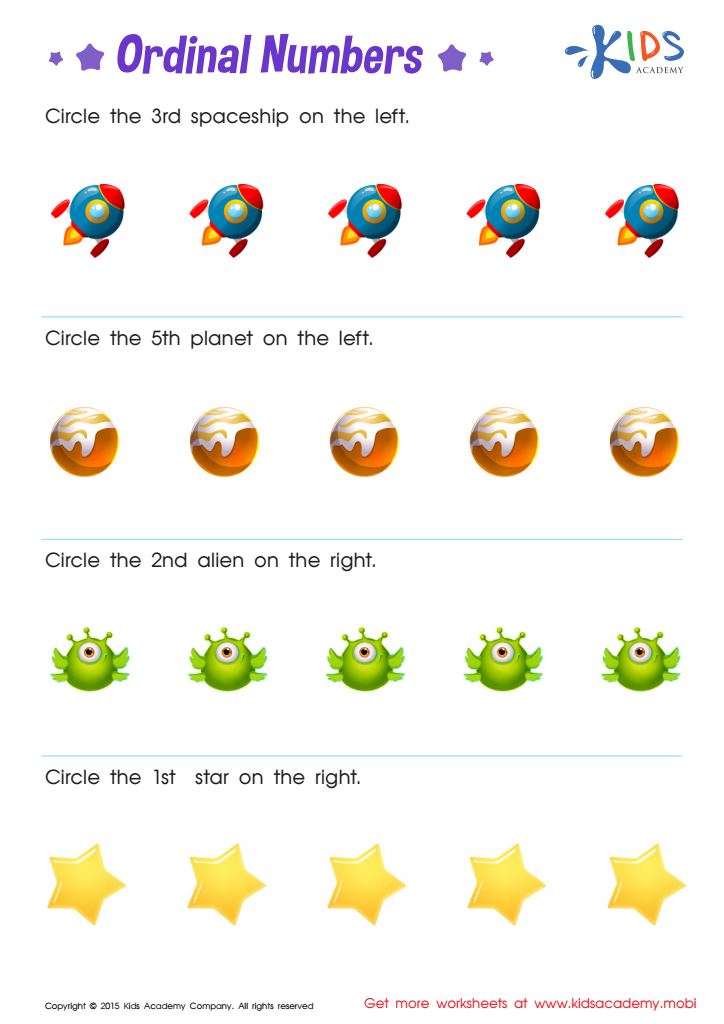
Ordinal Numbers: Space Ordinals Worksheet





Understanding ordinal numbers is crucial in the early developmental stages of children aged 4-7. Ordinal numbers describe the position of objects in a sequence, such as first, second, and third. Here are a few key reasons why parents and teachers should prioritize this concept:
-
Foundational Skill: Knowing ordinal numbers supports the development of basic math skills. It aligns with understanding sequences, ordering, and positioning, which are fundamental for more advanced arithmetic and algebra.
-
Daily Life Application: Ordinal numbers are used daily, such as in lining up, following steps in recipes, or determining the order of events. Proficiency in this concept helps in comprehending daily routines and activities comprehensively.
-
Language Development: Discussing ordinal numbers enriches children’s vocabulary. It helps them articulate positions and order, a vital element of clear communication and instructions.
-
Cognitive Development: Learning ordinal numbers aids in developing logical thinking and spatial awareness. Being able to contextualize positions within a sequence supports reasoning skills critical in problem-solving scenarios.
-
Social Skills: In social play situations, children often use ordinal numbers. Understanding these helps them grasp notions of fairness, taking turns, and following rules, which are key to effective interpersonal interactions.
Overall, a solid grasp of ordinal numbers not only builds a sound mathematical foundation but also enhances practical understanding, linguistic growth, cognitive development, and social interactions, making it essential for early childhood education.








