Understanding shapes Worksheets for Ages 4-7
7 filtered results
-
From - To
"Understanding Shapes Worksheets for Ages 4-7" offer engaging, colorful activities that help young learners master the basics of geometry. These printable resources are designed to develop critical thinking and fine motor skills by exploring different shapes and their properties. Through exciting exercises, including shape tracing, matching, sorting, and pattern recognition, children will build a solid foundation in geometry in a fun and interactive way. Perfect for both classroom and home use, these worksheets make learning about circles, squares, triangles, and more, an enjoyable experience that fosters confidence and a love for math from an early age.
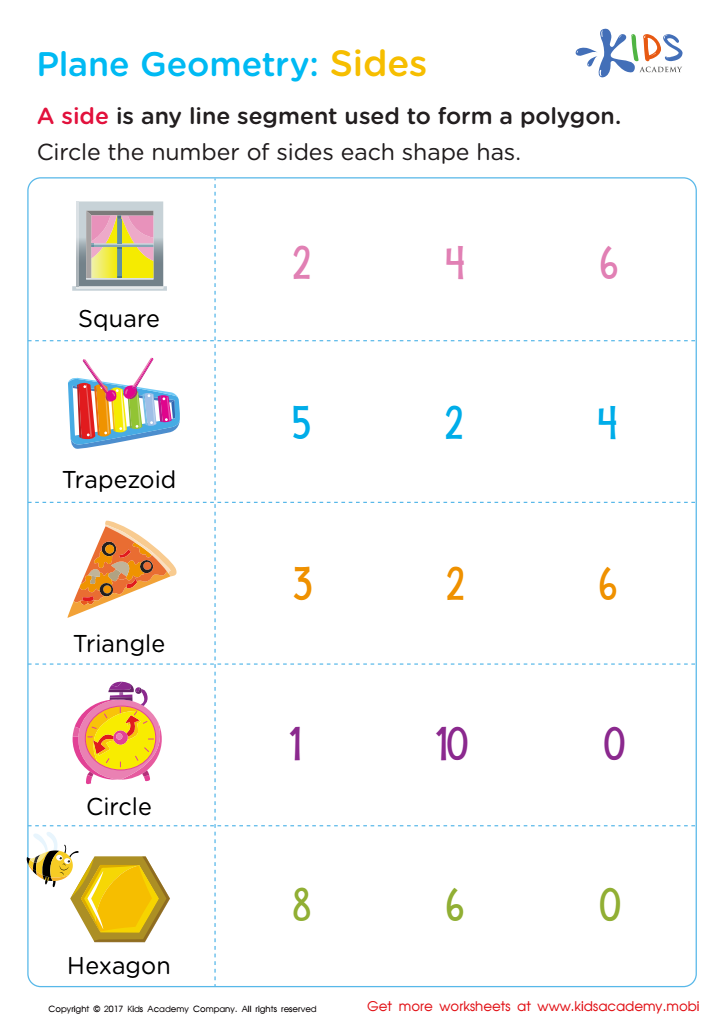
 Assign to My Students
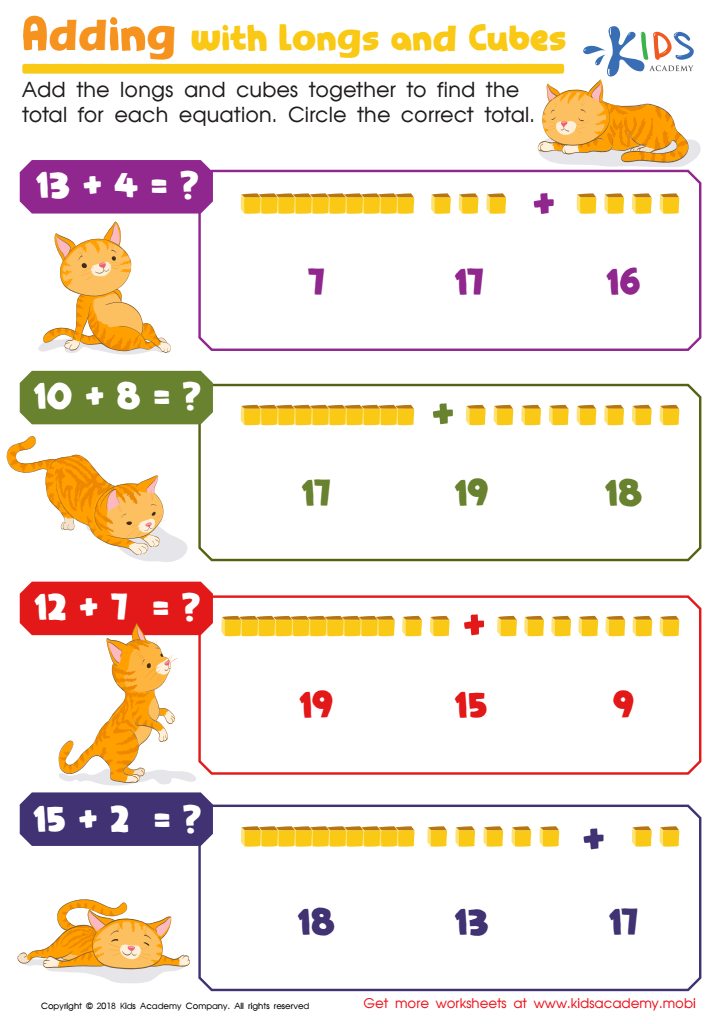
Adding With Longs and Cubes Worksheet
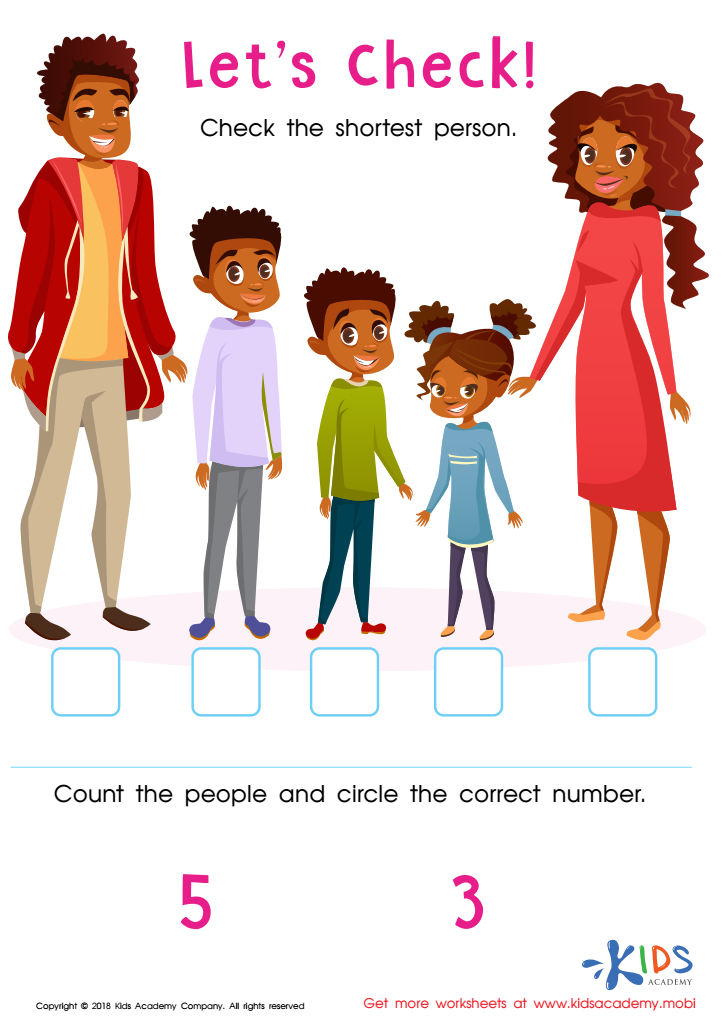
Let's Check! Assessment Worksheet
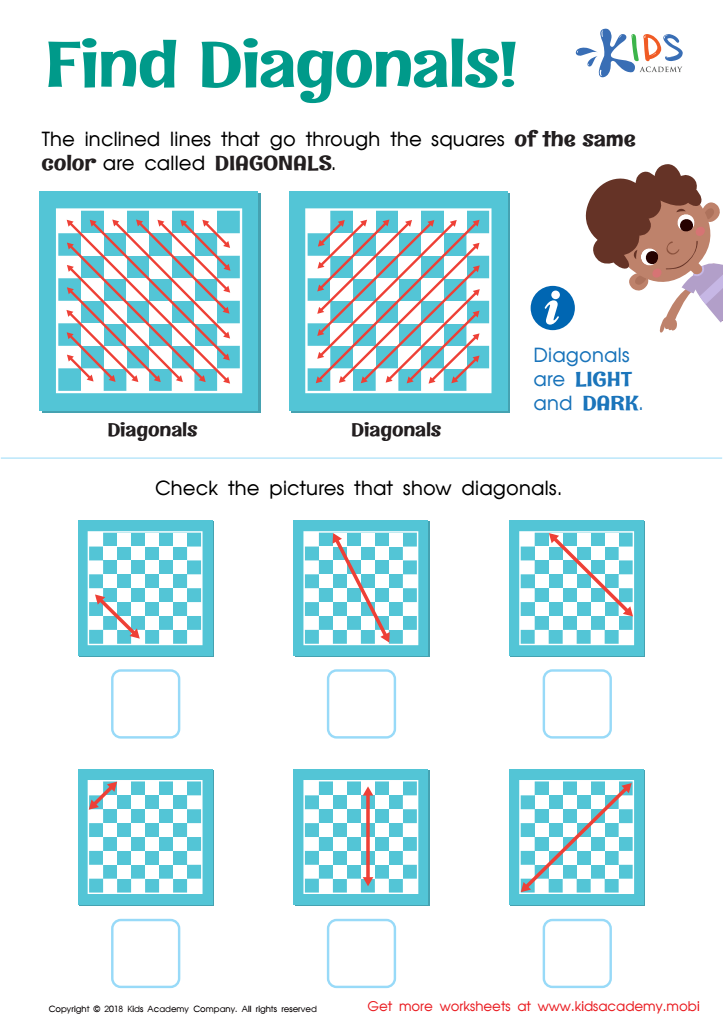
Find Diagonals Worksheet
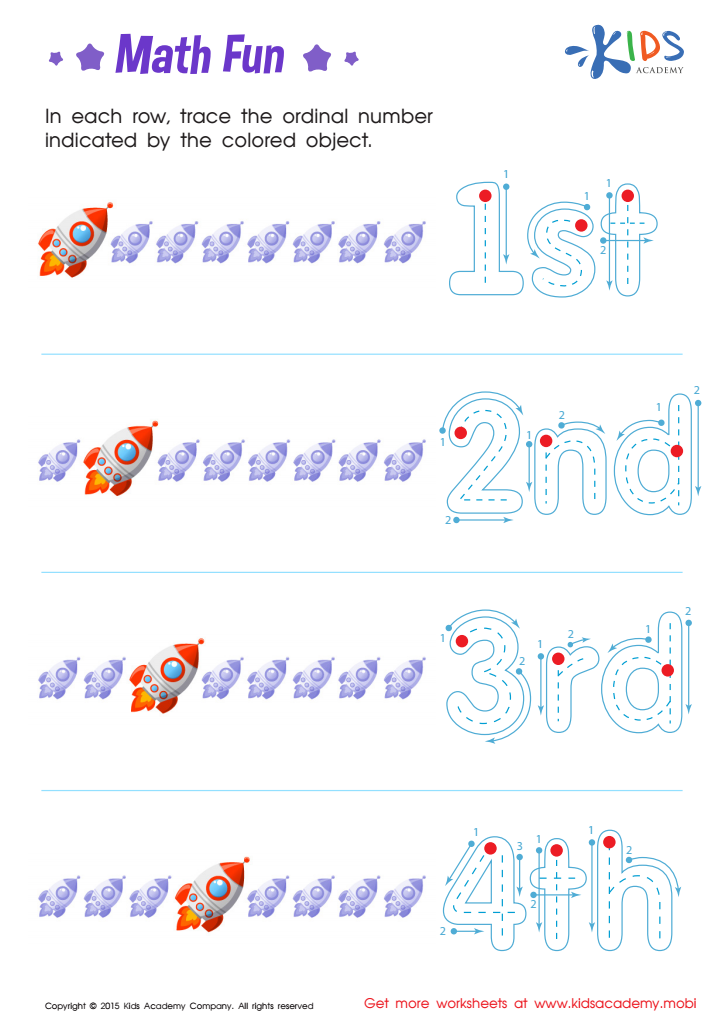
Ordinal Numbers: Math Fun Worksheet
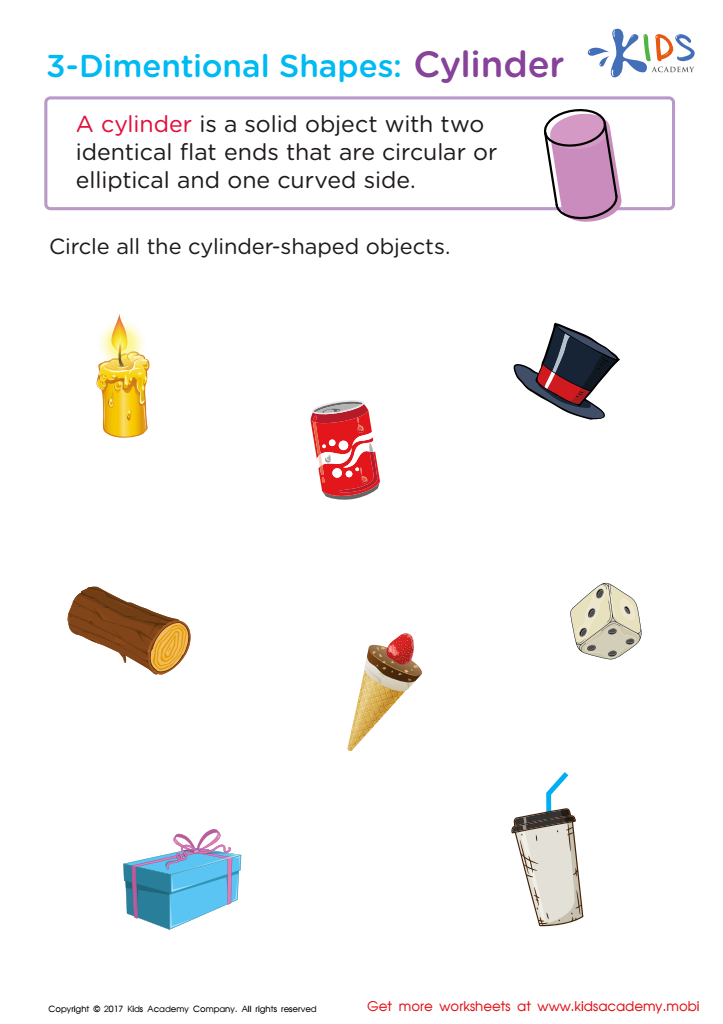
Three–Dimensional Shapes: Cylinder Worksheet







Understanding shapes at ages 4-7 is crucial for young children's foundational development in several key areas. At this early stage, children are rapidly growing cognitively, and an introduction to geometric shapes helps to sharpen their spatial awareness and visual recognition skills. Recognizing shapes like circles, squares, and triangles helps children differentiate and categorize objects in their environment, making sense of the world around them.
Moreover, engaging with shapes lays the groundwork for more complex mathematical concepts. For instance, understanding geometry’s basics prepares children for topics such as symmetry, fractions, and problem-solving techniques they will encounter later. Shapes also bridge to early literacy skills; many letters and numbers incorporate basic shapes, aiding in learning to read and write.
Additionally, exploring shapes can be a fun and interactive experience that stimulates creativity and fine motor skills. Activities like drawing, cutting shapes, or arranging them into patterns enhance hand-eye coordination and encourage imaginative thinking.
Therefore, parents and teachers play a pivotal role in nurturing these skills through engaging activities, discussions, and everyday observations pointing out and naming shapes. By doing so, they build a strong educational foundation that supports children’s overall cognitive development and inspires a lifelong love for learning.








