Understanding syllables Worksheets for Ages 4-7
4 filtered results
-
From - To
Explore our engaging "Understanding Syllables Worksheets" designed for children aged 4-7! These interactive worksheets help young learners identify, count, and pronounce syllables, laying a strong foundation for reading and language skills. Activities include colorful exercises that promote phonemic awareness through fun illustrations and playful tasks. Each worksheet encourages hands-on practice, making learning enjoyable and accessible. Perfect for teachers and parents, our resources support early education in a fun and interactive manner. Help your child develop confidence in their reading abilities with our thoughtfully designed syllables worksheets, promoting a love for learning in these formative years! Start the adventure today!
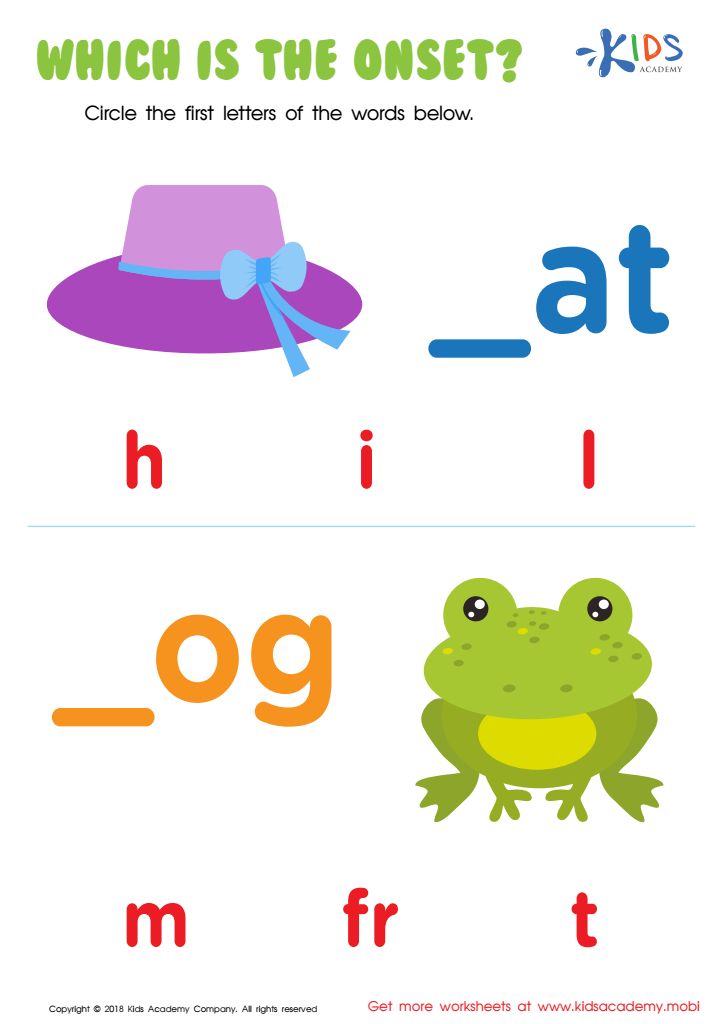
Which Is the Onset? Worksheet
 Assign to My Students
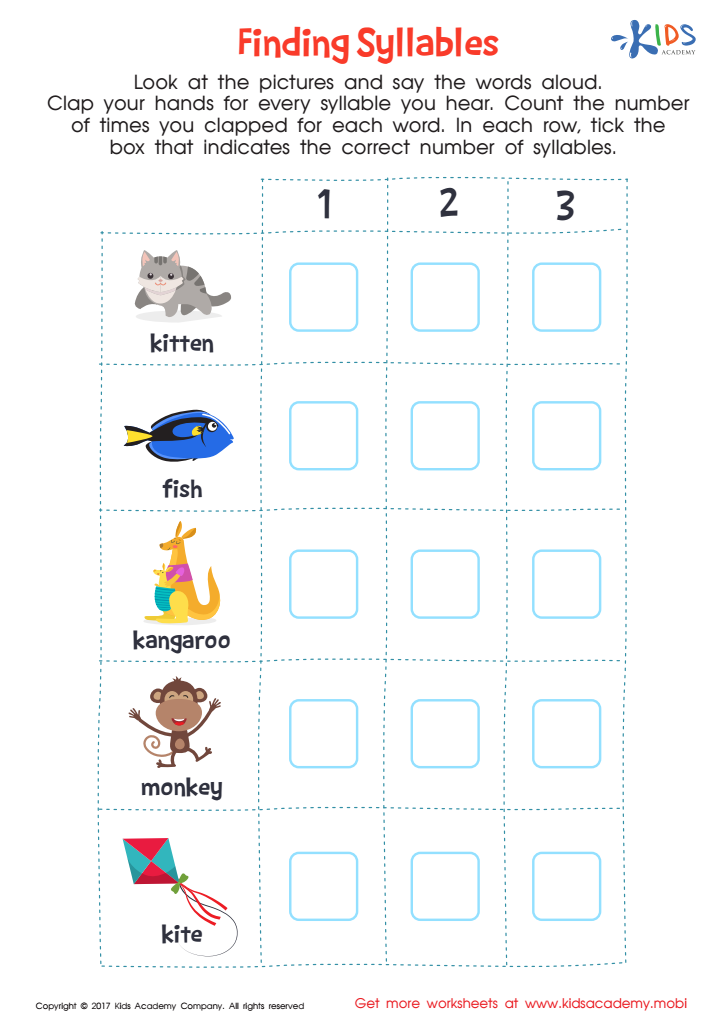
Finding Syllables Word Structure Worksheet
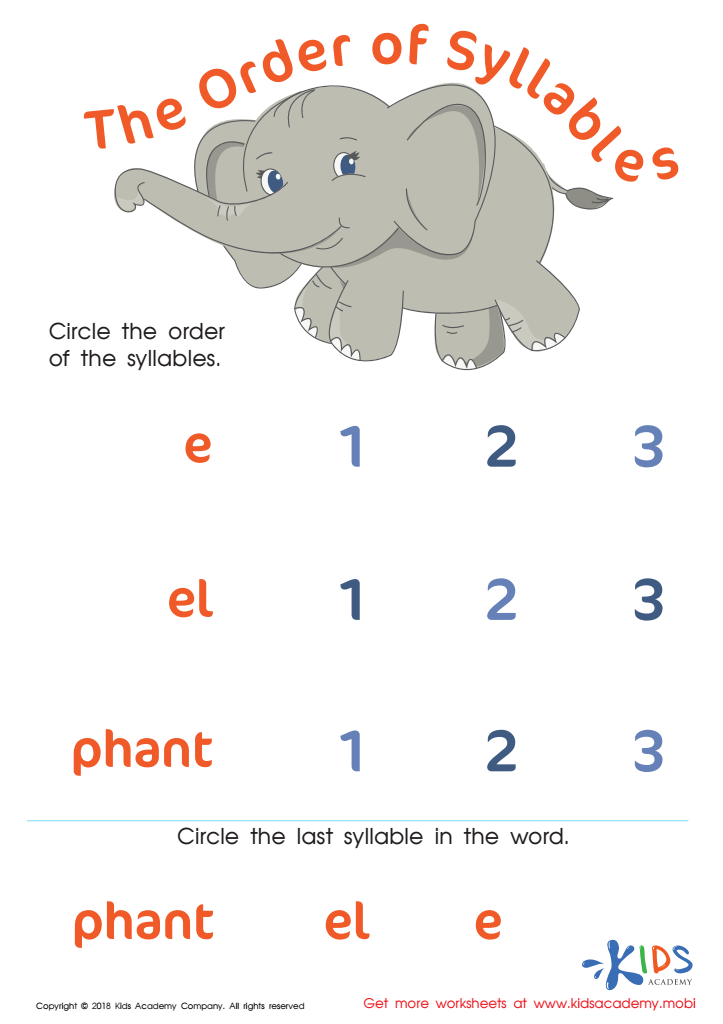
The Order of Syllables Worksheet
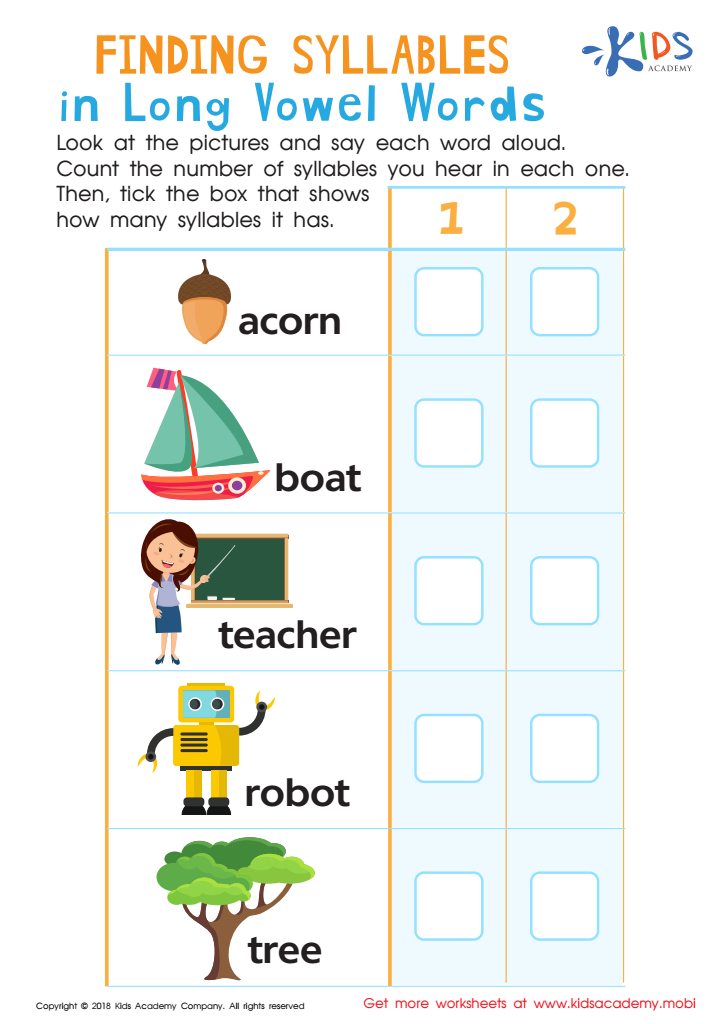
Finding Syllables in Long Vowel Words Worksheet





Understanding syllables is crucial for young learners aged 4-7 as it lays the foundation for literacy development. Syllables help children break words into manageable chunks, making reading and spelling less daunting. By recognizing syllables, children learn to identify phonemes — the smallest units of sound that make up words. This skill enhances their phonemic awareness, a key predictor of future reading success.
Additionally, grasping syllables aids in building vocabulary and improving pronunciation. As children clap out syllables or use visual aids, they develop an intuitive grasp of word structure, which encourages, them to explore new vocabulary with confidence. Moreover, activities centered around syllables can be both educational and fun, making learning engaging and interactive.
For teachers and parents, fostering an understanding of syllables through games, songs, and rhymes can strengthen the bond in teaching, making it a collaborative experience. This early exposure equips students with essential tools they will carry throughout their academic journey, ultimately fostering a love for reading and language. Recognizing the significance of syllables sets children on a positive path to literacy, while also encouraging critical thinking and communication skills essential for overall cognitive development.








