Enhance your child’s visual discrimination skills with our engaging worksheets designed for ages 4-7. These printable activities focus on helping young learners recognize and differentiate shapes, colors, sizes, and patterns, crucial for their cognitive development. Our visually appealing resources promote concentration, critical thinking, and fine motor skills through fun exercises tailored to reinforce understanding. Whether at home or in the classroom, these worksheets provide the perfect opportunity for kids to practice and improve their visual abilities. Set your child on the path to academic success with our easy-to-use, accessible materials that make learning enjoyable and effective! Start exploring today!

Check out this FREE "Visual discrimination skills" Trial Lesson for age 4-7!

L

Favorites
With answer key
Interactive
  • 4-7
  • Visual discrimination skills
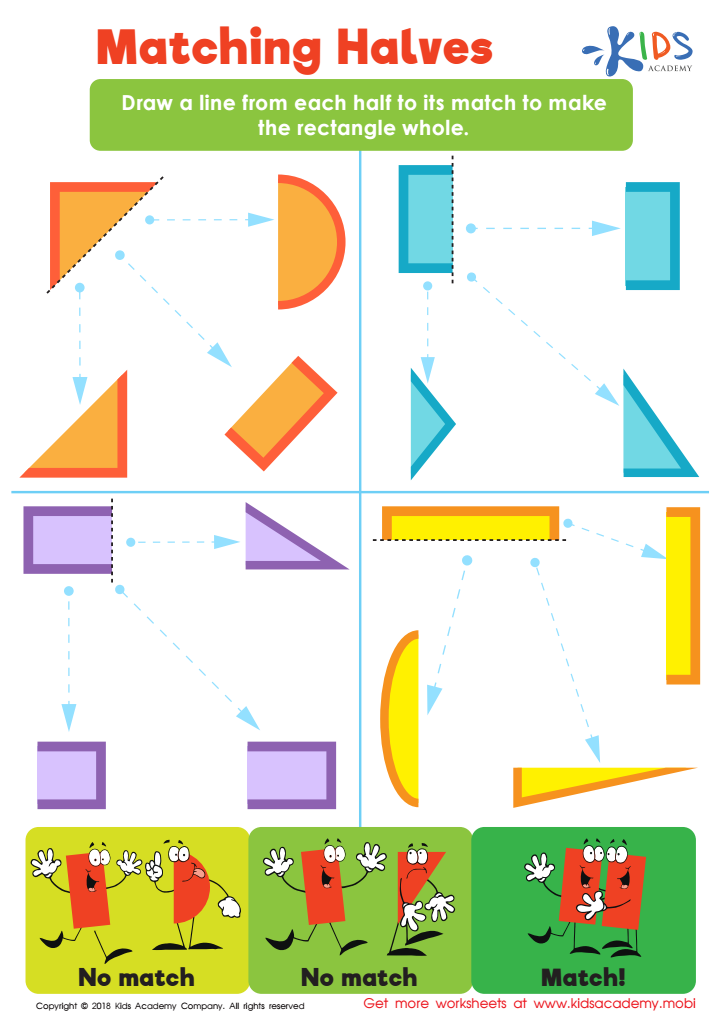
Matching Halves Worksheet

Matching Halves Worksheet

See how your child fares in matching two halves to form a complete rectangle. Provide them with four options, and ask them to draw a line connecting the two correct halves. Put their shape knowledge to the test with this simple worksheet!
Matching Halves Worksheet
Worksheet
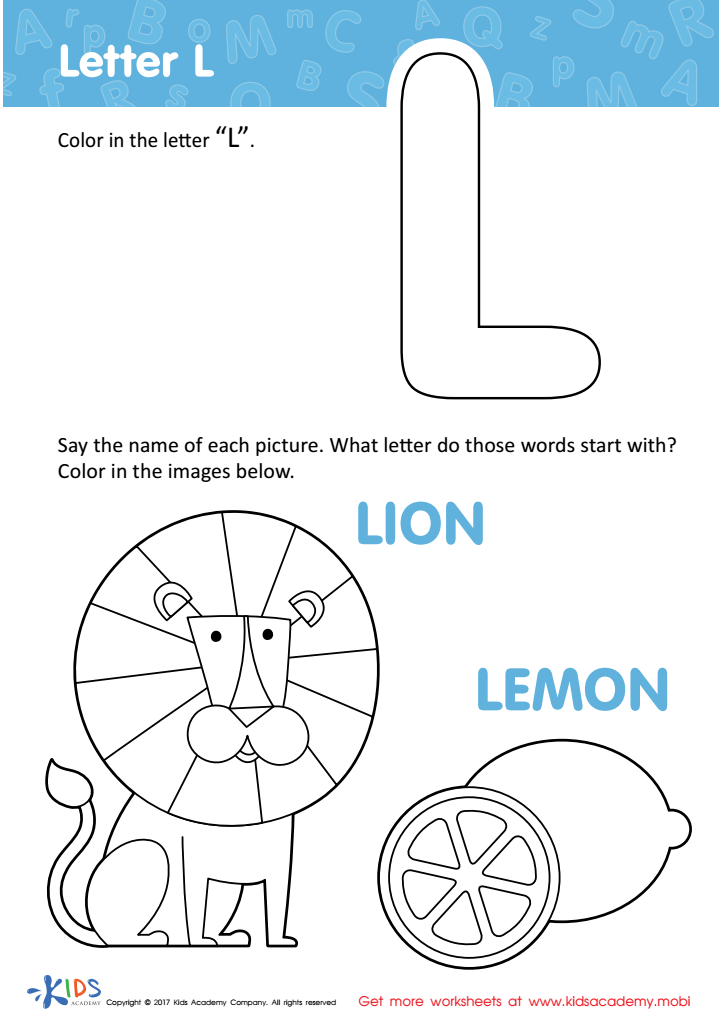
Letter L Coloring Page

Letter L Coloring Sheet

Kids often struggle to say "L" and love it because so many things they love start with it! This coloring page combines the letter and fun images like a lemon and lion to teach and entertain!
Download (PDF)
Assign to My Students
Letter L Coloring Sheet
Worksheet
Find Uppercase Letters A, B, and C Worksheet Preview
Find Uppercase Letters A, B, and C Worksheet

Check out this PDF worksheet and spot all the capital letters! Arranged as a puzzle, this exercise will test little learners to read and recognize uppercase letters and tell the difference between letters and numbers. To help them, use the pictures on top of the page to practice the sounds A, B and C make! 80 words.
Find Uppercase Letters A, B, and C Worksheet
Worksheet
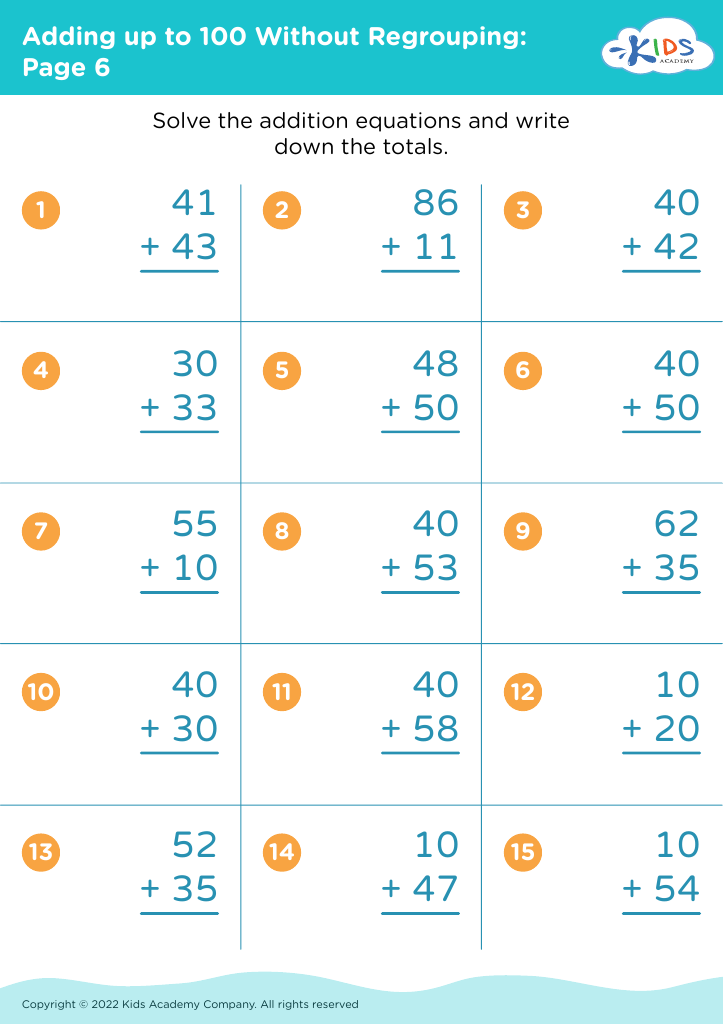
Adding up to 100 Without Regrouping: Page 6
Worksheet
Identifying Uppercase Letters Worksheet Preview

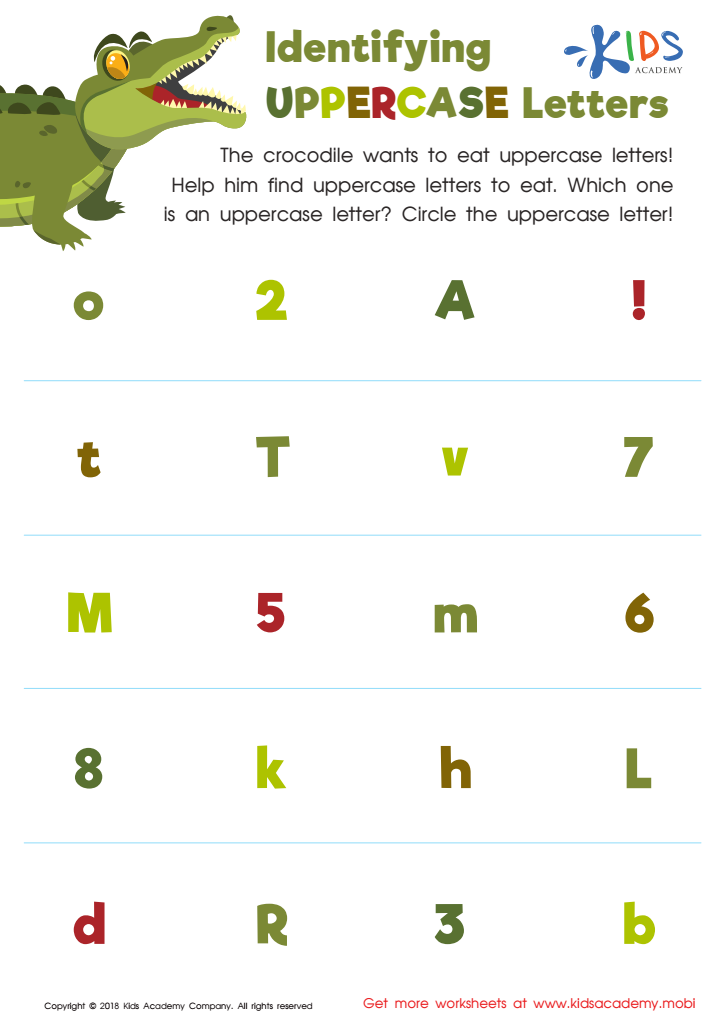
Identifying Uppercase Letters Worksheet

It's essential for kindergarteners to know the distinction between uppercase and lowercase letters. This skill will aid them when starting to write. They can practice by selecting the uppercase letters among a mix of lowercase, uppercase letters and numbers. Whatever their level of learning, give your child confidence with this PDF!
Identifying Uppercase Letters Worksheet
Worksheet
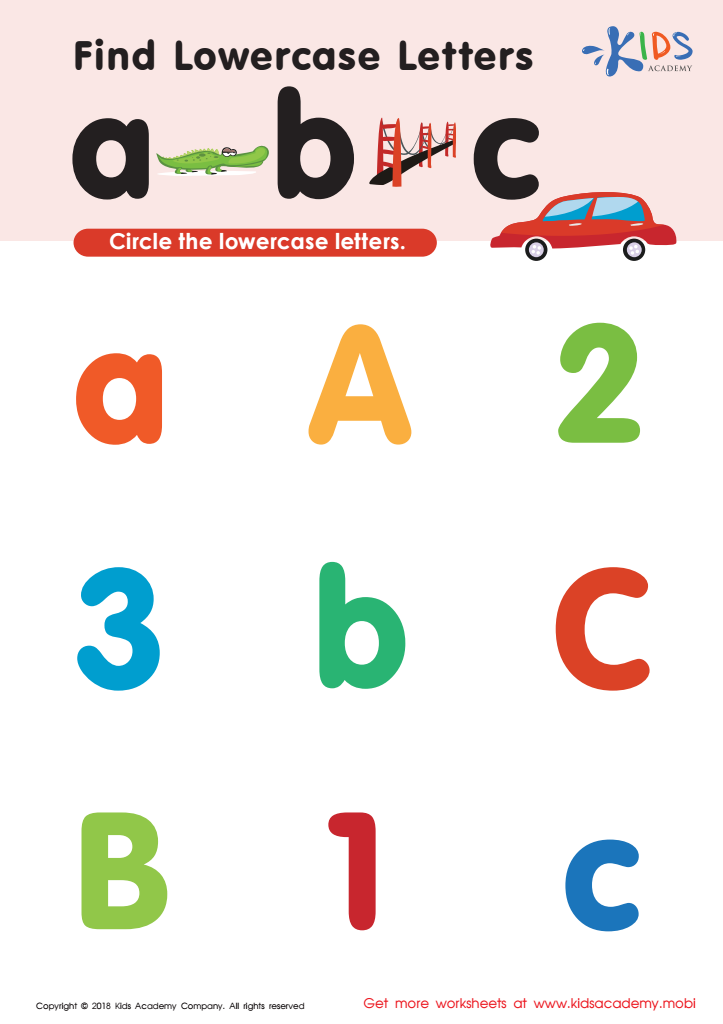
Find lowercase letters a b c Worksheet

Find lowercase letters a b c Worksheet

Help your child identify lowercase letters with this worksheet. Carefully look at each letter and have your child circle the lowercase ones. This exercise is vital in helping them understand the alphabet and the difference between lower and uppercase letters.
Find lowercase letters a b c Worksheet
Worksheet
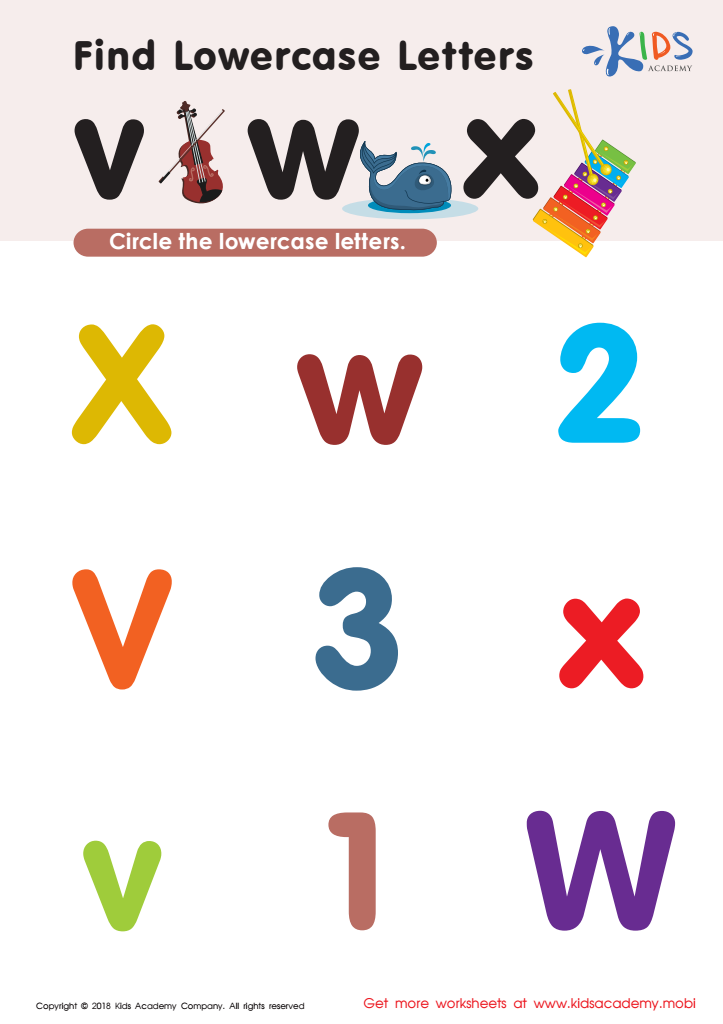
Find Lowercase Letters v w x Worksheet

Find Lowercase Letters v w x Worksheet

If your child doesn't know the alphabet, get them this helpful worksheet. It's an easy exercise to build their understanding of the alphabet and lowercase letters. Find the letters v, w, and x among other uppercase letters and numbers in the downloadable PDF.
Find Lowercase Letters v w x Worksheet
Worksheet
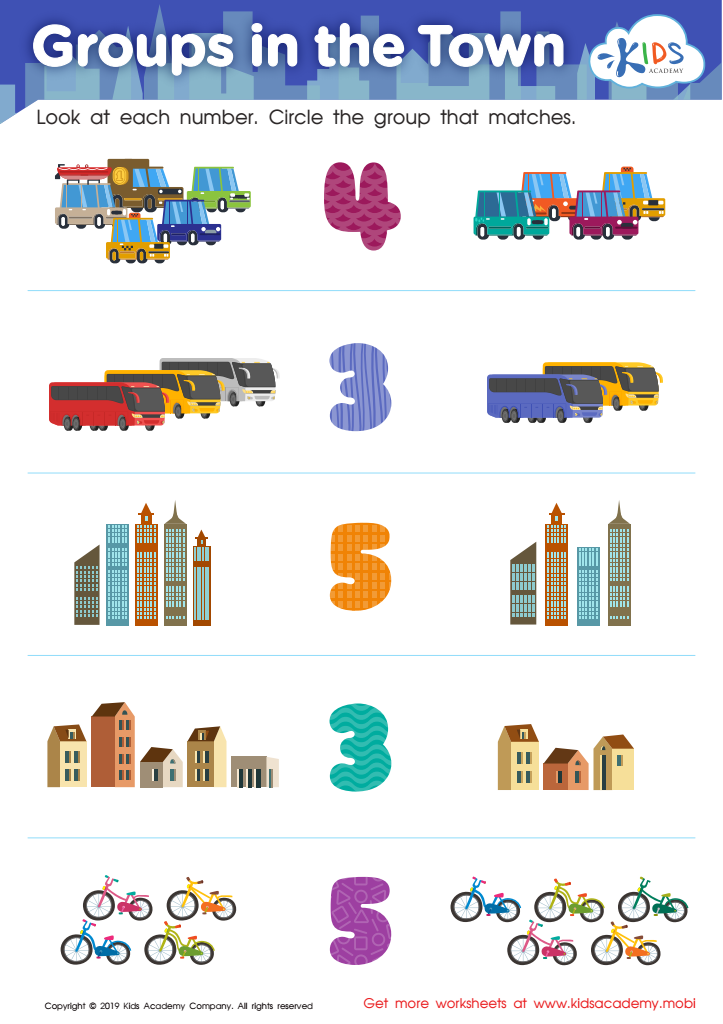
Groups in the Town Worksheet

Groups in the Town Worksheet

Help your kids learn to count with this worksheet! Look at each number of objects and circle the group that matches. This simple activity can give them extra practice to support what they learn in school. Learning doesn't have to be a struggle; make it fun and interactive with this worksheet.
Groups in the Town Worksheet
Worksheet
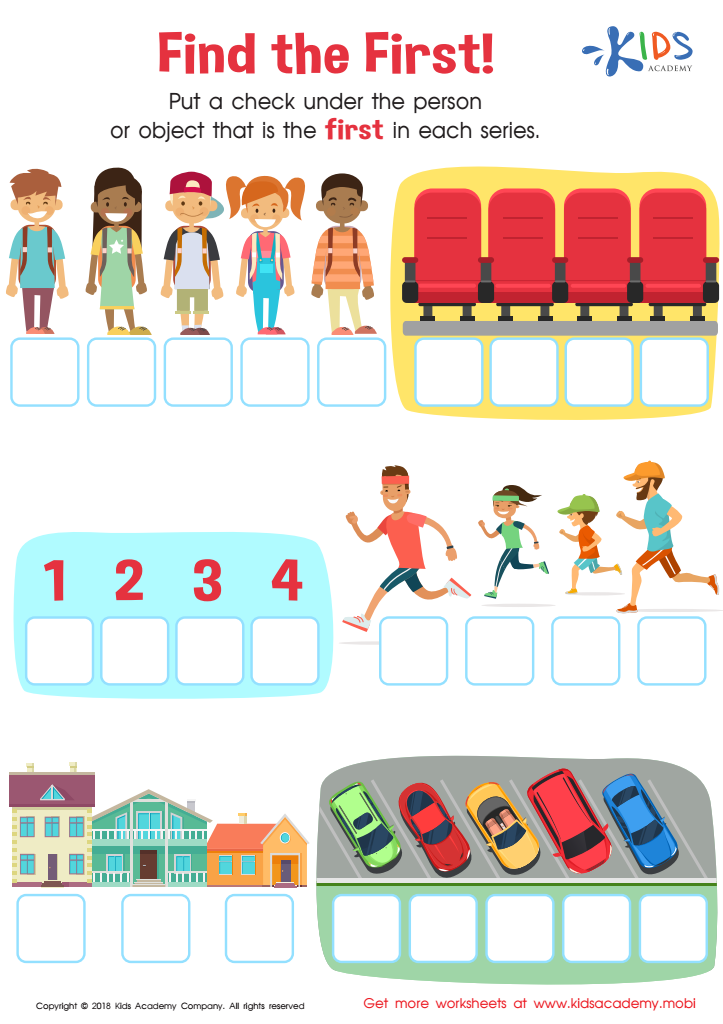
Find the First! Worksheet


Find the First! Worksheet

Have your young students discuss what it means to be first in line, row, or a race. This free worksheet helps clarify their understanding of "first". View each group of people/objects and choose the first one. Follow up with hands-on activities like lining up students/toys or acting out a sequence of movements. Students can tell what happened first. Enjoy this printout for a fun math lesson!
Find the First! Worksheet
Worksheet


Visual discrimination skills are crucial for children ages 4-7, as they form the foundation for many aspects of learning, particularly in reading, writing, and math. These skills enable children to differentiate between similar shapes, letters, numbers, and patterns, thereby impacting their ability to decode written language and understand mathematical concepts. For instance, without strong visual discrimination, children may confuse letters like 'b' and 'd,' which can pose challenges in reading.

Moreover, visual discrimination aids in fostering attention to detail, an essential skill for successful problem-solving and critical thinking. As children engage in tasks such as sorting objects or identifying differences in images, they enhance their cognitive development and fine motor skills simultaneously.

Parents and teachers play a key role in nurturing these skills. Encouraging activities like puzzles, matching games, and reading can strengthen visual discrimination abilities. By supporting these skills, caregivers and educators not only facilitate academic success but also boost children's confidence, making learning an enjoyable journey. In a world increasingly reliant on visual information, ensuring that children develop robust visual discrimination skills is essential for their future educational and life endeavors.