Visual-motor skills Worksheets for Ages 4-7
6 filtered results
-
From - To
Enhance your child's development with our engaging Visual-Motor Skills Worksheets designed for ages 4-7. These printable resources are perfect for building essential skills, including hand-eye coordination, tracing, and fine motor dexterity. Children will enjoy colorful activities that make learning fun and effective, from connecting dots to completing simple patterns. Our worksheets promote creativity while fostering confidence as kids master essential visual-motor skills. Perfect for home or classroom use, these activities can easily be integrated into your child's daily routine. Explore our collection today and empower your little learners to sharpen their abilities in an enjoyable and supportive environment!
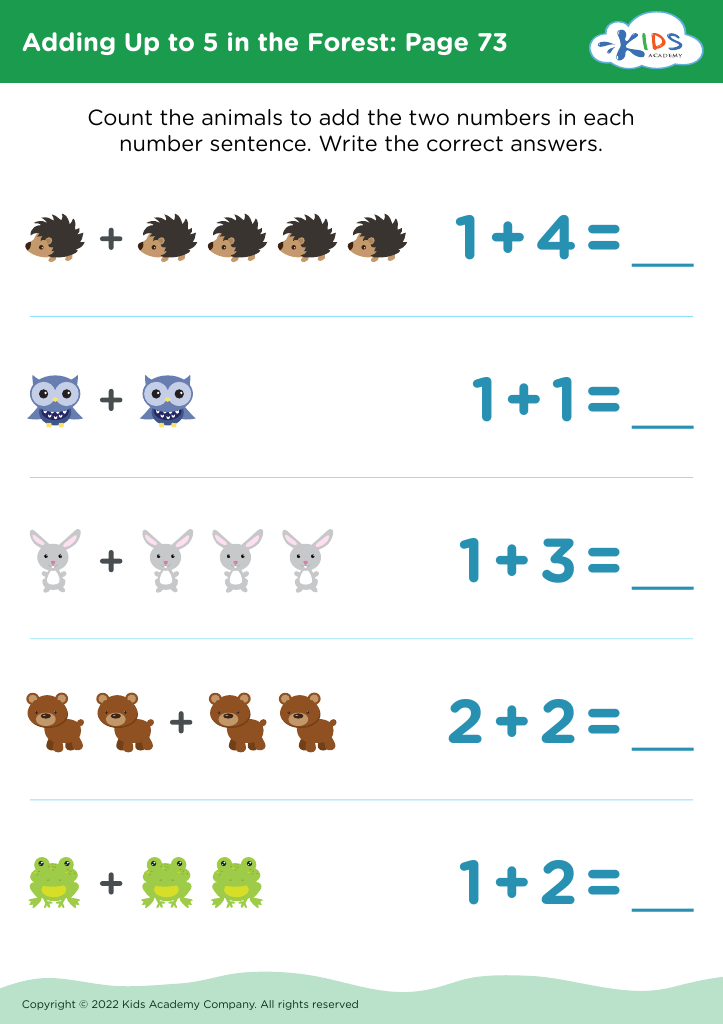
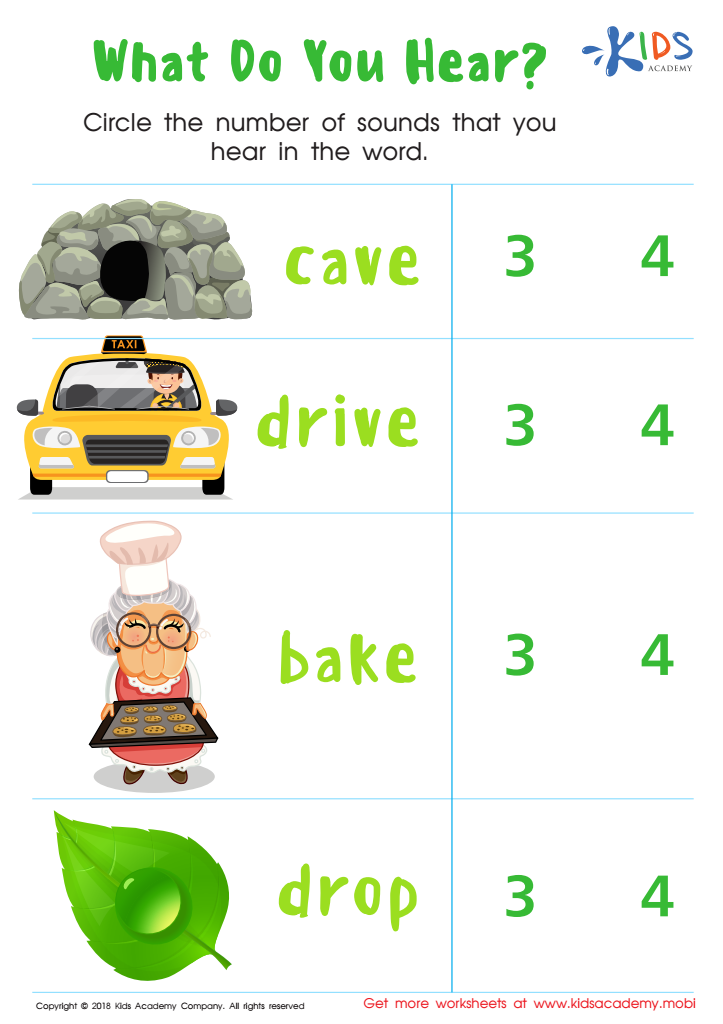
What Do You Hear? Worksheet
 Assign to My Students
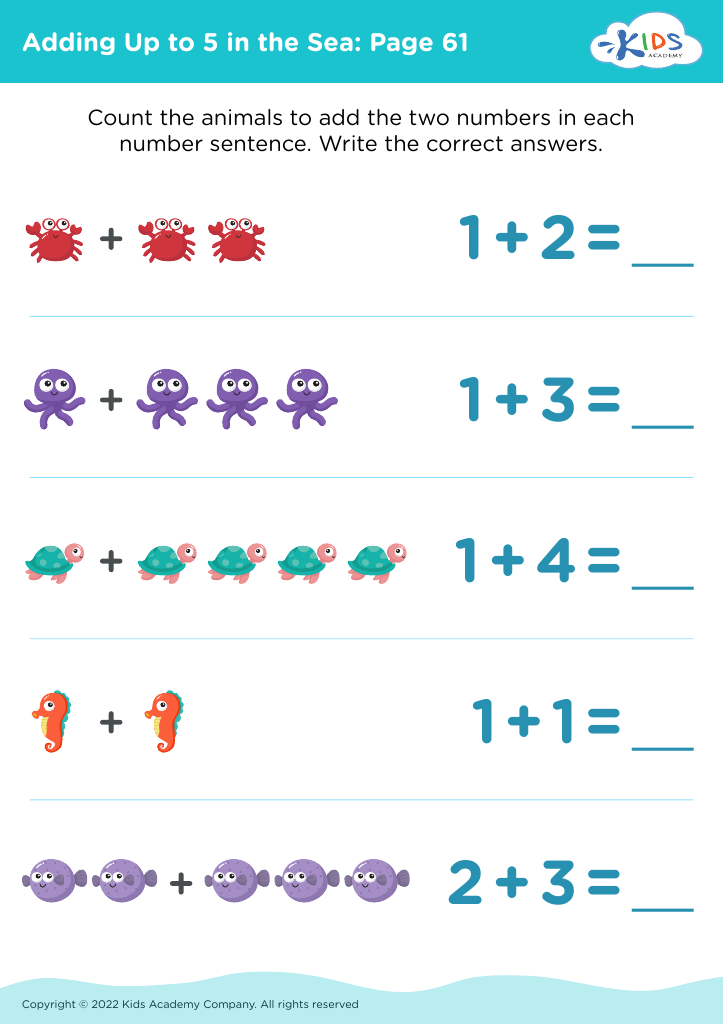
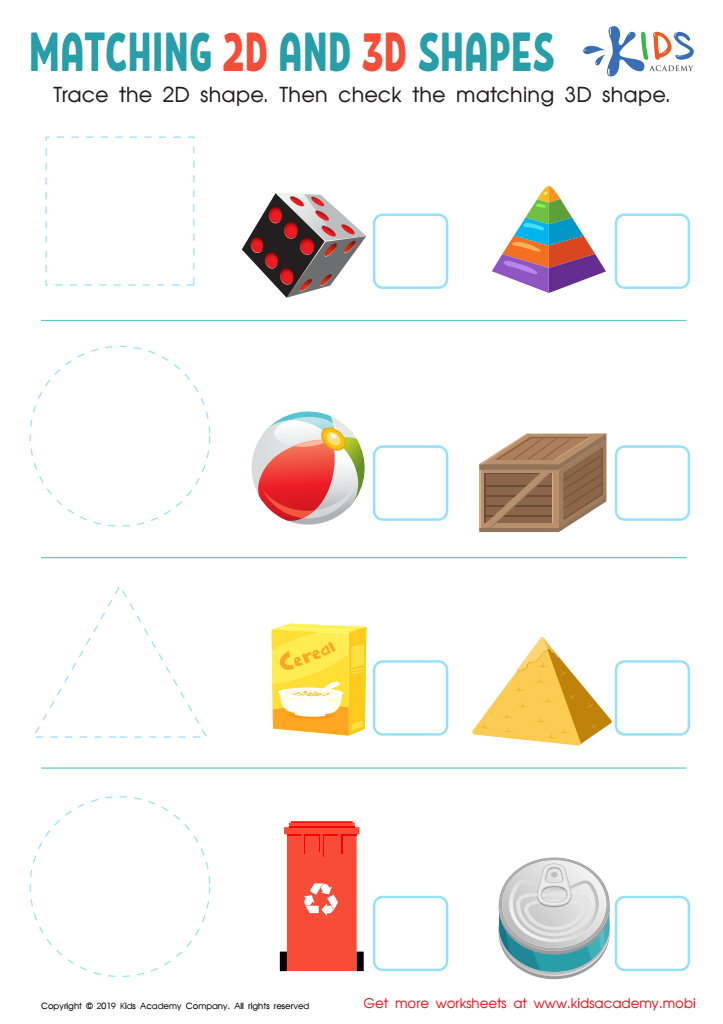
Matching 2D and 3D Shapes Worksheet







Visual-motor skills are crucial for children's development, particularly for those aged 4 to 7, as they provide the foundational abilities needed for everyday tasks and future learning. These skills enable children to coordinate their visual perception with their physical movements, allowing them to perform activities such as writing, cutting, and drawing.
For parents and teachers, nurturing visual-motor skills is essential for several reasons. First, these skills are linked to academic success; children who struggle with visual-motor coordination may face difficulties in tasks like handwriting or reading, potentially leading to lower confidence and engagement in school. Additionally, strong visual-motor skills support self-regulation and focus, which are vital for classroom participation and peer interactions.
Moreover, visual-motor skills play a crucial role in a child’s overall physical coordination. Proficient visual-motor integration promotes better hand-eye coordination, which is necessary during athletic activities and daily tasks, fostering independence. By encouraging activities that improve these skills, such as puzzles, arts and crafts, and outdoor play, parents and teachers can support a child’s holistic development. Ultimately, prioritizing visual-motor skills can lead to a smoother transition into more complex academic and life skills as children grow.








