
Visual representation Worksheets for Ages 4-7
3 filtered results
Difficulty Level
Grade
Age
-
From - To
Subject
Activity
Standards
Discover our engaging Visual Representation Worksheets designed specifically for kids ages 4-7! These worksheets are perfect for nurturing young learners’ creativity and critical thinking skills through visually stimulating activities. Children will explore concepts such as shapes, colors, and patterns while connecting images to ideas, enhancing their comprehension and expression. Each worksheet is thoughtfully crafted to cater to various skill levels, ensuring every child finds joy in learning. Ideal for home, daycare, or classroom settings, our visual representation resources provide a fun way for kids to improve their cognitive abilities and develop essential artistic skills. Start the creative journey today!
Favorites
With answer key
Interactive
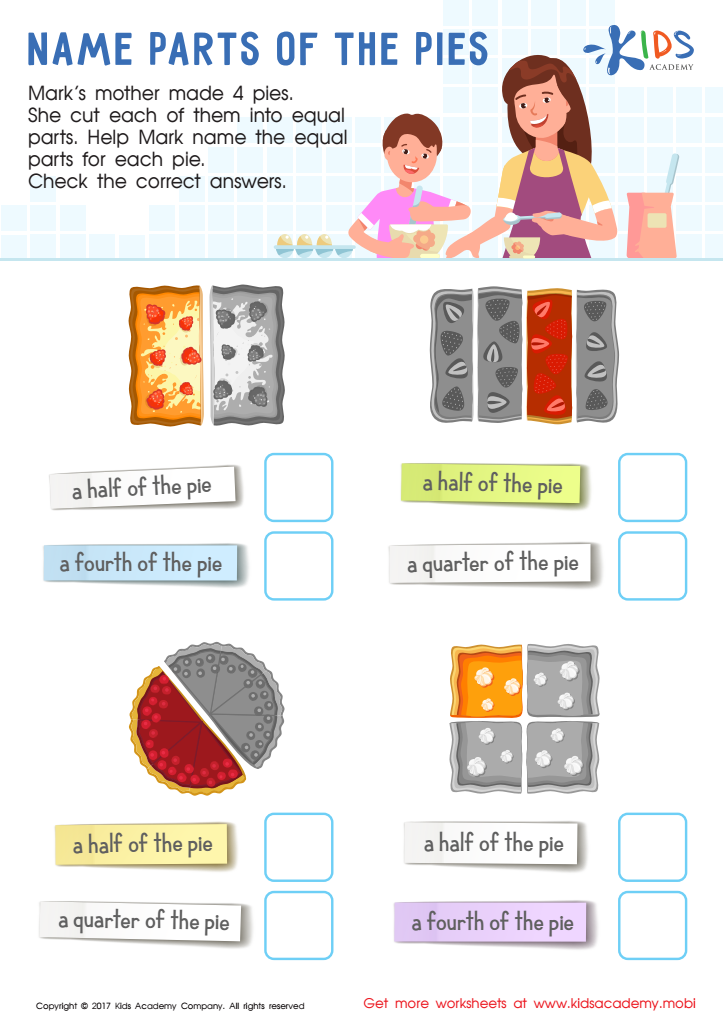
Name Parts of the Pies Worksheet
Mark and his mom are making pies. He's dividing them into equal parts and needs help to name them. Let your students aid him by checking the correct answer for each picture. Have them think of their own roles in the kitchen when they're done. How do they help their moms?
 Assign to My Students
Name Parts of the Pies Worksheet
Worksheet
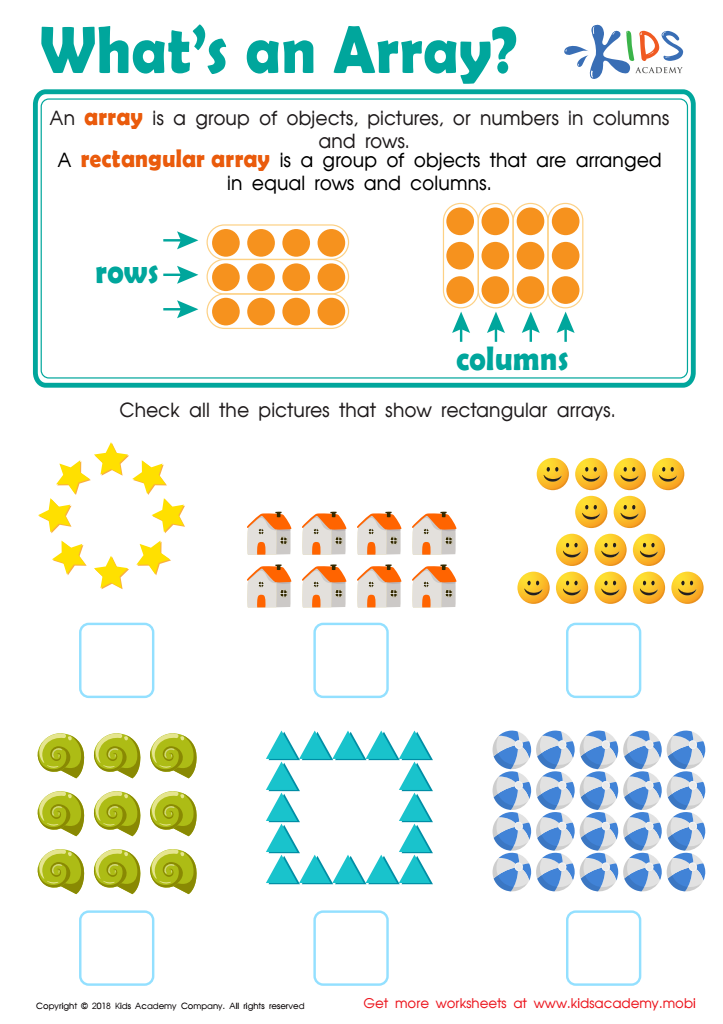
What's an Array? Worksheet
Explain to your child that an array is a group of objects, pictures, or numbers in columns and rows. Show them a rectangular array is a group of objects in equal rows and columns. Guide them to check the pictures in the worksheet to spot any rectangular arrays. Help them remember this concept.
What's an Array? Worksheet
Worksheet
Join Kids Academy for Free
Who is primarily going to use this learning content?








Visual representation is a crucial aspect of learning for children aged 4-7, as it significantly enhances their cognitive development, comprehension, and creativity. At this developmental stage, children are discovering how to interpret the world around them, and visual aids—such as pictures, drawings, charts, and diagrams—help bridge the gap between abstract concepts and tangible understanding.
Incorporating visual representation into learning enables young learners to engage more deeply with content, making information more accessible and easier to grasp. It fosters critical thinking skills by allowing children to analyze and interpret visual data, which promotes active learning rather than passive absorption. Additionally, it can spark their imagination and encourage exploration, providing opportunities for self-expression and creative thought.
Parents and teachers should prioritize visual representation as a tool for communication. Children often find it easier to express their thoughts and feelings through images when words may fail them. By embracing visual representation in the classroom and at home, adults can create a richer, more inviting learning environment that supports diverse learning styles, fosters collaboration, and enriches emotional and social development. Ultimately, it equips children with essential skills for future learning and problem-solving.








