Recognizing shapes 2D Shapes Worksheets for Ages 4-7
3 filtered results
-
From - To
Discover our engaging 2D Shapes Worksheets designed for children ages 4-7, perfect for enhancing shape recognition skills! Each worksheet features vibrant illustrations and age-appropriate activities tailored to keep young learners motivated and focused. Through fun exercises, kids will identify different 2D shapes, gain confidence in their understanding, and develop essential math skills in a supportive environment. Whether in the classroom or at home, our printable resources are easy to use and provide a great opportunity for kids to explore, learn, and express their creativity. Start your child's shape recognition journey today and watch their confidence grow!
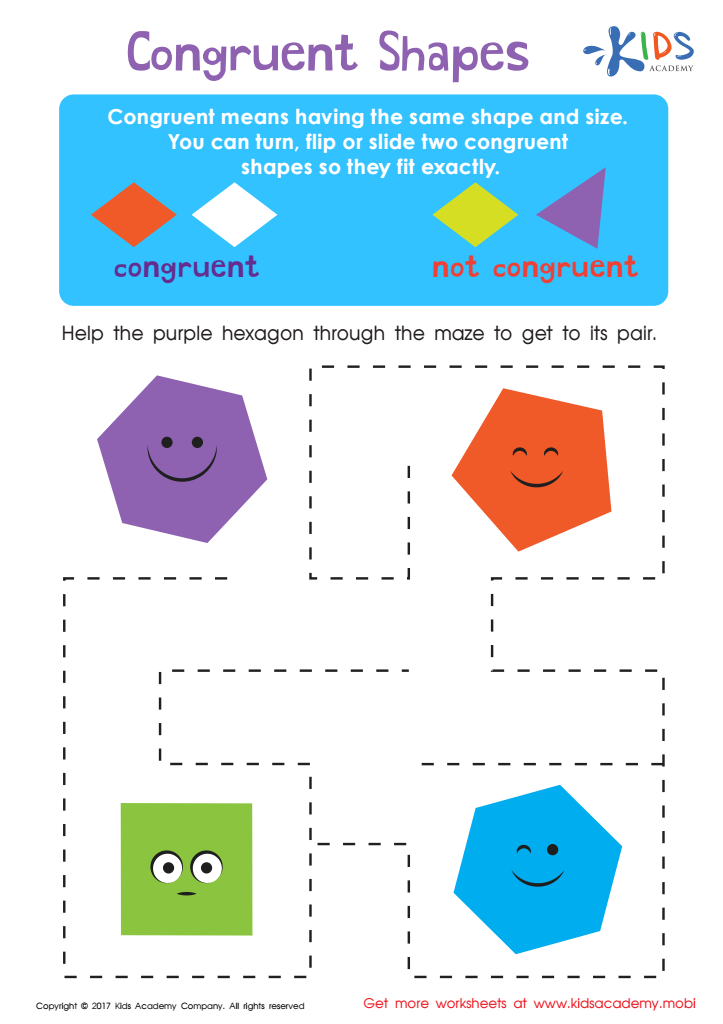
Congruent Shapes Worksheet
 Assign to My Students











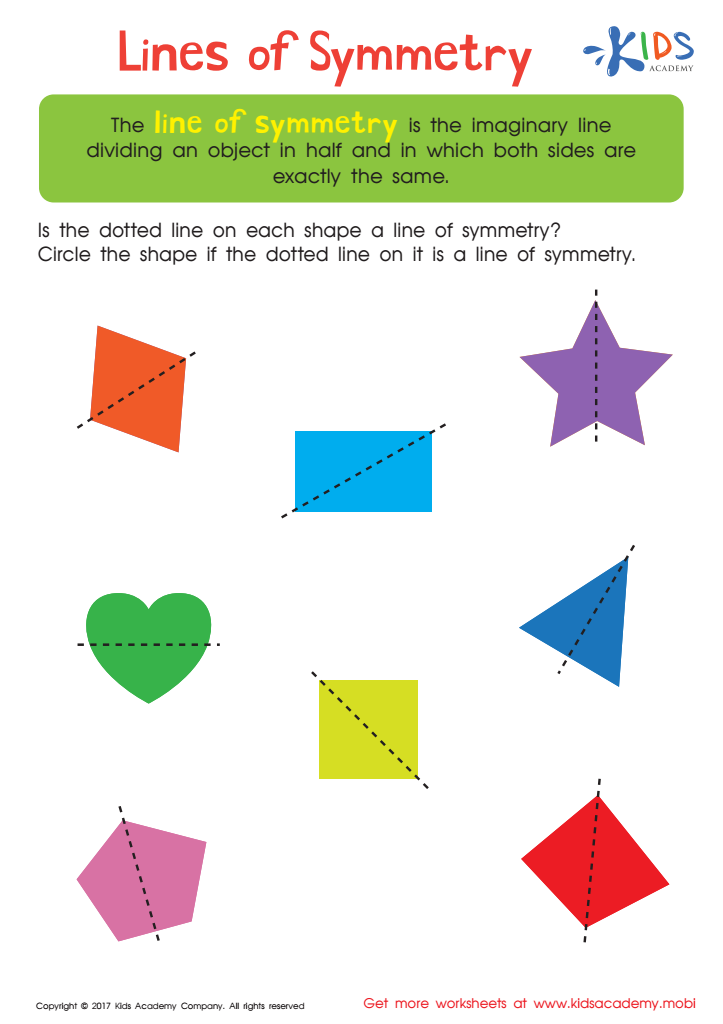
Lines of Symmetry Printable
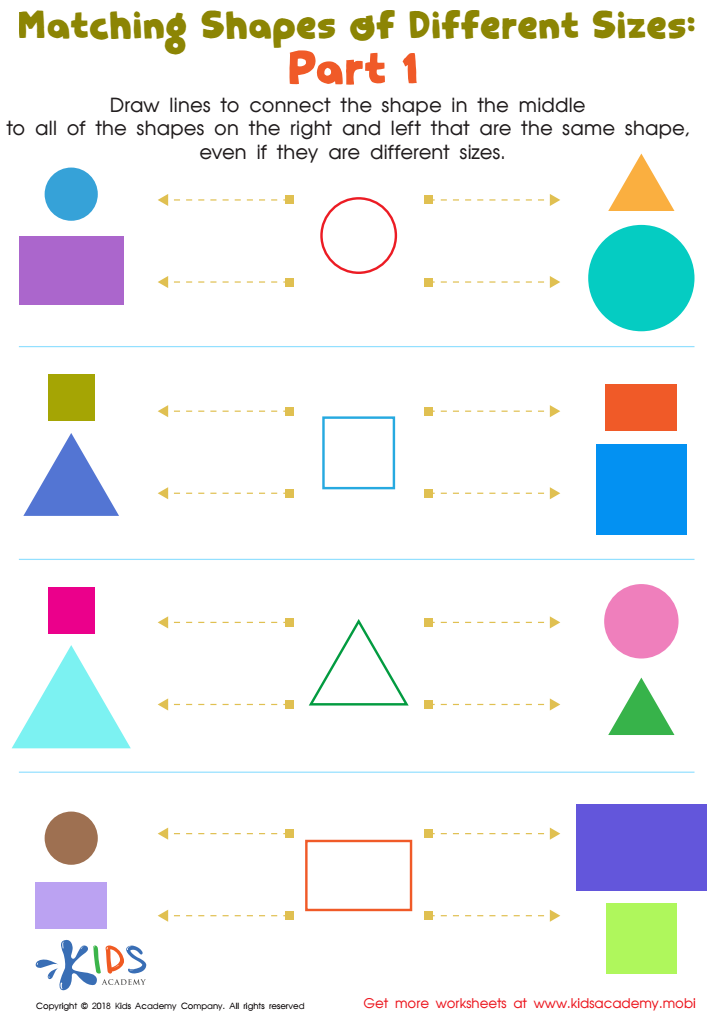
Geometry: part 1 Worksheet








Recognizing 2D shapes is a foundational skill for children aged 4-7 that plays a crucial role in their cognitive development and early mathematics education. This recognition helps children understand and make sense of the world around them. Shapes are everywhere in our daily lives, from buildings to toys, and recognizing them enables children to categorize and connect concepts in their environment.
Furthermore, learning about 2D shapes lays the groundwork for more complex geometric concepts and spatial reasoning skills that children will encounter in later education. Activities involving shapes can foster critical thinking, enhance problem-solving abilities, and promote creativity. For example, art projects that involve drawing or using shapes can reinforce classroom learning while allowing children to explore and express themselves.
Furthermore, engaging with shapes can serve as a gateway for developing language skills. Discussing shapes and their properties helps enhance vocabulary and encourages communication. Parents and teachers can play an essential role by incorporating fun, interactive activities that make learning about 2D shapes enjoyable. Through games, puzzles, and real-life examples, adults can help children build confidence and a positive attitude toward mathematics, preparing them for future academic success. Ultimately, recognizing shapes is an essential building block for lifelong learning.








