Critical Thinking Adding 2-digit Numbers Worksheets for Ages 4-7
3 filtered results
-
From - To
Enhance your child's mathematical skills with our "Critical Thinking Adding 2-digit Numbers Worksheets for Ages 4-7". These engaging worksheets are designed to foster critical thinking and problem-solving abilities in young learners. Through interactive exercises and fun challenges, children will master the art of adding 2-digit numbers while developing essential analytical skills. Perfect for both classroom and at-home use, these worksheets provide a strong foundation in basic arithmetic and critical reasoning, ensuring your child’s academic success. Boost their confidence and math proficiency with Kids Academy’s expertly crafted resources!
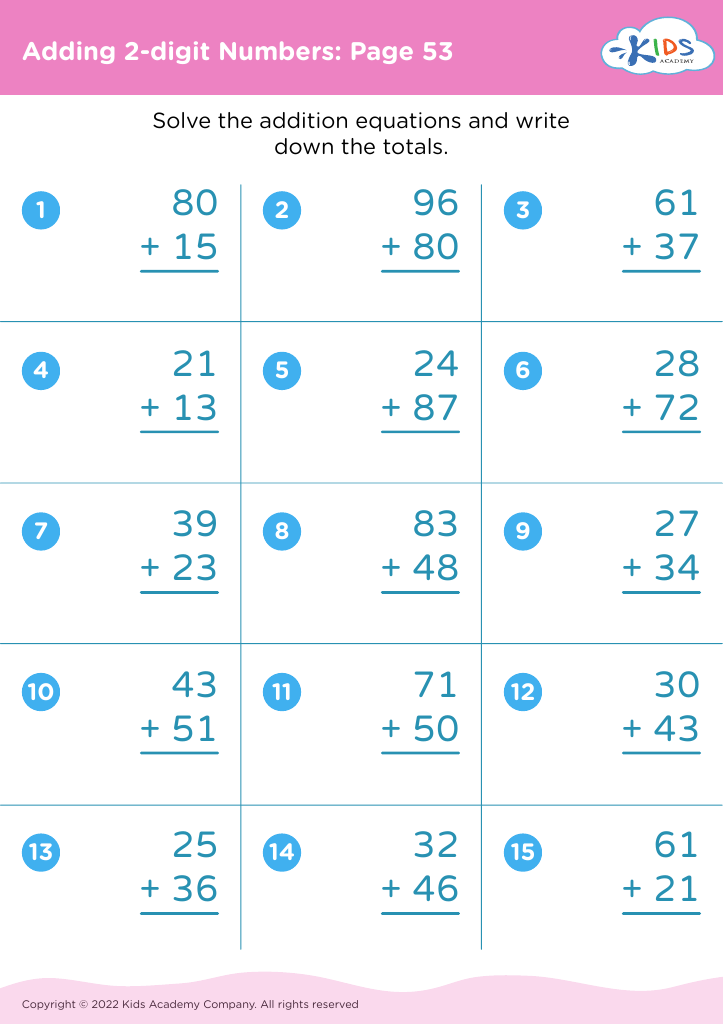
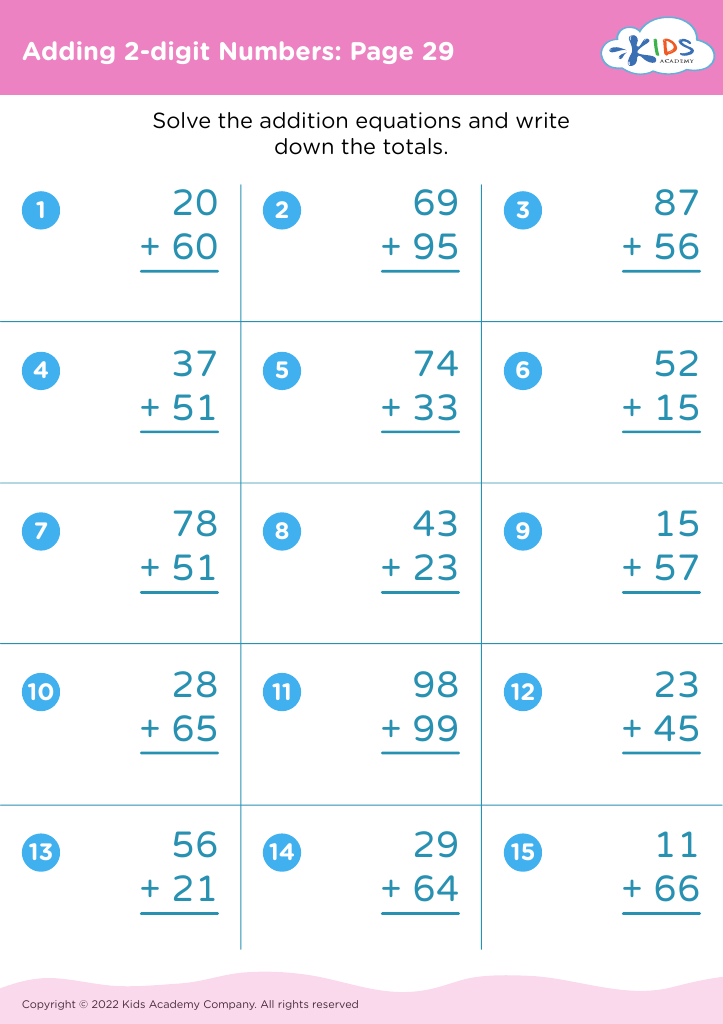
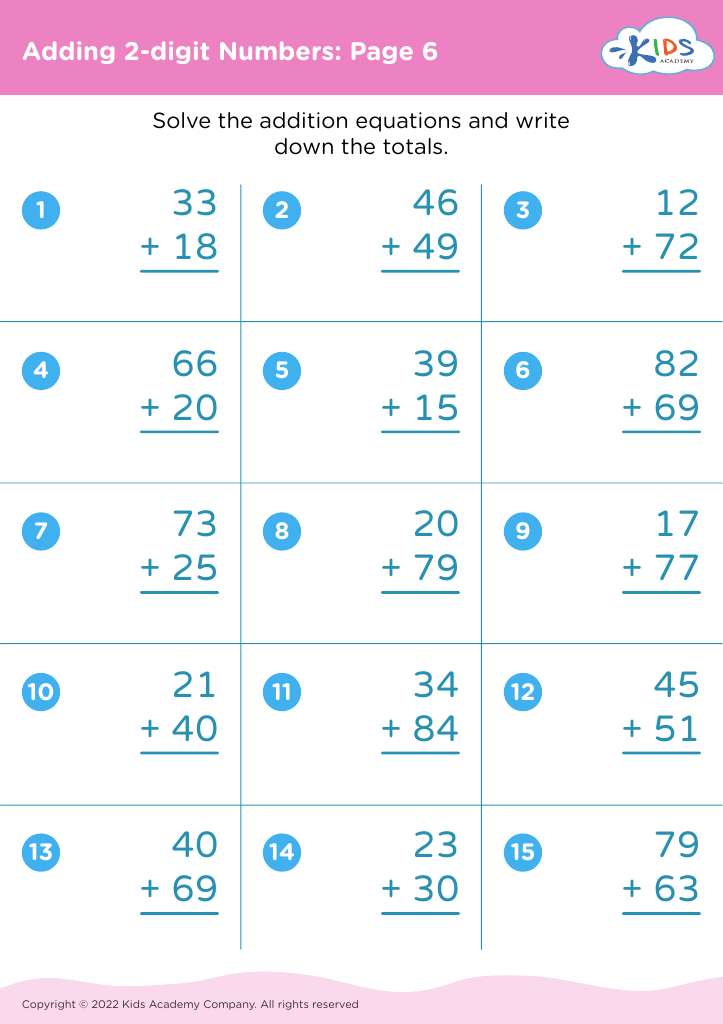








Parents and teachers should prioritize critical thinking skills, especially when introducing children between ages 4-7 to adding 2-digit numbers, because these skills form the foundation for future academic success and real-world problem-solving. Young minds are incredibly impressionable and adaptable, making early childhood the perfect time for fostering these essential abilities.
By focusing on critical thinking, children learn to approach problems systematically and logically, rather than merely memorizing rote methods. This engenders a deeper comprehension of mathematical concepts, enabling children to grasp not just how to add numbers, but why these operations work. Such understanding promotes flexibility in thinking, allowing youngsters to tackle various types of problems with confidence.
Moreover, nurturing critical thinking in early math education cultivates key life skills such as decision-making, creativity, and persistence. Children who can reason through mathematical problems are likely to apply the same analytical skills across disciplines, contributing to overall cognitive development. Teachers and parents facilitating critical thinking in math help children develop into independent, thoughtful learners, setting them up for success in academics and everyday decision-making. In essence, seeing beyond the numbers to encourage critical thinking paves the way for well-rounded, adaptable, and capable individuals.








