Recognizing Patterns Adding 2-digit Numbers Worksheets for Ages 4-7
3 filtered results
-
From - To
Discover our engaging "Recognizing Patterns Adding 2-Digit Numbers Worksheets" designed for young learners aged 4-7. These worksheets provide a vibrant and interactive way to help children understand and recognize numerical patterns while mastering the addition of 2-digit numbers. Each activity promotes critical thinking and enhances math skills through fun exercises, making math enjoyable for kids. Perfect for classrooms or at-home learning, our resources ensure that every child builds a solid foundation in mathematics. Unlock your child’s potential while encouraging logical reasoning and pattern recognition with our expertly designed worksheets tailored for early education. Start exploring today!
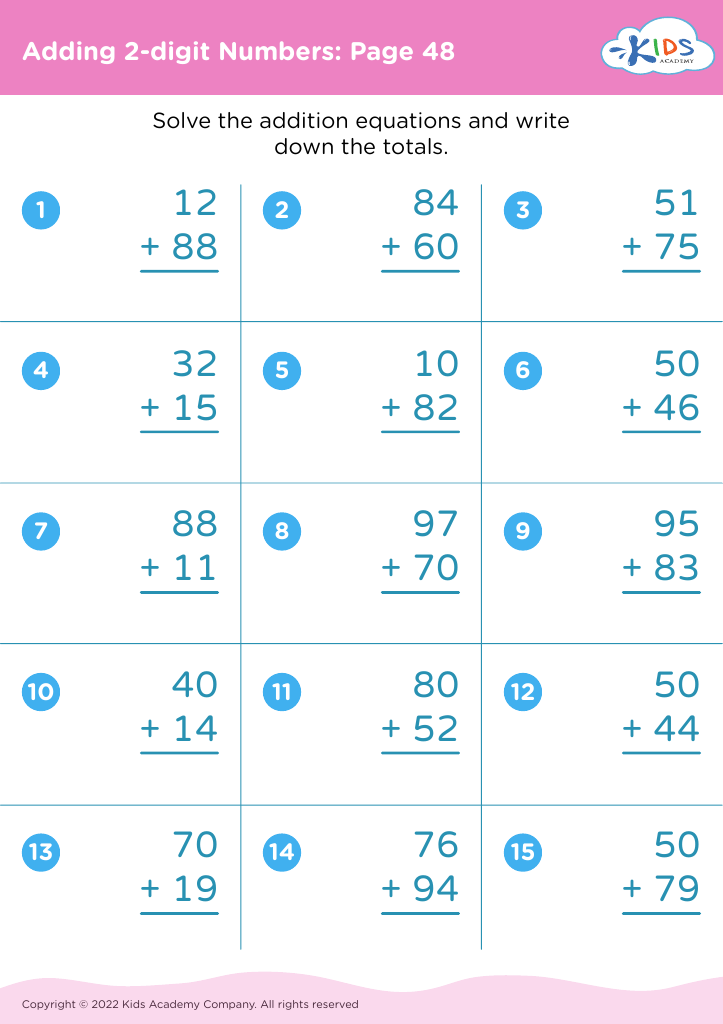
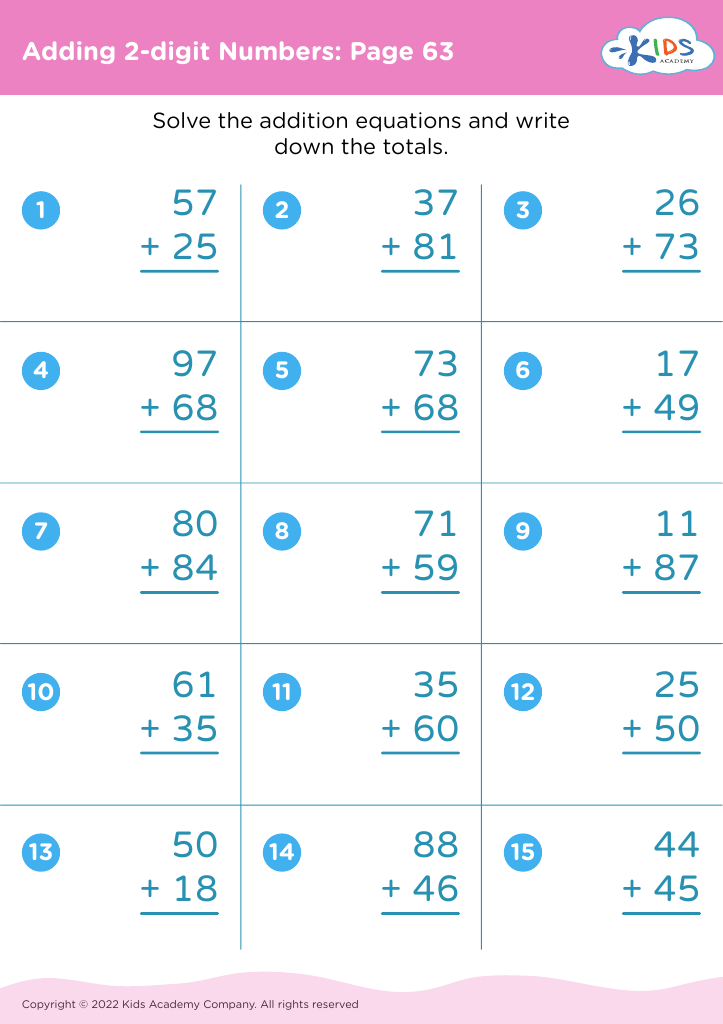
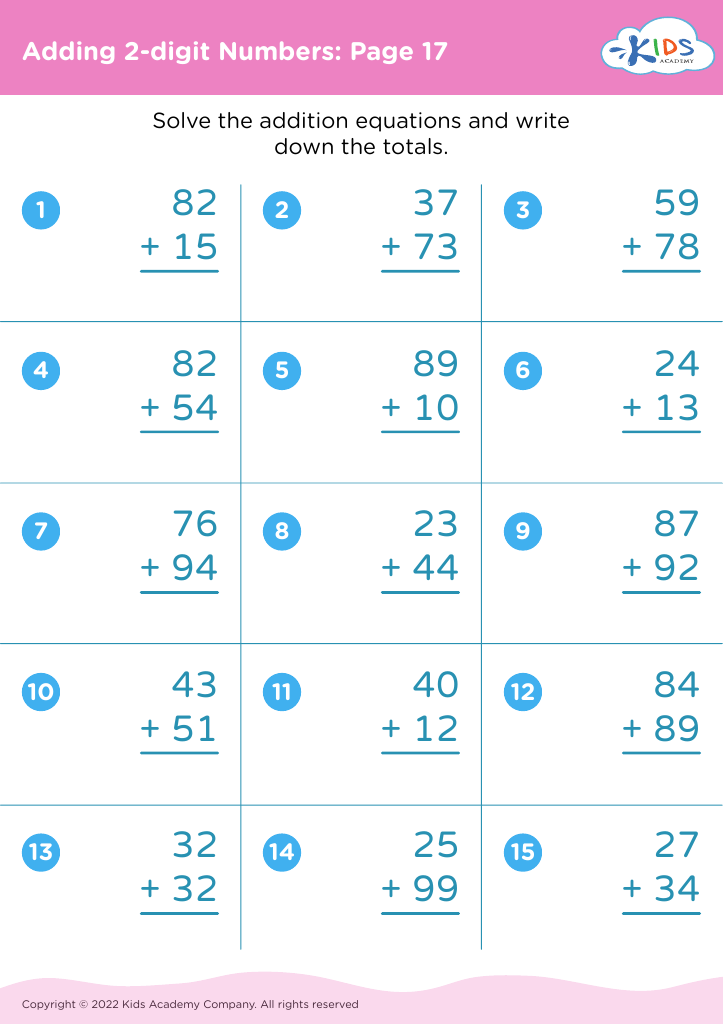








Recognizing patterns in adding 2-digit numbers is a crucial skill for children aged 4-7, as it lays the foundation for their mathematical understanding and problem-solving abilities. For parents and teachers, fostering this skill goes beyond mere arithmetic; it nurtures critical thinking and cognitive development.
Firstly, recognizing patterns helps children make connections between numbers, enhancing their ability to comprehend more complex mathematical concepts in the future. When children identify patterns, such as recognizing that 47 + 10 is similar to 37 + 10, they learn to predict outcomes, boosting their confidence and motivation in math.
Additionally, this skill aids in developing number sense. Children become more fluent in adding and can perform calculations quickly without relying solely on memorization. This flexibility nurtures a deeper understanding of mathematics as they start to see it as an interconnected system rather than isolated tasks.
Furthermore, pattern recognition cultivates perseverance and resilience, essential traits for lifelong learning. When children encounter challenging problems, identifying patterns can provide them with strategies to solve them. Overall, parents and teachers should prioritize this skill as it fundamentally shapes a child's attitude towards math, influencing their motivation and success in academics.








