Understanding patterns Adding 2-digit Numbers Worksheets for Ages 4-7
4 filtered results
-
From - To
Enhance your child's math skills with our "Understanding Patterns in Adding 2-Digit Numbers" worksheets, designed for ages 4-7. These engaging and interactive resources help young learners recognize numerical patterns and develop their addition abilities through fun activities. With colorful visuals and age-appropriate challenges, kids will build a strong foundation in mathematics while enjoying the process. Structured to promote critical thinking and problem-solving, our worksheets also encourage independent learning and confidence. Perfect for home or classroom use, our printables make math exciting and accessible, ensuring your child grasps essential concepts while developing a love for numbers. Start exploring today!
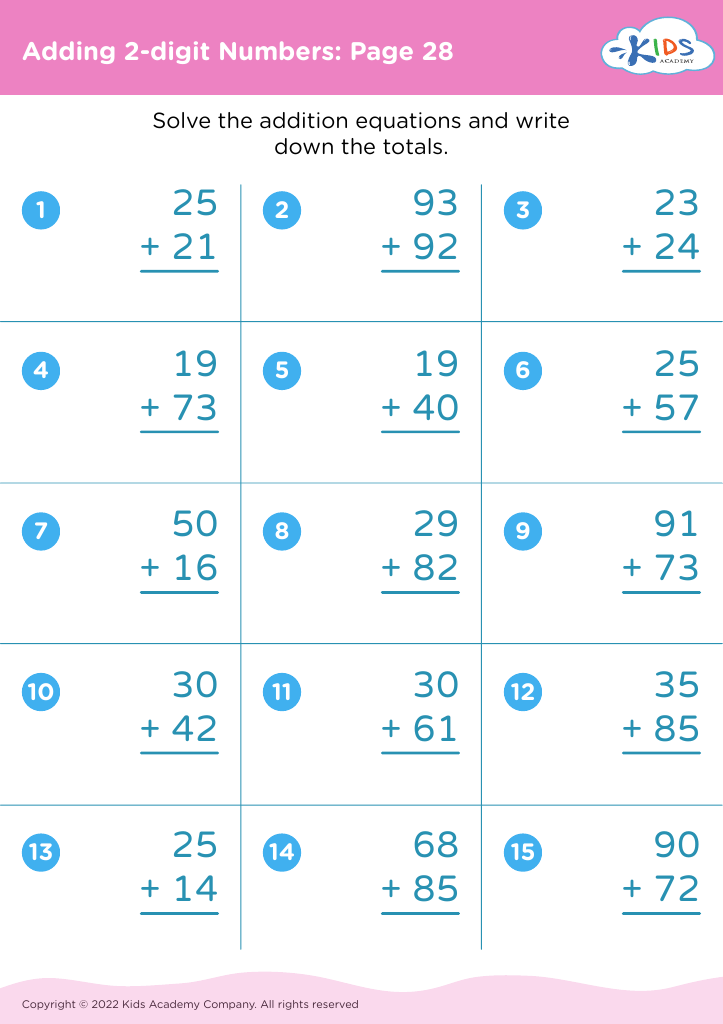
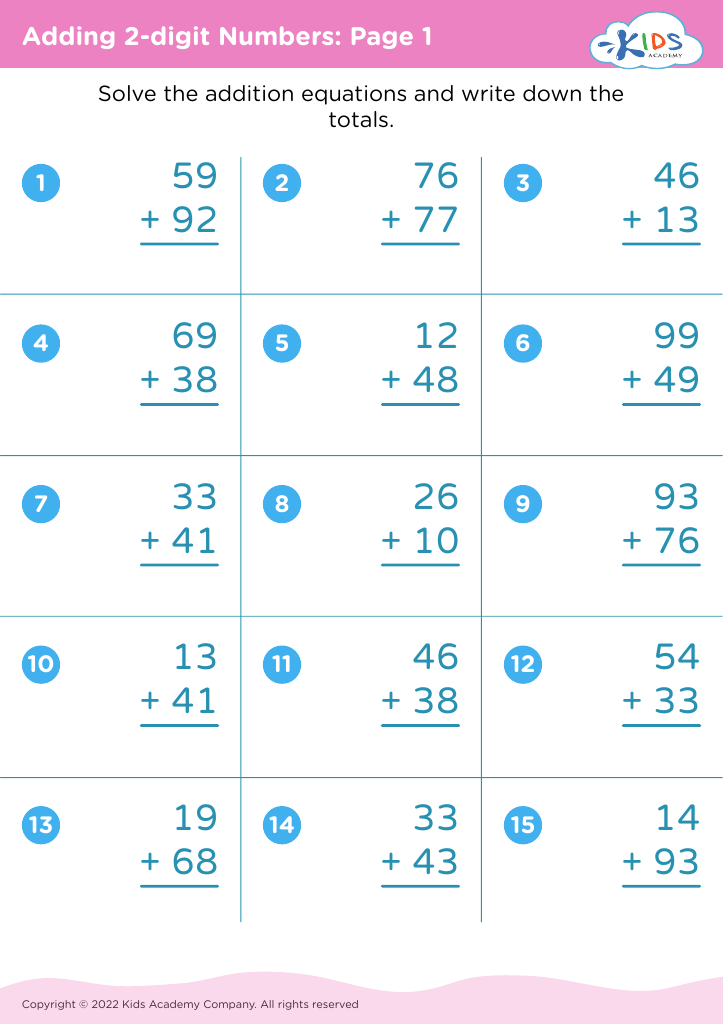
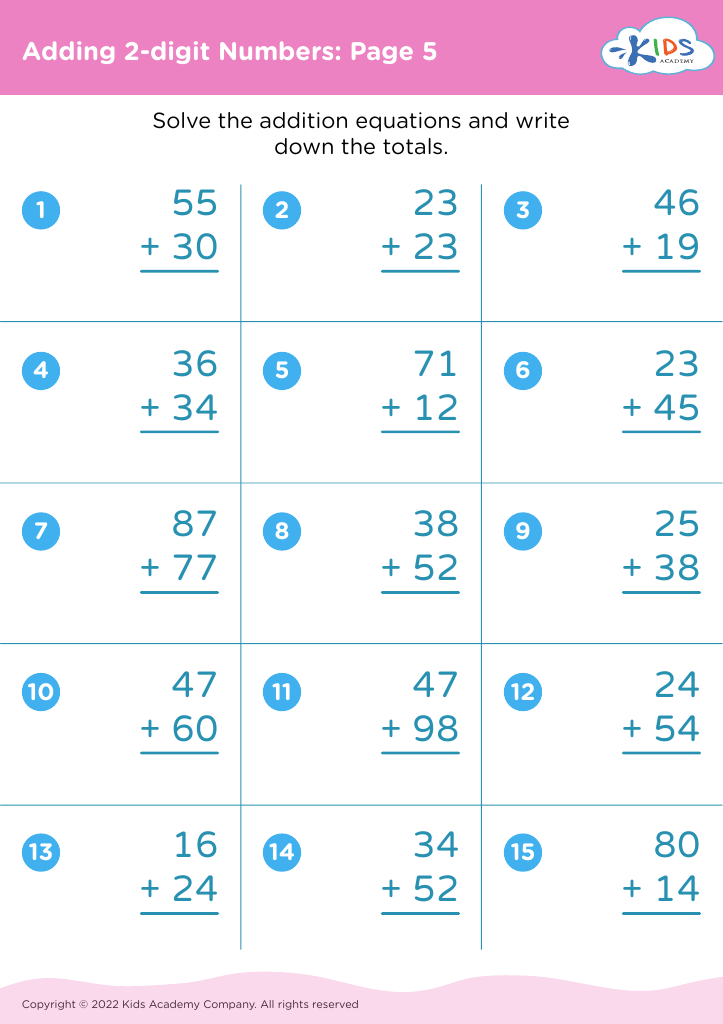
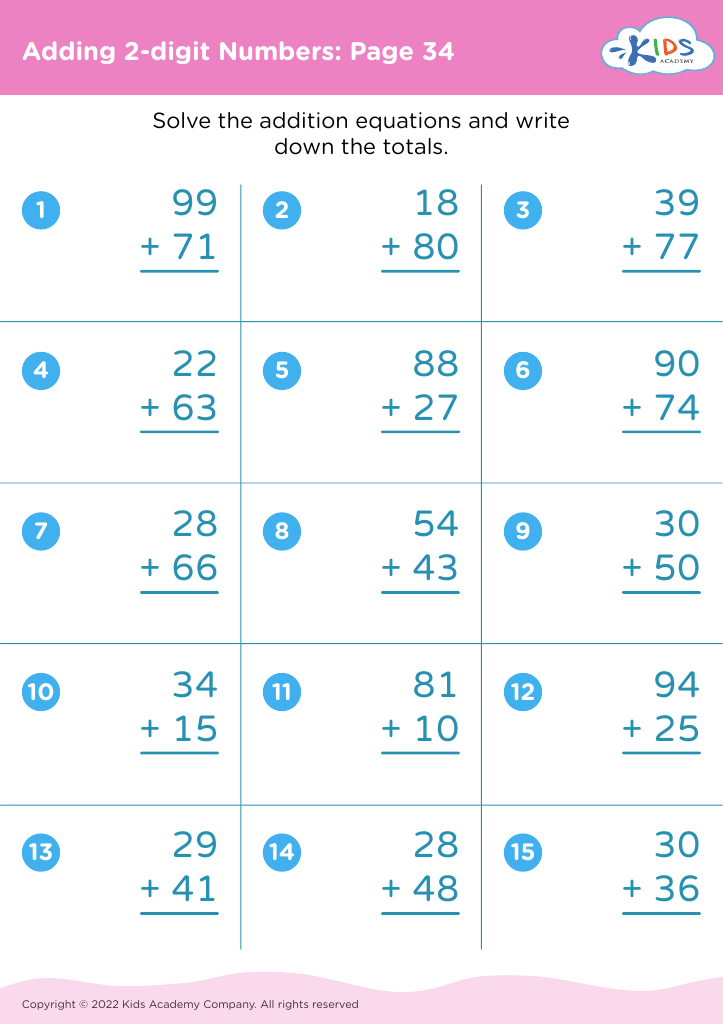








Understanding patterns in adding 2-digit numbers is crucial for children aged 4-7 as it lays a solid foundation for mathematical skills and problem-solving. At this developmental stage, children are naturally curious and eager learners; recognizing patterns helps them make connections between numbers and operations, thereby enhancing their numerical fluency.
When children grasp how numbers relate to each other through patterns—such as adding ten to a whole number—they begin to develop strategies that simplify calculations. This competence boosts their confidence and reduces math anxiety. Patterns also encourage logical thinking and predictability in arithmetic, enabling children to approach more complex math concepts as they progress.
For parents and teachers, fostering this understanding can lead to a more engaging learning environment. Utilizing playful methods, such as games or visual representations, makes learning enjoyable and interactive. Furthermore, emphasizing patterns aligns with early childhood education best practices, promoting critical thinking and creativity. As children see repeating patterns in numbers, they are better prepared for future math challenges and other subjects like science and music, where patterns also play a pivotal role. Therefore, nurturing pattern recognition is an investment in a child's cognitive development and lifelong learning journey.








