Understanding symmetry Adding 2-digit Numbers Worksheets for Ages 4-7
5 filtered results
-
From - To
Explore our engaging "Understanding Symmetry Adding 2-digit Numbers Worksheets" designed for young learners aged 4-7. These printable worksheets aim to build foundational math skills by combining fun, symmetrically themed exercises that strengthen number sense and addition techniques. Carefully crafted, the activities invite children to explore symmetry while practicing the addition of 2-digit numbers, ensuring a balanced and enjoyable learning experience. Perfect for classroom or home use, these worksheets support early math development and boost confidence in young mathematicians. Enhance your child's understanding of symmetry and numerical addition with these educational, accessible resources.
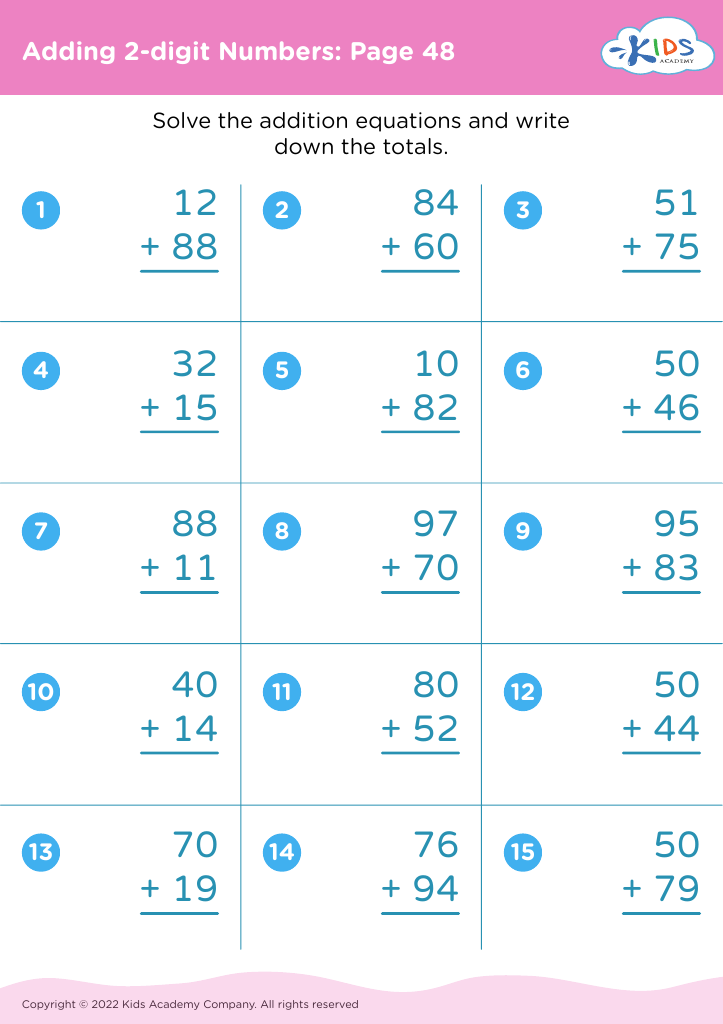
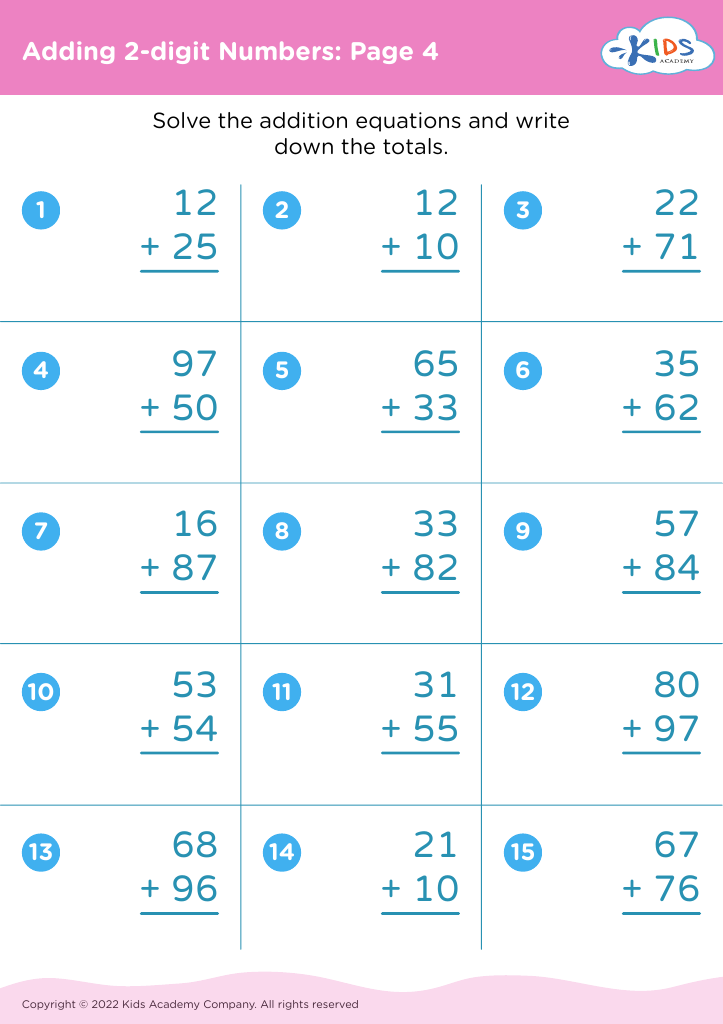
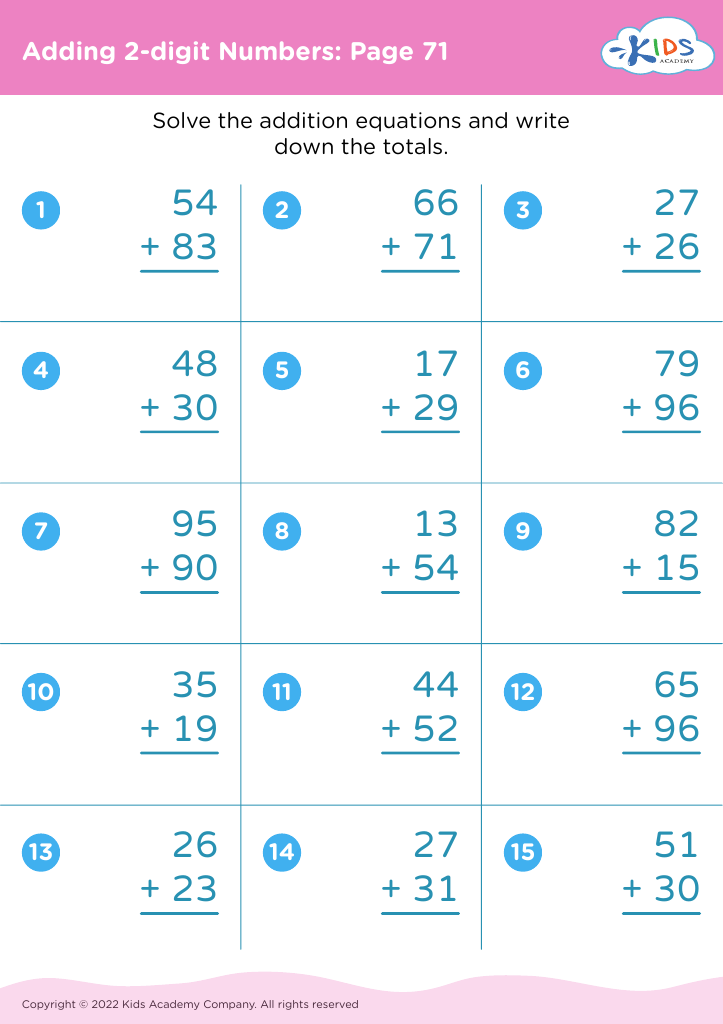
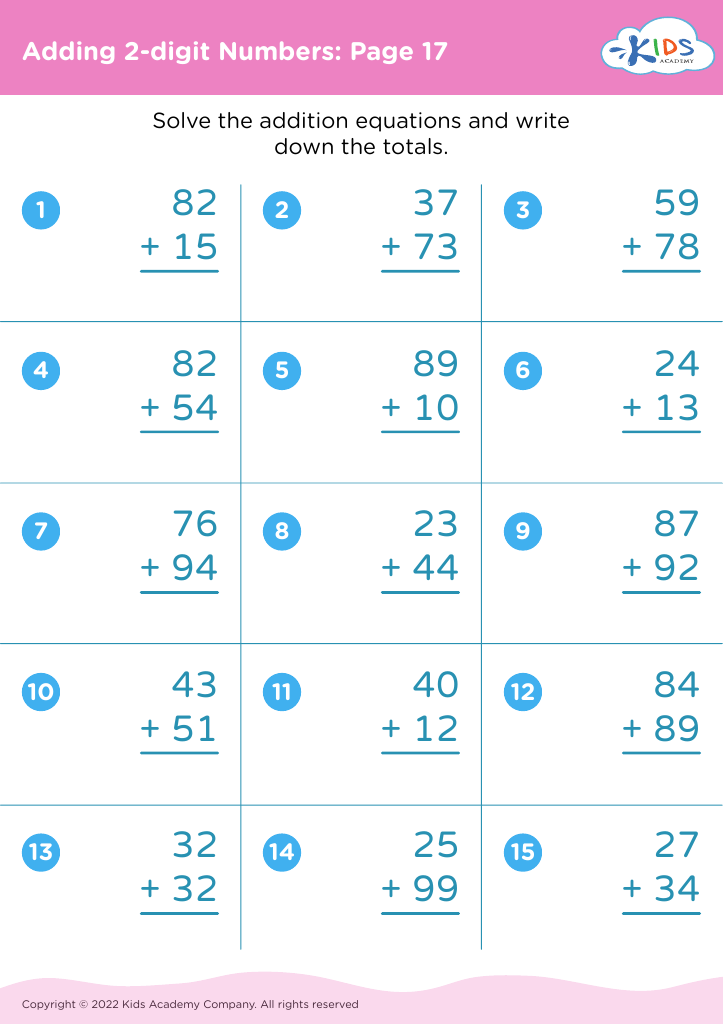
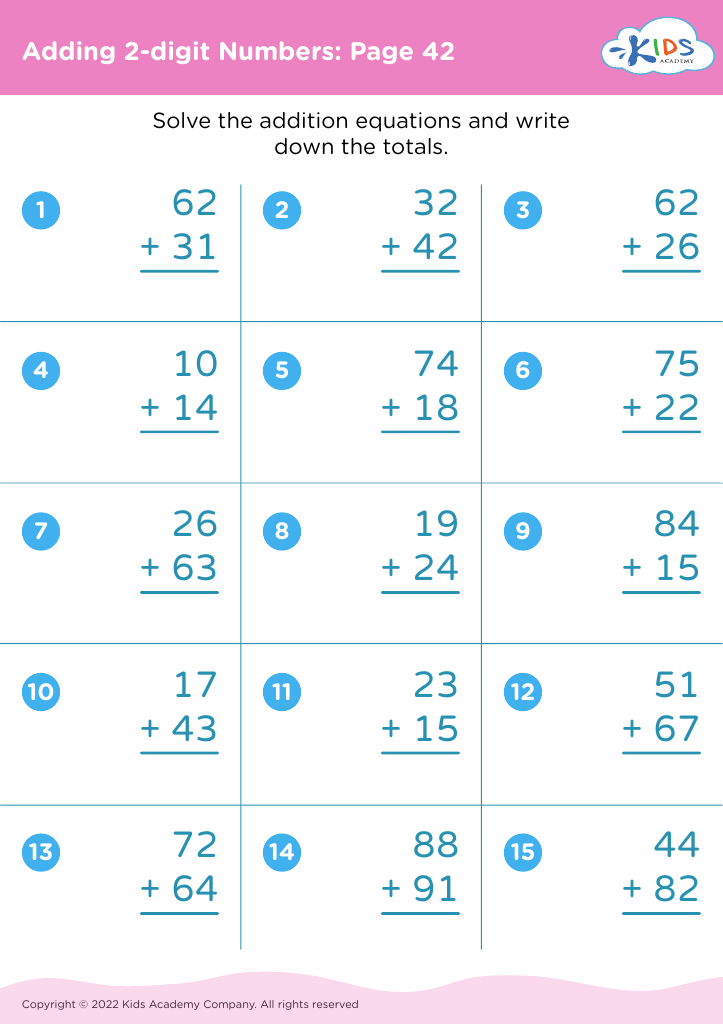








Understanding symmetry and adding 2-digit numbers are foundational skills that can greatly benefit children aged 4-7 in their early education.
Symmetry is key in the development of spatial awareness, which enhances a child's ability to understand shapes, patterns, and structures. It builds a strong foundation for geometry, critical thinking, and problem-solving skills, all of which are integral in fields like mathematics and science as they progress through school. Simple activities like folding paper or drawing mirror images can make symmetry fun and engaging, helping children recognize balance and harmony in the world around them.
Adding 2-digit numbers nurtures basic arithmetic skills, which are crucial for everyday activities and advanced math concepts. Early proficiency in mental math and number manipulation can make future mathematics learning less daunting and increase self-confidence. Children can learn through engaging activities like games and practical examples (e.g., counting toys or snacks) that make these concepts tangible and enjoyable.
Parents and teachers who prioritize these skills help children develop not just academically but also cognitively, as they enhance abilities like memory, attention, and logical reasoning. This early investment sets children up for long-term success by fostering a love for learning and building crucial mathematical foundations.








