Addition Practice Adding at the Zoo Worksheets for Ages 4-7
8 filtered results
-
From - To
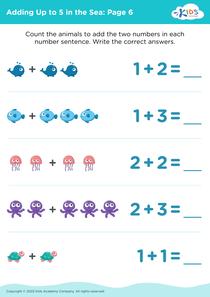
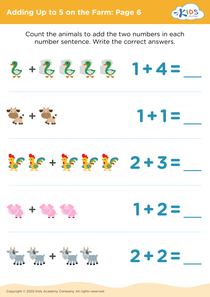
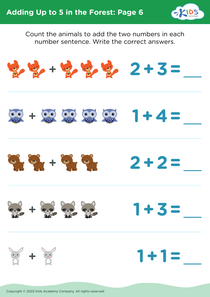
Welcome to our "Addition Practice: Adding at the Zoo" worksheets designed for children ages 4-7! These engaging and colorful worksheets provide a fun way for young learners to develop their addition skills. Set in an exciting zoo theme, children will enjoy counting and solving addition problems featuring their favorite animals. Each worksheet encourages hands-on learning with simple, interactive exercises that build confidence in math fundamentals. Perfect for use at home or in the classroom, our worksheets foster a love for learning while helping kids master essential addition concepts. Start your child's math adventure today at the zoo!
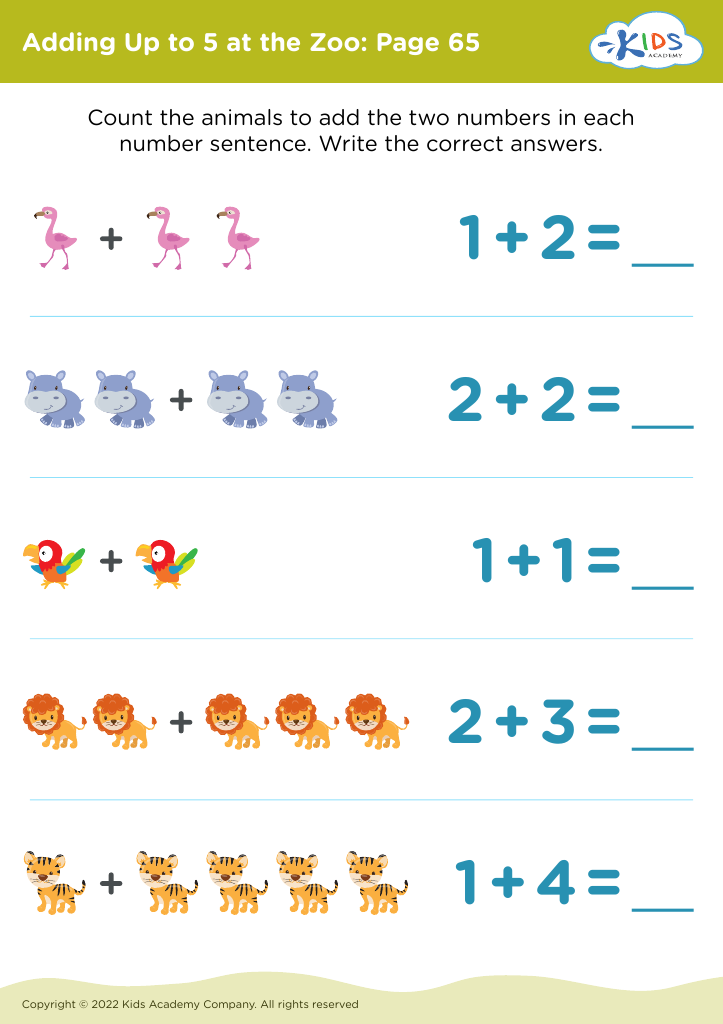
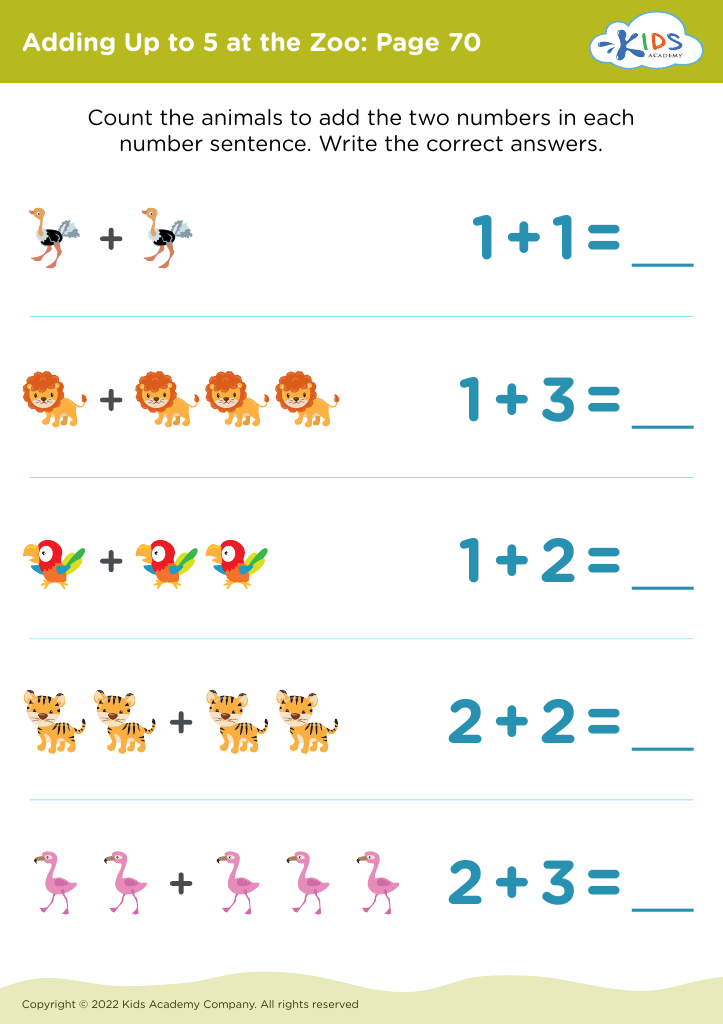
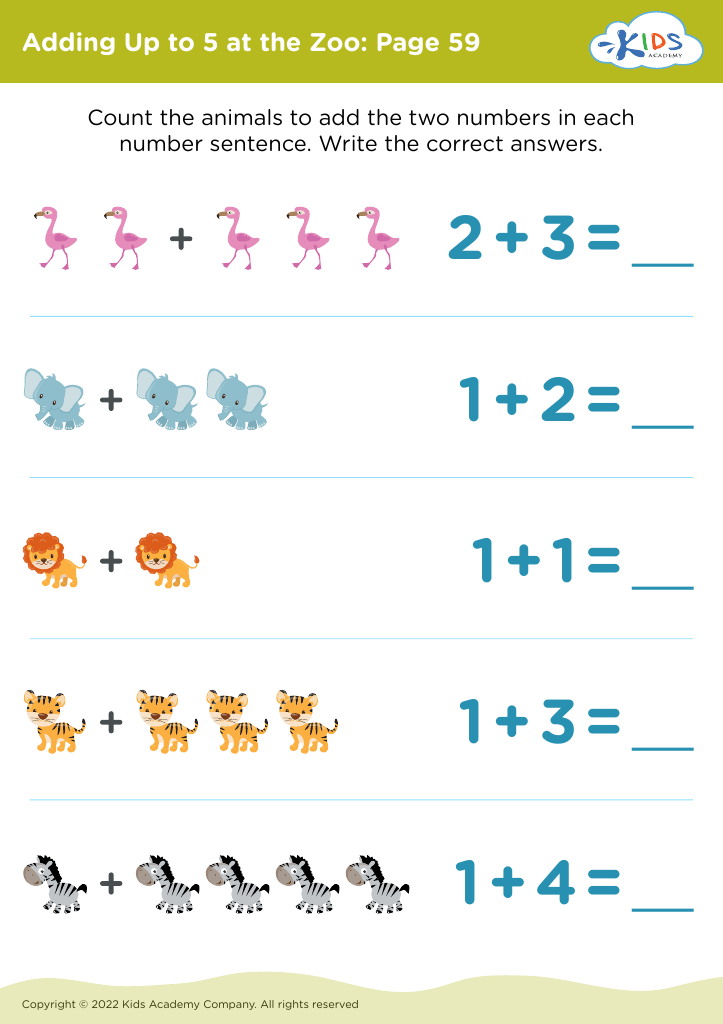
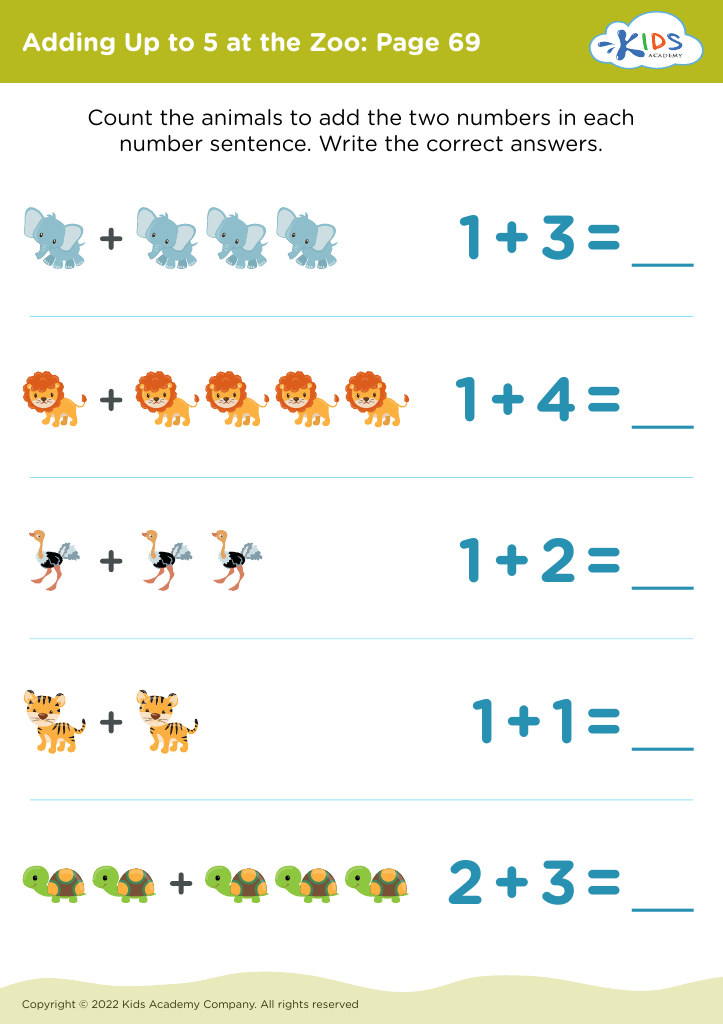
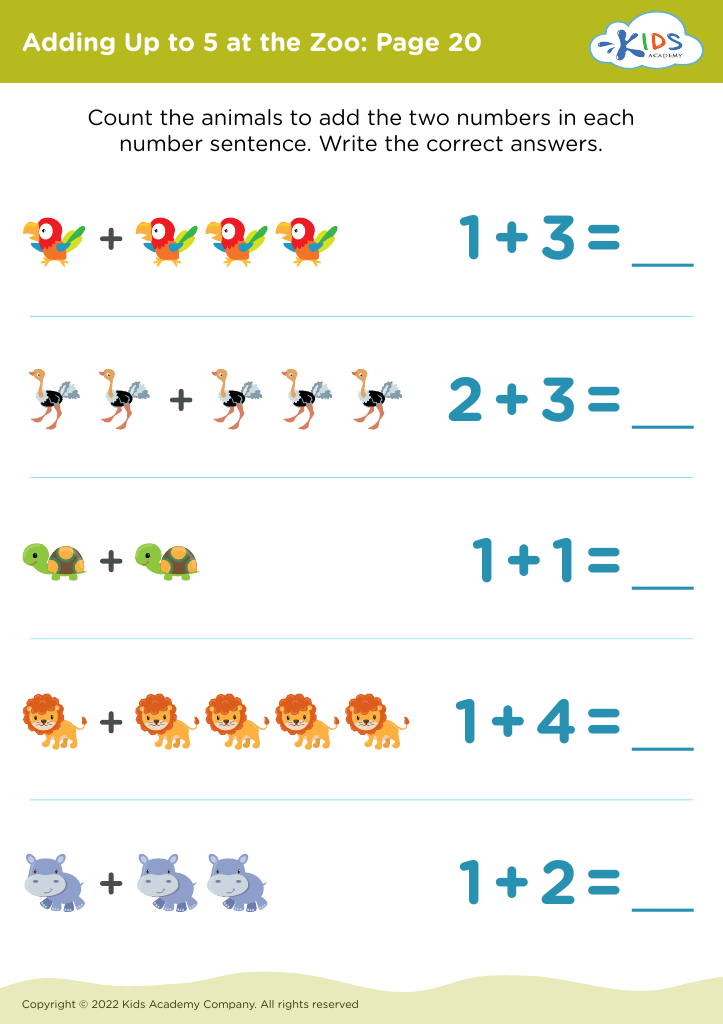
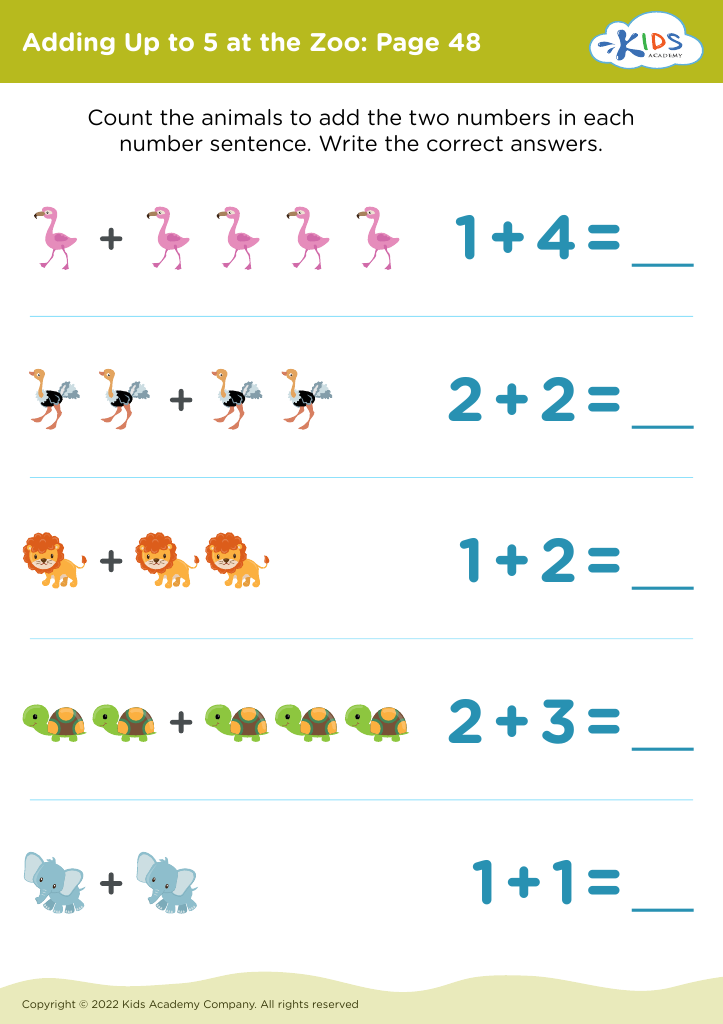
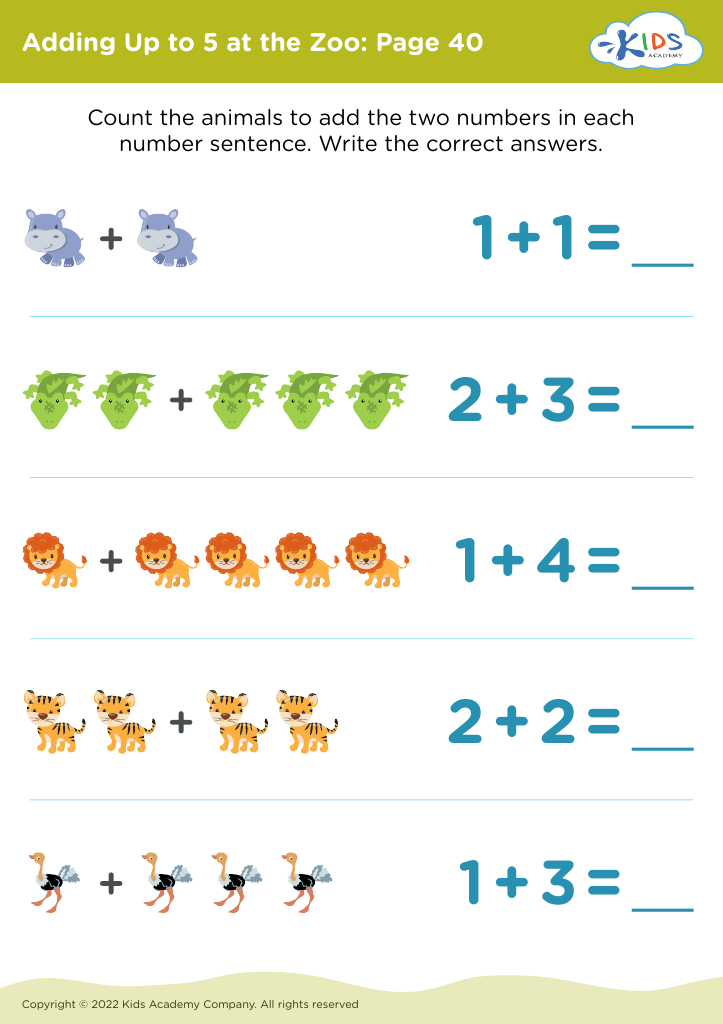
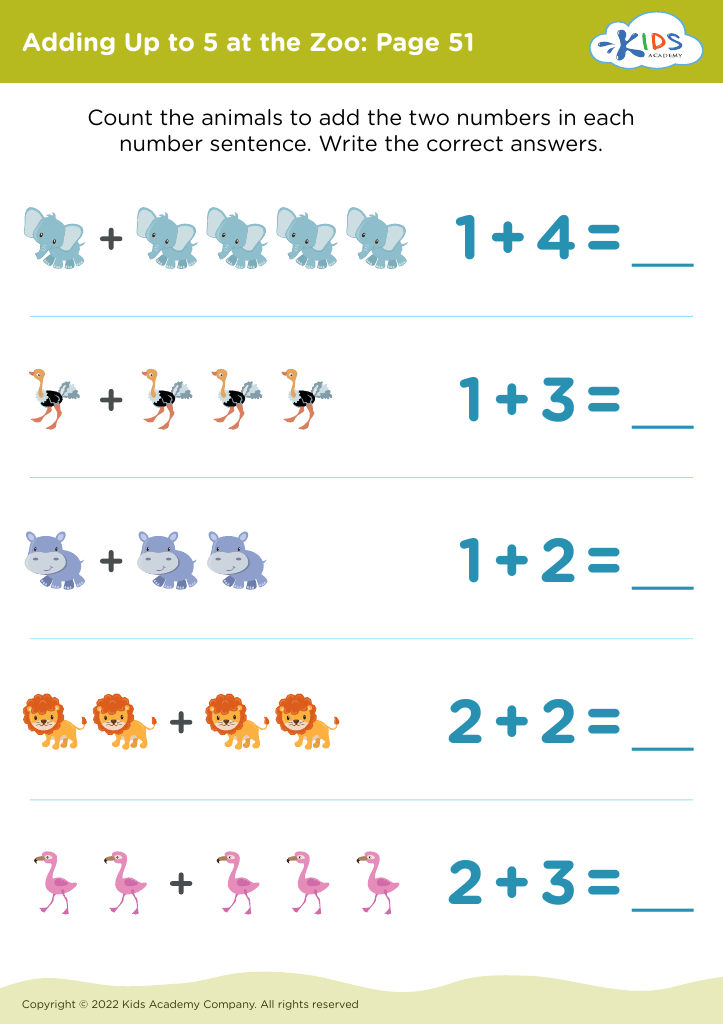



Addition Practice Adding at the Zoo is a valuable educational activity for children aged 4-7. During this formative stage of development, young learners are naturally curious and ready to explore mathematical concepts, making addition practice both engaging and crucial.
This activity utilizes a familiar and exciting setting—the zoo—to capture children's interest. By incorporating animals and vibrant visuals, it creates an enjoyable learning experience that sustains their focus and encourages participation. This playful approach makes math feel less intimidating and more like a game, easing anxiety around subjects that some children may find challenging.
Moreover, mastering basic addition skills at an early age lays a solid foundation for future mathematical learning. It promotes critical thinking, problem-solving skills, and number sense, which are essential for success in more advanced math topics. Practicing addition also enhances cognitive development, helping children develop concentration, memory, and logic.
For parents and teachers, engaging children in addition practice through activities like Adding at the Zoo fosters a love for learning and strengthens the home-school connection. It addresses multiple developmental areas, fostering not just mathematical abilities but also social, emotional, and communication skills through interaction and collaborative play. Thus, investing time in these activities is beneficial for comprehensive child development.