Animal recognition Adding at the Zoo Worksheets for Ages 4-7 - Page 2
43 filtered results
-
From - To
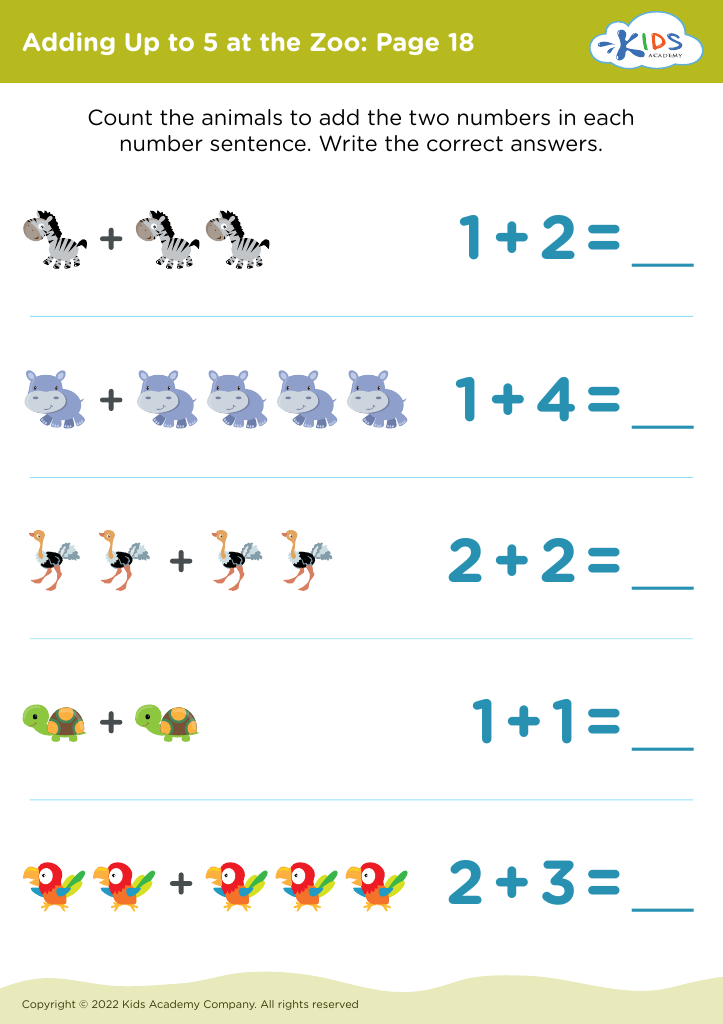
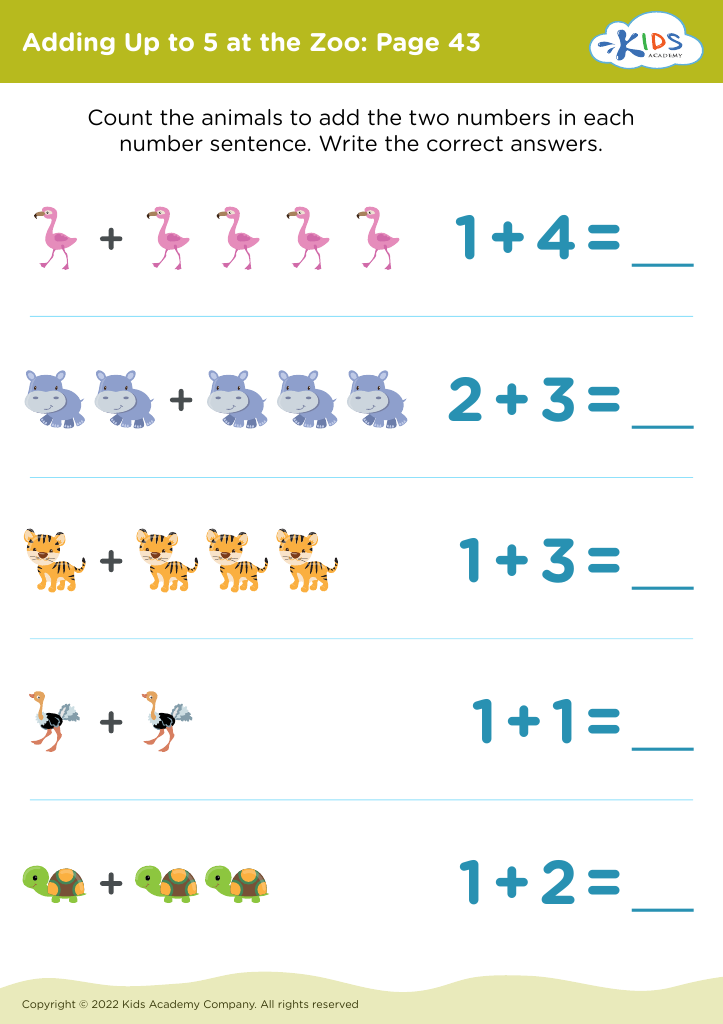
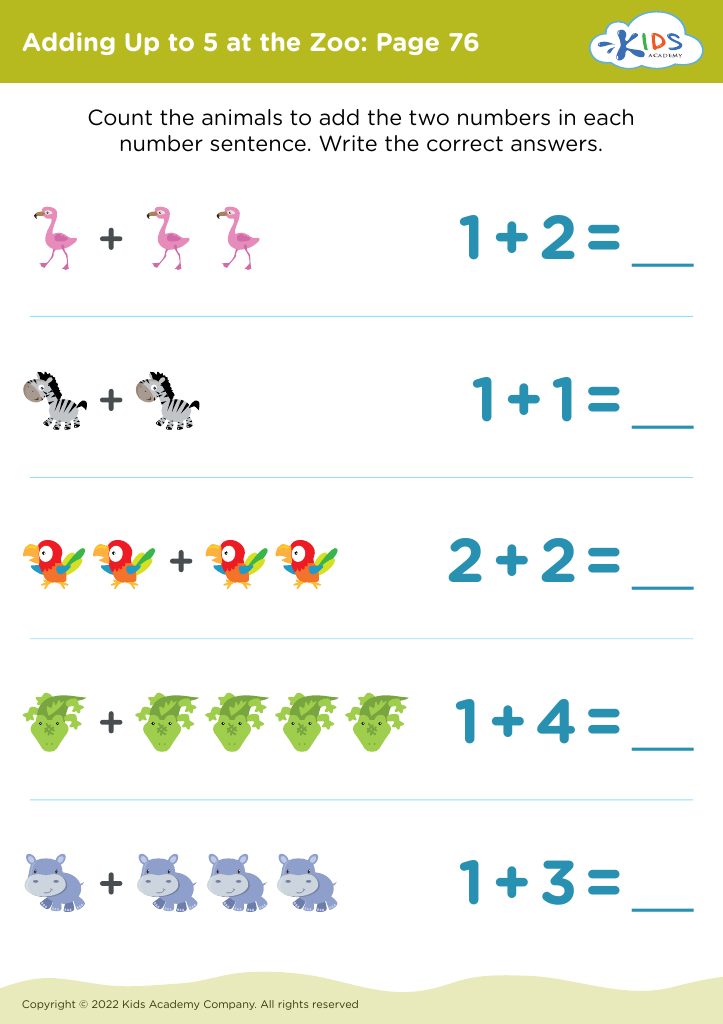
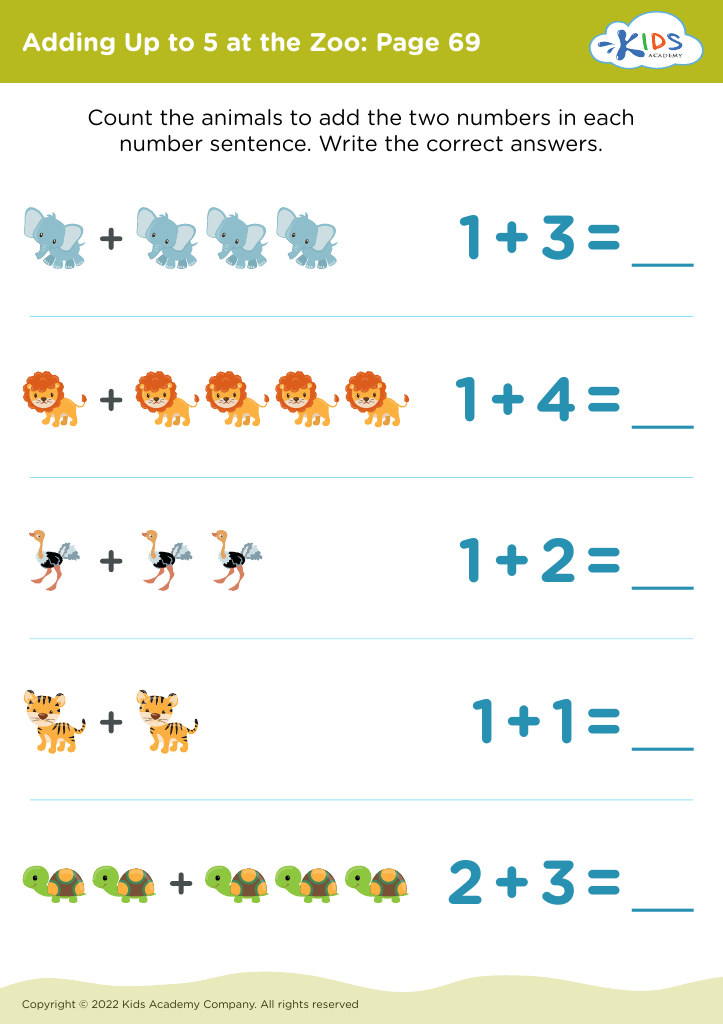
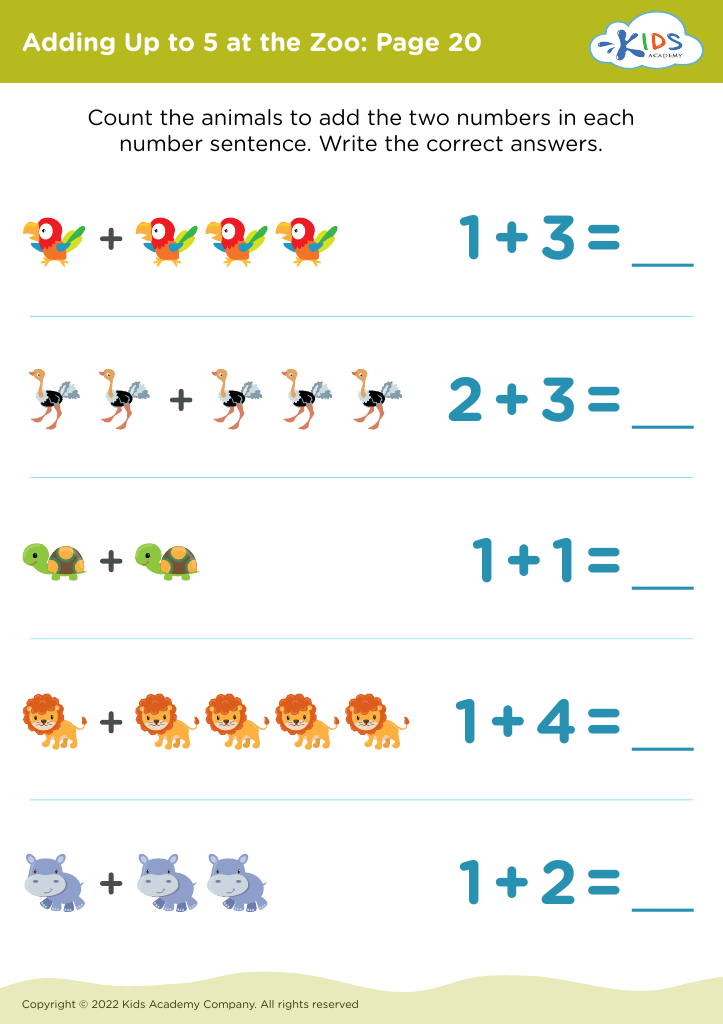
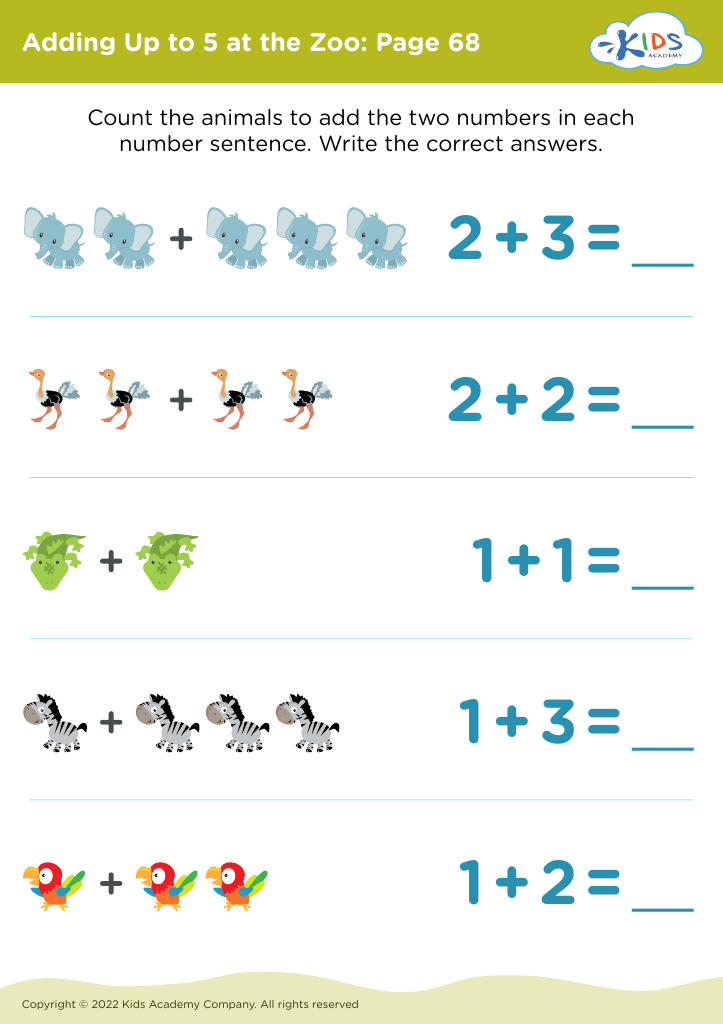
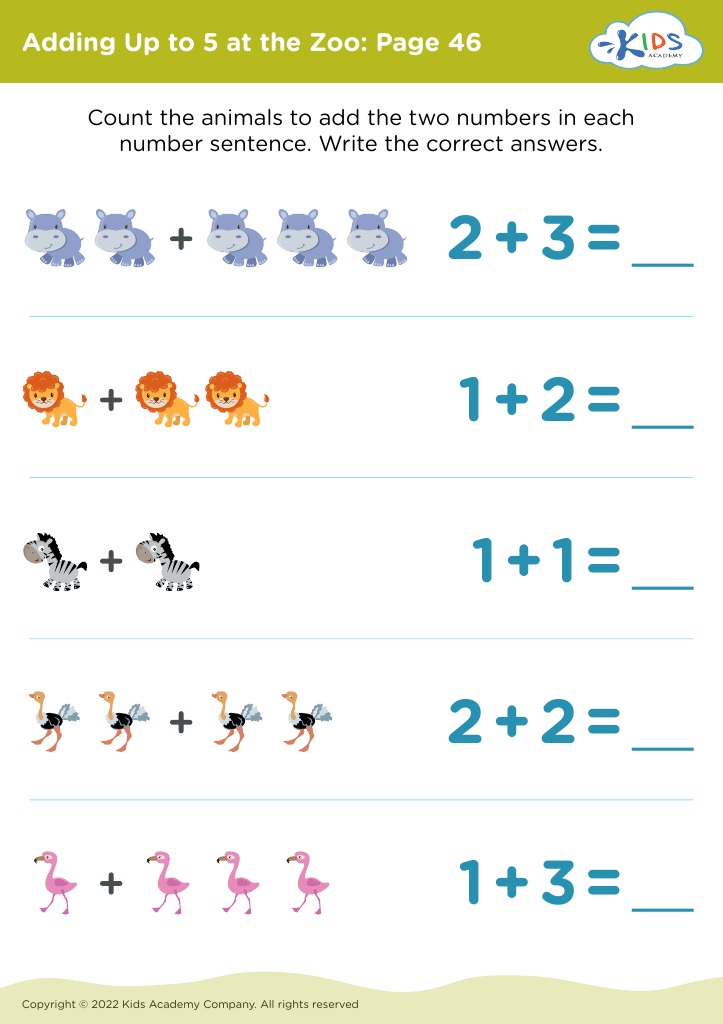
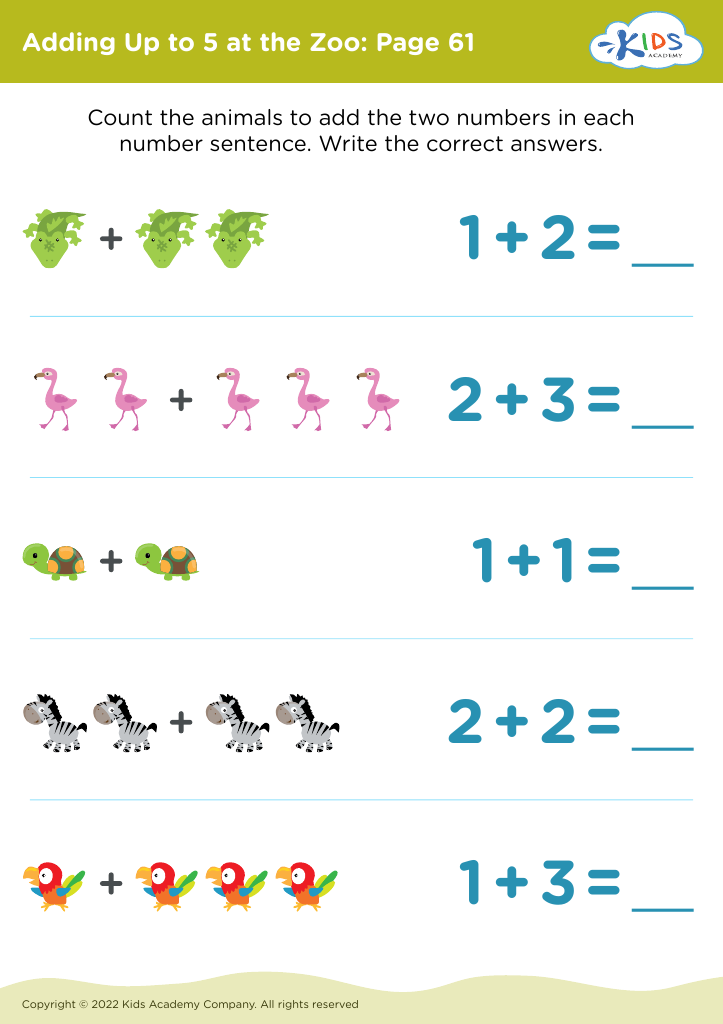
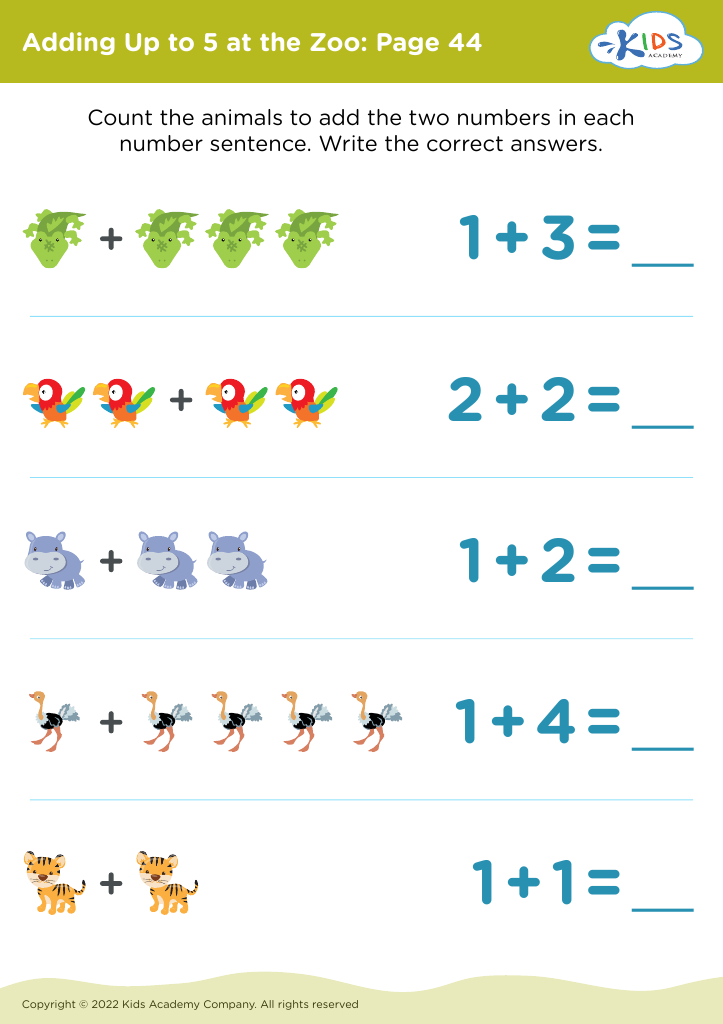
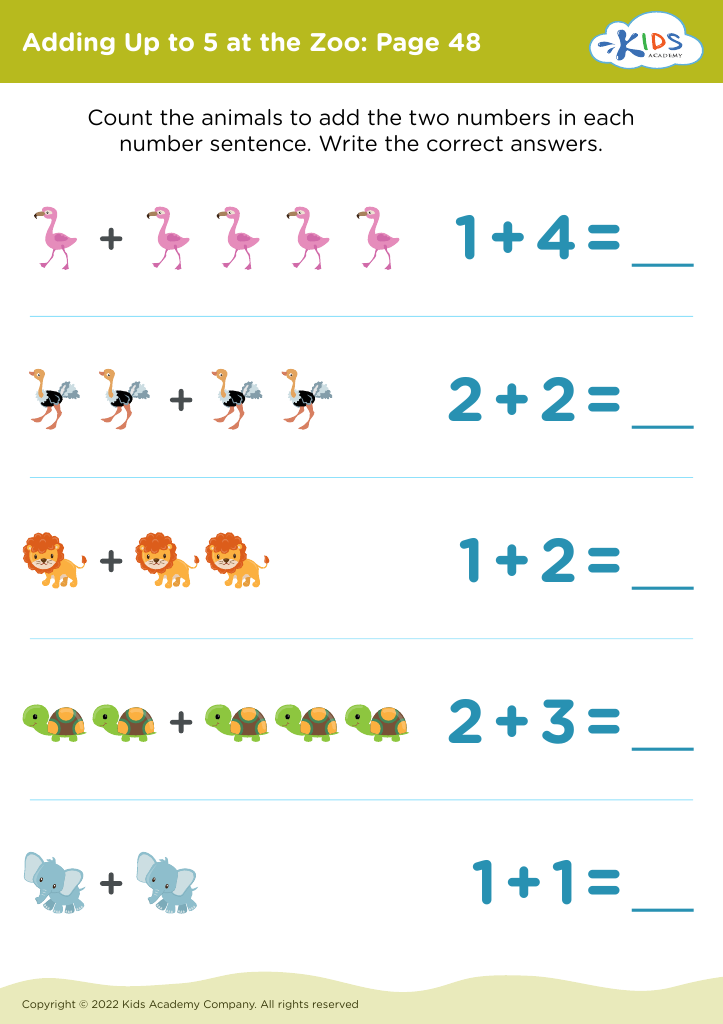
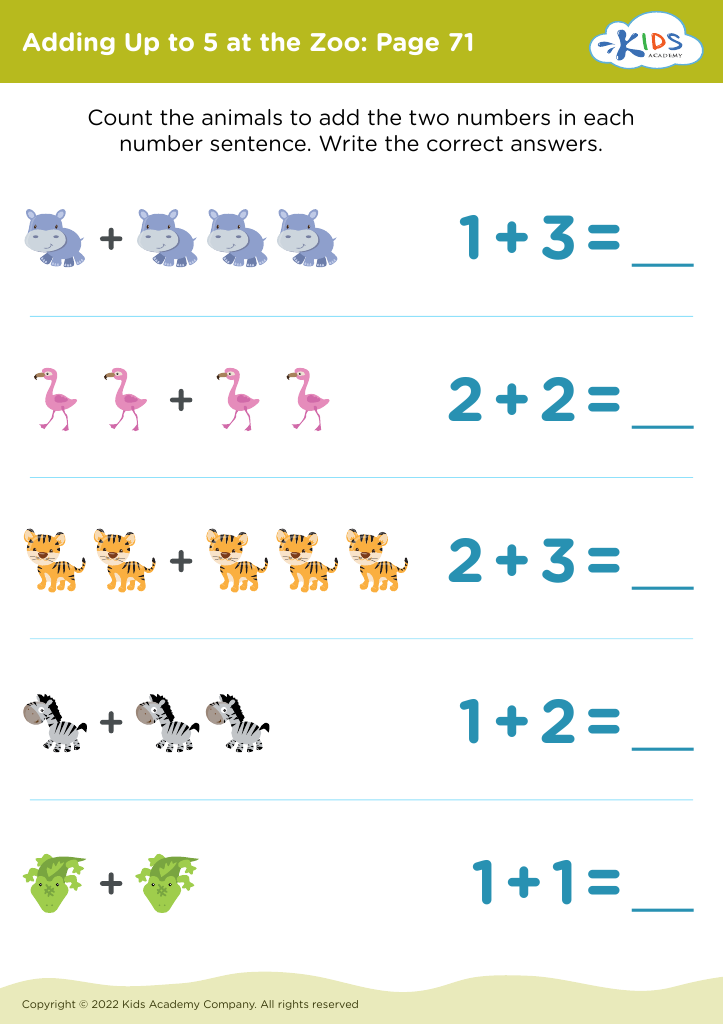
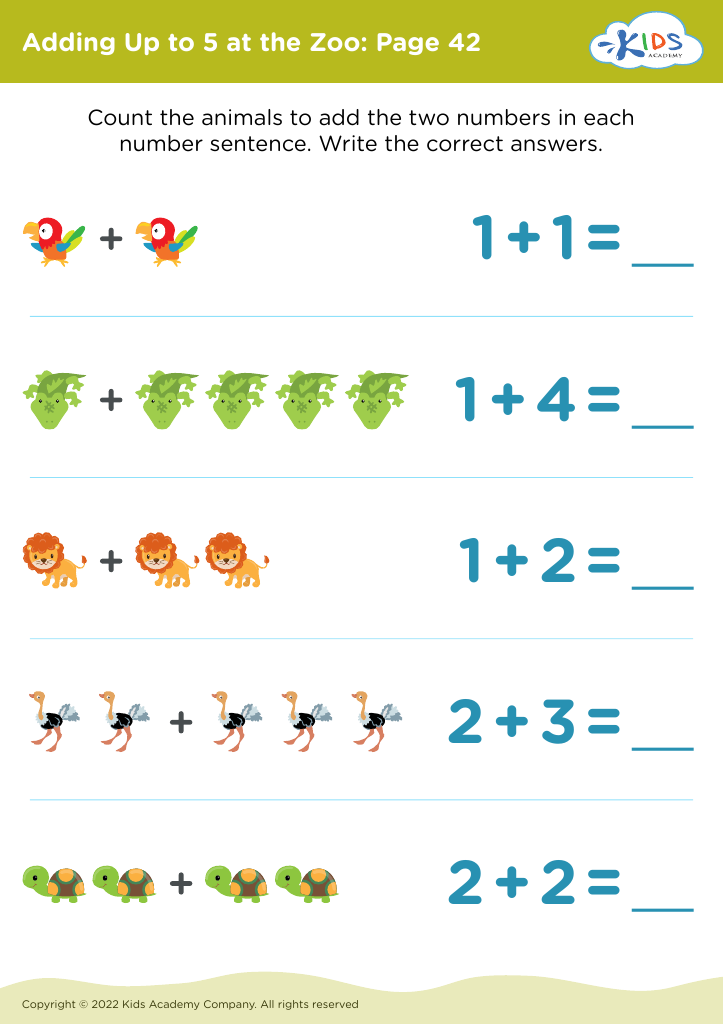
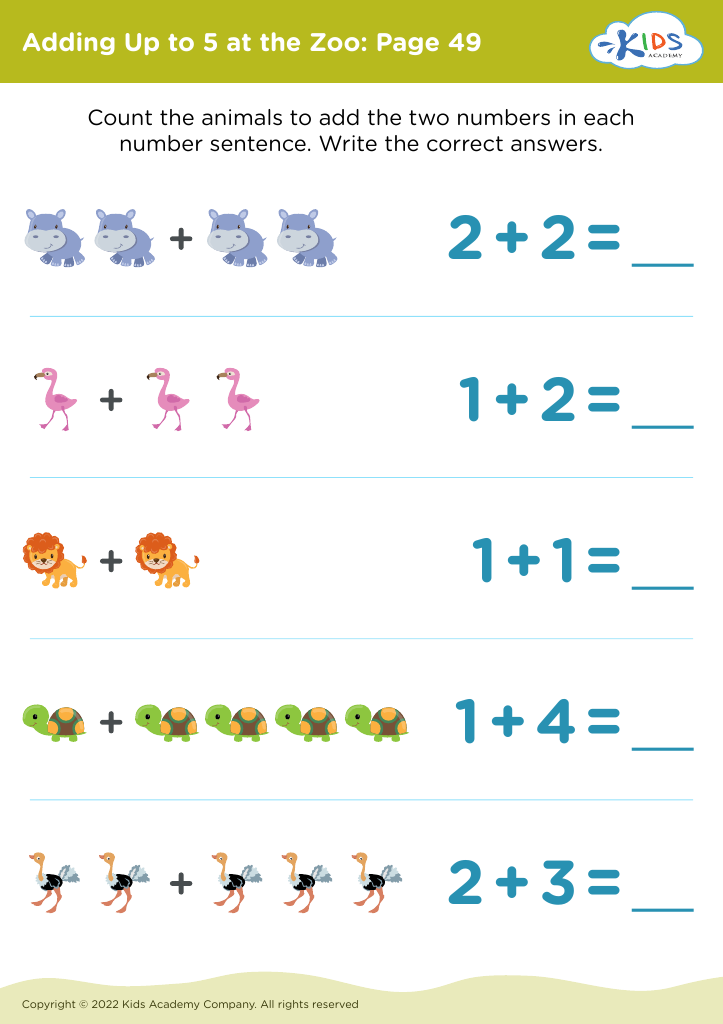
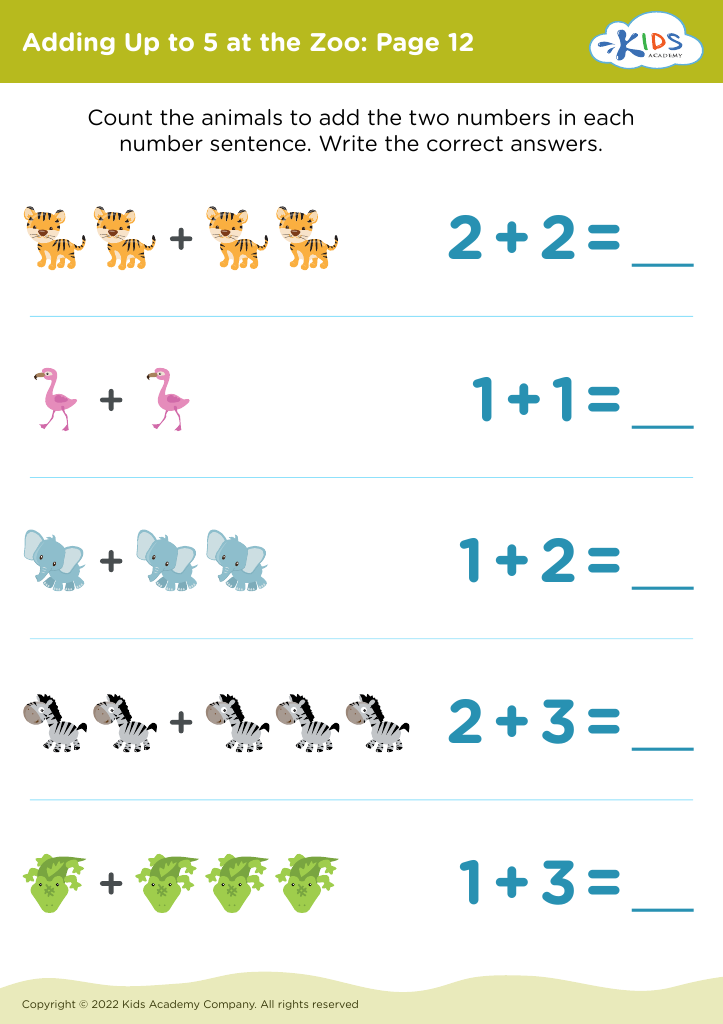
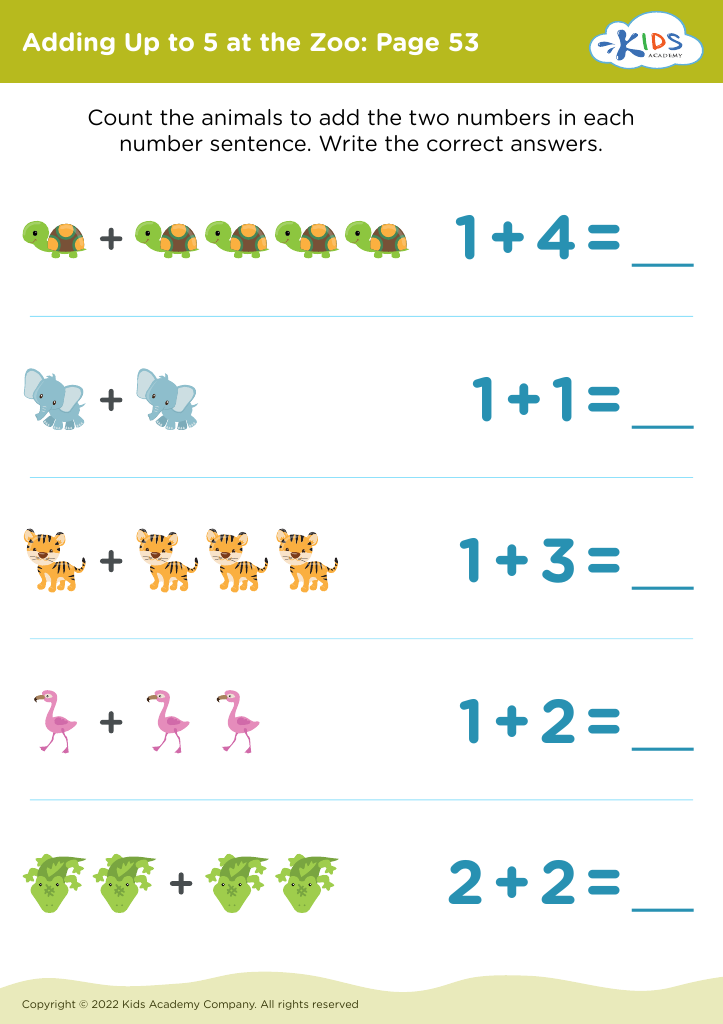
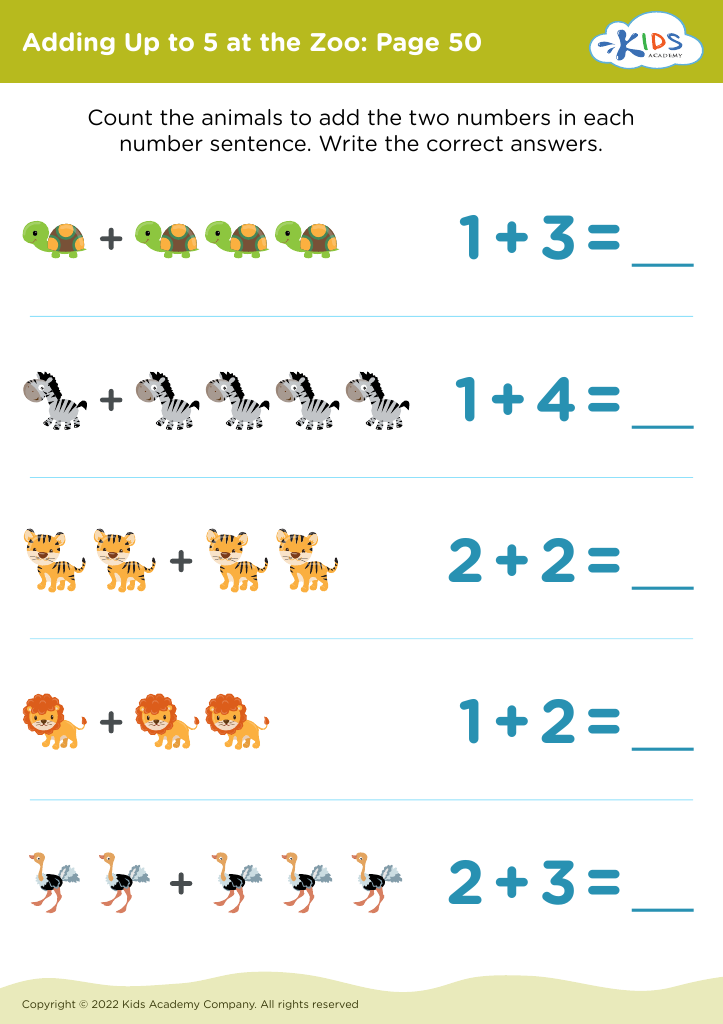
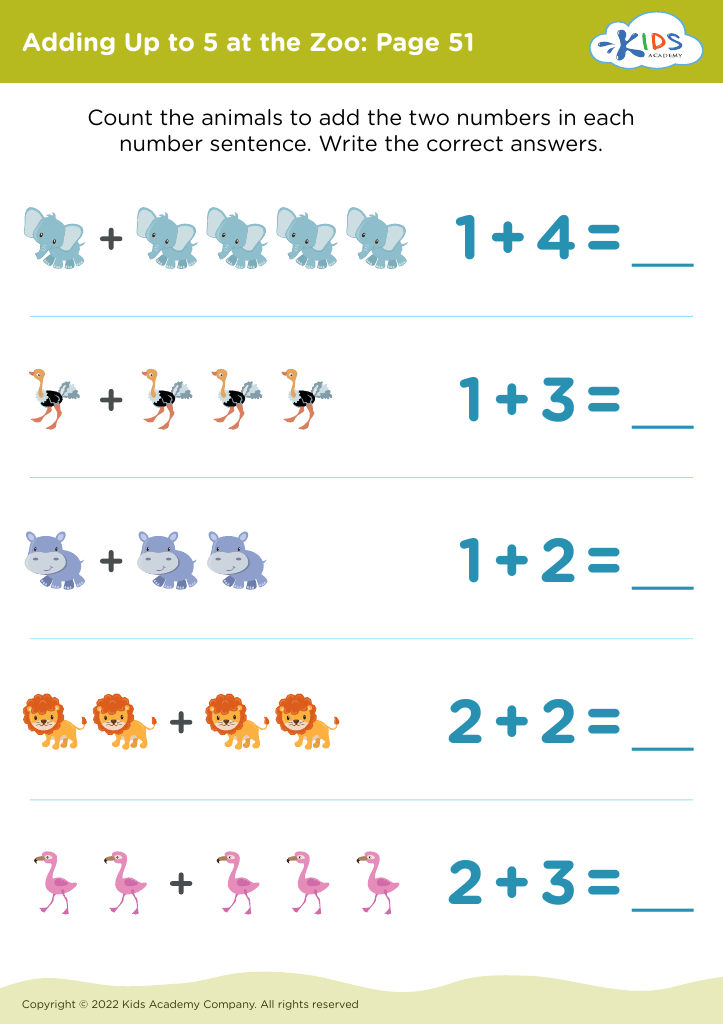
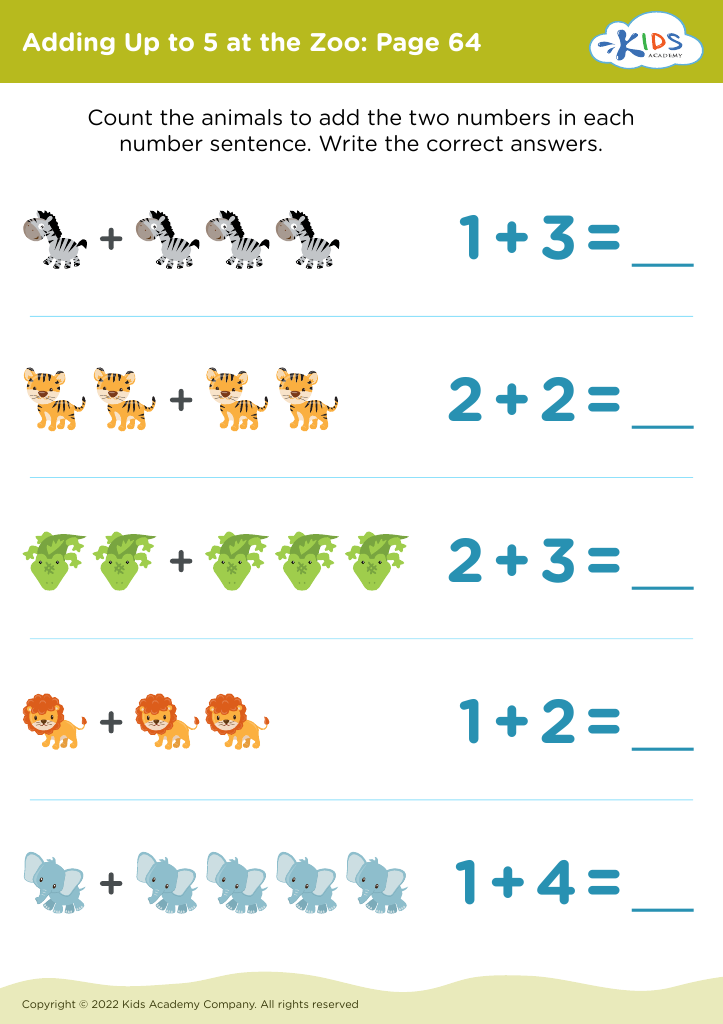
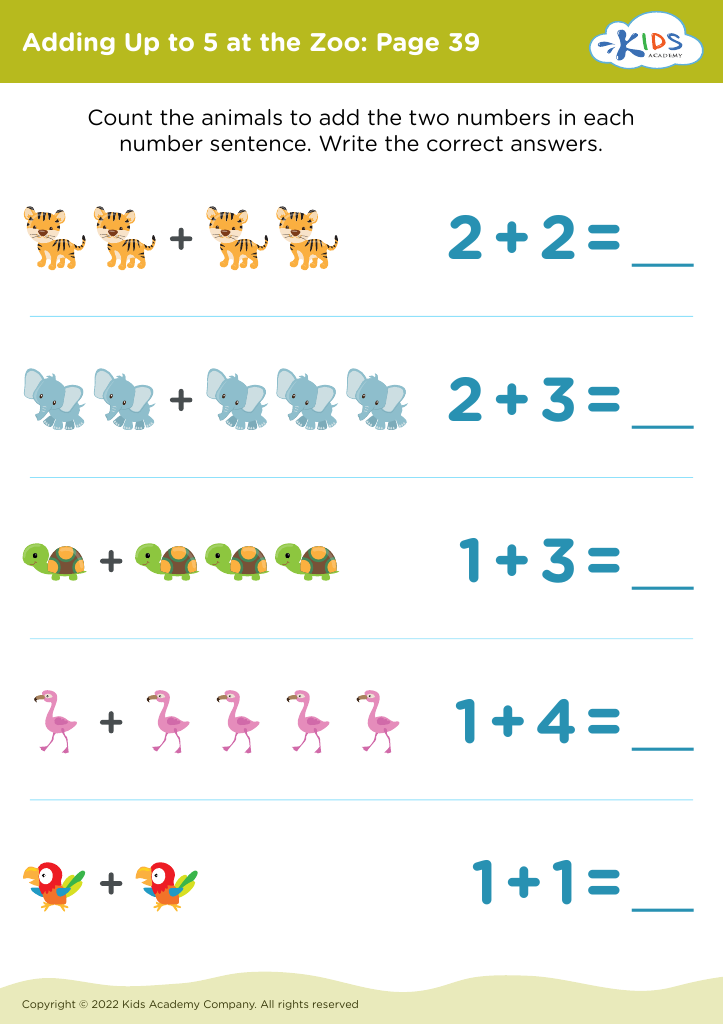



Parents and teachers should care about animal recognition activities at the zoo for young children because they offer numerous educational and developmental benefits. First, recognizing and learning about animals in a real-world setting enhances children's cognitive skills. Engaging with different animals encourages observation, critical thinking, and memory as they distinguish various species and recall information about them.
Additionally, these activities foster early language development. Learning animal names, their behaviors, and habitats enriches a child's vocabulary and communication skills. This kind of hands-on learning is much more impactful than just reading about animals, as it involves multi-sensory engagement.
Furthermore, animal recognition activities at the zoo cultivate emotional and social skills. They promote patience, empathy, and responsibility as children observe and learn about caring for animals. Opportunities for group activities can improve teamwork and cooperative behaviors among peers.
Lastly, such activities spark a lifelong interest in science and nature. They help plant the seeds of curiosity about the natural world, encouraging children to ask questions and explore further. By making learning fun and interactive, zoos play a pivotal role in children's overall development and help them appreciate the diversity of life.
In summary, animal recognition at the zoo merges educational value with emotional and social growth, setting a strong foundation for well-rounded development in young children.