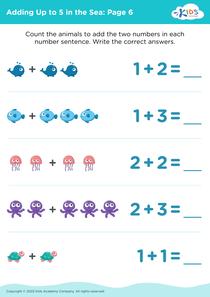
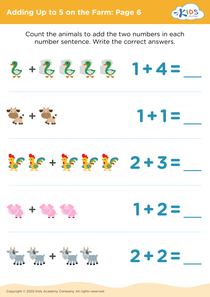
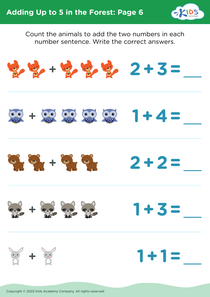
Basic addition practice Adding at the Zoo Worksheets for Ages 4-7
3 filtered results
-
From - To
Discover the fun and engaging world of math with our "Basic Addition Practice: Adding at the Zoo" worksheets, designed for children ages 4-7! These printable worksheets feature adorable zoo animals to help young learners develop their addition skills in an enjoyable setting. Each page offers age-appropriate problems that encourage problem-solving and strategic thinking. Perfect for classroom activities or at-home practice, these colorful sheets make learning addition exciting and interactive. Enhance your child's math confidence and foundational skills with our expertly crafted worksheets, tailored for early learners. Join us on a math adventure at the zoo today!
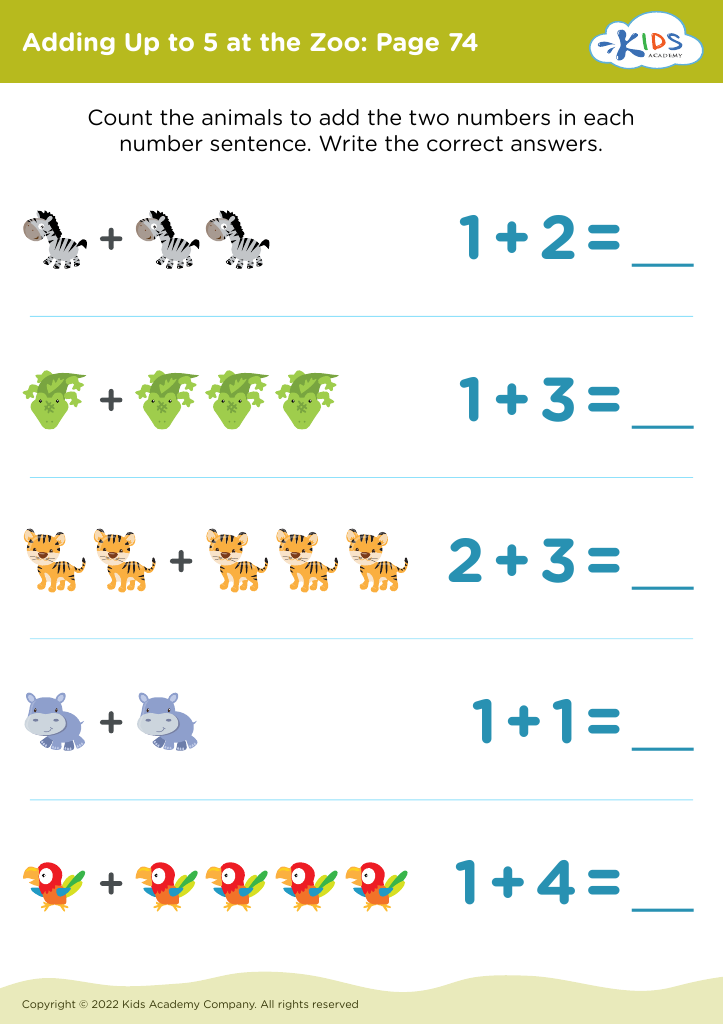
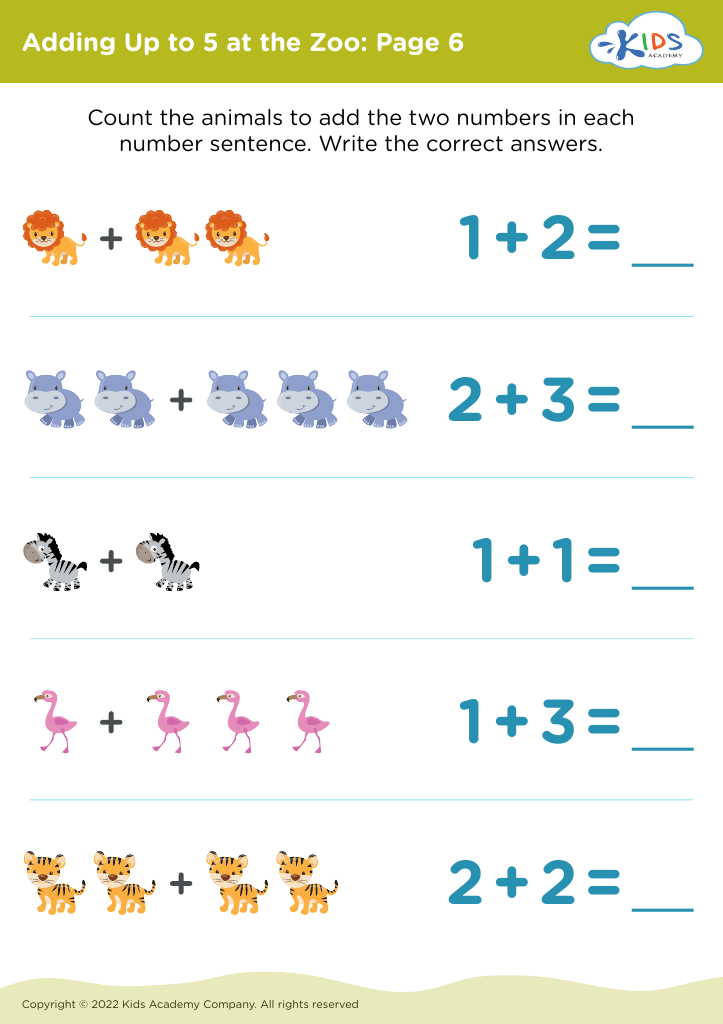
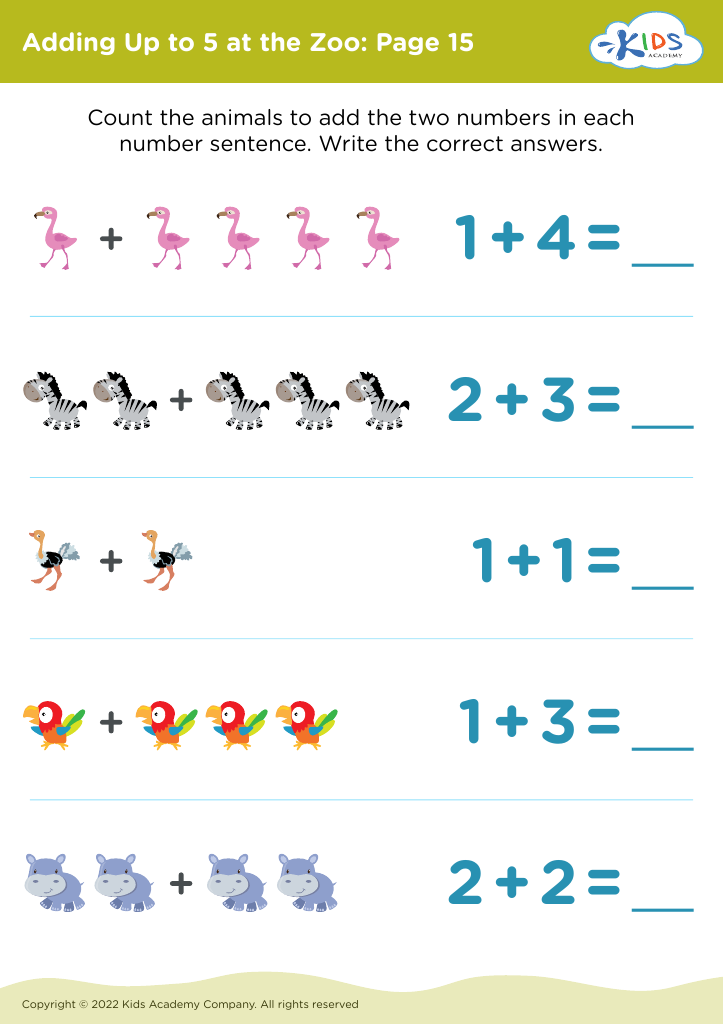



Parents and teachers should value basic addition practice with activities like "Adding at the Zoo" for children ages 4-7 because foundational math skills are critical for future academic success. Engaging young learners with fun, zoo-themed math exercises combines education with entertainment, helping maintain their interest and enthusiasm. At this developmental stage, children are establishing cognitive skills such as counting, number recognition, and basic problem-solving.
"Adding at the Zoo" captures their imagination by integrating animals and familiar zoo experiences, making abstract concepts more concrete. This thematic approach aids in better retention and understanding, as children can relate math problems to real-life contexts. Furthermore, early success in math can boost a child's confidence and affinity towards the subject, fostering a positive attitude that benefits their lifetime learning trajectory.
Teachers can leverage this activity to observe individual progress and provide personalized support, while parents can use it to reinforce classroom learning in a familiar and enjoyable setting at home. Both also gain insights into a child's preferred learning methods. In essence, foundational math activities not only build essential skills but also establish a positive educational experience for young learners, setting the stage for lifelong academic achievement.