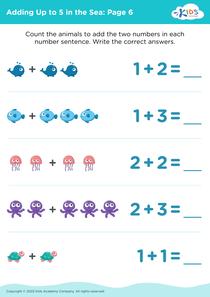
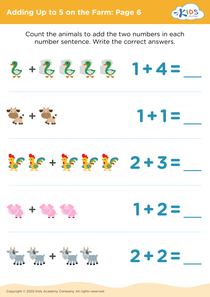
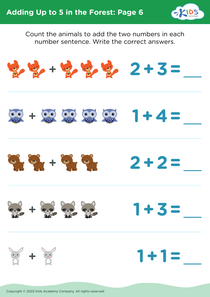
Basic arithmetic practice Adding at the Zoo Worksheets for Ages 4-7
4 filtered results
-
From - To
Explore our engaging "Adding at the Zoo" worksheets designed specifically for ages 4-7! These interactive resources make learning basic arithmetic fun and relatable as children practice addition through adorable zoo-themed activities. Your little ones will count and add colorful animals, fostering both their math skills and love for nature. Each worksheet features vibrant illustrations and manageable problems, ensuring a delightful learning experience. Ideal for preschool and early elementary students, these worksheets encourage early math proficiency in a playful context. Download and print these enticing addition activities today to enhance your child’s educational journey while they explore the wonders of the zoo!
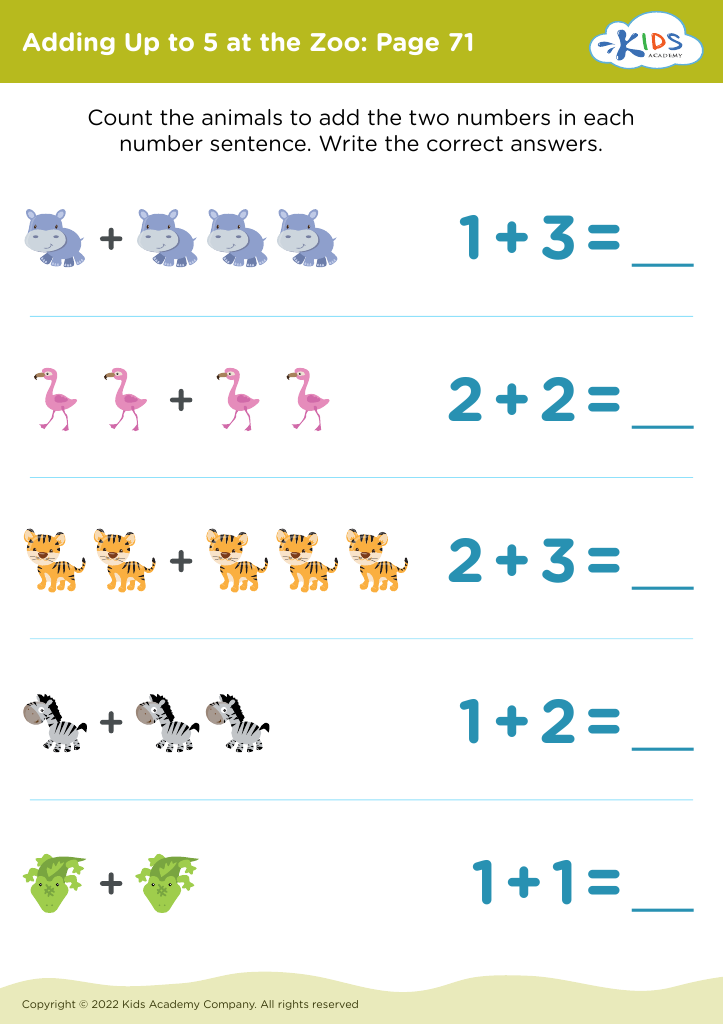
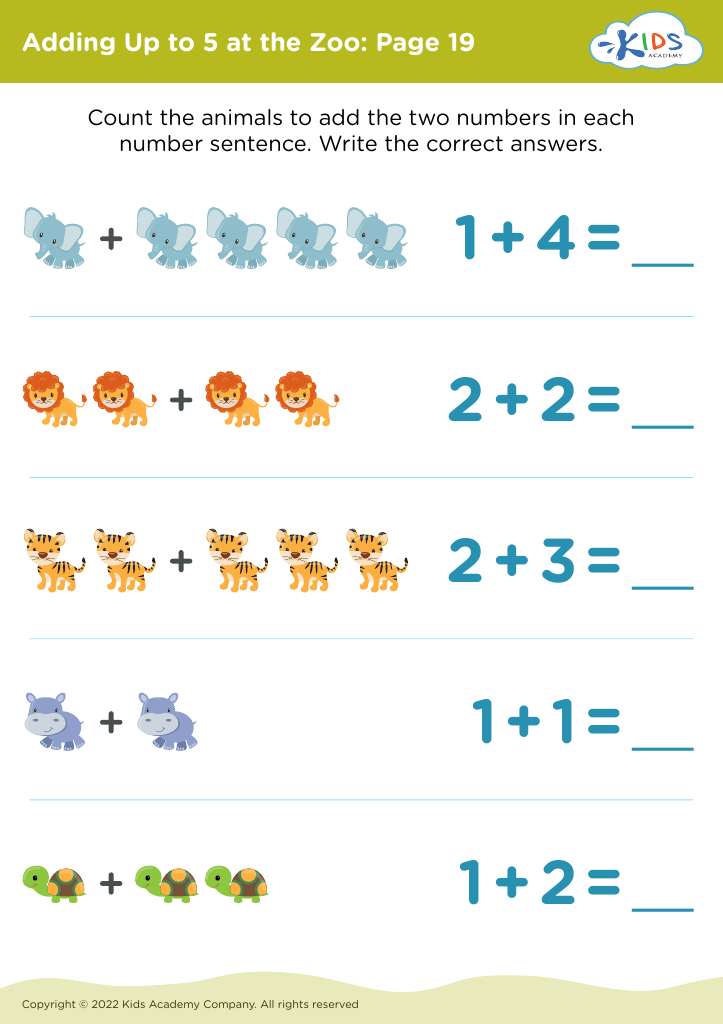
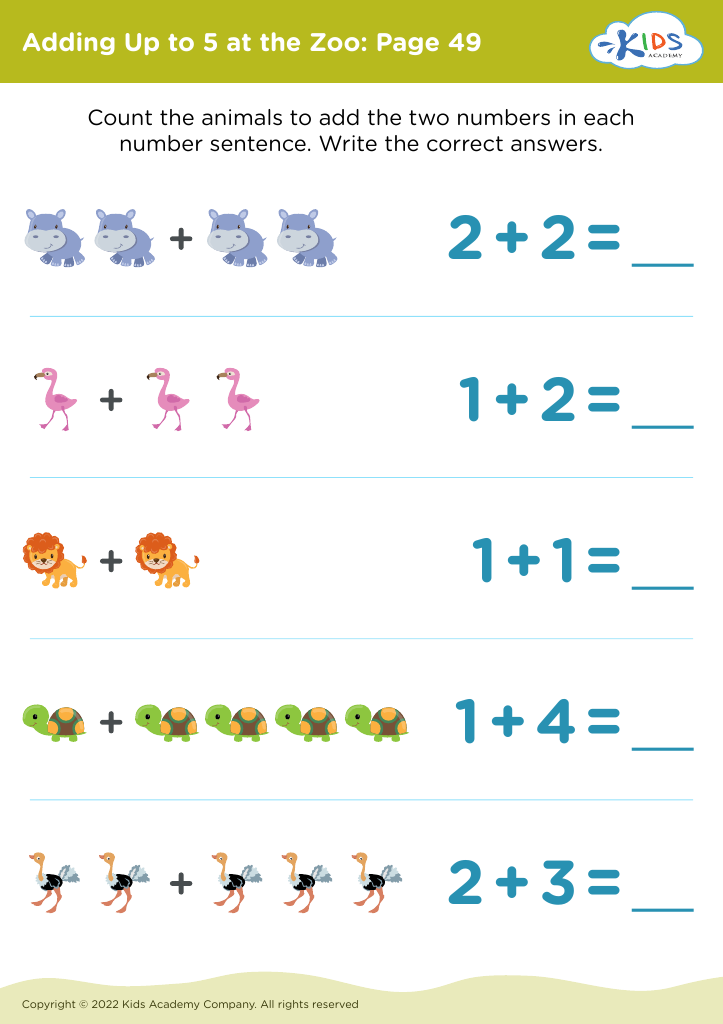
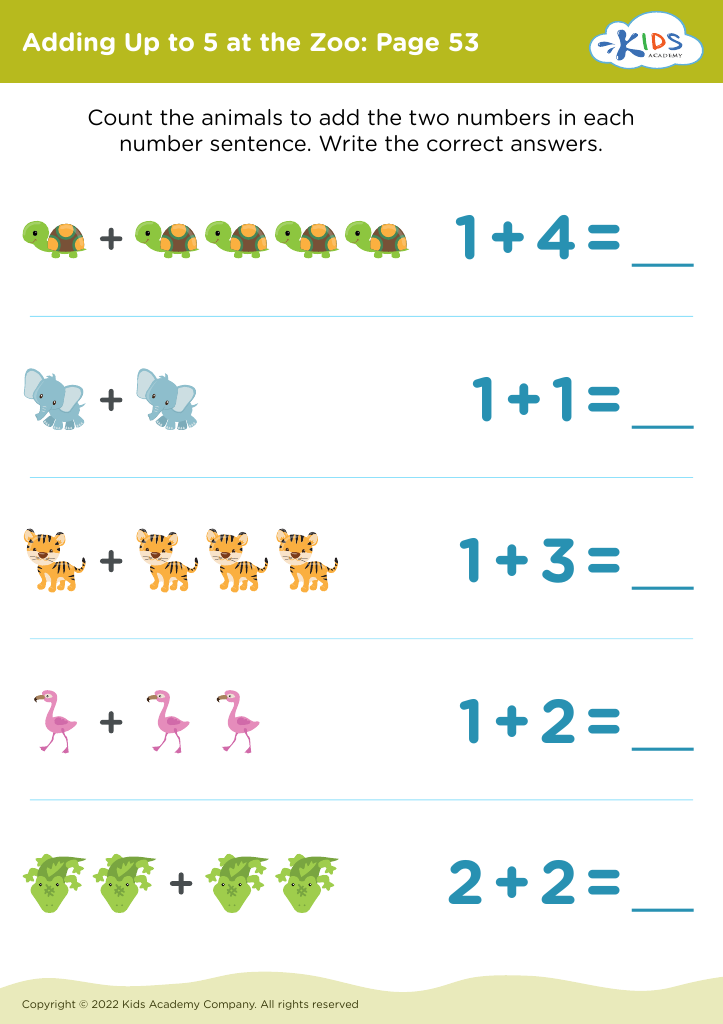



Basic arithmetic practice, such as "Adding at the Zoo," is essential for children ages 4-7 for several reasons. Firstly, it provides a fun, engaging context for learning math, allowing children to connect arithmetic concepts with real-world experiences. Visiting a zoo, even in a game, allows young learners to explore addition in a captivating environment, making abstract numbers relatable.
Additionally, this age is critical for building foundational math skills, as children develop cognitive abilities that will support future learning. Regular practice with basic addition helps solidify these skills, promoting confidence and competency. By incorporating interactive activities, like adding up animals at the zoo, children can also develop problem-solving skills and critical thinking.
Moreover, "Adding at the Zoo" encourages fine motor skills and hand-eye coordination through engaging activities, like counting animals or playing educational games. This combination benefits cognitive development and stimulates curiosity and enthusiasm for learning.
When parents and teachers prioritize such exercises, they nurture a love for math and create positive associations, essential for lifelong learning. In essence, basic arithmetic practice fosters not just mathematical abilities but also holistic development, laying the groundwork for future educational success.