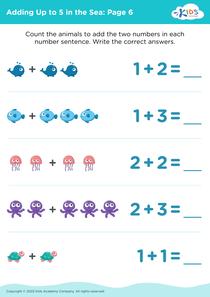
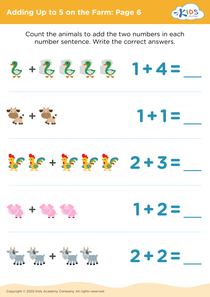
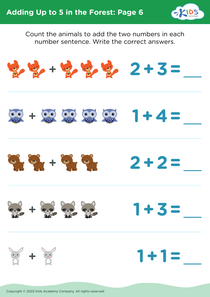
Counting skills Adding at the Zoo Worksheets for Ages 4-7 - Page 2
27 filtered results
-
From - To
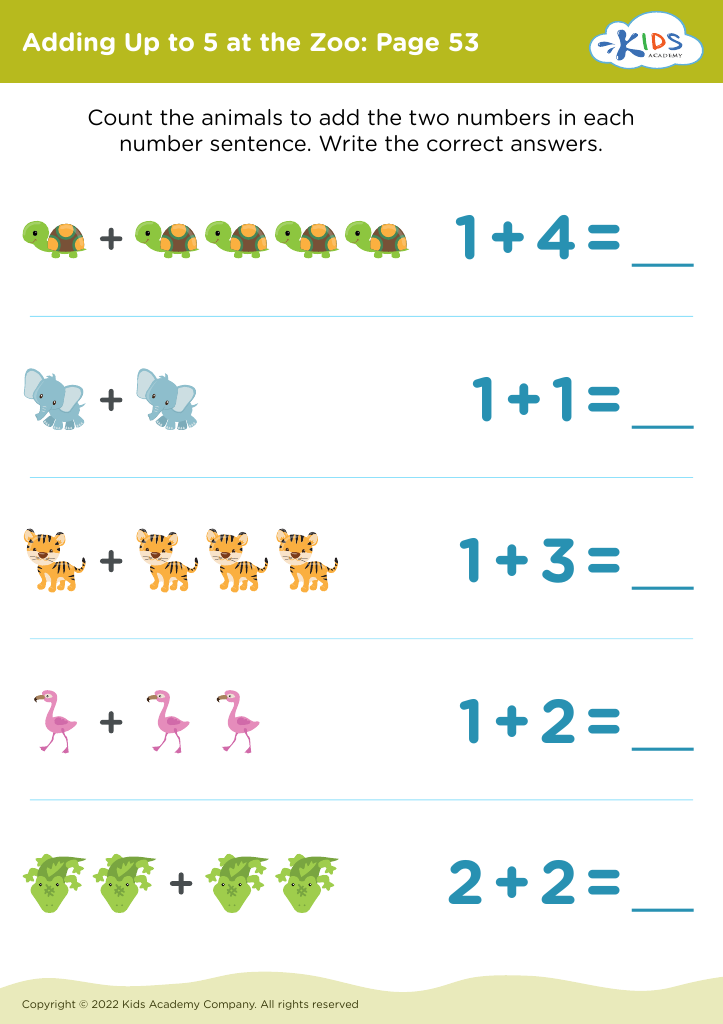
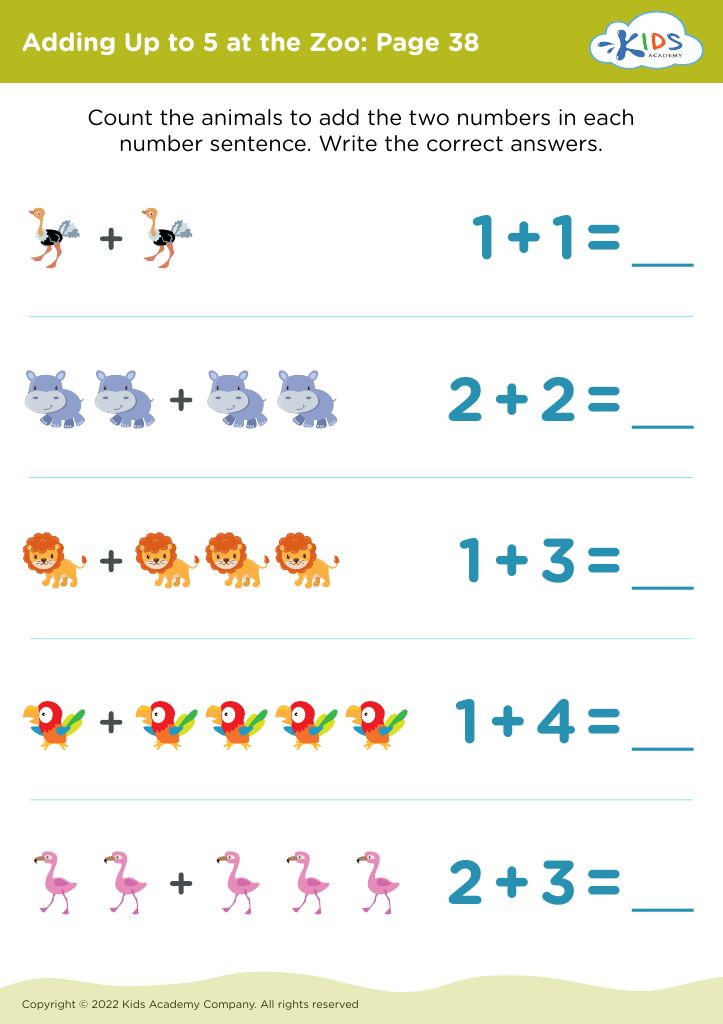
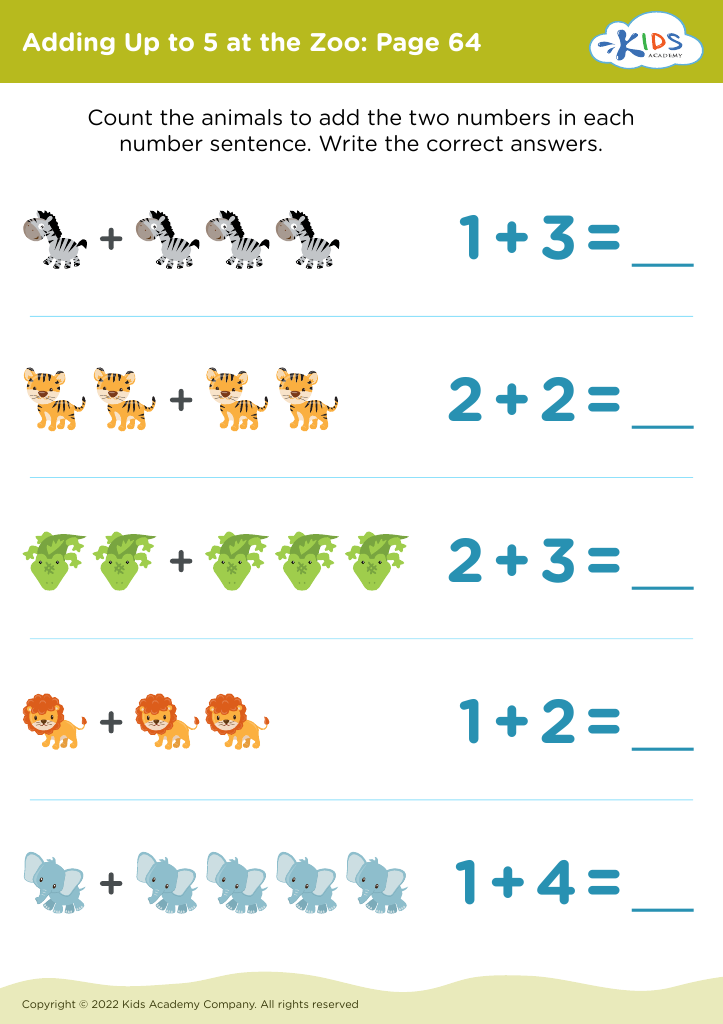



Counting skills are foundational to developing a strong mathematical understanding, making it crucial for parents and teachers to emphasize activities like "Counting Skills Adding at the Zoo" for children ages 4-7. At this pivotal age, children are highly receptive to learning basic numerical concepts, and engaging in interactive, themed activities helps to reinforce these concepts in an enjoyable way.
"Counting Skills Adding at the Zoo" creatively merges learning with fun by using animals and their environments as the context for counting and simple addition. This approach ties mathematical concepts to familiar and interesting subjects, which enhances children's engagement and retention. Counting objects like lions, monkeys, or parading elephants helps children practice basic addition and reinforces their understanding of quantity and number relationships.
Additionally, these activities aid in developing fine motor skills, focus, and problem-solving abilities essential for later academic success. With parental and teacher involvement, children receive supportive feedback that builds confidence and encourages a positive attitude toward mathematics.
In conclusion, "Counting Skills Adding at the Zoo" is not merely a fun activity; it is a targeted educational tool that lays the groundwork for future mathematical learning. By prioritizing such activities, parents and teachers ensure children gain the essential skills needed to excel in more complex mathematical concepts, fostering both academic and personal growth.