Problem Solving Adding at the Zoo Worksheets for Ages 4-7
3 filtered results
-
From - To
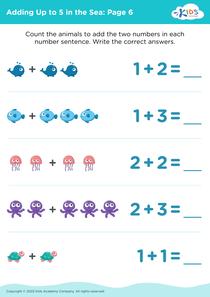
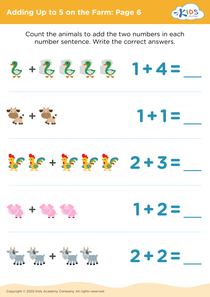
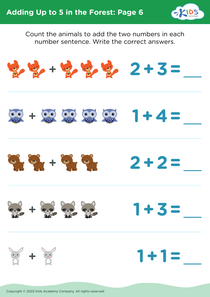
Unlock your child's potential with our "Problem Solving Adding at the Zoo Worksheets for Ages 4-7"! These engaging worksheets blend fun zoo-themed activities with essential math skills. Designed for young learners, each page encourages critical thinking and problem-solving through interactive addition problems featuring delightful animals. Ideal for preschool to early elementary students, these worksheets foster curiosity, enhance numerical skills, and boost confidence in math. Perfect for home or classroom use, they provide a captivating educational experience that turns learning into an exciting adventure. Download now to make addition fun and ensure your child's bright academic future!
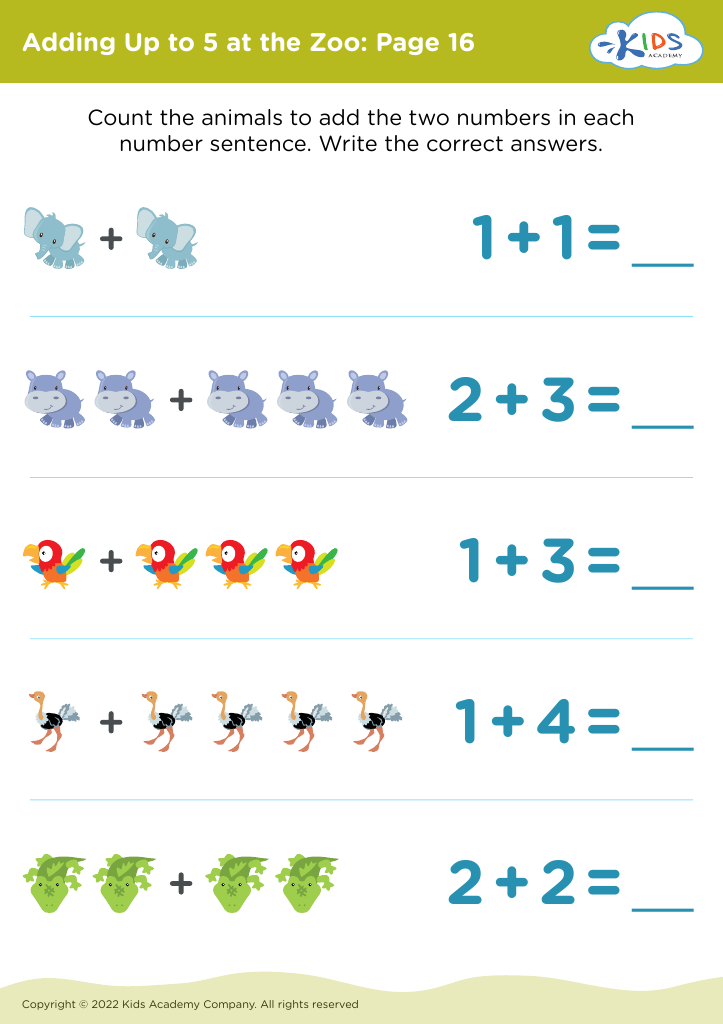
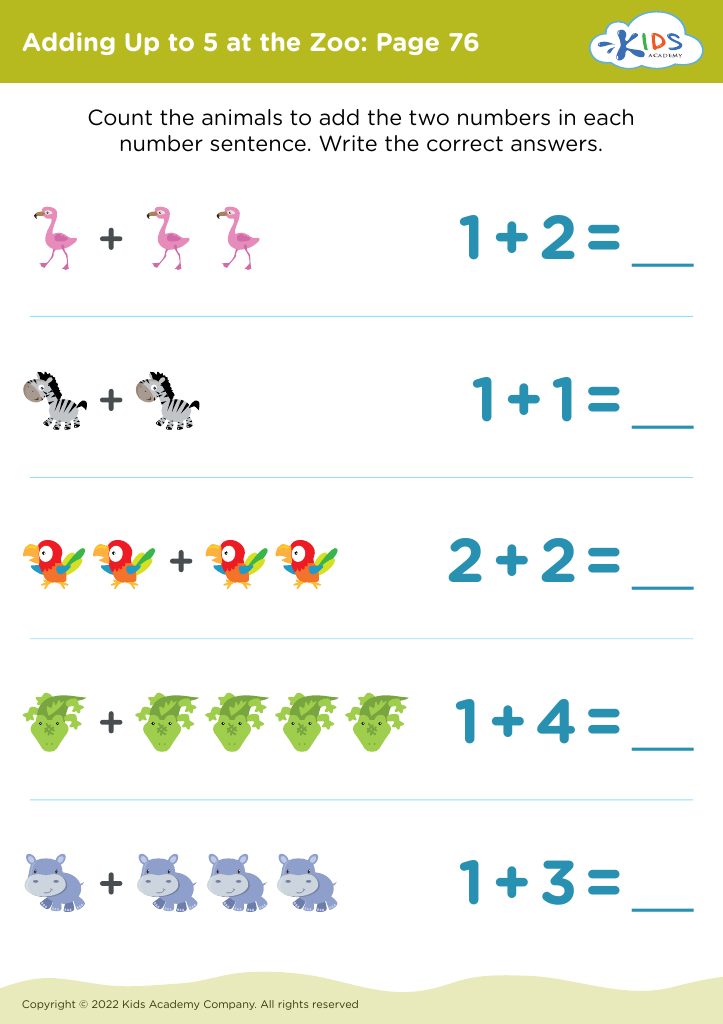
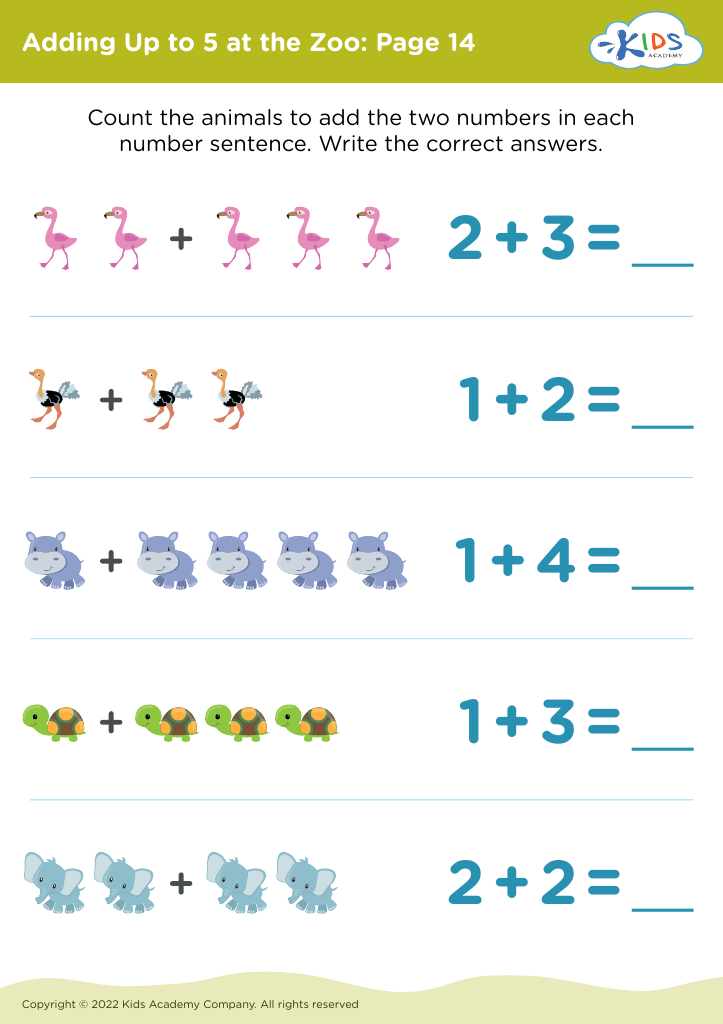



Parents and teachers should place significant value on "Problem Solving Adding at the Zoo" for children ages 4-7 because it serves as a foundational stepping-stone in cognitive development and mathematical fluency. Firstly, activities that blend engaging themes, such as animals in a zoo, with problem-solving and addition stimulate both intrinsic motivation and curiosity, allowing children to learn in a fun and meaningful way. Such contexts help to mirror real-life scenarios, fostering observational skills and critical thinking.
Furthermore, early exposure to mathematical problems promotes numeracy, which is an essential life skill. Young learners develop the ability to perform basic calculations with confidence, improving their overall academic readiness. This specific age range (4-7) is crucial because children's brains are highly receptive, making it a prime period for instilling the habits of logical reasoning and perseverance through challenges.
In addition to cognitive benefits, these activities foster social and emotional development. By working on problems individually or in groups, children practice patience, teamwork, and communication. When parents and teachers prioritize problem-solving and addition, they help create a holistic educational environment that readies children not only for subsequent stages of education but for daily life interactions and future problem-solving situations.