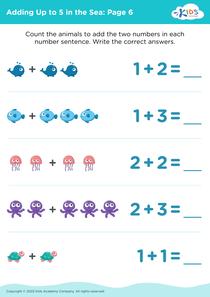
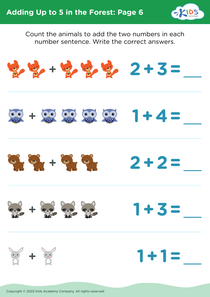
Problem-Solving Skills Adding at the Zoo Worksheets for Ages 4-7
4 filtered results
-
From - To
Unlock your child’s potential with our "Problem-Solving Skills Adding at the Zoo Worksheets" designed for ages 4-7! These engaging worksheets combine the excitement of a trip to the zoo with essential math skills, helping young learners master addition through fun, interactive challenges. Each worksheet encourages critical thinking and problem-solving as kids encounter relatable scenarios involving animals and their habitats. With vibrant illustrations and age-appropriate content, children will develop their mathematical reasoning while fostering a love for learning. Perfect for classroom use or home practice, these worksheets provide a seamless blend of education and entertainment, ensuring your child stays motivated and eager to learn!
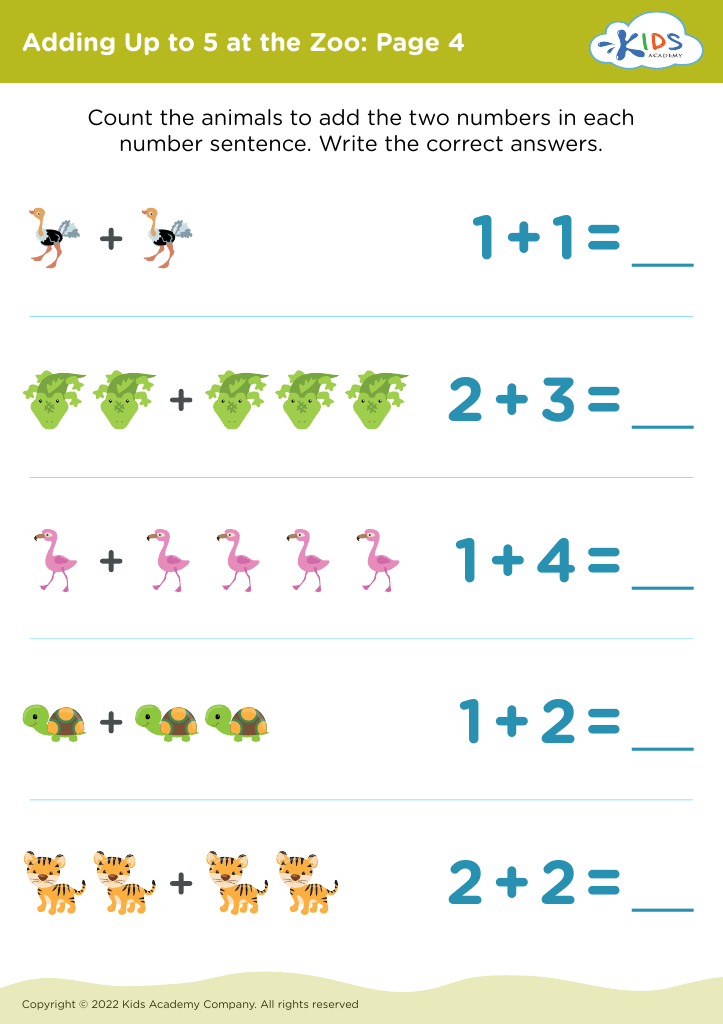
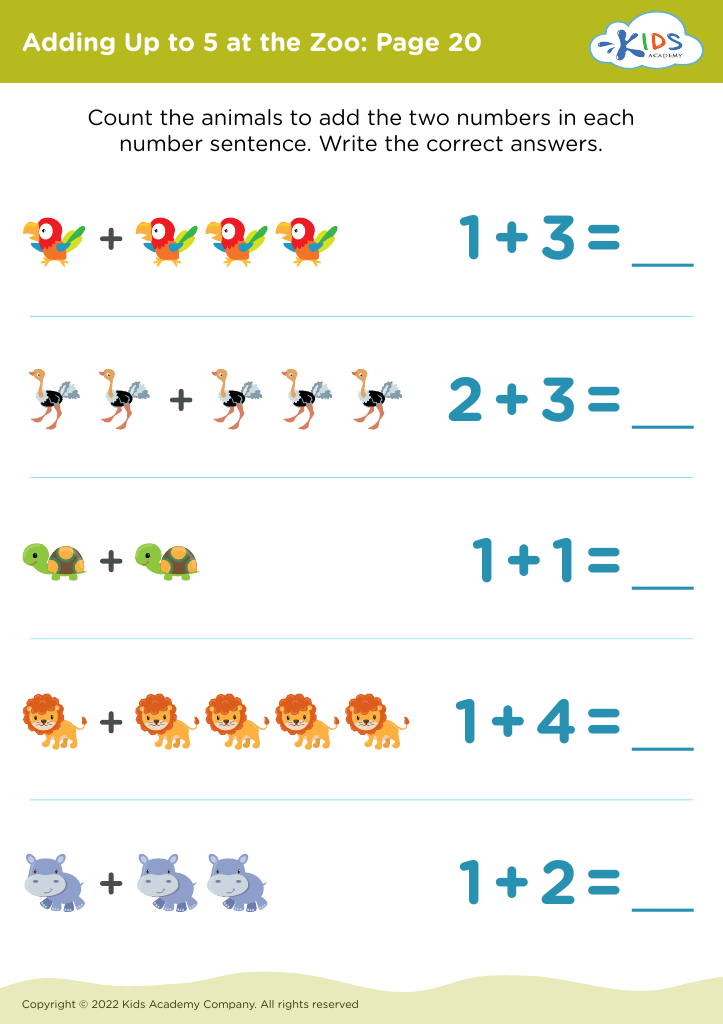
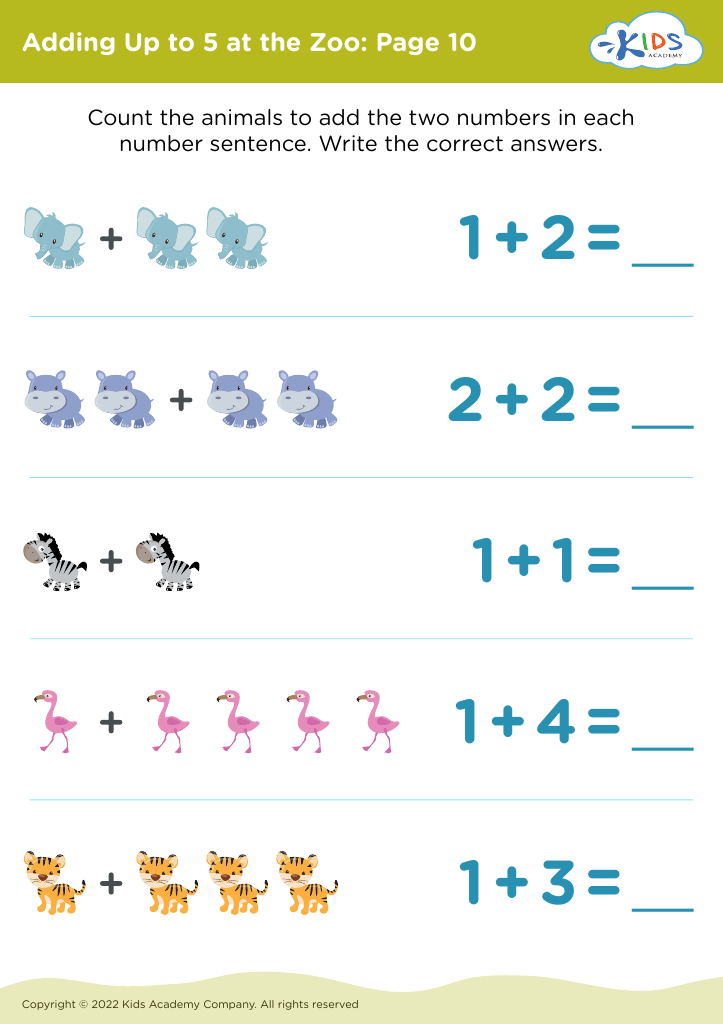
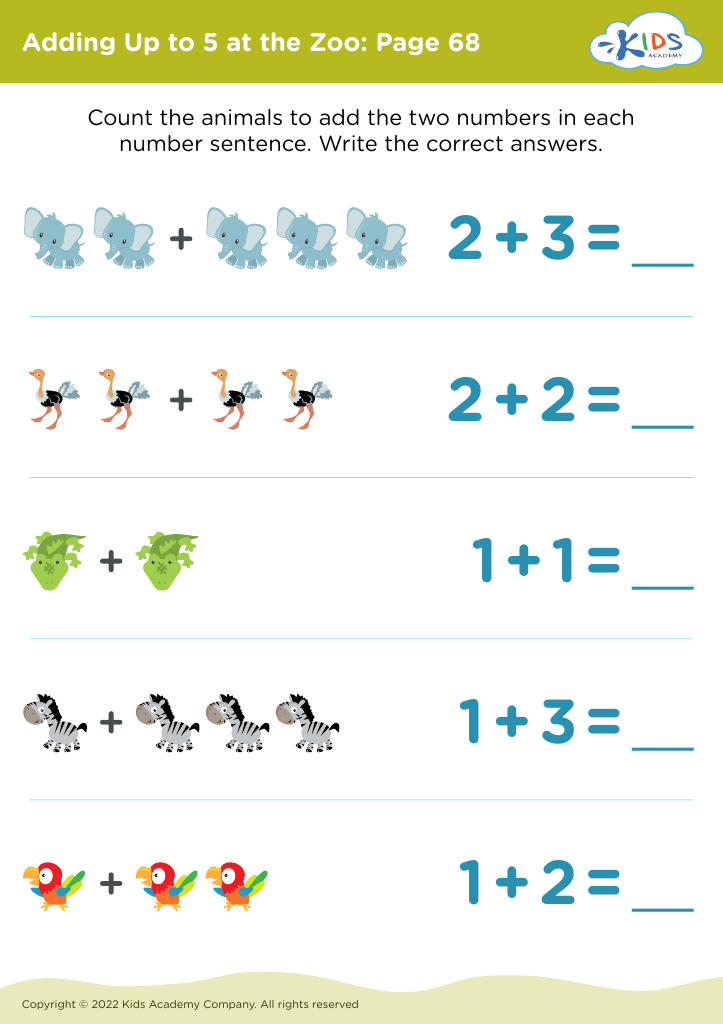



Problem-solving skills are crucial for young children because they lay the foundation for critical thinking, decision-making, and resilience. When parents and teachers engage children in activities like “Adding at the Zoo,” they create enjoyable opportunities for little ones to practice these essential skills in a fun context.
At this age, children are naturally curious about the world around them. Activities that incorporate counting animals, solving simple addition problems, and evaluating different scenarios stimulate their cognitive development. When children face challenges, such as figuring out how many more animals they need to make a certain number, they learn to analyze problems, explore solutions, and understand the cause-and-effect relationships.
Moreover, problem-solving experiences foster collaboration as children may work together to find solutions. This instills teamwork, communication, and social skills. As teachers and parents facilitate these learning moments, they also cultivate a love for learning, encouraging children to approach challenges with positivity and creativity.
Ultimately, by integrating problem-solving skills into playful activities like “Adding at the Zoo,” parents and teachers help nurture confidence and independence in early learners. These are invaluable attributes that will benefit them throughout their academic journey and beyond.