Visual comprehension Adding at the Zoo Worksheets for Ages 4-7
3 filtered results
-
From - To
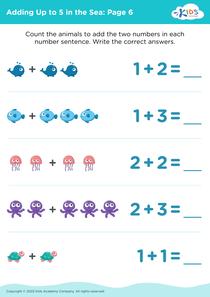
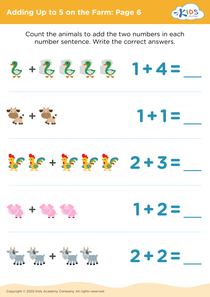
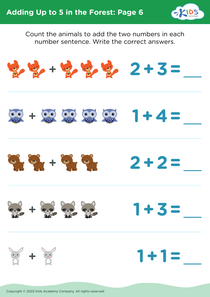
Our "Visual Comprehension Adding at the Zoo Worksheets for Ages 4-7" focus on engaging young learners in the basics of addition through vibrant, zoo-themed illustrations. Perfect for preschool through early elementary grades, these printable worksheets help children develop crucial visual comprehension and math skills. Kids will enjoy counting colorful animals while performing simple additions, making learning fun and interactive. By connecting math concepts with enjoyable imagery, we aim to foster a love for learning and improve kids' critical thinking and numerical proficiency. Download today to provide your child with a head start in their educational journey!
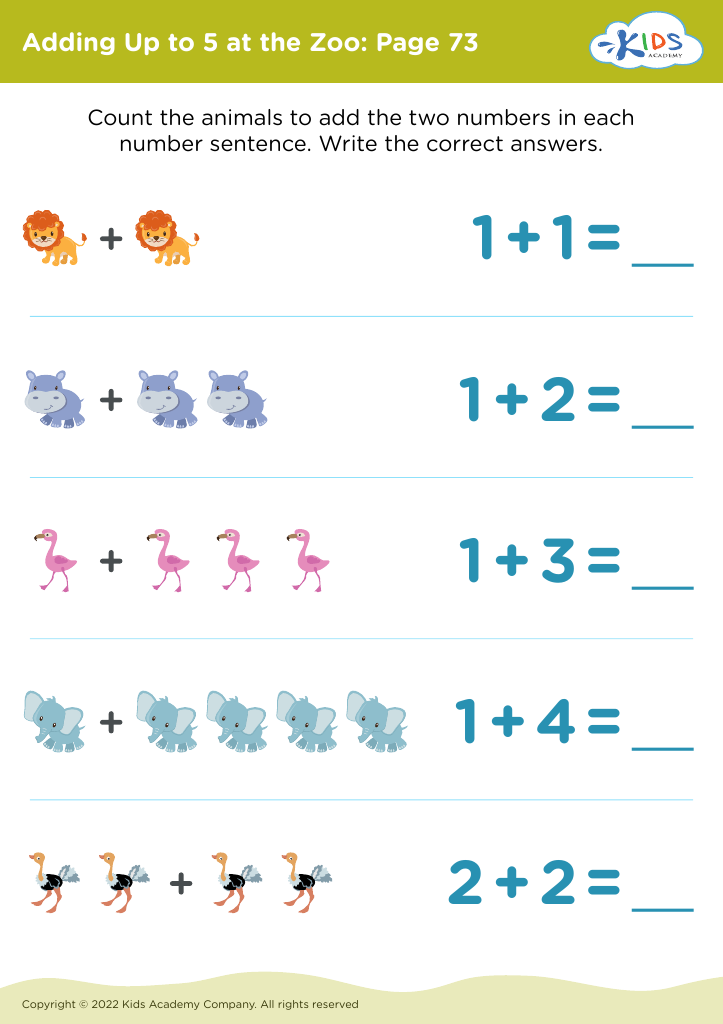
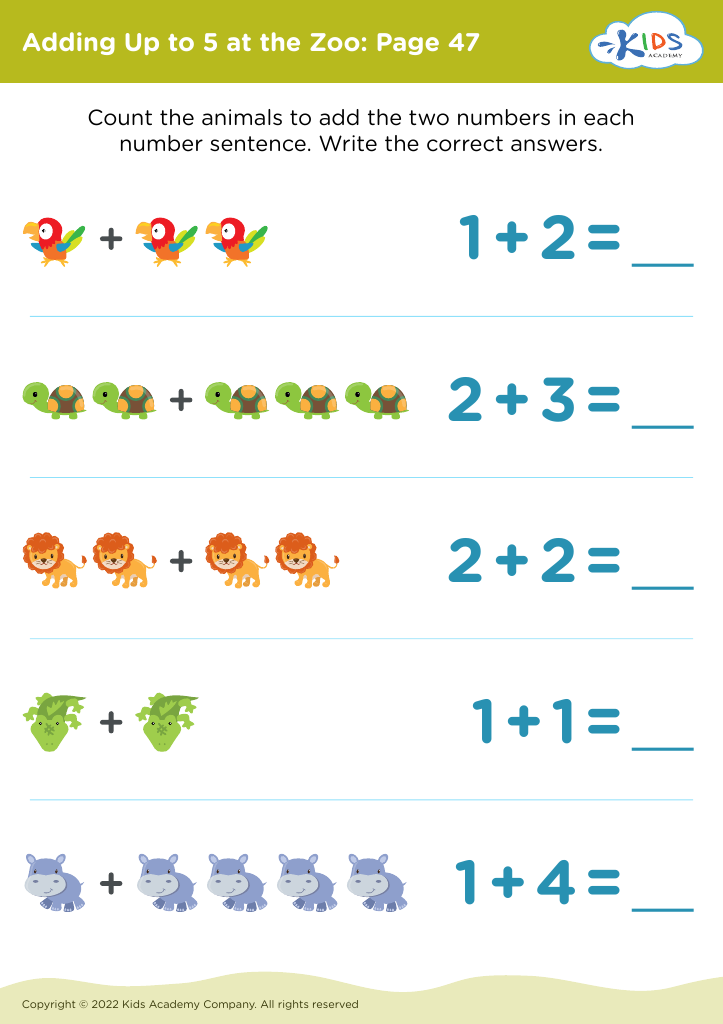
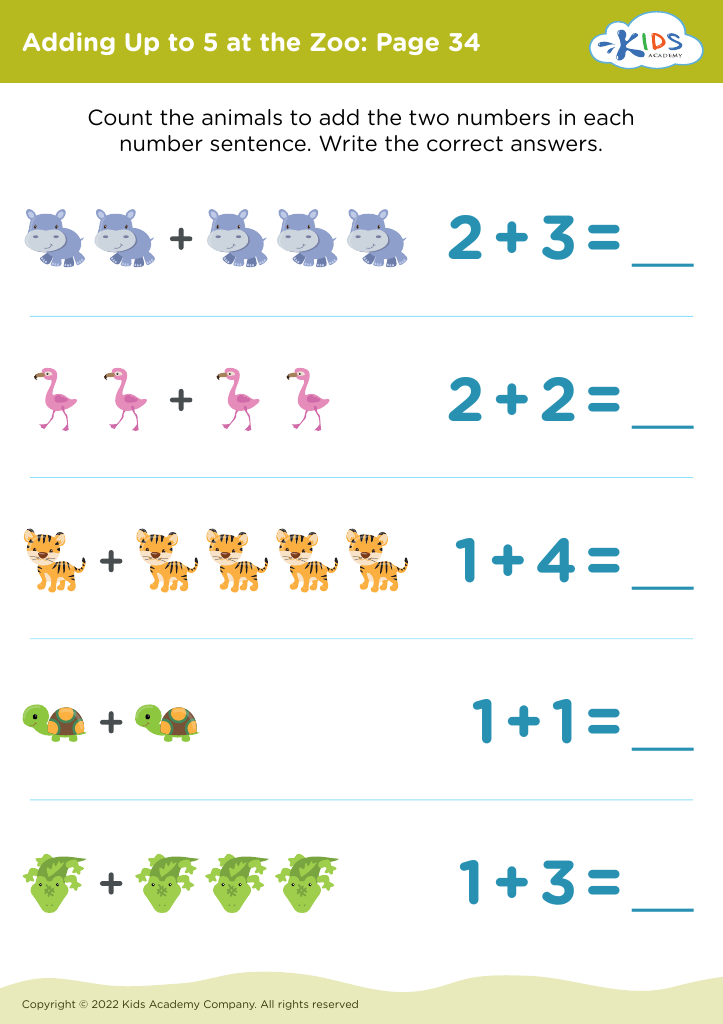



Visual comprehension is a critical skill for children aged 4-7 as it lays the foundation for a wide range of cognitive and academic capabilities. When integrated into activities such as "Adding at the Zoo," a visually engaging and educational experience, visual comprehension becomes an effective tool for early learners.
Firstly, visual comprehension enhances children's ability to interpret and understand visual information, crucial for reading and mathematics. Recognizing patterns, counting objects, and understanding spatial relationships are skills naturally developed through visual tasks. In the context of a zoo-themed adding activity, children can engage with colorful animal illustrations and count them, which makes abstract concepts like addition more tangible and relatable.
Secondly, such activities encourage focus and attention to detail, important components of effective learning. When children observe different animals and count them, they practice concentrating on visual stimuli, which can improve their overall learning and comprehension skills in various subjects.
Lastly, integrating visual elements into learning caters to diverse learning styles. It ensures that children who are visual learners get the reinforcement they need, making learning inclusive and effective.
In summary, fostering visual comprehension through engaging activities like "Adding at the Zoo" aids cognitive development, promotes concentration, and supports diverse learning needs, making it a valuable tool for young learners' early education.