Filters

17 filtered results

Clear all filters
Favorites
With answer key
Interactive

17 filtered results

Difficulty Level

Grade


Subject

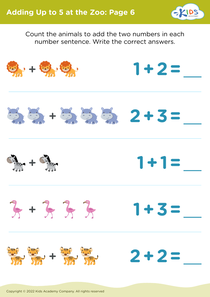
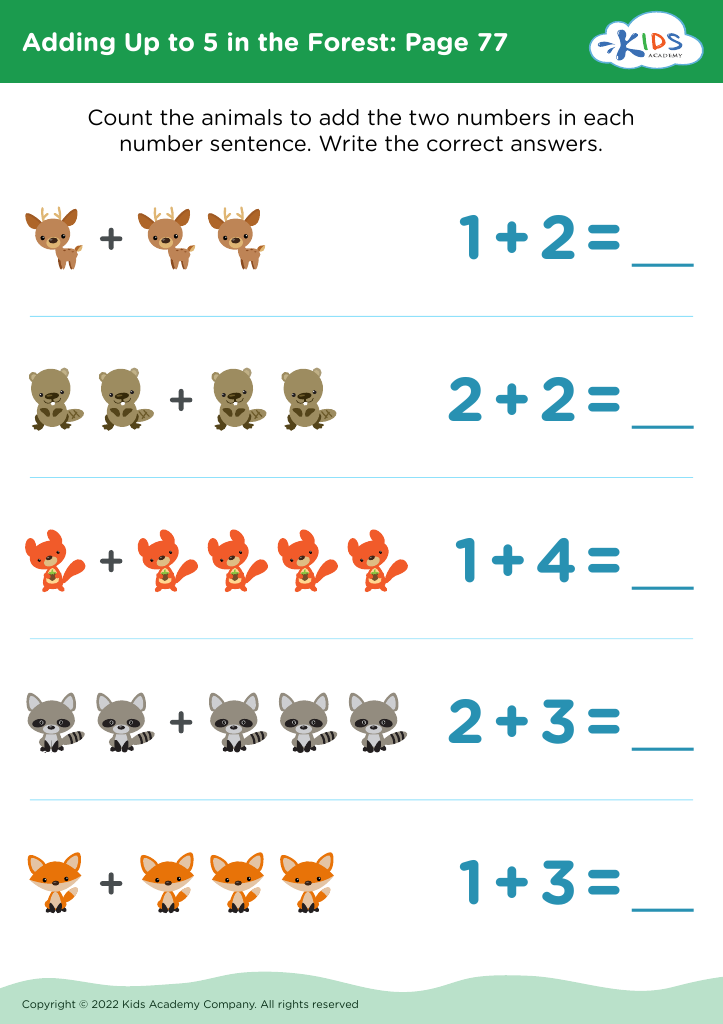
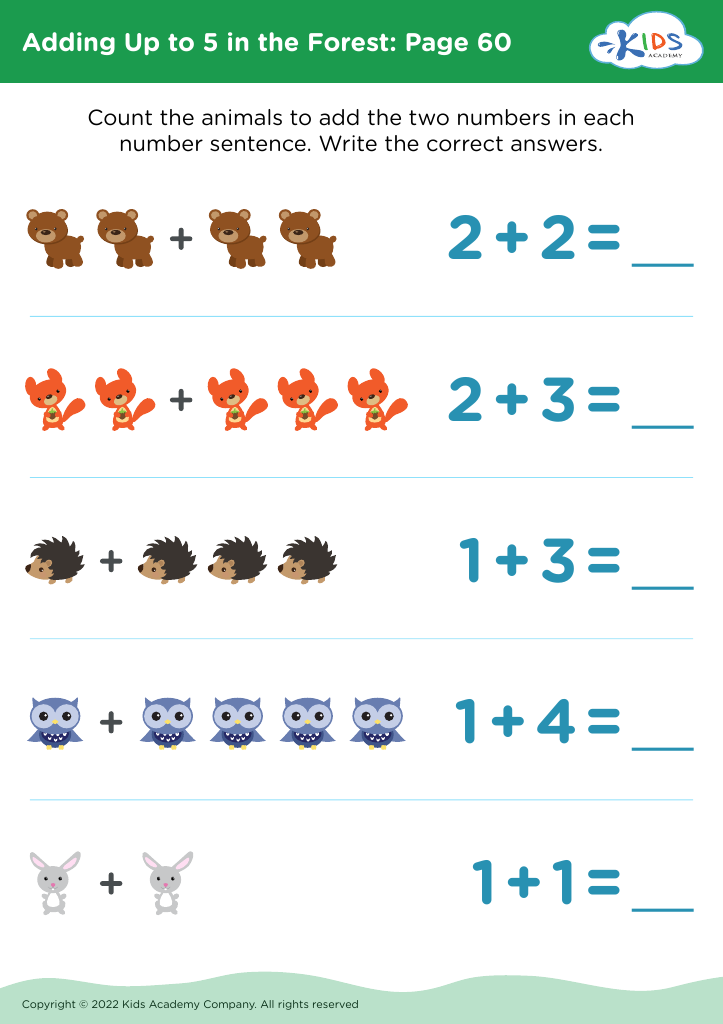
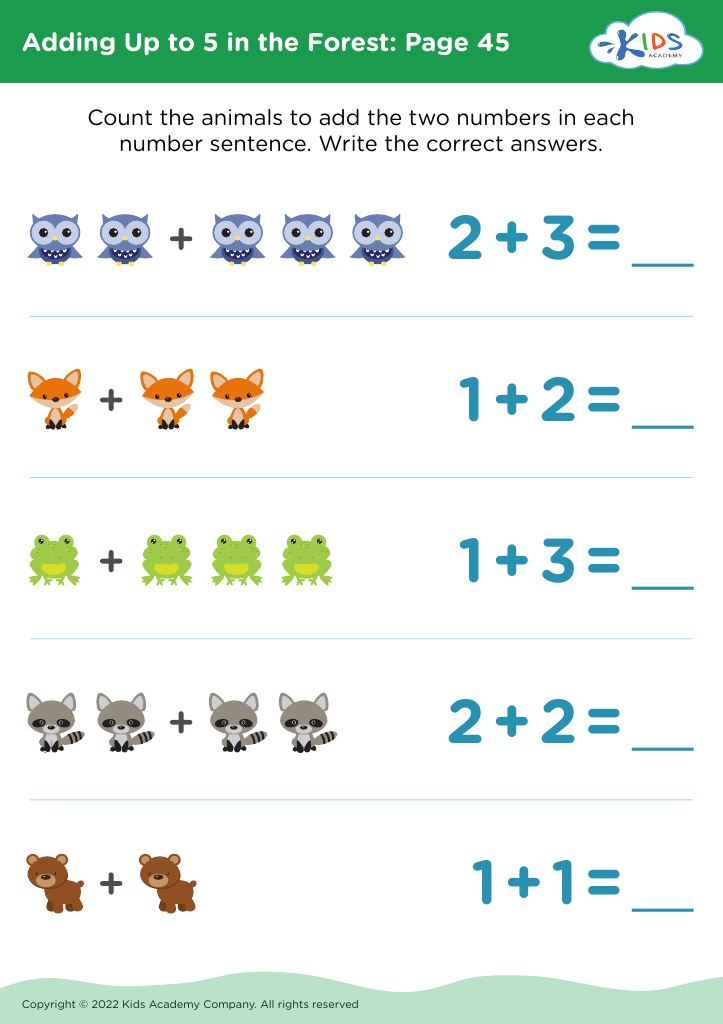
Explore our "Cognitive Development Adding in the Forest Worksheets" designed for children aged 4-7. These captivating printables blend calculations with enchanting woodland themes, fostering cognitive growth and math proficiency. Engaging activities include adding forest critters and counting woodland treasures, promoting the joy of learning. Designed by experts, our worksheets enhance critical thinking, problem-solving, and number sense. Perfect for parents and teachers, these resources support early education in fun and interactive ways. Download now to bring a nurturing forest adventure to your child's mathematical journey, aiding in their developmental milestones.
Check out this FREE Trial Lesson on Adding in the Forest for age 4-7!

Z

Favorites
With answer key
Interactive
  • 4-7
  • Cognitive Development
  • Adding in the Forest
Adding Up to 5 in the Forest: Page 77
Worksheet
Adding Up to 5 in the Forest: Page 60
Worksheet
Adding Up to 5 in the Forest: Page 45
Worksheet
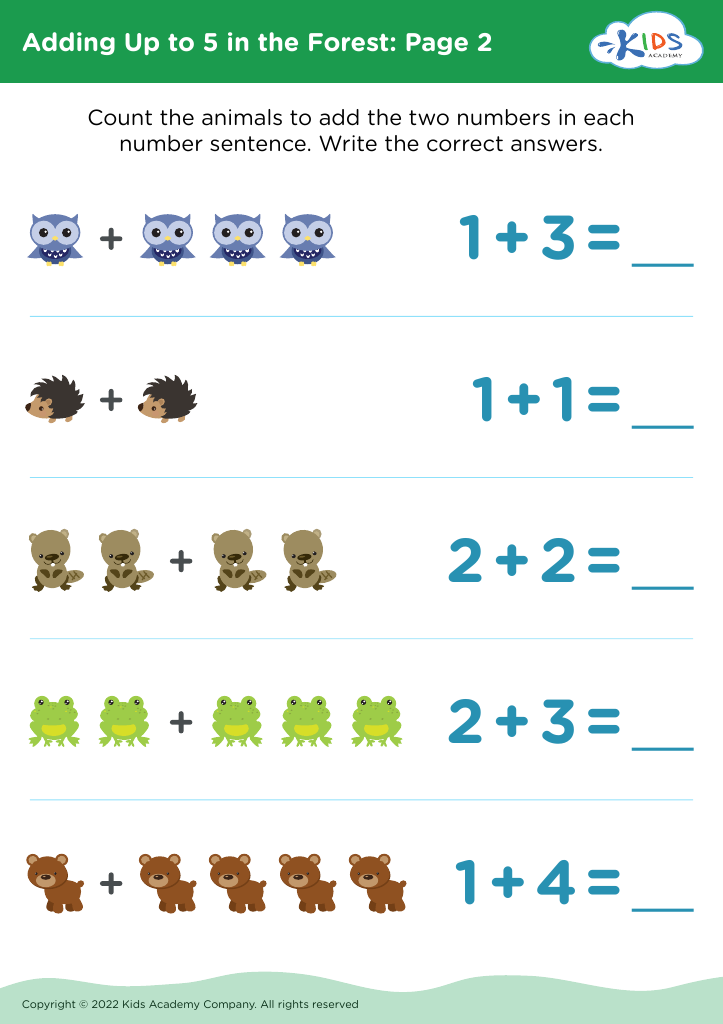
Adding Up to 5 in the Forest: Page 2
Worksheet
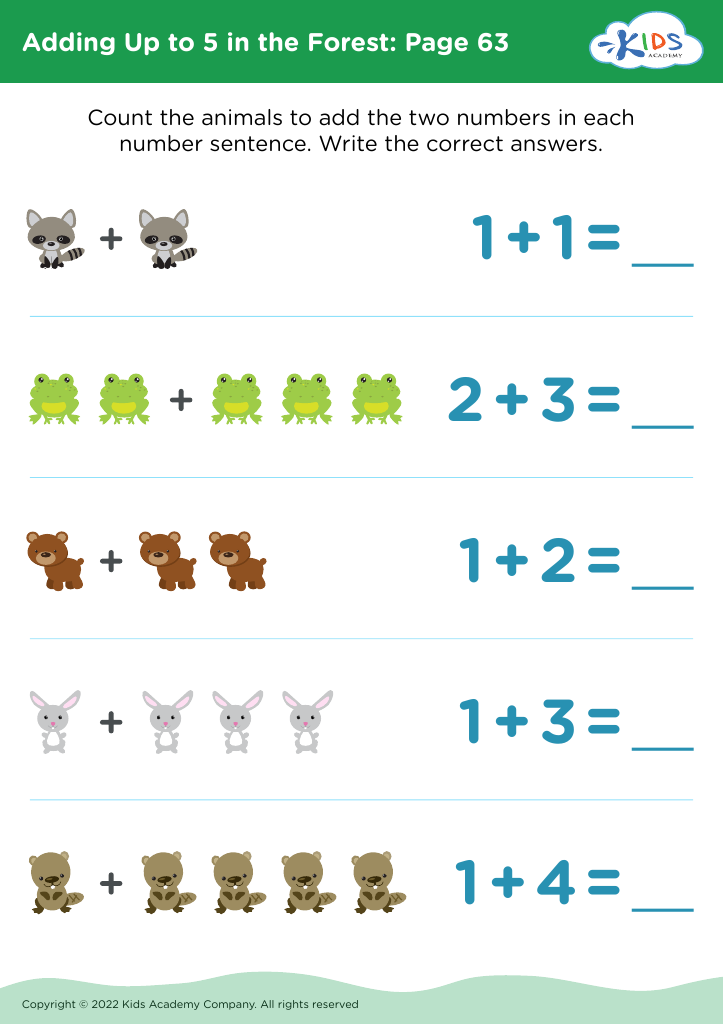
Adding Up to 5 in the Forest: Page 63
Worksheet
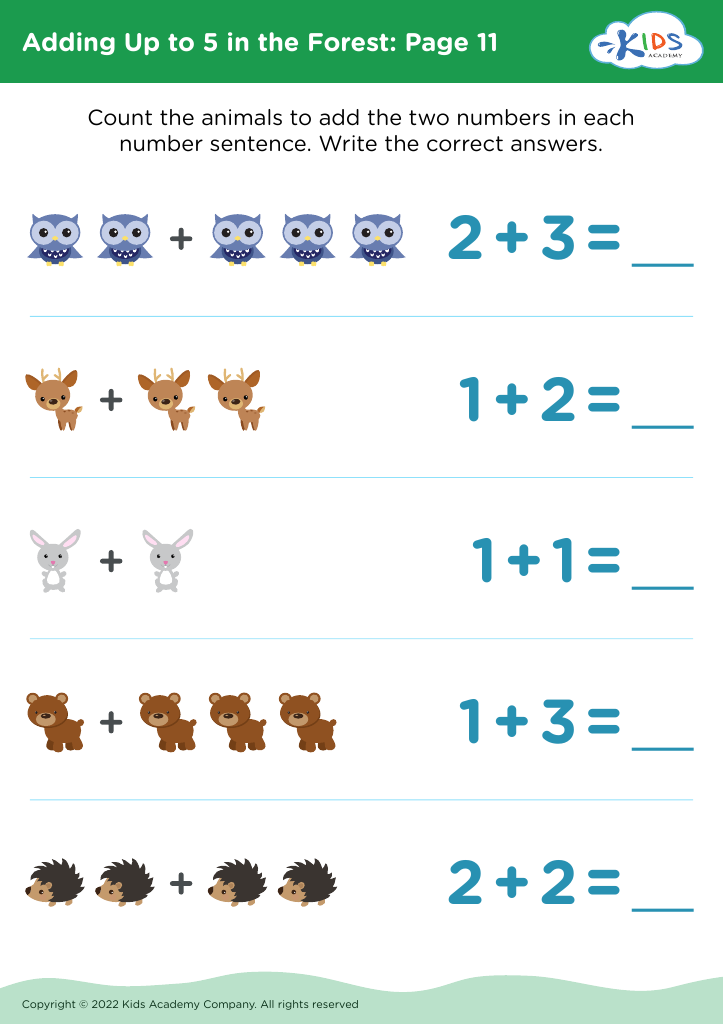
Adding Up to 5 in the Forest: Page 11
Worksheet
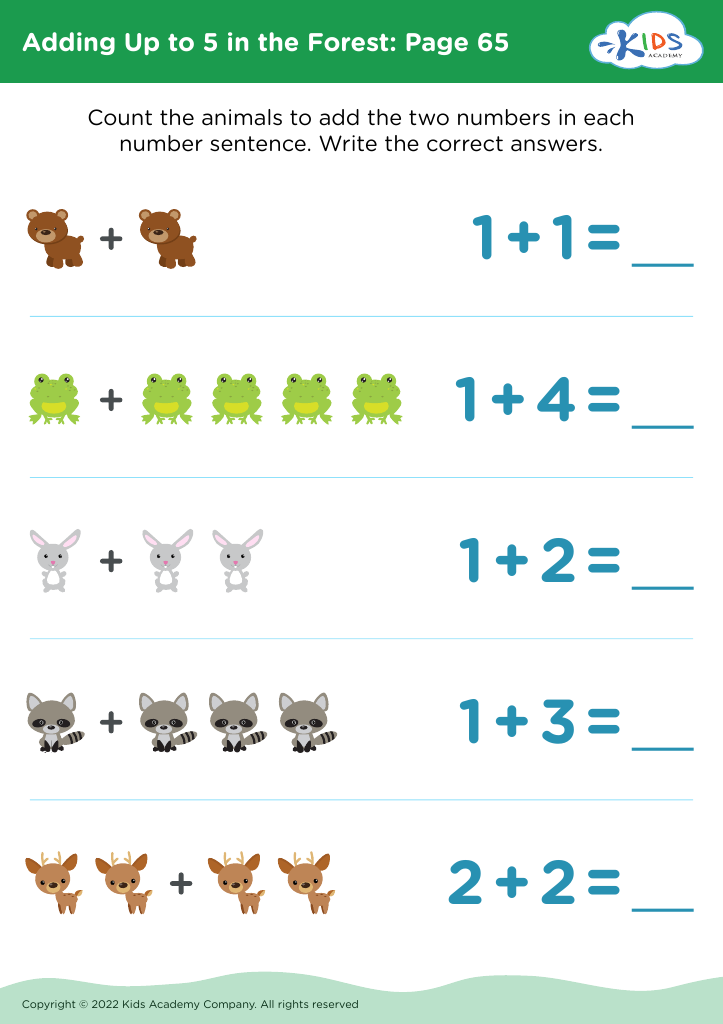
Adding Up to 5 in the Forest: Page 65
Worksheet
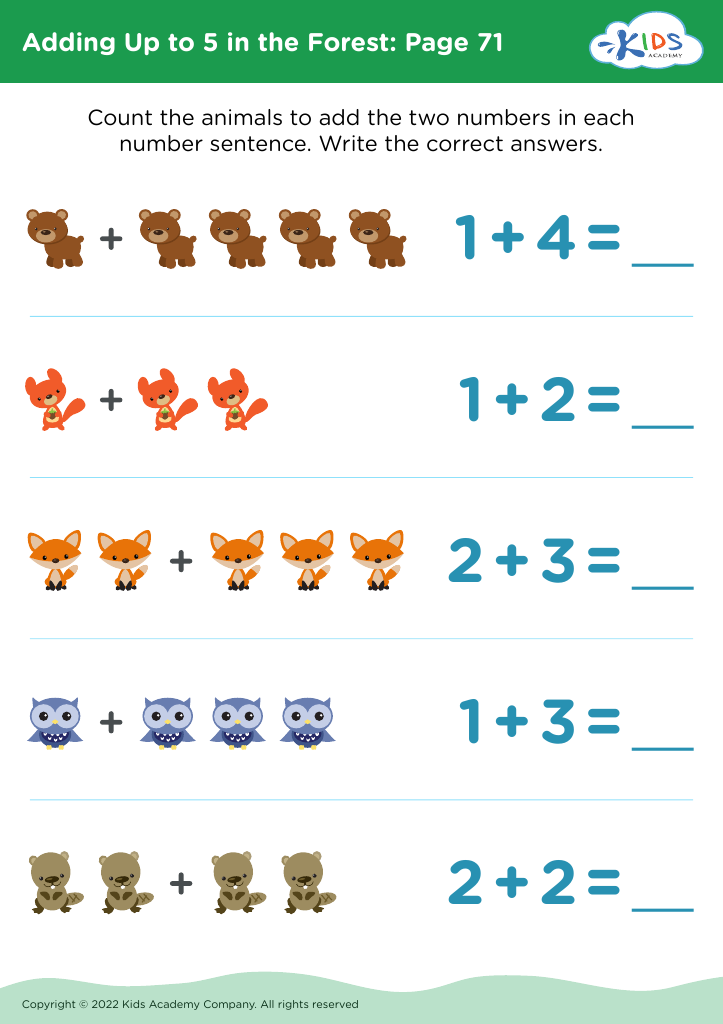
Adding Up to 5 in the Forest: Page 71
Worksheet
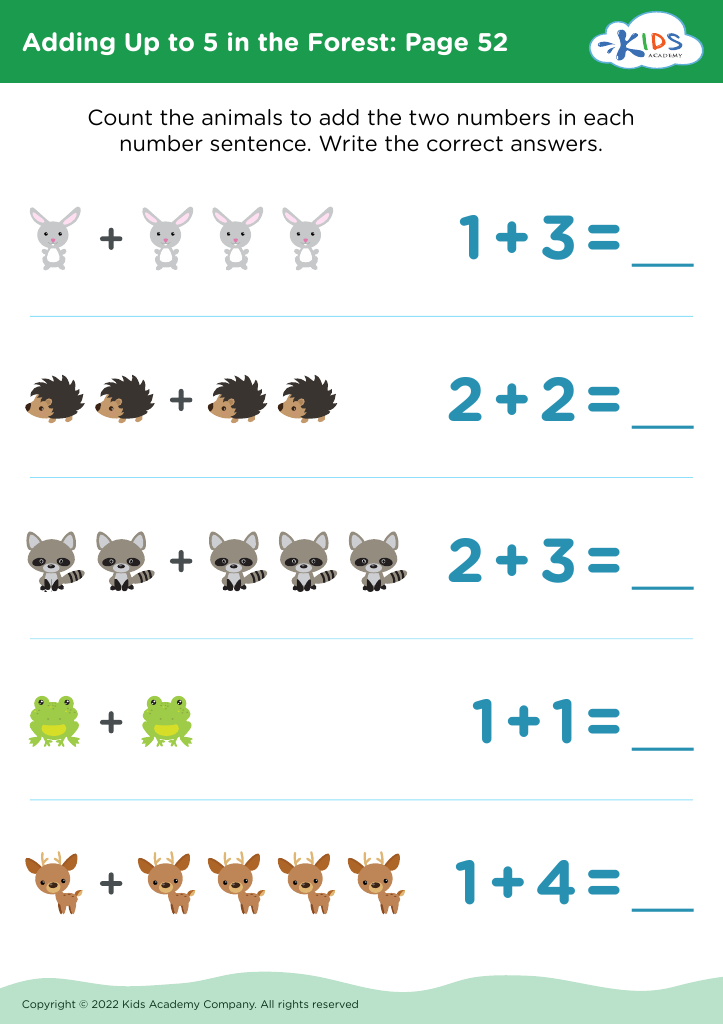
Adding Up to 5 in the Forest: Page 52
Worksheet
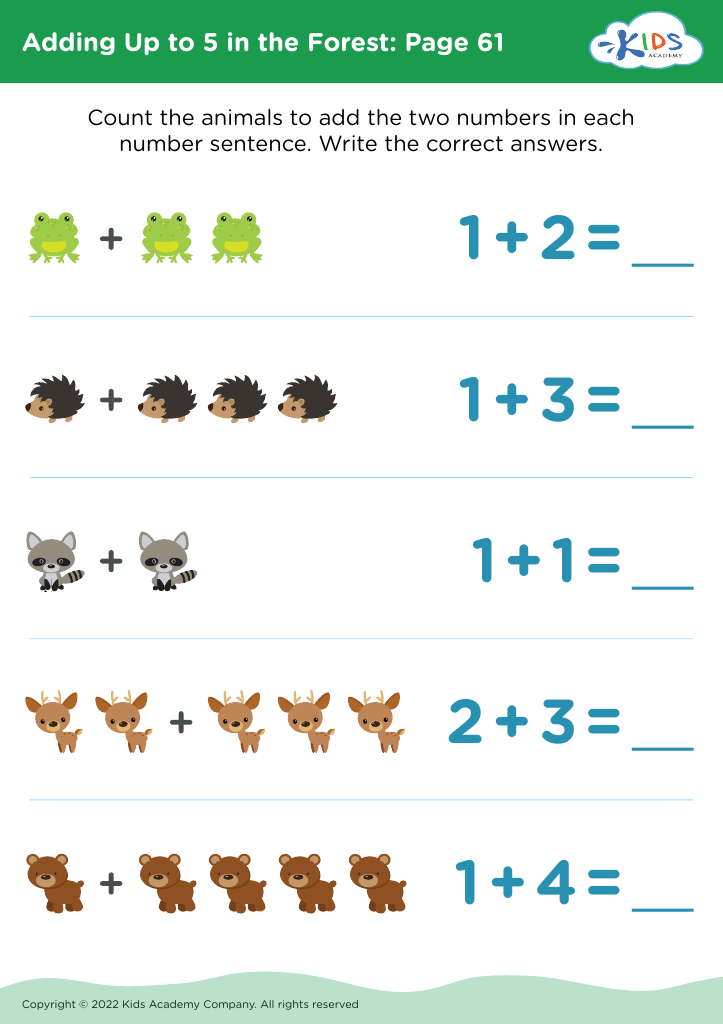
Adding Up to 5 in the Forest: Page 61
Worksheet
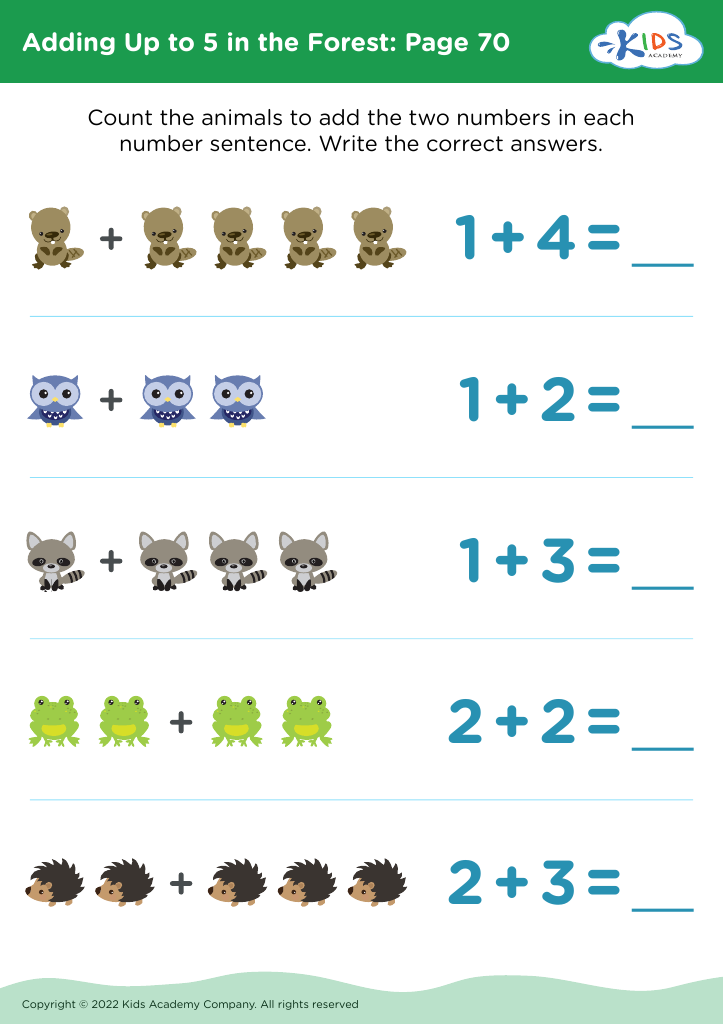
Adding Up to 5 in the Forest: Page 70
Worksheet
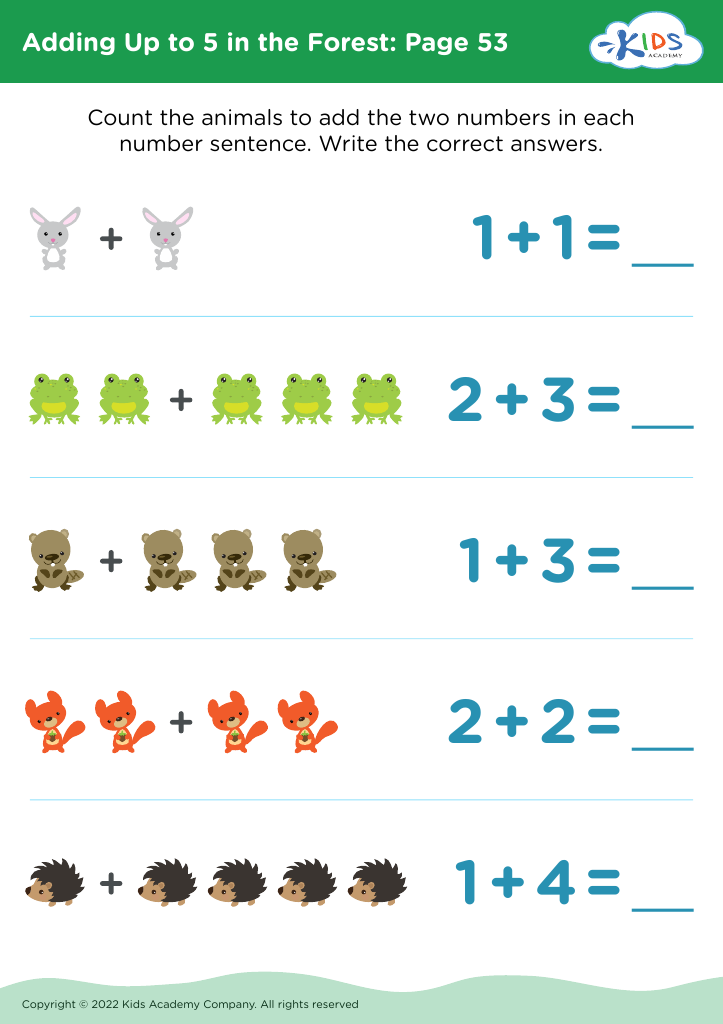
Adding Up to 5 in the Forest: Page 53
Worksheet
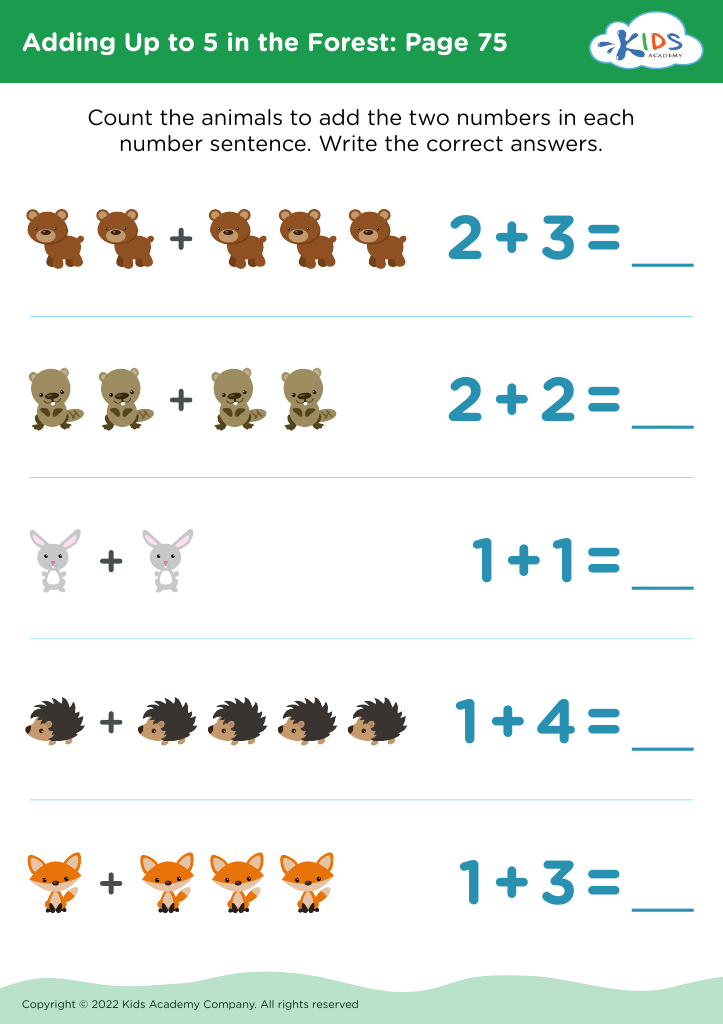
Adding Up to 5 in the Forest: Page 75
Worksheet
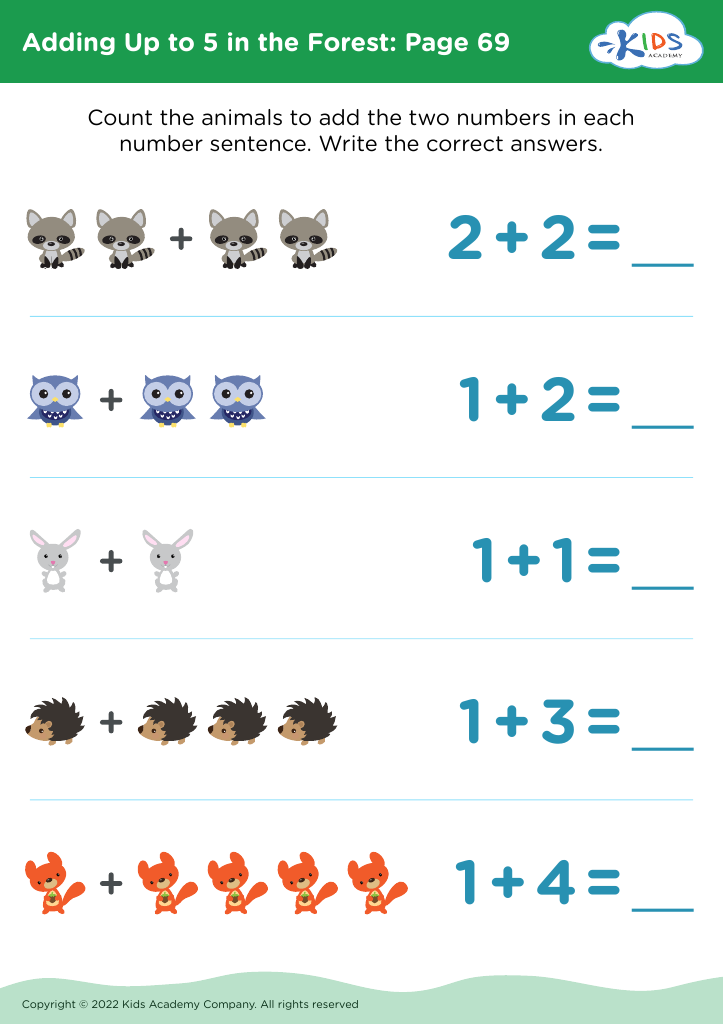
Adding Up to 5 in the Forest: Page 69
Worksheet
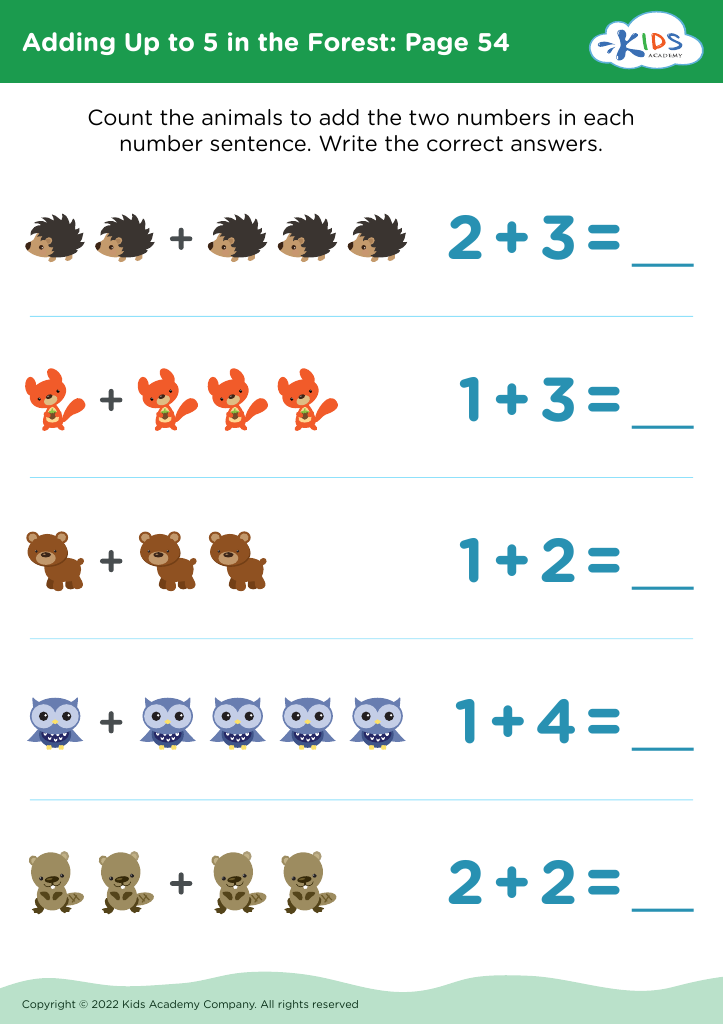
Adding Up to 5 in the Forest: Page 54
Worksheet
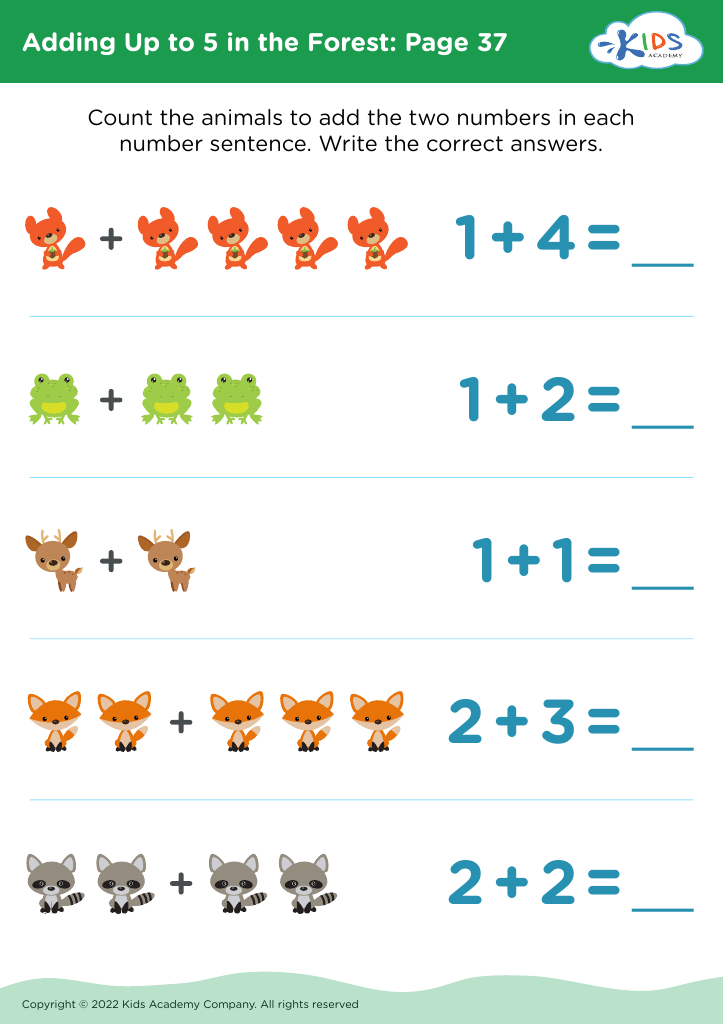
Adding Up to 5 in the Forest: Page 37
Worksheet
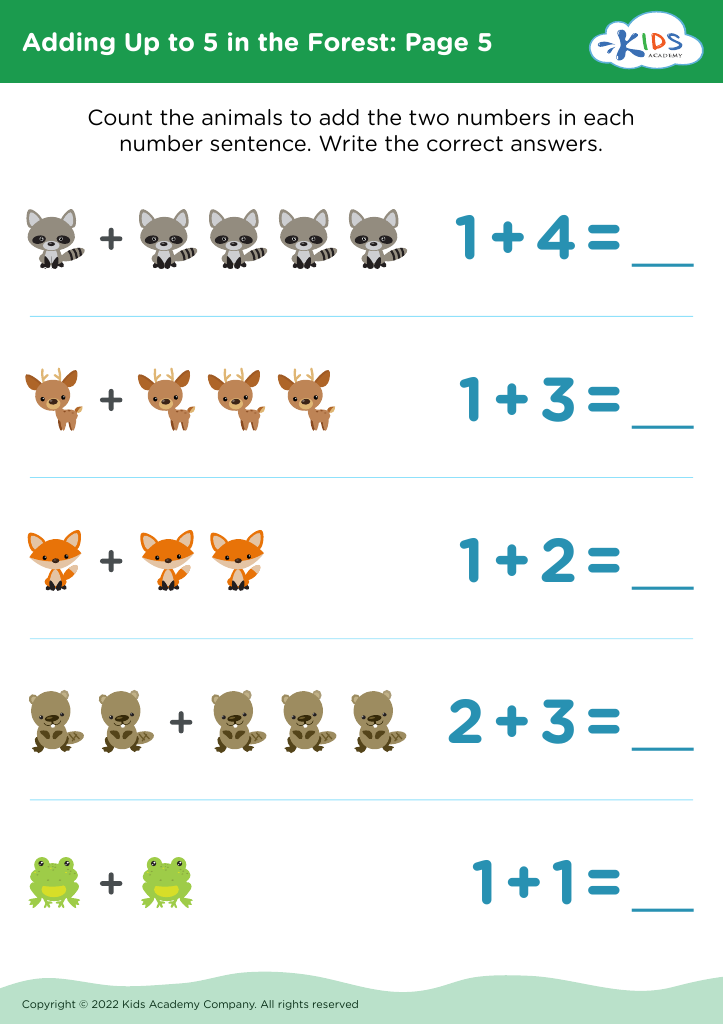
Adding Up to 5 in the Forest: Page 5
Worksheet


Cognitive development during early childhood sets the foundation for all future learning, making activities like "Adding in the Forest" critical for ages 4-7. Engaging in tailored math activities within a playful, thematic context such as a forest nurtures crucial skills such as problem-solving, logical thinking, and numerical comprehension. Parents and teachers should care about this because it intertwines play and learning, catering to young children’s exploratory nature while embedding essential cognitive skills.

When children engage with concepts organically, like counting trees or animals in a forest, they form stronger neural connections. This natural and enjoyable setting removes the pressure typically associated with math, allowing children to build confidence in their abilities. Such activities also support other domains of development. For example, social skills are honed through cooperative learning, while language skills expand as children describe their actions or narrate their experiences.

In addition, fostering an early interest in mathematics promotes a positive attitude towards challenging subjects later in life. By integrating cognitive development tasks in themes children find enchanting, we stimulate their curiosity and knowledge acquisition, ensuring holistic development. Therefore, caring passionately about these early learning experiences maximizes children's potential for lifelong educational success.