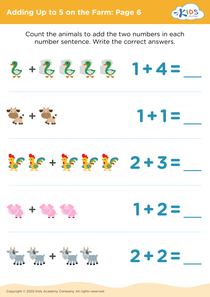
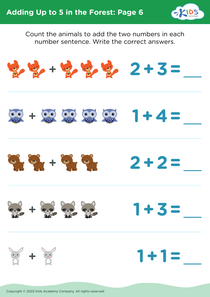
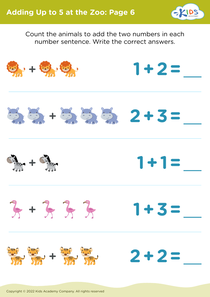
Basic Math Skills Adding in the Sea Worksheets for Ages 4-7
4 filtered results
-
From - To
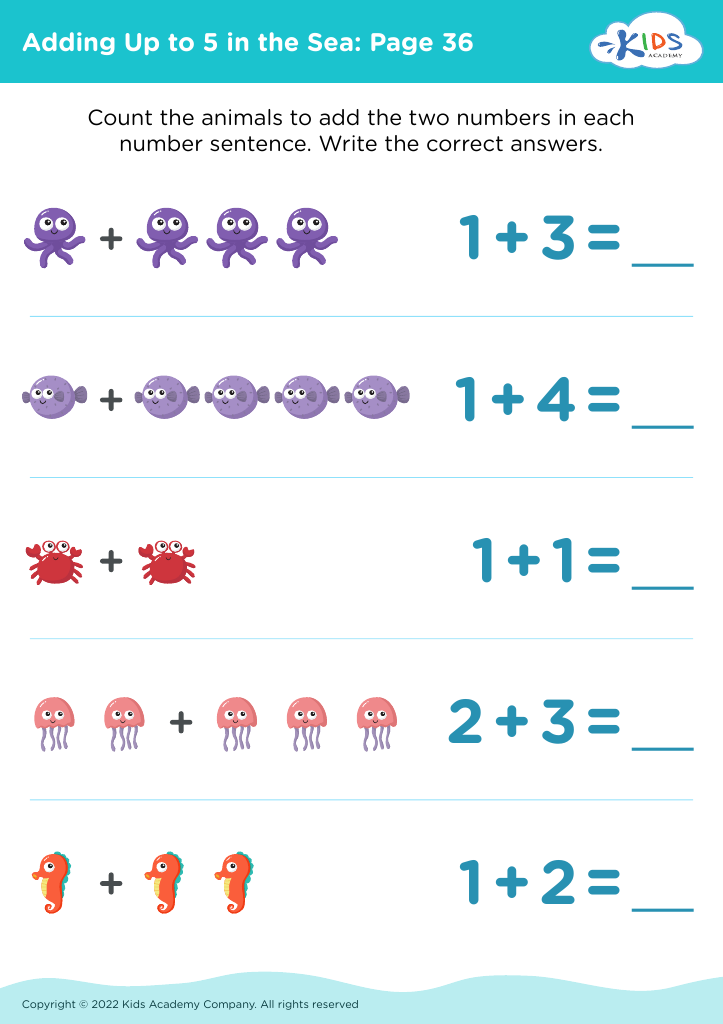
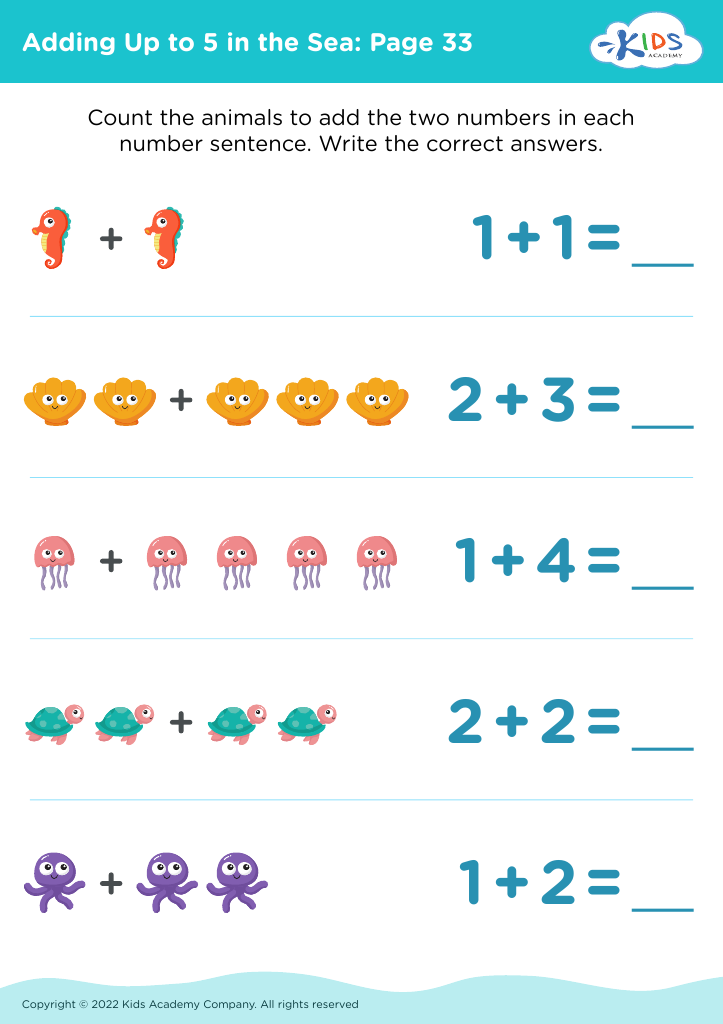
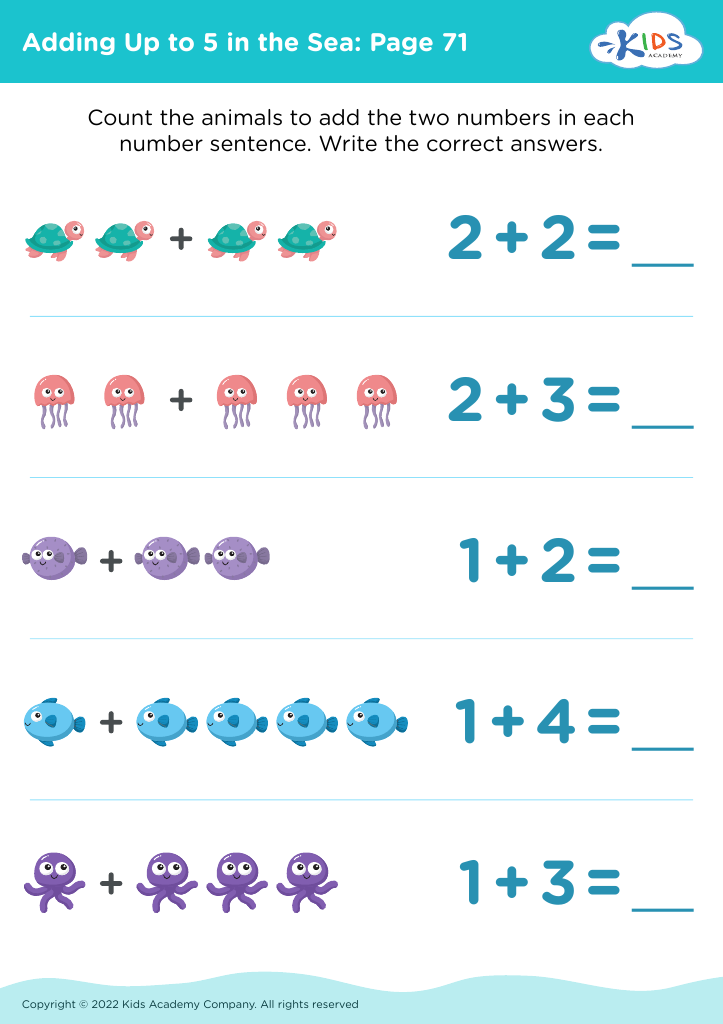
Welcome to our "Basic Math Skills: Adding in the Sea Worksheets" for ages 4-7! These engaging worksheets are designed to make learning addition fun and interactive for young learners. With delightful ocean-themed graphics, children will practice fundamental math skills while counting colorful sea animals and solving simple addition problems. Each worksheet provides a hands-on approach to reinforce number recognition and basic arithmetic in a playful underwater setting. Whether at home or in the classroom, these worksheets are perfect for developing essential math skills. Dive into a world of learning and help your child build a strong math foundation with our ocean-inspired activities!
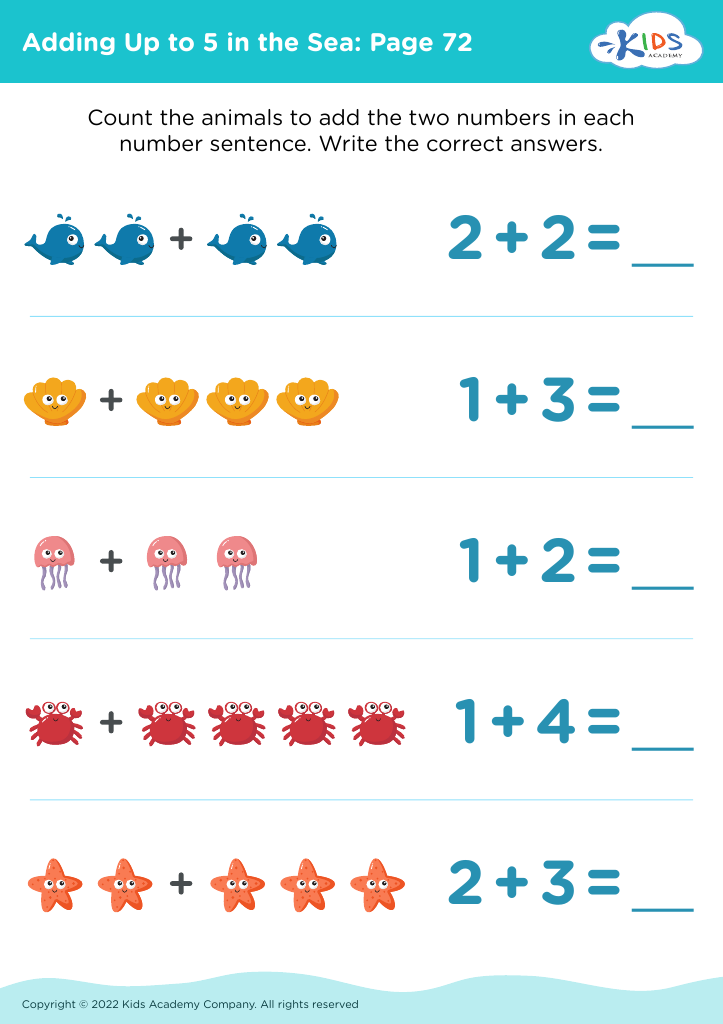



Parents and teachers should care about developing basic math skills, particularly adding, for children aged 4-7, as these foundational skills are crucial for future academic success and everyday life. Mastering basic addition lays the groundwork for more advanced math concepts, promoting critical thinking and problem-solving abilities. During early childhood, brain development is at its peak; children are naturally curious and eager to learn, making this the perfect time to introduce math in engaging ways.
Incorporating themes like adding in the sea, with objects like fish or shells, makes learning fun and relatable, enhancing engagement and retention. By linking math to familiar concepts, children can better grasp abstract ideas, fostering a love for learning. Furthermore, early math skills boost confidence, combating potential anxiety around math later on.
Additionally, these skills promote essential life skills such as budgeting and time management, providing a foundation for successful navigation through daily challenges. For parents and teachers, nurturing these skills encourages a positive attitude toward learning and prepares children for a wide array of future educational opportunities. Ultimately, investing time and resources in basic math skills now can pave the way for students to excel academically and in life.