Basic Math understanding Adding in the Sea Worksheets for Ages 4-7
3 filtered results
-
From - To
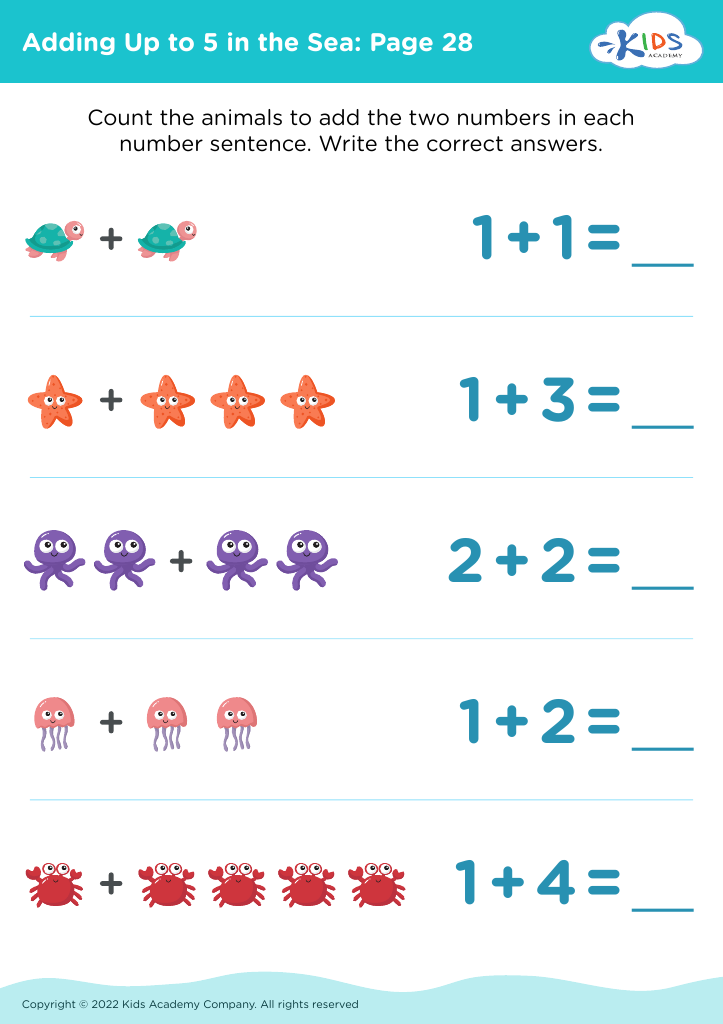
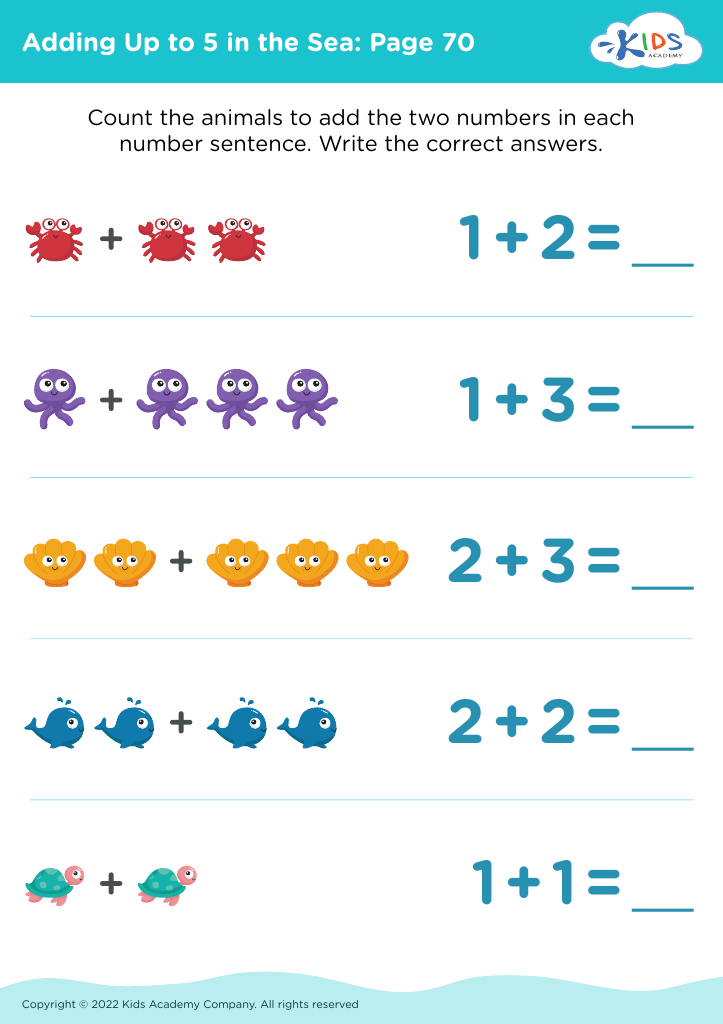
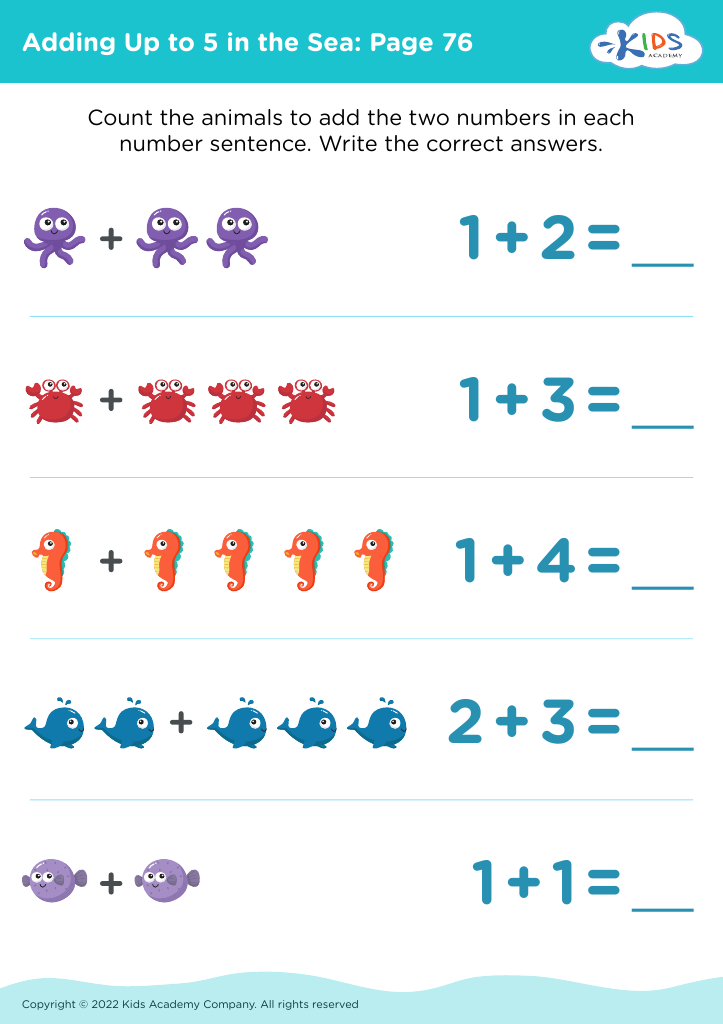
Dive into the world of numbers with "Adding in the Sea Worksheets" from Kids Academy, specifically crafted for ages 4-7. These engaging worksheets use sea-themed illustrations to help young learners grasp basic addition. Designed to develop foundational math skills, the activities make learning fun and interactive, promoting a love for numbers. Perfect for early learners, each worksheet enhances problem-solving abilities and number recognition. Watch as your child's confidence in math grows while they explore colorful underwater adventures. Equip your little one with essential math skills through a delightful and educational experience in the ocean's depths.



Basic math understanding is crucial for young children, and "Adding in the Sea" presents an engaging way to master these foundational skills. At ages 4-7, children’s brains are exceptionally malleable and are developing critical thinking and problem-solving abilities. Introducing them to basic math, such as addition, at this stage is invaluable.
Math isn't just about numbers; it's a language and a way of thinking that fosters logical reasoning and analytical skills. By using a familiar and engaging theme like sea creatures, children are more likely to stay focused and retain information. Themes like "Adding in the Sea" make abstract concepts tangible, demonstrating how math is embedded in everyday life and stimulating curiosity.
Furthermore, a strong grounding in basic math ensures children are prepared for more complex concepts they will encounter later. Struggling with foundational skills can lead to math anxiety and a general aversion to the subject, potentially affecting their academic progression.
For parents and teachers, fostering a positive, enjoyable mathematics environment is critical, and using themed resources caters perfectly to young learners’ developmental stages. Moreover, such resourceful anecdotes help build a strong, supportive learning bond between children and their mentors. Therefore, “Adding in the Sea” isn’t just about learning to add but nurturing a lifelong love and understanding of math.