Animal recognition Adding on the Farm Worksheets for Ages 4-7 - Page 2
31 filtered results
-
From - To
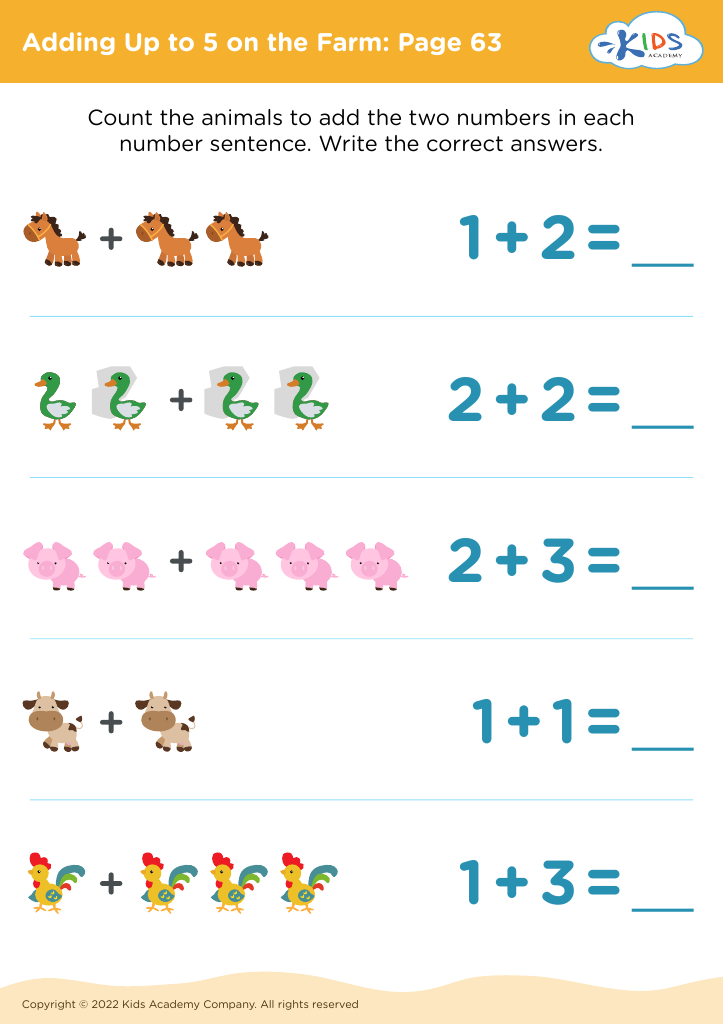
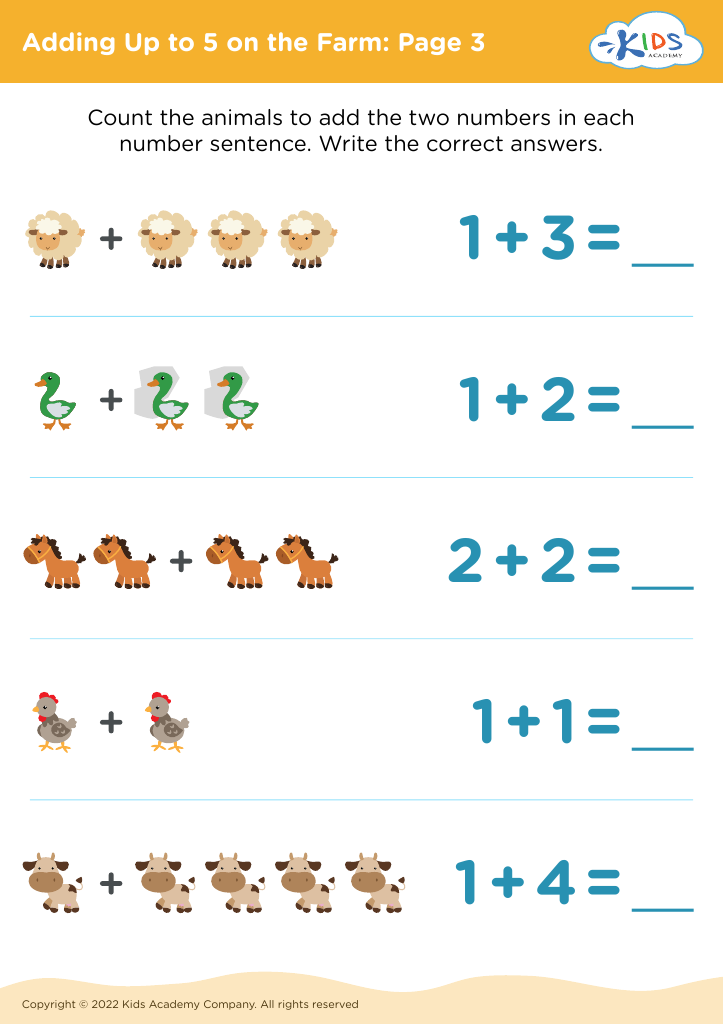
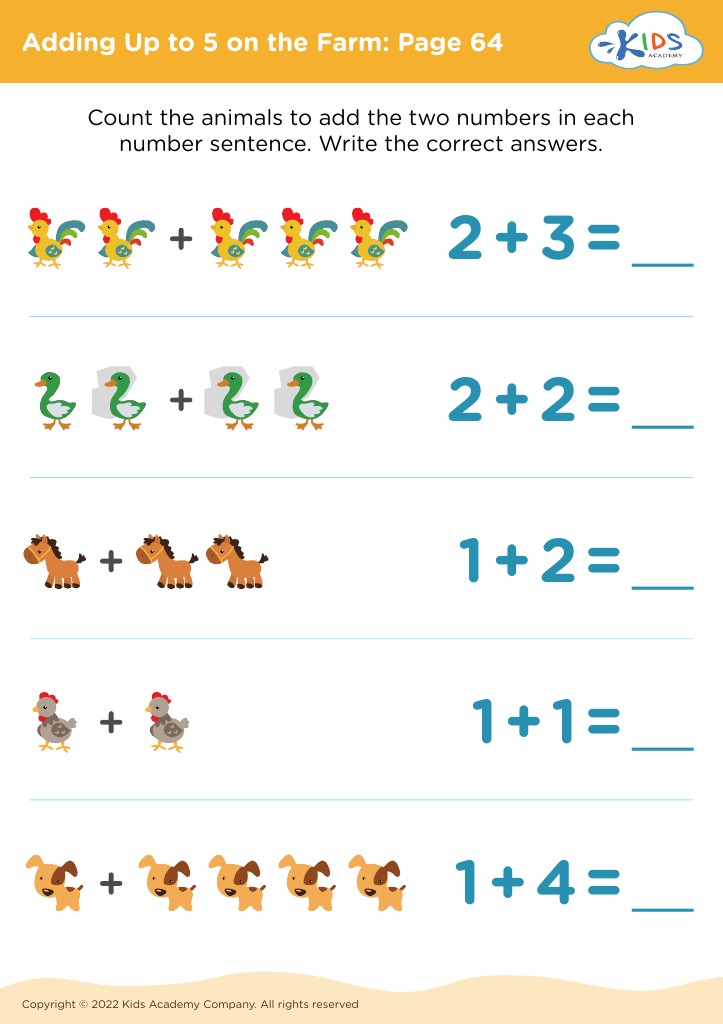
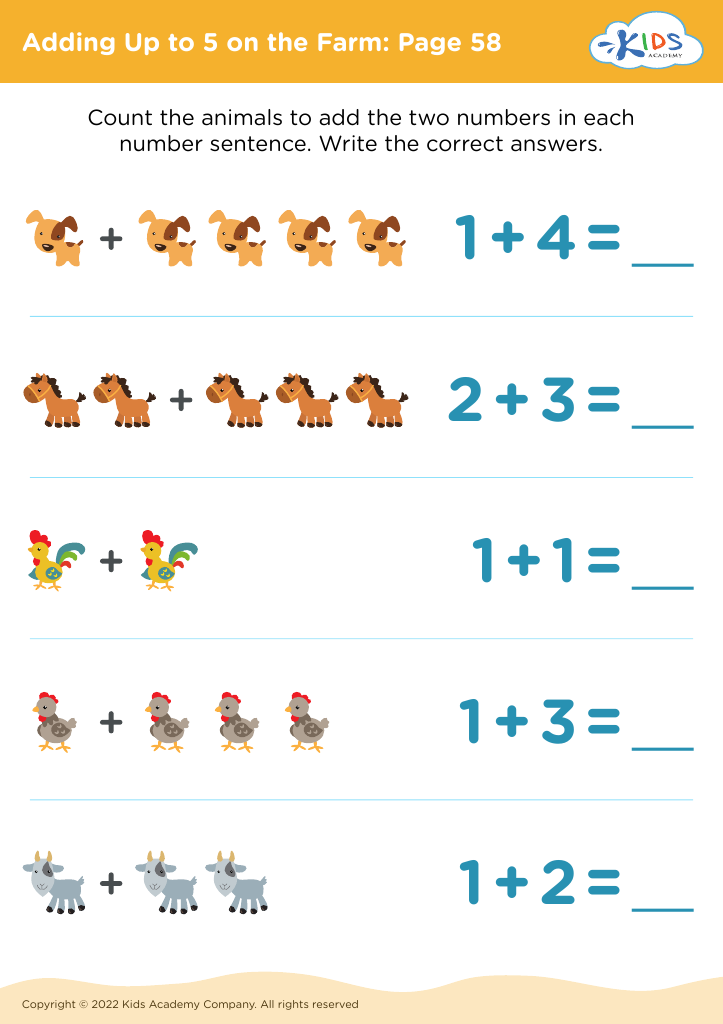
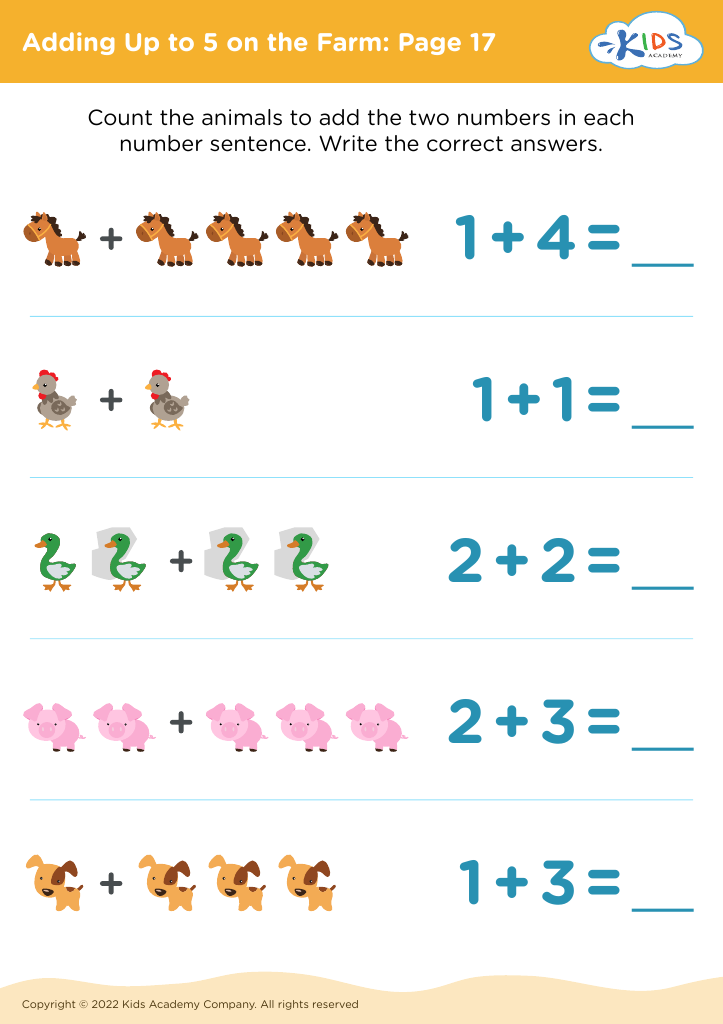
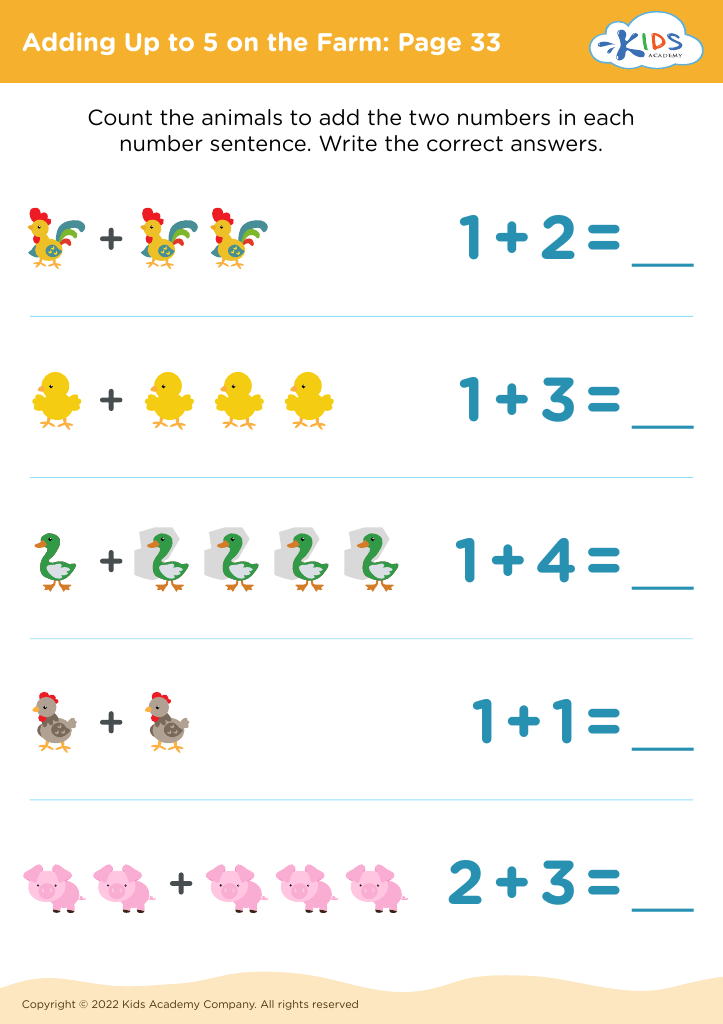
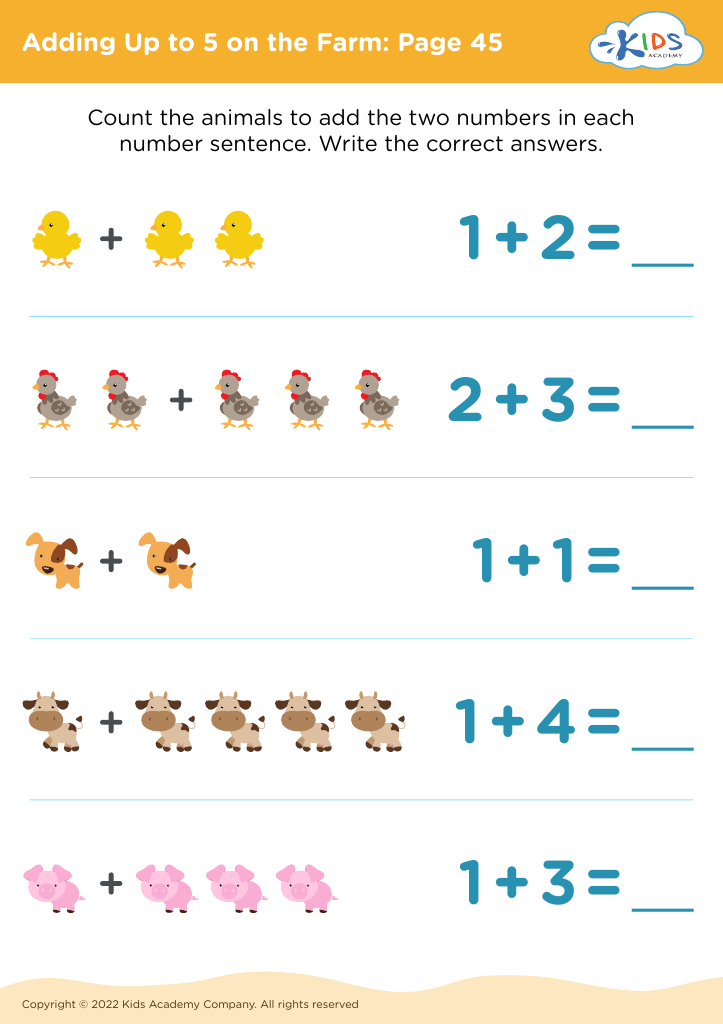



Animal recognition on a farm is a vital learning focus for children aged 4-7 for several reasons. During these formative years, children are naturally curious and eager to explore their surroundings, making it an ideal time to introduce them to the concept of farm animals. Recognizing different animals, such as cows, chickens, pigs, and sheep, fosters observational skills and cognitive development. This knowledge also enriches their vocabulary as they learn names and sounds associated with each animal.
Understanding farm animals helps children connect to nature and comprehend where food comes from, laying the foundation for healthy eating habits and appreciation for agriculture. Furthermore, through engaging activities like sorting or matching games, storytelling, and interactive lessons, teachers can integrate creativity with learning, catering to diverse learning styles.
Additionally, learning about farm animals promotes empathy and nurturing behaviors as children grasp the responsibility of caring for living beings. It also opens doors for discussions about animal welfare and ensuring that these animals are treated with respect. Recognizing animals on a farm cultivates curiosity, strengthens cognitive skills, and instills values, making it a joyous and enriching experience for both parents and teachers to encourage in young learners.