Develop fine motor skills Adding up to 100 Misc Worksheets for Ages 4-7
4 filtered results
-
From - To
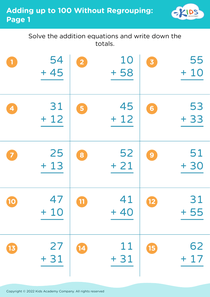
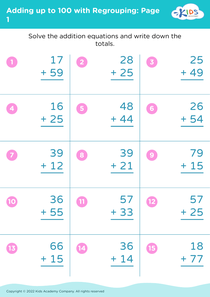
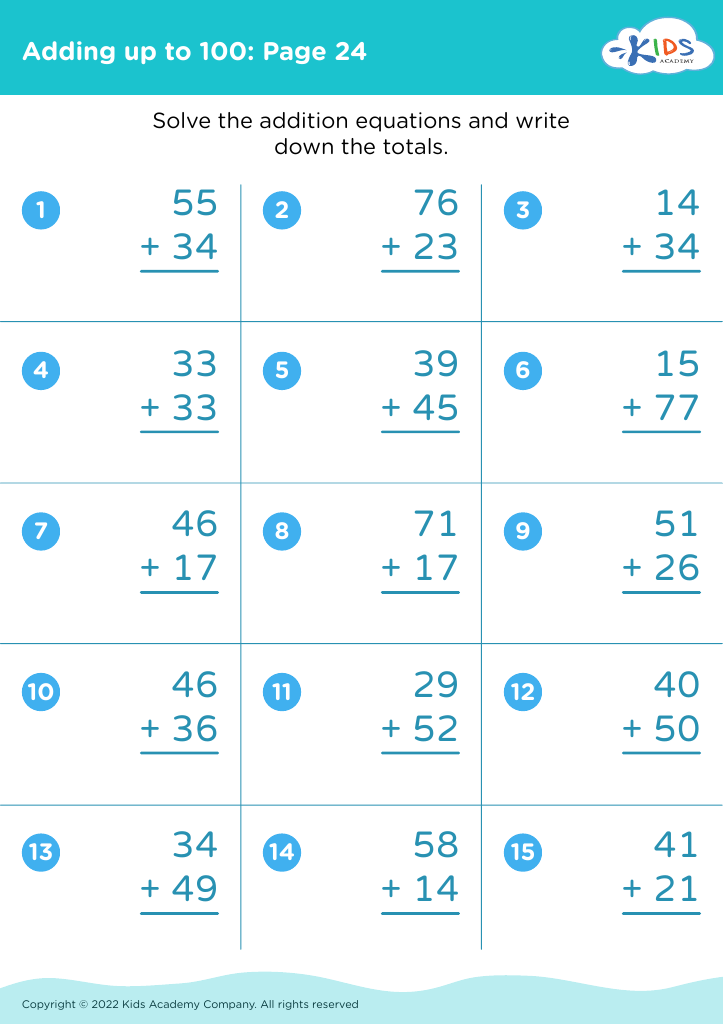
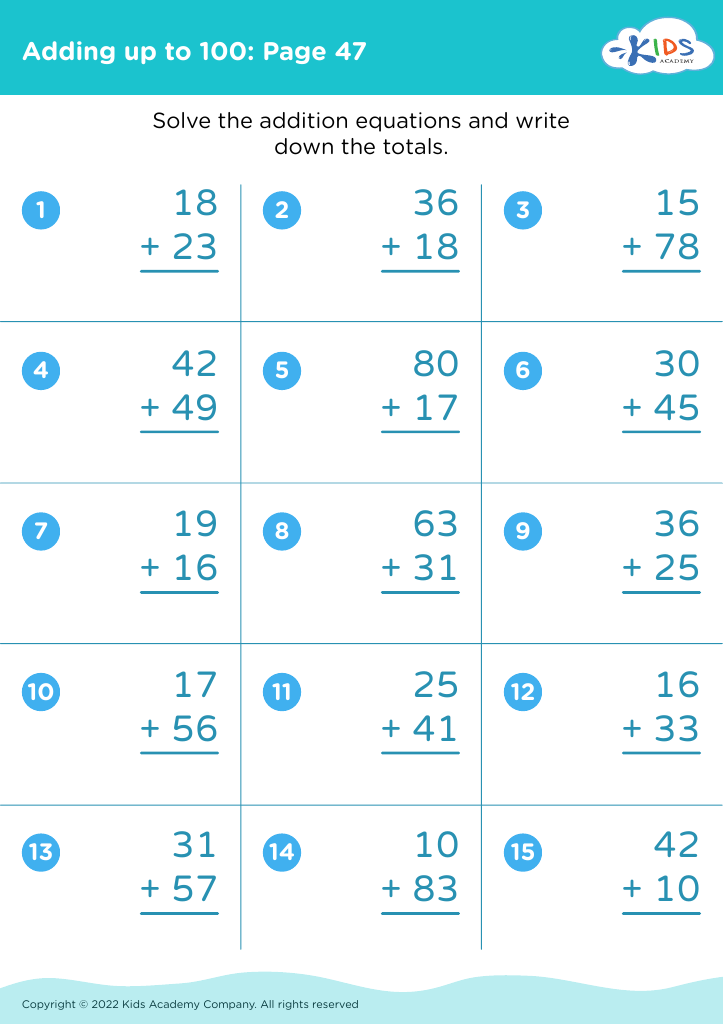
Enhance your child’s fine motor skills with our engaging "Adding Up to 100 Misc Worksheets" specially designed for ages 4-7. Our colorful and interactive worksheets not only aid in mathematical development but also help refine pencil grip, hand-eye coordination, and precision. Through a variety of fun activities, children will practice addition while improving their ability to write and draw. These worksheets offer an enjoyable way to build essential skills for lifelong learning. Perfect for parents and educators, our resources support your child’s overall development in both math proficiency and fine motor abilities. Explore today and watch your young learner thrive!
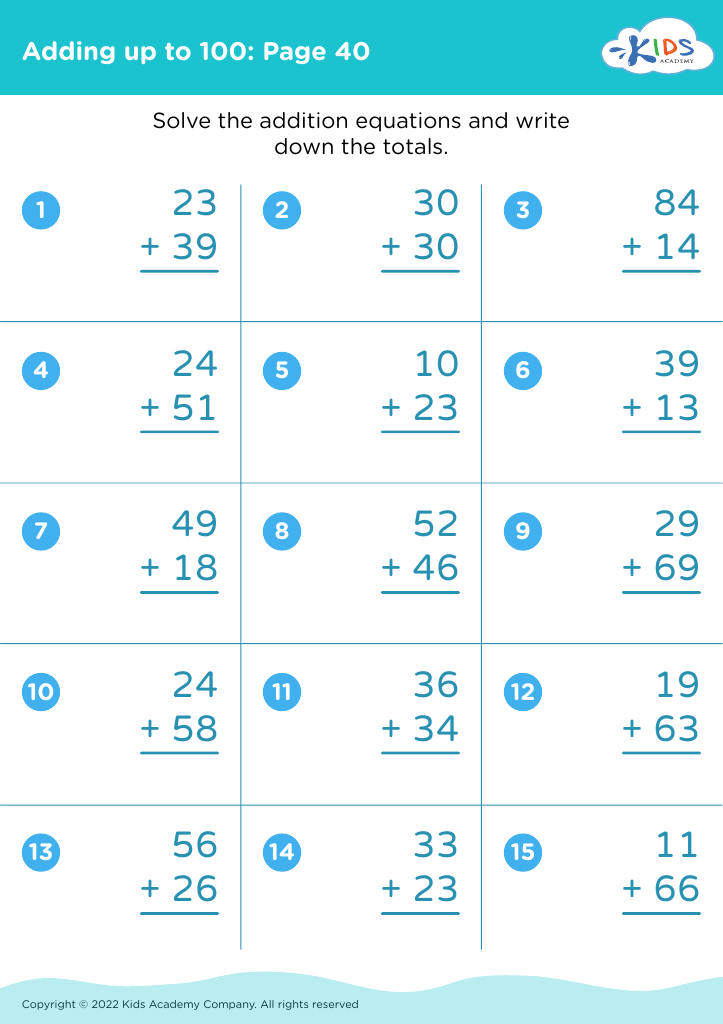
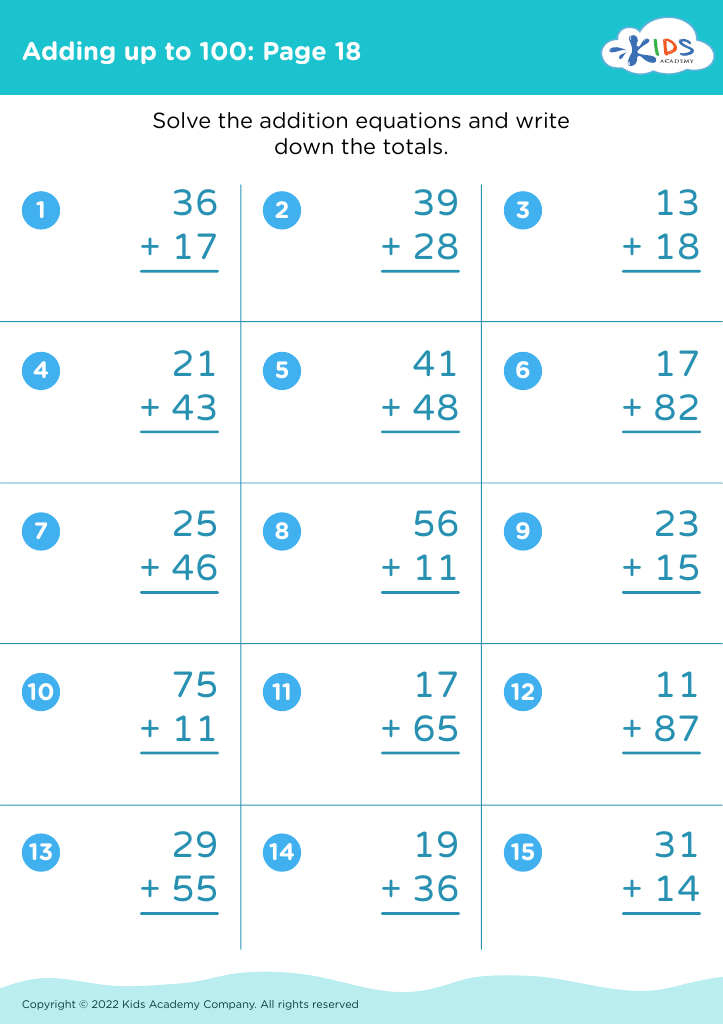


Parents and teachers should prioritize developing fine motor skills, counting up to 100, and miscellaneous foundational skills for children aged 4-7. Fine motor skills involve the coordination of small muscles in the hands and fingers, crucial for daily activities like writing, buttoning, and cutting. Strengthening these skills at a young age fosters independence and boosts confidence, paving the way for academic and personal success.
Counting up to 100 is more than just memorizing numbers; it establishes a solid mathematical foundation. This skill enhances children's number sense, which is the ability to understand and manipulate numbers. It introduces them to concepts of quantity, order, and magnitude, which are essential for grappling with more complex math topics like addition, subtraction, and measurement. Consistent practice in counting helps children recognize patterns and empowers their problem-solving abilities.
Engaging in a range of miscellaneous activities, from puzzles to simple science experiments, stimulates cognitive growth and creativity. It helps children explore various interests, developing their critical thinking and reasoning skills. Holistic development through these areas enriches a child's learning experience, fostering a love for learning and preparing them for future academic challenges. Parents and teachers should nurture these foundational skills to support the child's overall development and lifelong success.