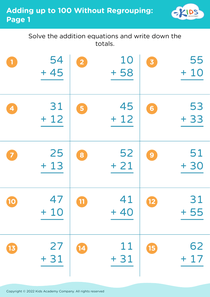
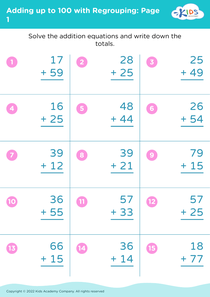
Number Recognition Adding up to 100 Misc Worksheets for Ages 4-7
8 filtered results
-
From - To
Discover our engaging "Number Recognition Adding Up to 100 Misc Worksheets" designed for ages 4-7! These worksheets are perfect for young learners eager to enhance their number recognition skills while having fun. Each activity is thoughtfully tailored to help children recognize and identify numbers in various formats, fostering a solid foundation for mathematical understanding. Incorporating vibrant visuals and interactive exercises, kids will enjoy practicing at their own pace. Perfect for both classroom use and at-home learning, these resources offer a wonderful way to support early math education. Explore our collection today and watch your child's confidence soar!
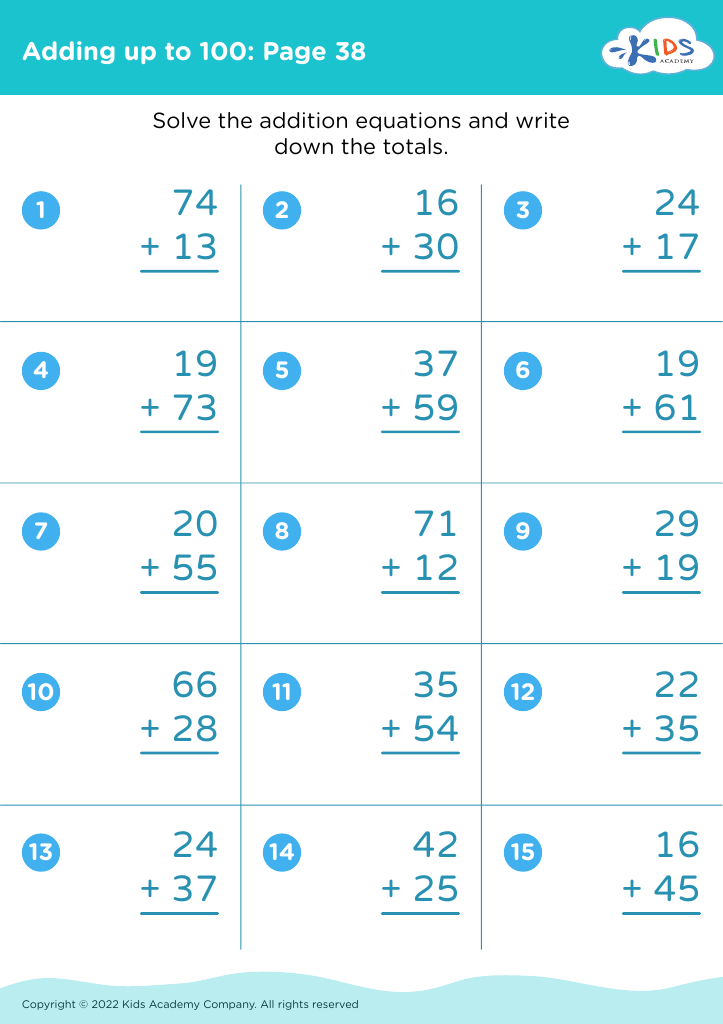
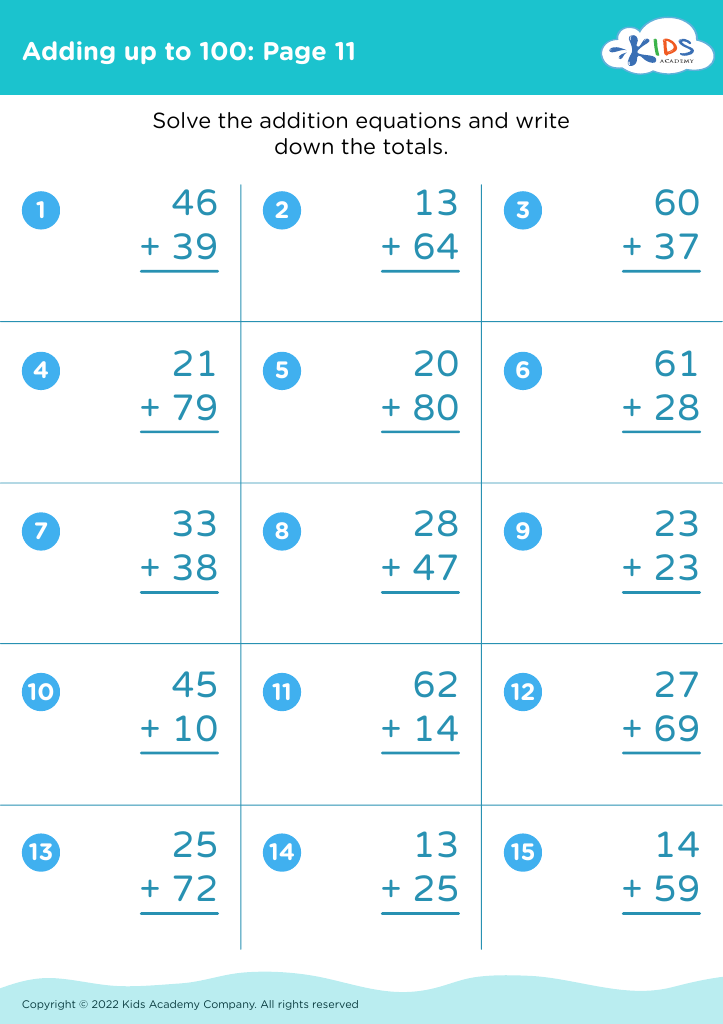
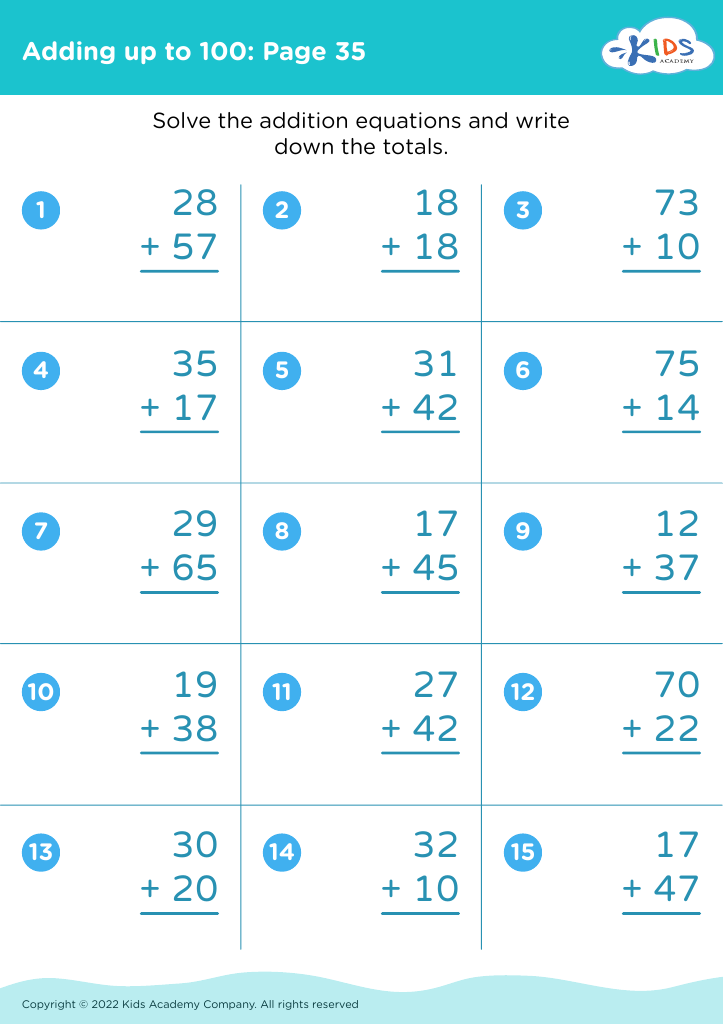
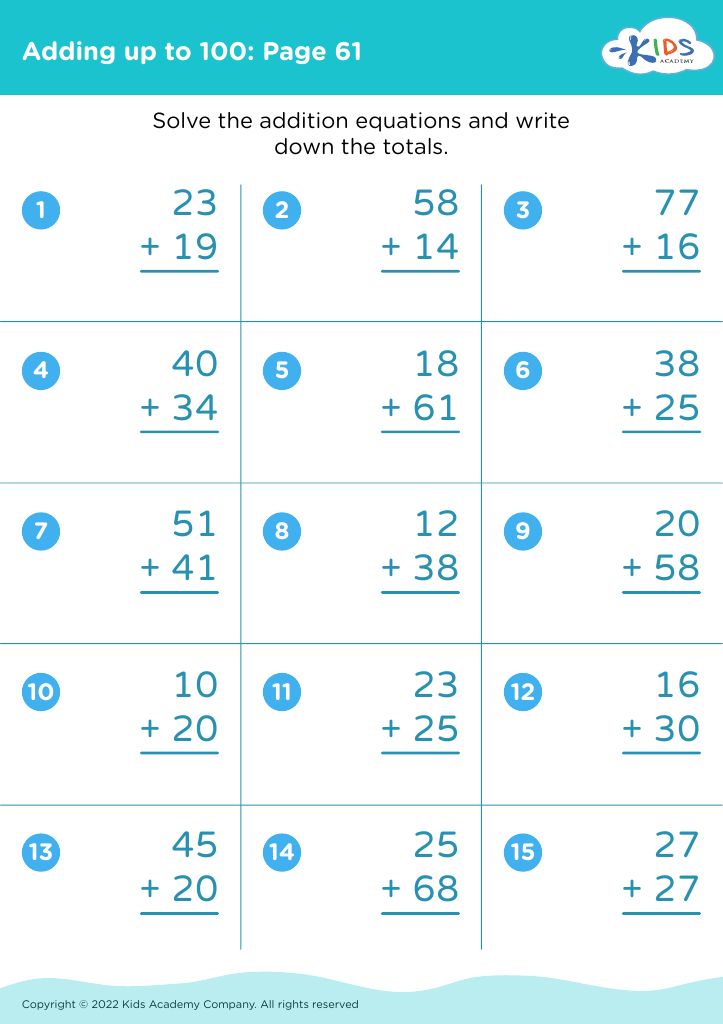
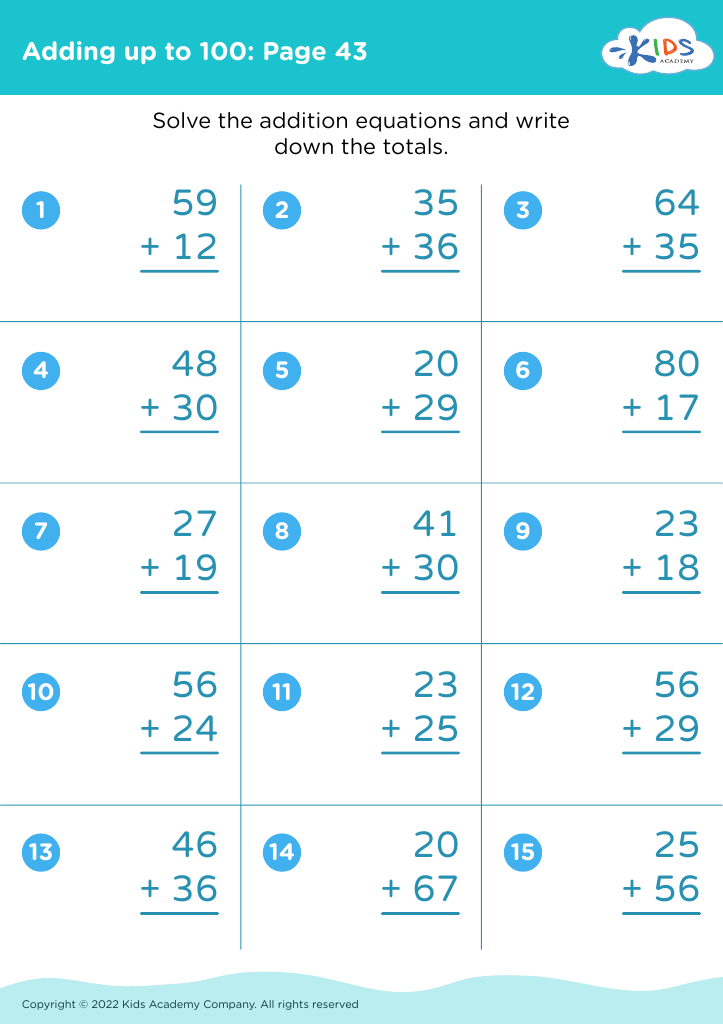
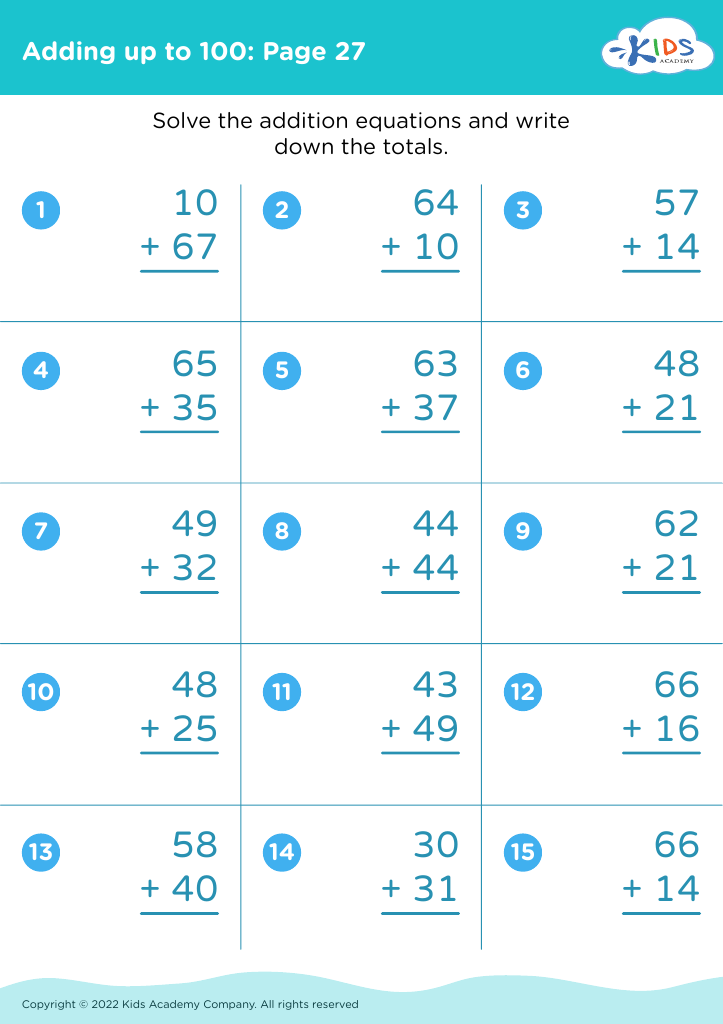
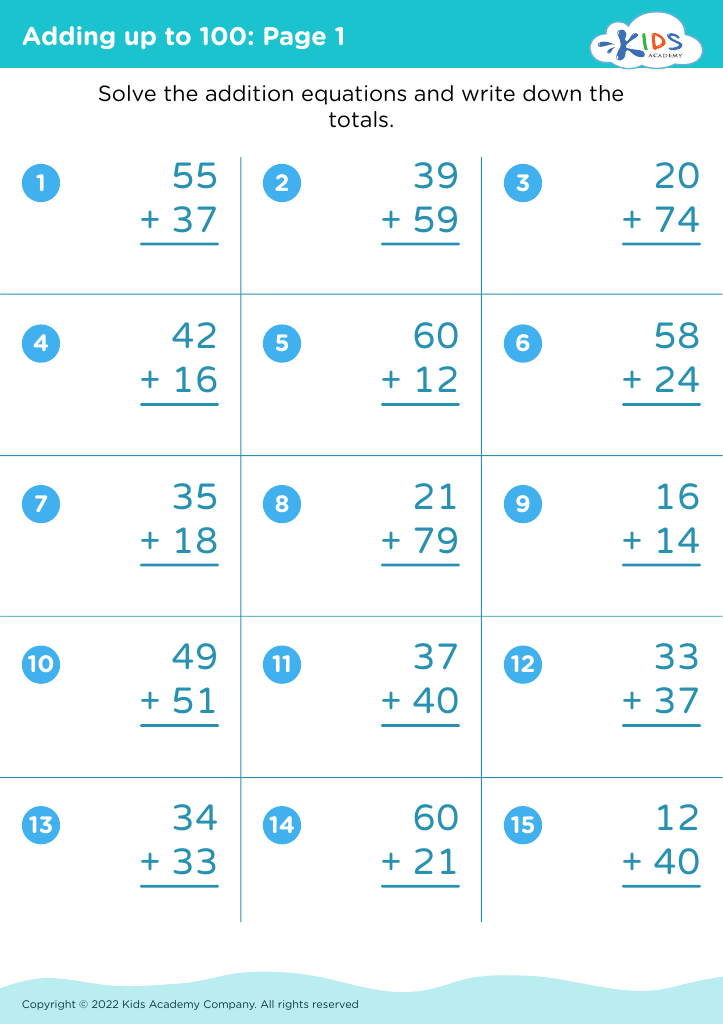
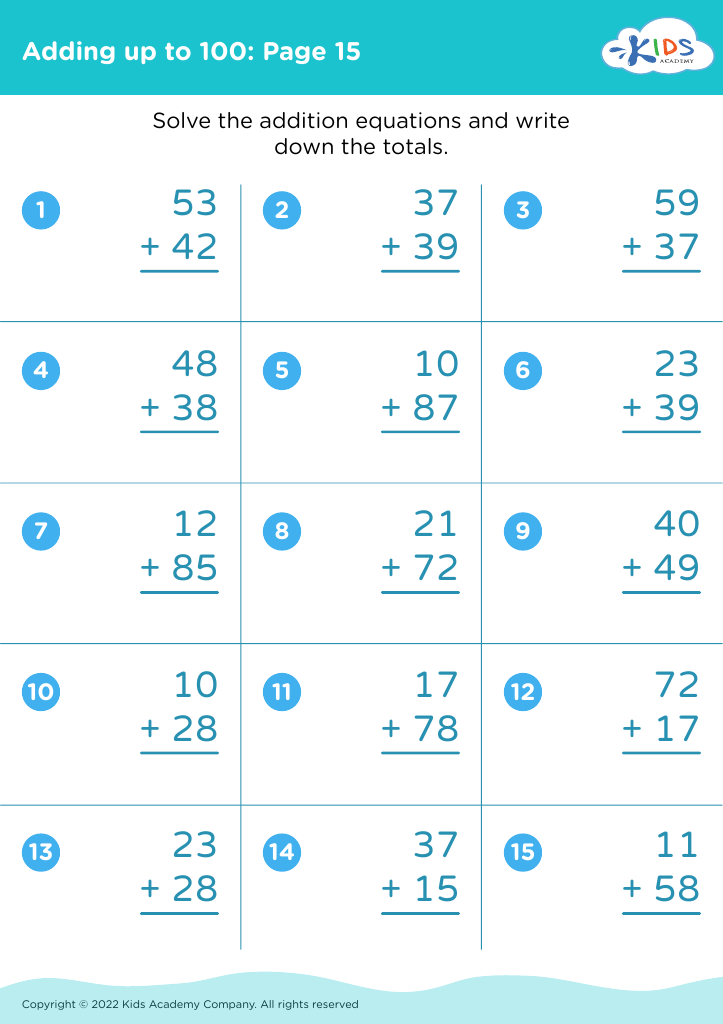


Number recognition and the ability to add up to 100 are vital foundational skills for children aged 4-7. Parents and teachers should prioritize these competencies as they form the basis of future mathematical understanding and success. Early recognition of numbers enables children to identify, compare, and manipulate quantities, fostering essential problem-solving skills.
Recognizing numbers helps children grasp concepts like size, order, and relationships, which are crucial for more advanced mathematics later on. Addition skills ensure they can accumulate knowledge progressively and engage in mathematical thinking through fun and interactive activities.
Developing this competency within this age range supports cognitive growth, enhances memory, and boosts confidence, laying a strong groundwork for academic achievement. Furthermore, early exposure to these concepts nurtures a positive attitude toward math, reducing anxiety that can arise from the subject in later years.
Engaging children in playful and real-world applications of number recognition and addition makes learning enjoyable. Activities ranging from counting objects to playing games promote interaction and bonding while reinforcing essential skills. Therefore, understanding the importance of number recognition and addition is paramount for parents and teachers, as it directly impacts children’s future academic and life success.