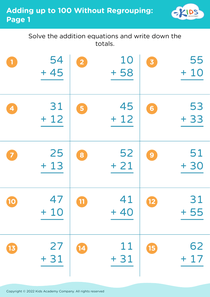
Addition Practice Adding up to 100 with Regrouping Worksheets for Ages 4-7
4 filtered results
-
From - To
Enhance your child's addition skills with our "Addition Practice Adding up to 100 with Regrouping Worksheets" tailored for ages 4-7. These engaging worksheets are designed to make learning fun, helping young learners master addition concepts while developing critical math skills. With a focus on regrouping, these worksheets are perfect for building a solid foundation in arithmetic. Each page is filled with colorful problems and clear instructions, making it easy for kids to follow along and practice. Perfect for both classroom and at-home learning, these worksheets ensure your child gains confidence and proficiency in addition.
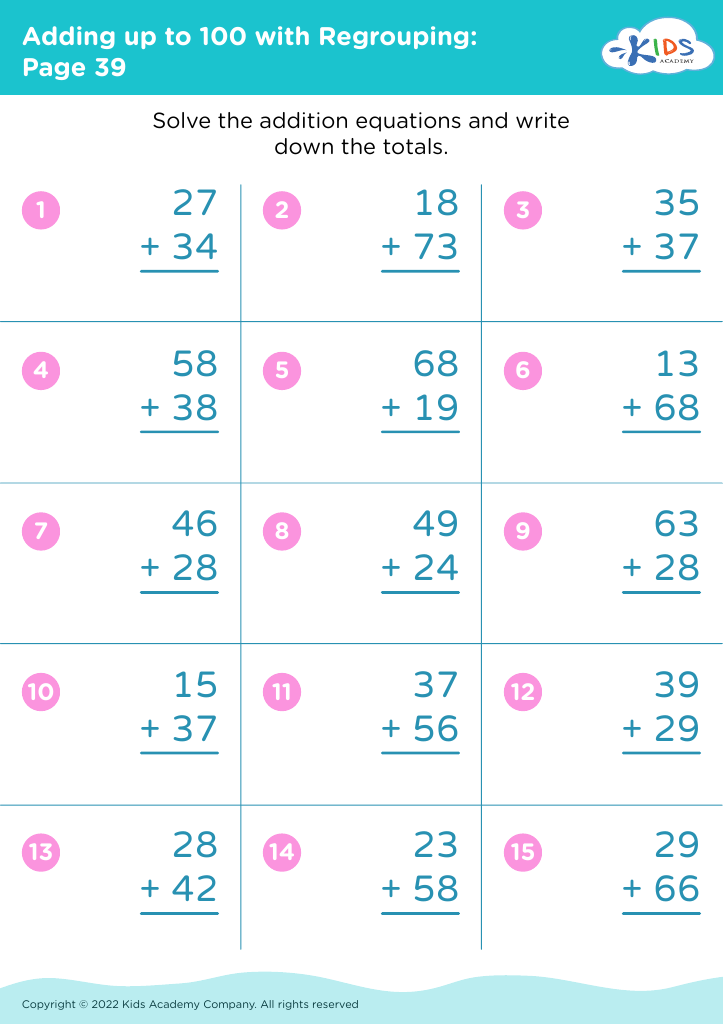
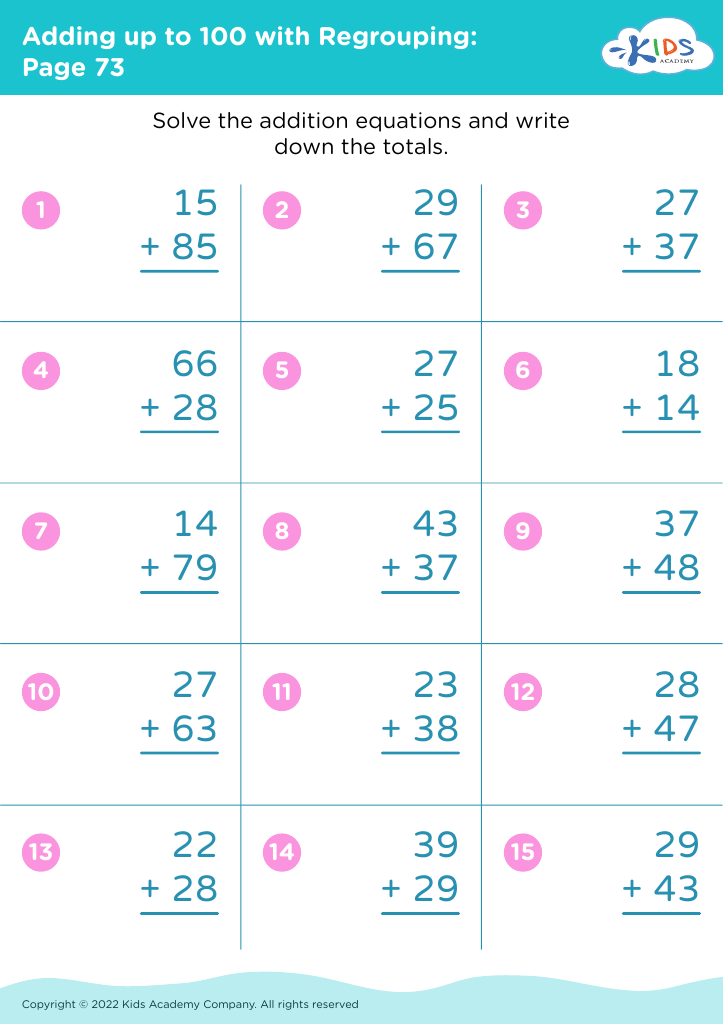
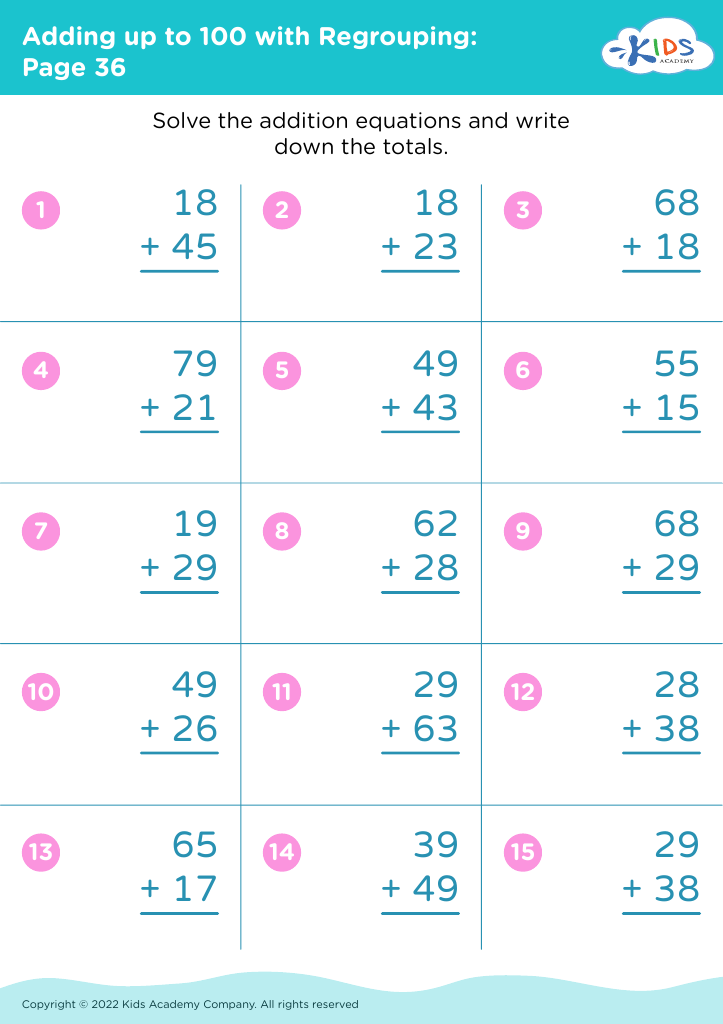
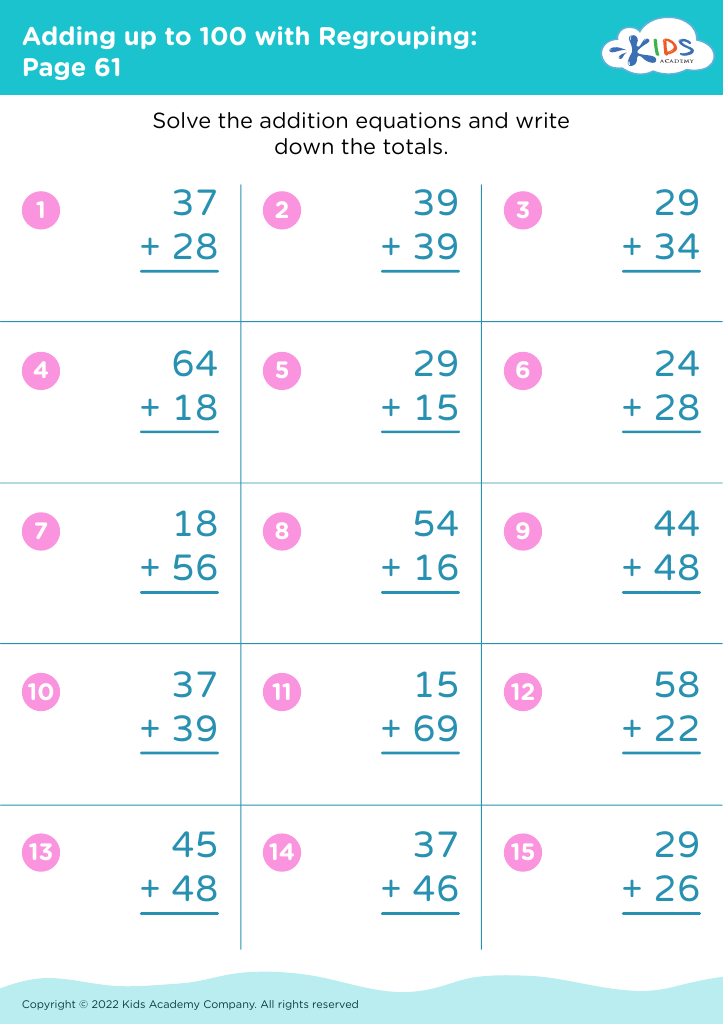




Parents and teachers should value addition practice that involves adding up to 100 with regrouping for children aged 4-7 because it lays a solid mathematical foundation crucial for later learning. At this age, children are developing crucial cognitive skills, and mastering basic addition with regrouping helps cultivate their number sense, mental math abilities, and problem-solving skills. Regrouping, also known as carrying over, is an essential concept in arithmetic that allows children to handle more complex calculations with ease.
Practicing addition with regrouping helps children understand the place value system, which is a fundamental principle in mathematics. By recognizing how to group and ungroup tens and ones, young learners gain a clearer representation of how numbers interact, which is key for future arithmetic, such as subtraction, multiplication, and division.
Moreover, consistent practice in this area builds confidence and fluency in math, reducing anxiety and fostering a positive attitude towards learning. As children experience success in mastering these basic skills, their overall academic self-esteem is boosted, encouraging a love for mathematics that is often essential for later academic achievement in STEM subjects.
In summary, addition practice with regrouping for young learners is important because it strengthens foundational math skills, enhances cognitive development, and promotes a confident and positive learning experience.