Basic Addition Skills Adding up to 100 with Regrouping Worksheets for Ages 4-7
3 filtered results
-
From - To
Explore our engaging "Basic Addition Skills: Adding up to 100 with Regrouping" worksheets, specifically designed for children aged 4-7. These interactive resources introduce young learners to essential addition strategies, focusing on regrouping techniques that enhance their mathematical understanding. Through colorful visuals and fun practice exercises, kids will build confidence as they master core concepts in addition, laying a strong foundation for future math success. Perfect for home or classroom use, our worksheets make learning addition enjoyable and effective. Equip your little ones with the skills they need to excel in math with our thoughtfully crafted activities!
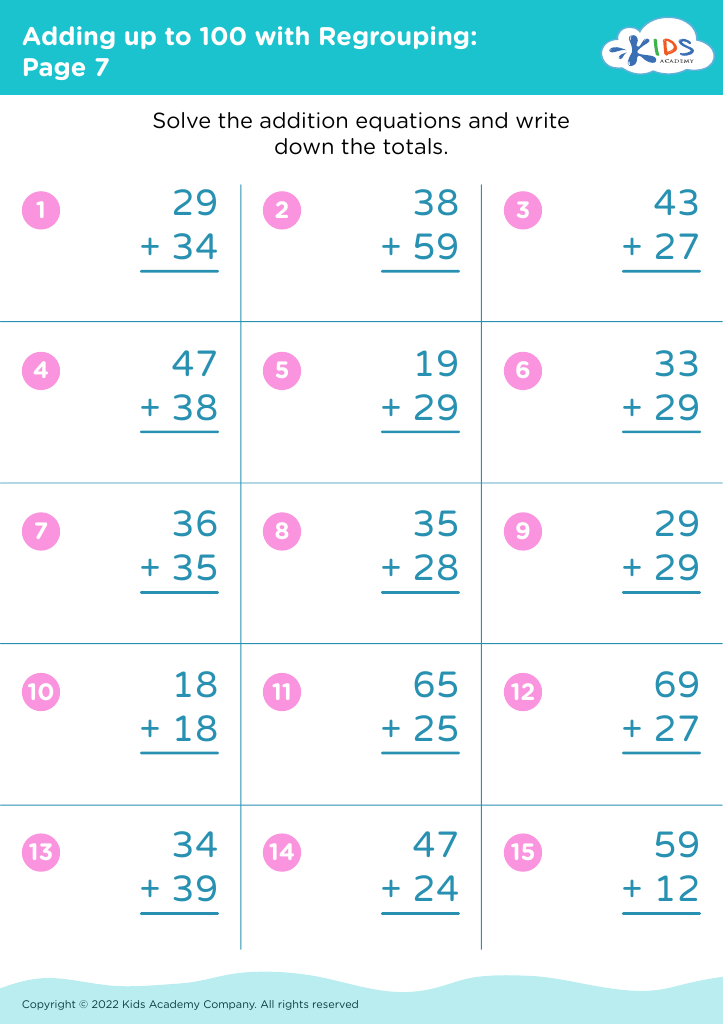
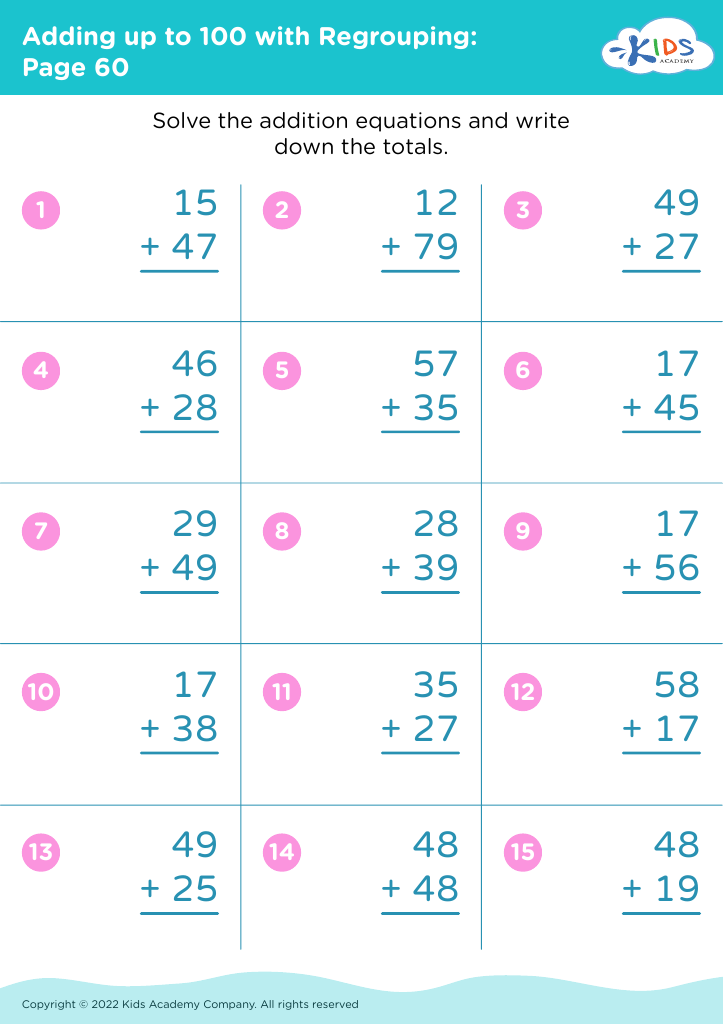
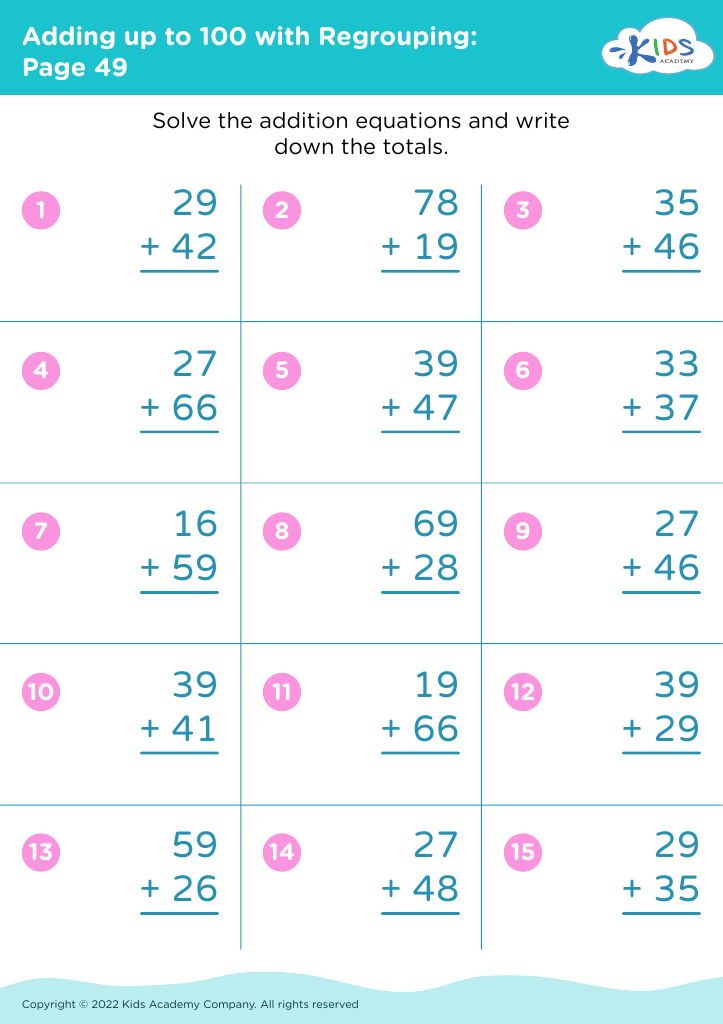




Parents and teachers should prioritize basic addition skills, especially adding up to 100 with regrouping for children ages 4-7, because these foundational concepts significantly influence future learning and overall mathematical proficiency. At this age, children are developing critical cognitive skills; understanding addition lays the groundwork for more complex operations such as subtraction, multiplication, and eventually algebra. Regrouping helps them grasp the concept of place value, an essential element of the number system.
Moreover, mastering these skills fosters confidence in young learners. When children can successfully perform addition tasks, they develop a positive attitude toward mathematics, which can last a lifetime. This self-assurance encourages them to tackle more challenging problems as they progress academically. Furthermore, basic addition skills are used in everyday life—whether through budgeting, shopping, or cooking—teaching children practical applications of math that are beneficial outside the classroom.
Additionally, reinforcing these skills enhances problem-solving abilities and logical reasoning, critical skills across all subjects. By ensuring children acquire these essential skills early on, parents and teachers can support lifelong learning and adaptability, promoting success in school and beyond. Ultimately, fostering a strong mathematical foundation is key to ensuring children thrive academically and develop a love for learning.