Counting practice Adding up to 100 with Regrouping Worksheets for Ages 4-7
5 filtered results
-
From - To
Explore our engaging Counting Practice worksheets designed for children ages 4-7, helping them master the essential skill of adding up to 100 with regrouping. These interactive exercises make learning fun while reinforcing foundational math concepts. Your child will develop confidence in their counting abilities through colorful, easy-to-follow activities that build critical thinking skills. Each worksheet offers clear instructions and progressive challenges, ensuring students grasp the concept of regrouping while boosting their problem-solving capabilities. Perfect for home or classroom use, our Counting Practice worksheets are a valuable resource for fostering a love of math in young learners. Start counting today!
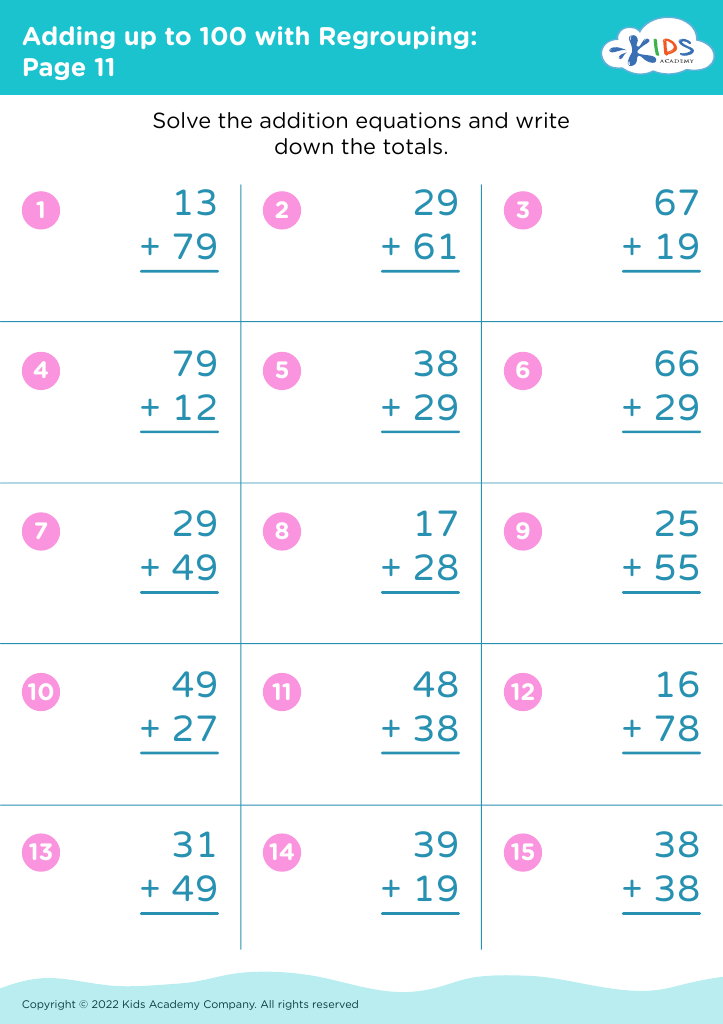
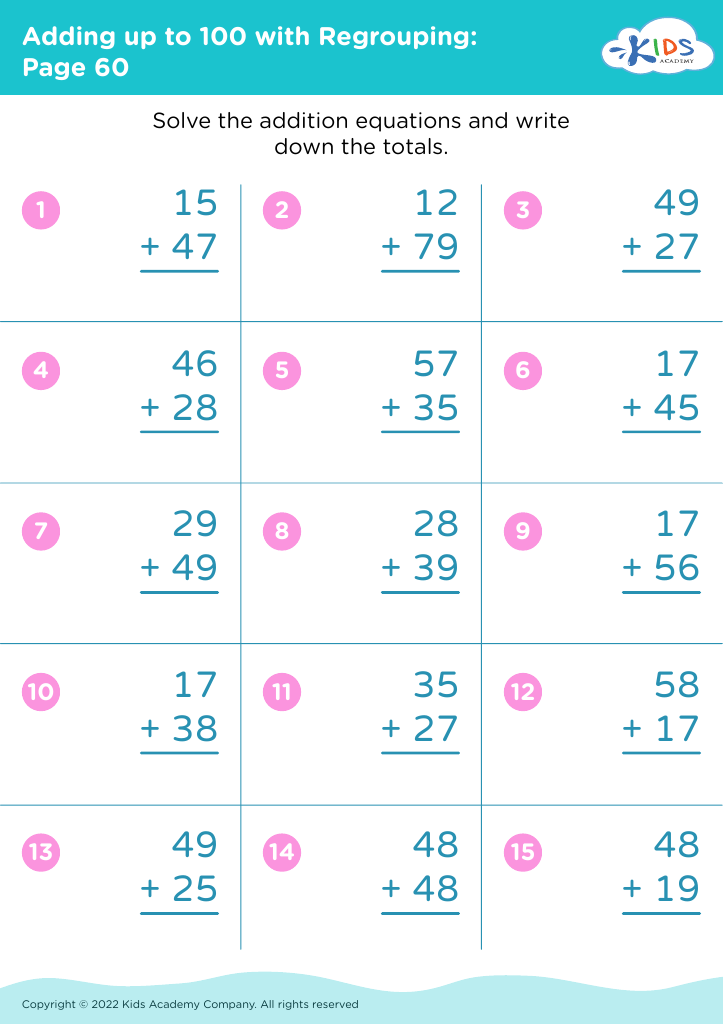
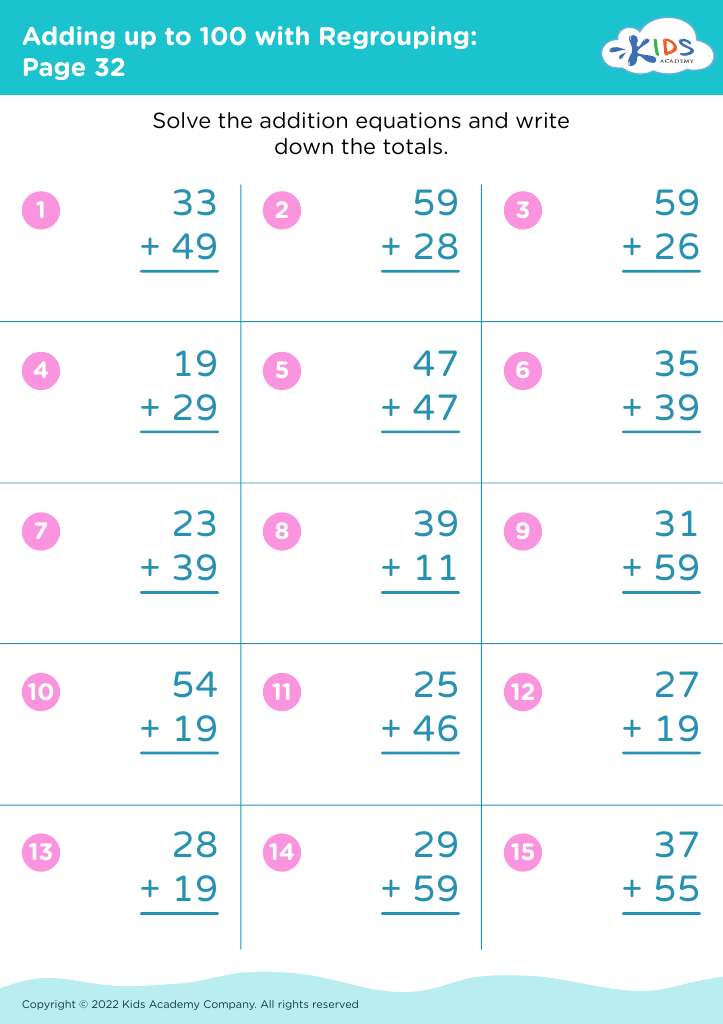
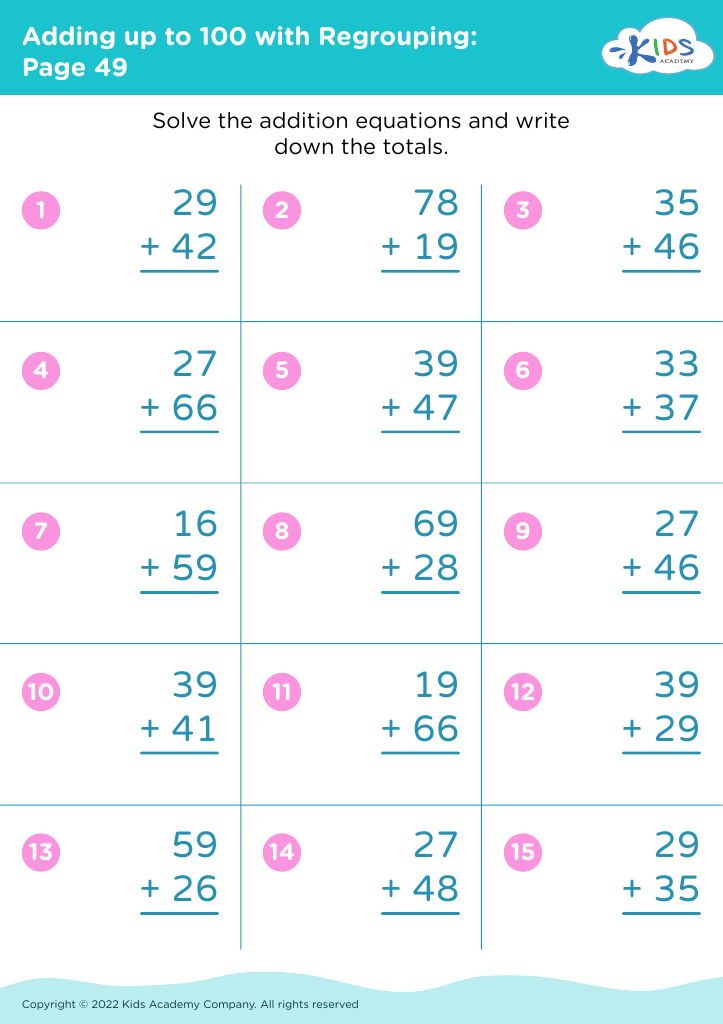
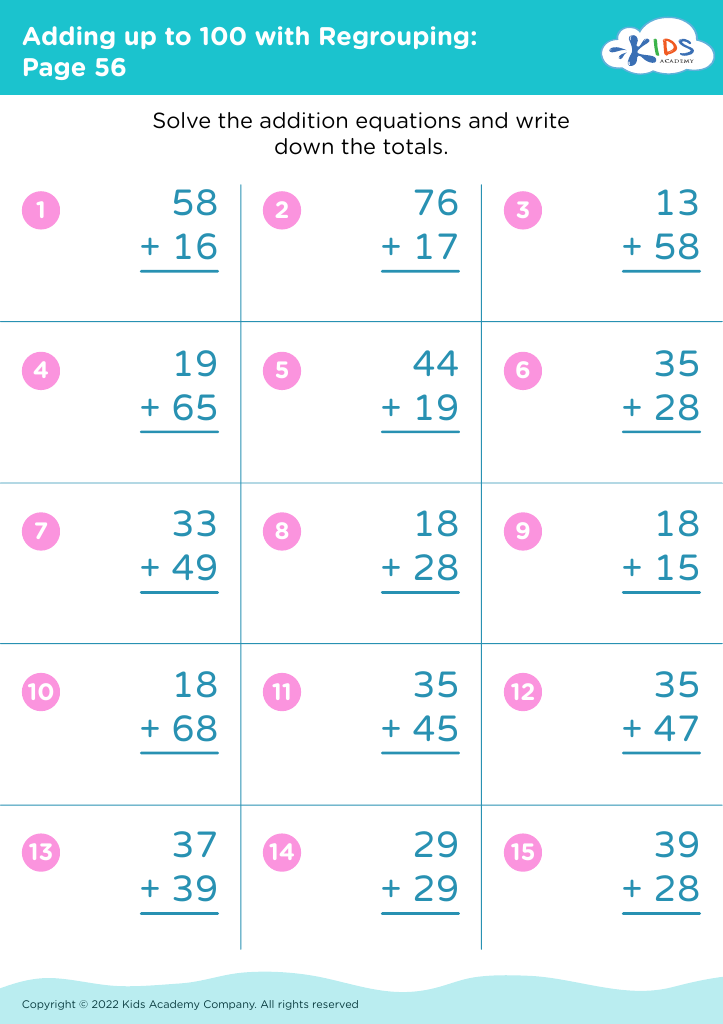




Counting practice, particularly in adding up to 100 with regrouping, is crucial for children aged 4-7 because it lays the foundation for essential mathematical skills. At this age, children are developing key cognitive abilities, and engaging them in counting helps strengthen their number sense. By learning to add and regroup, they begin to understand place value, an integral concept in mathematics.
The process of regrouping teaches children that numbers can be combined in flexible ways, which builds their problem-solving skills. This not only promotes computational fluency but also enhances critical thinking as they tackle more complex mathematical problems later on. Furthermore, early exposure to these concepts fosters confidence in math, preventing math anxiety in future education.
For parents and teachers, facilitating such practice creates a supportive learning environment that empowers children to explore math through play and real-life situations. It encourages communication about numbers, promoting a positive attitude towards learning. Ultimately, nurturing these foundational skills in early learners ensures they are well-equipped for future academic challenges and cultivates a lifelong love for mathematics. Collectively, these practices form an invaluable investment in the children's educational journey.