Shape Recognition Adding up to 100 with Regrouping Worksheets for Ages 4-7
5 filtered results
-
From - To
Enhance your child’s math and geometry skills with our Shape Recognition Adding up to 100 with Regrouping Worksheets, designed for ages 4-7. These worksheets seamlessly blend identifying shapes with mastering addition up to 100, including regrouping strategies. Structured to support early learners, each worksheet offers engaging activities that stimulate both critical thinking and arithmetic skills. Whether in the classroom or at home, our worksheets provide a fun, interactive way to boost confidence and proficiency in math. Give your young learner a head start in their educational journey with these expertly crafted exercises.
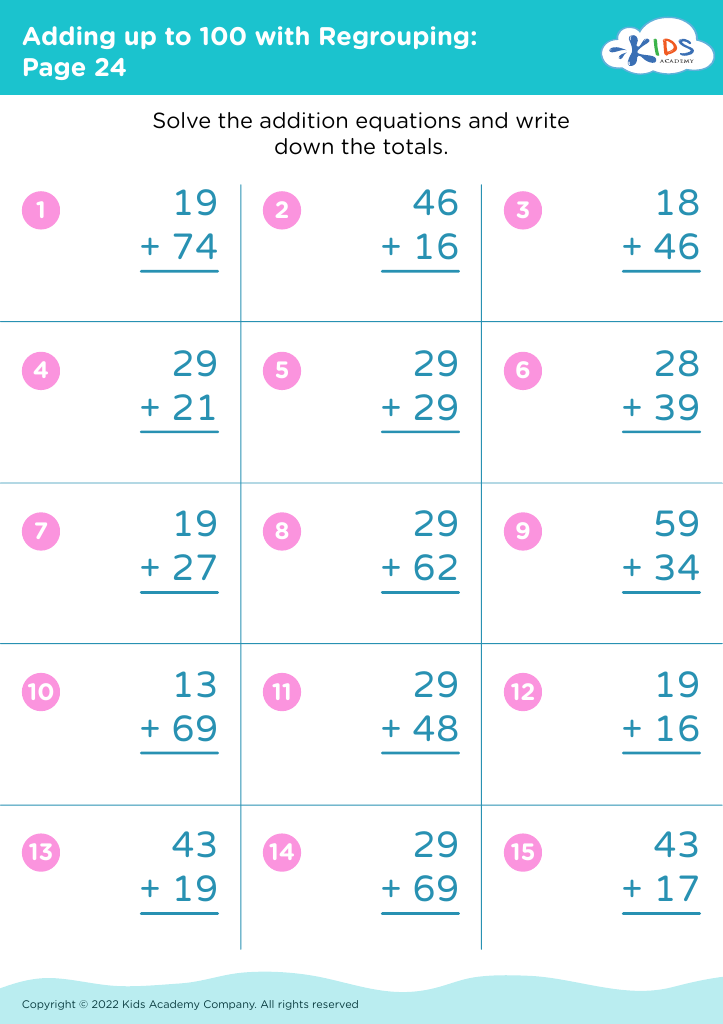
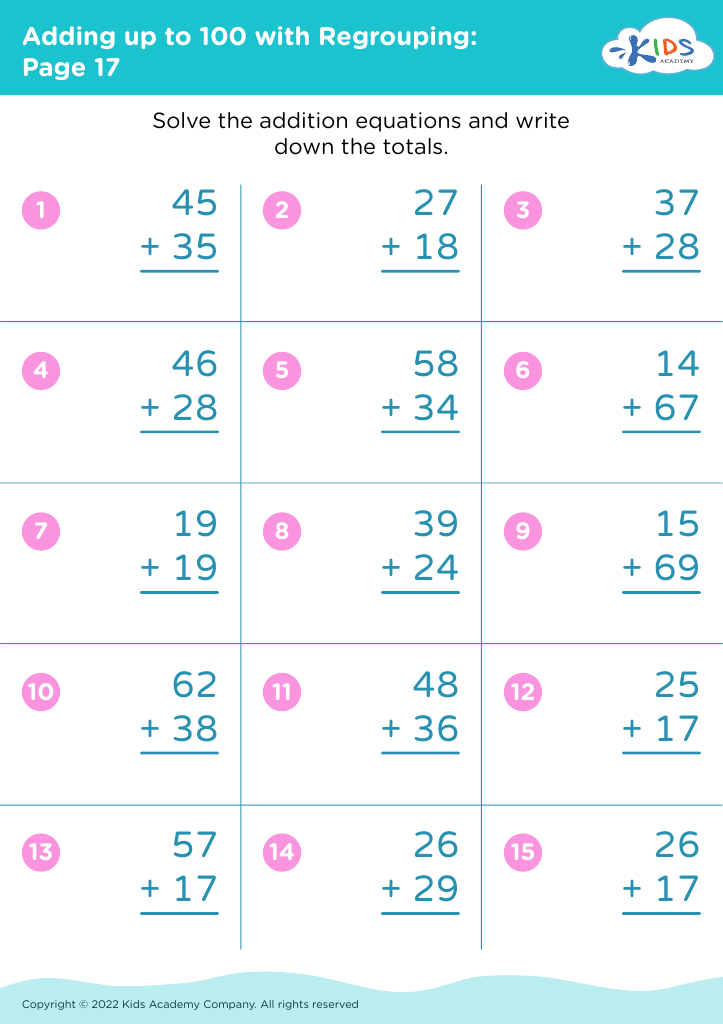
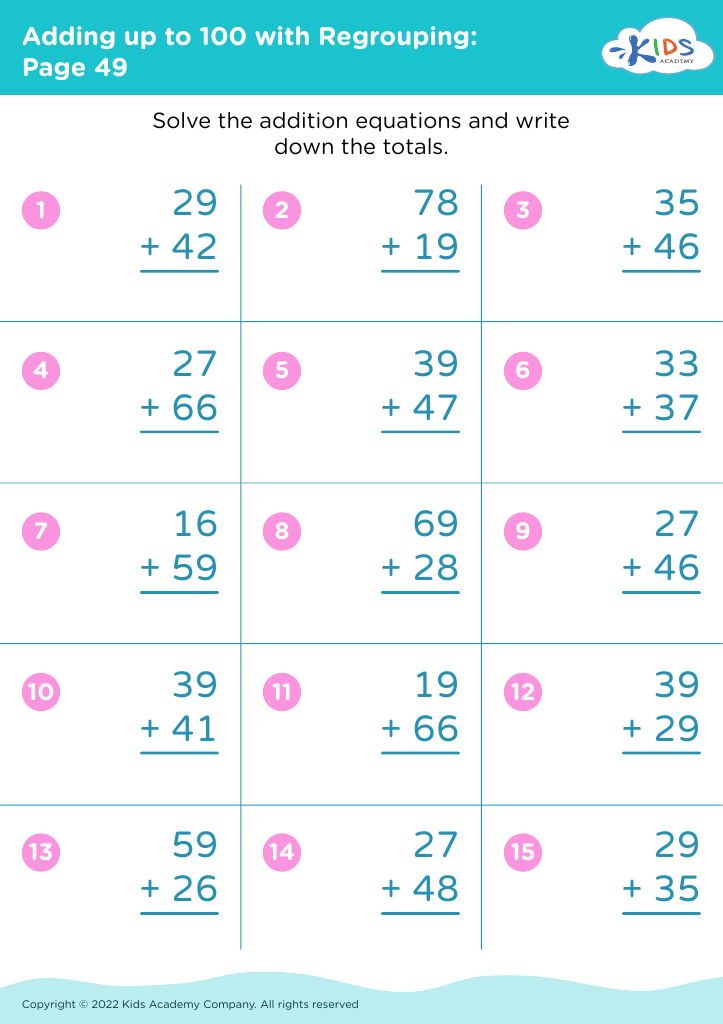
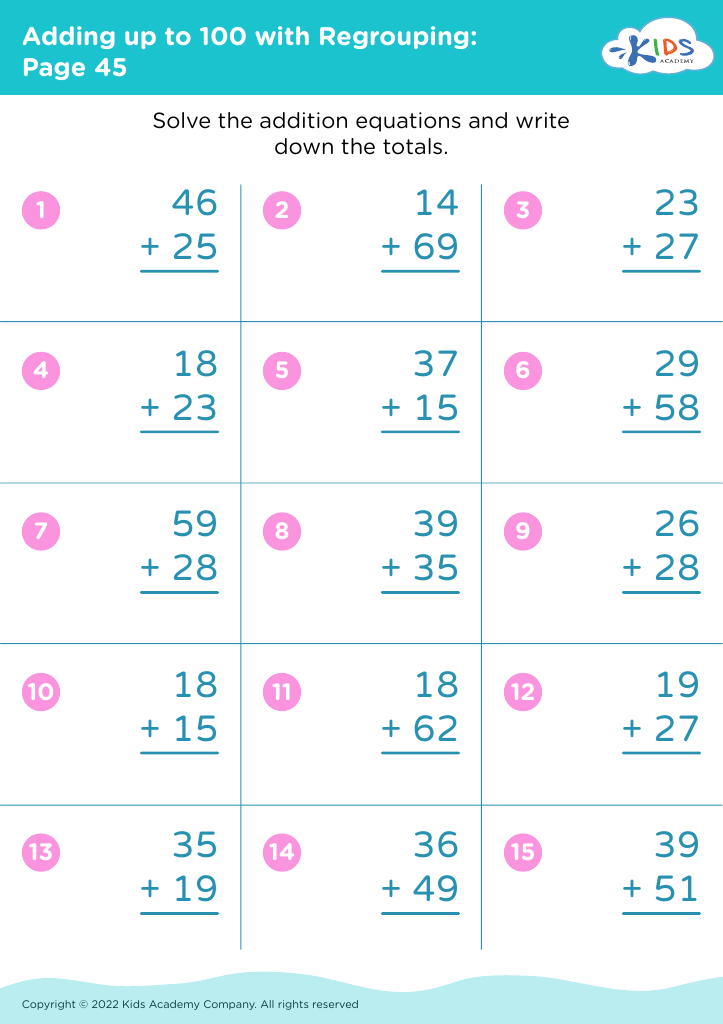
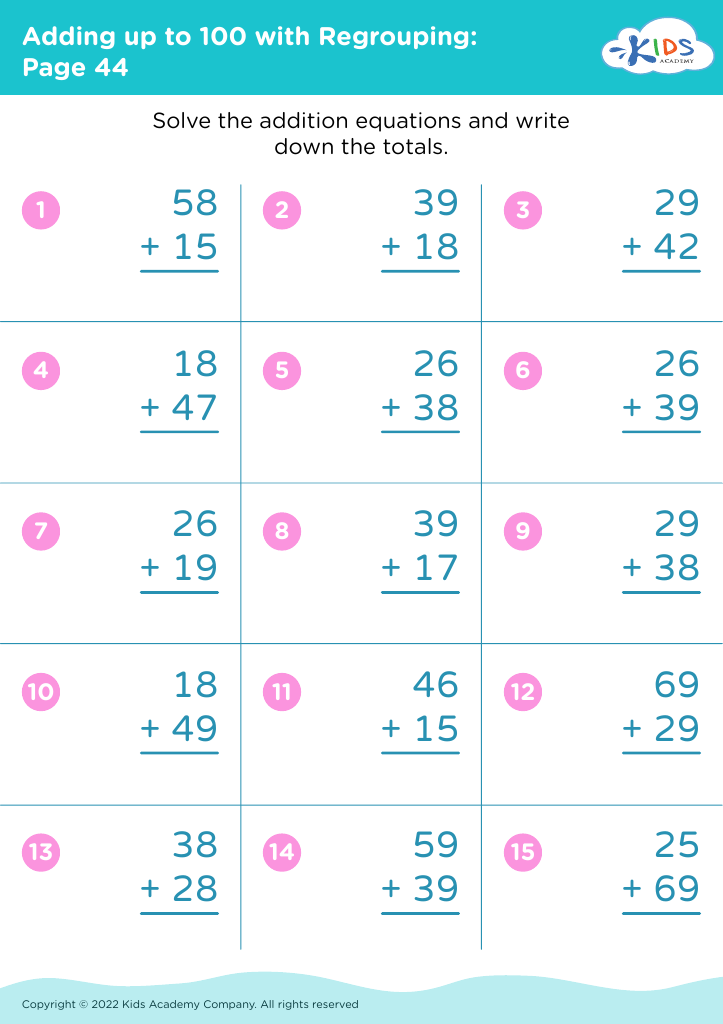




Shape recognition and understanding how numbers add up, including regrouping concepts, play crucial roles in early childhood education for ages 4-7. At this developmental stage, children are highly receptive to learning foundational skills that will support their overall academic journey.
Firstly, shape recognition hones a child's spatial awareness and problem-solving abilities. Identifying shapes helps children describe and understand their environment, fostering cognitive and language skills. For example, knowing the difference between a square and a rectangle also assists in categorizing and comprehending geometric properties, tying into spatial mathematics later in schooling.
Adding up to 100 with regrouping introduces children to essential arithmetic principles. Understanding how numbers combine lays the groundwork for more complex mathematical operations they’ll encounter in higher grades. Regrouping, in particular, is an important concept that shows children how to manage sums that extend beyond the single digits, fostering their cognitive resilience and flexibility in problem-solving.
Integrating these concepts early not only supports math fluency but also encourages logical thinking, attention to detail, and patience. For parents and teachers, nurturing these skills offers children a solid framework on which many other educational achievements are built. By valuing and cultivating shape recognition and regrouping strategies, adults set the stage for successful and enjoyable lifelong learning.