Filters

16 filtered results

Clear all filters
Favorites
With answer key
Interactive

16 filtered results

Difficulty Level

Grade


Discover the perfect tool to teach foundational math skills with our "Understanding Fractions: Adding up to 100 with Regrouping Worksheets for Ages 4-7". These expertly designed worksheets guide young learners through the basics of fractions and addition with regrouping, making challenging concepts accessible and fun. Ideally suited for kids aged 4-7, this collection builds confidence and enhances problem-solving skills through engaging, age-appropriate activities. Whether used in the classroom or at home, these worksheets provide a strong mathematical foundation, ensuring a smoother transition into more advanced topics. Foster a love for math today with our thoughtfully crafted resource.
Check out this FREE Trial Lesson on Adding up to 100 with Regrouping for age 4-7!

H

Favorites
With answer key
Interactive
  • 4-7
  • Understanding fractions
  • Adding up to 100 with Regrouping
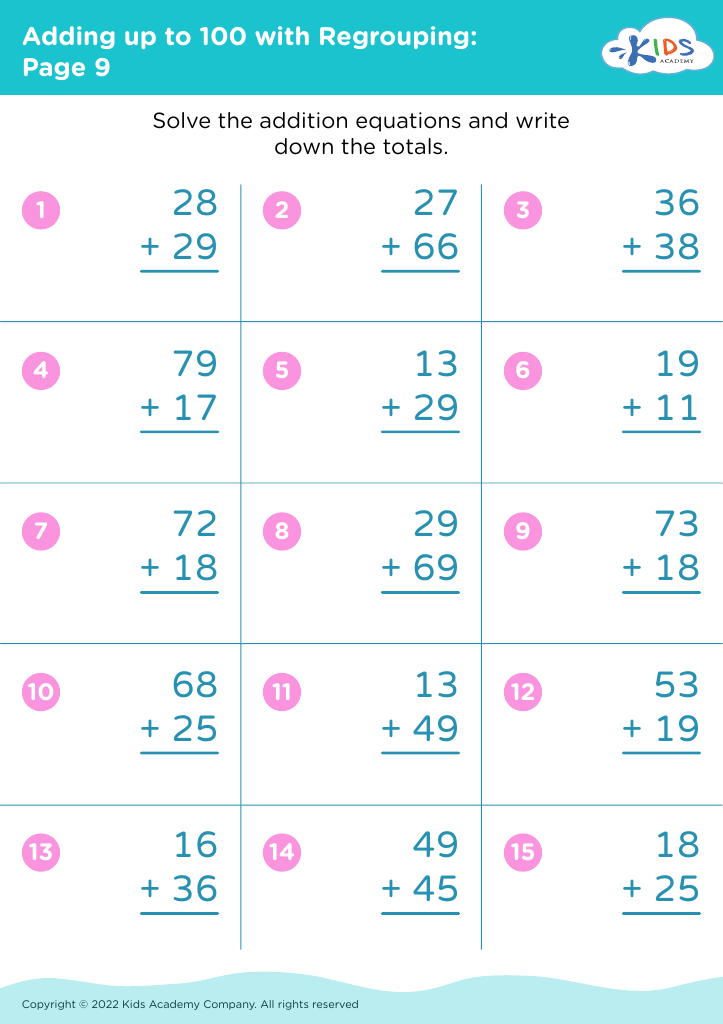
Adding up to 100 with Regrouping: Page 9
Worksheet
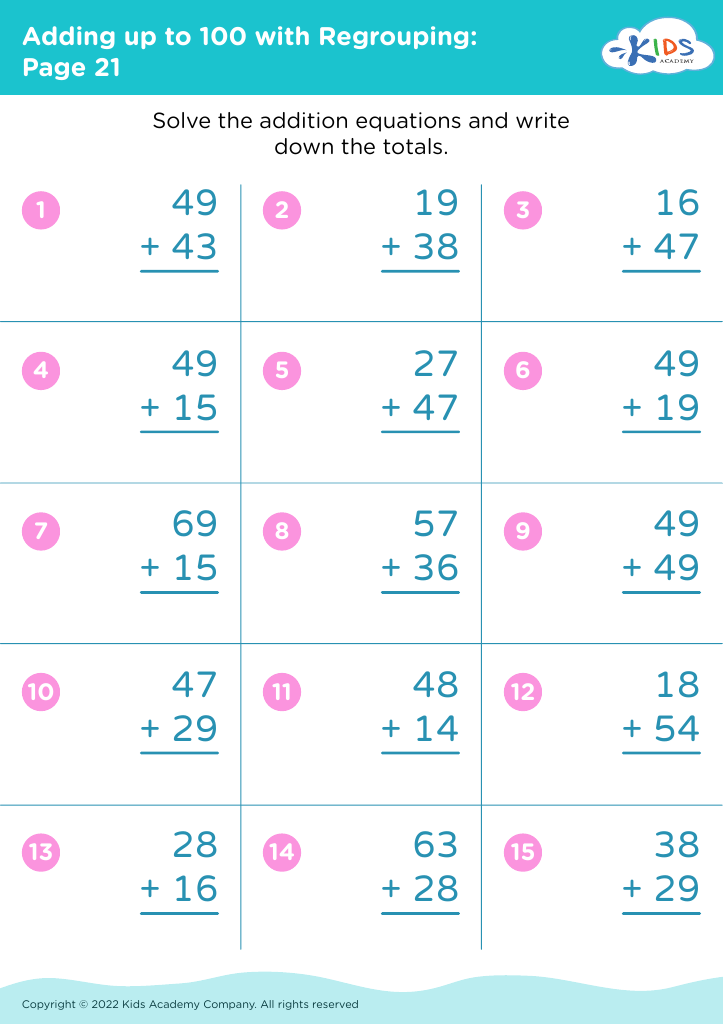
Adding up to 100 with Regrouping: Page 21
Worksheet
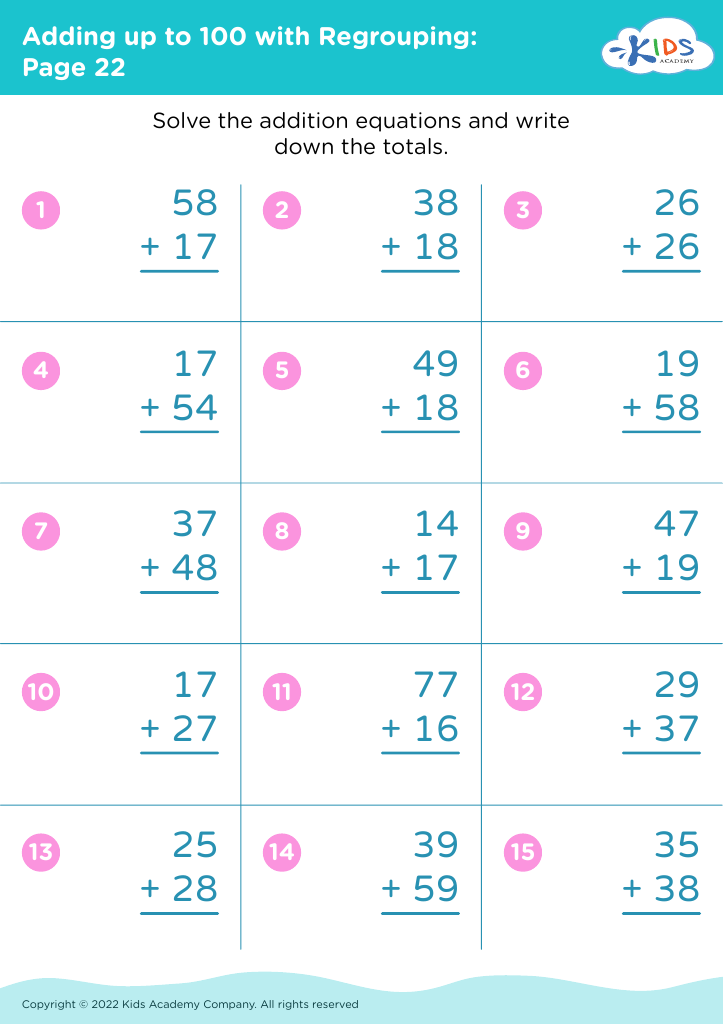
Adding up to 100 with Regrouping: Page 22
Worksheet
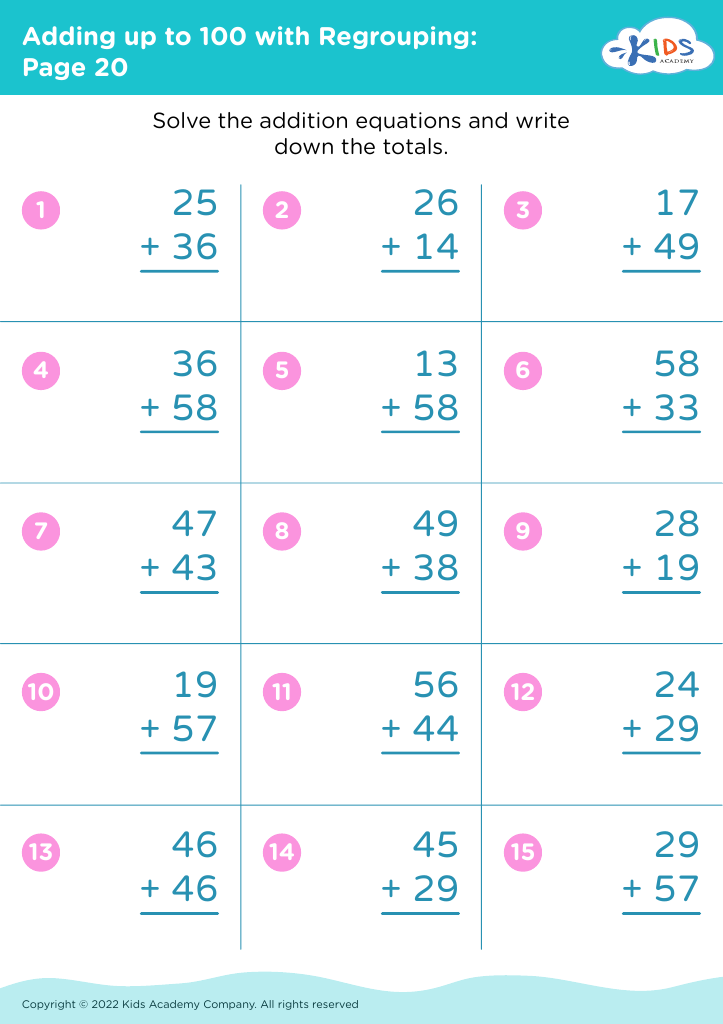
Adding up to 100 with Regrouping: Page 20
Worksheet
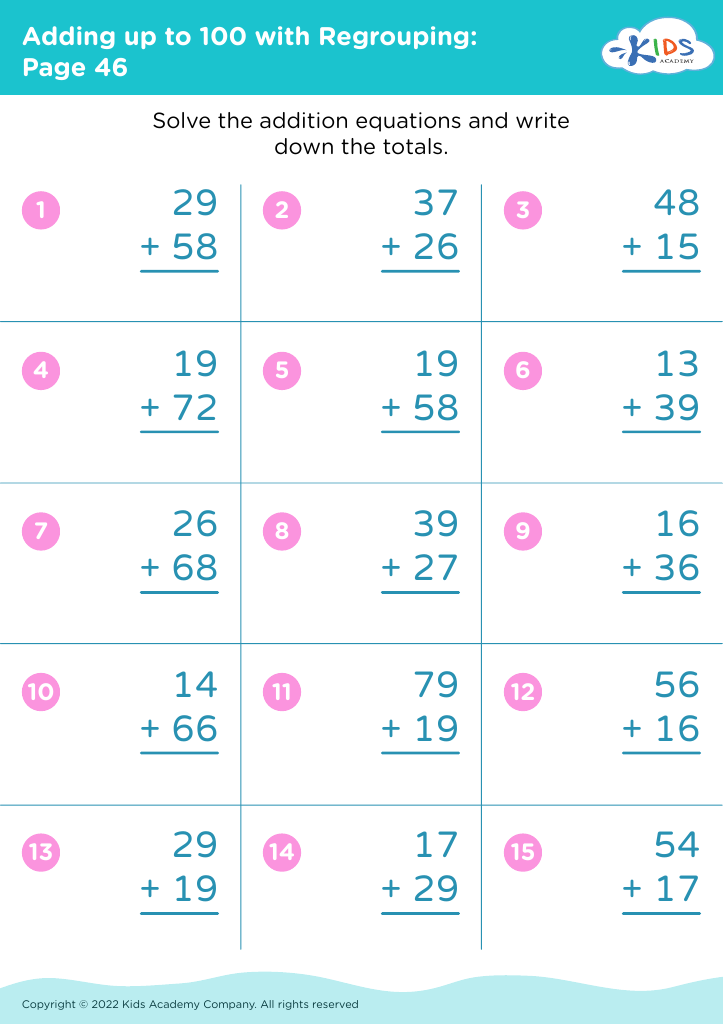
Adding up to 100 with Regrouping: Page 46
Worksheet
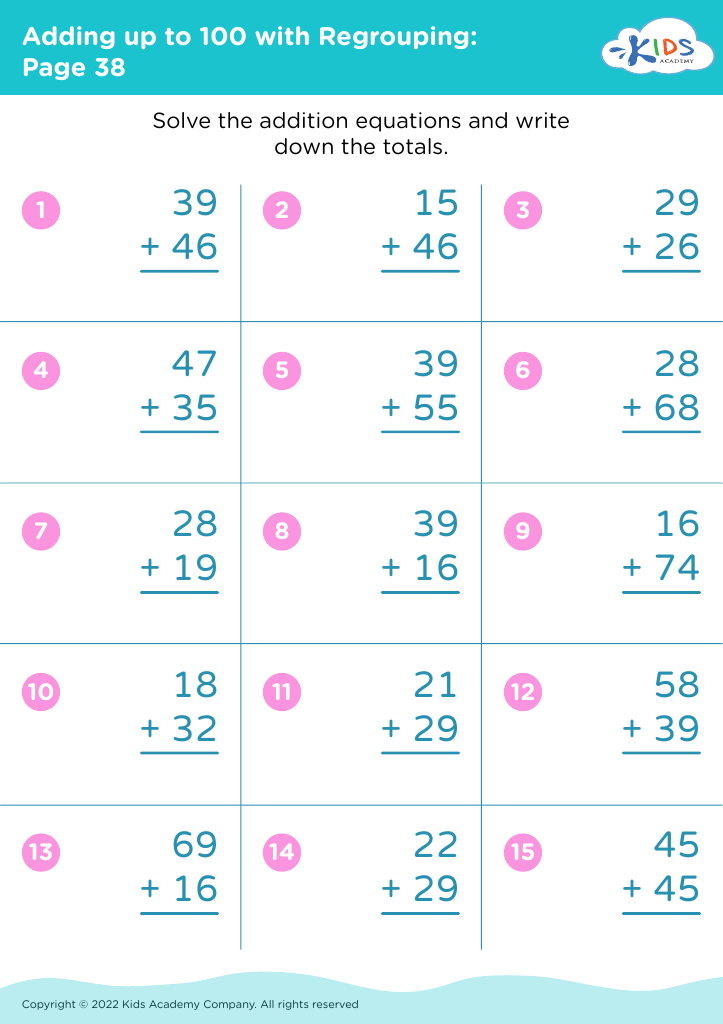
Adding up to 100 with Regrouping: Page 38
Worksheet
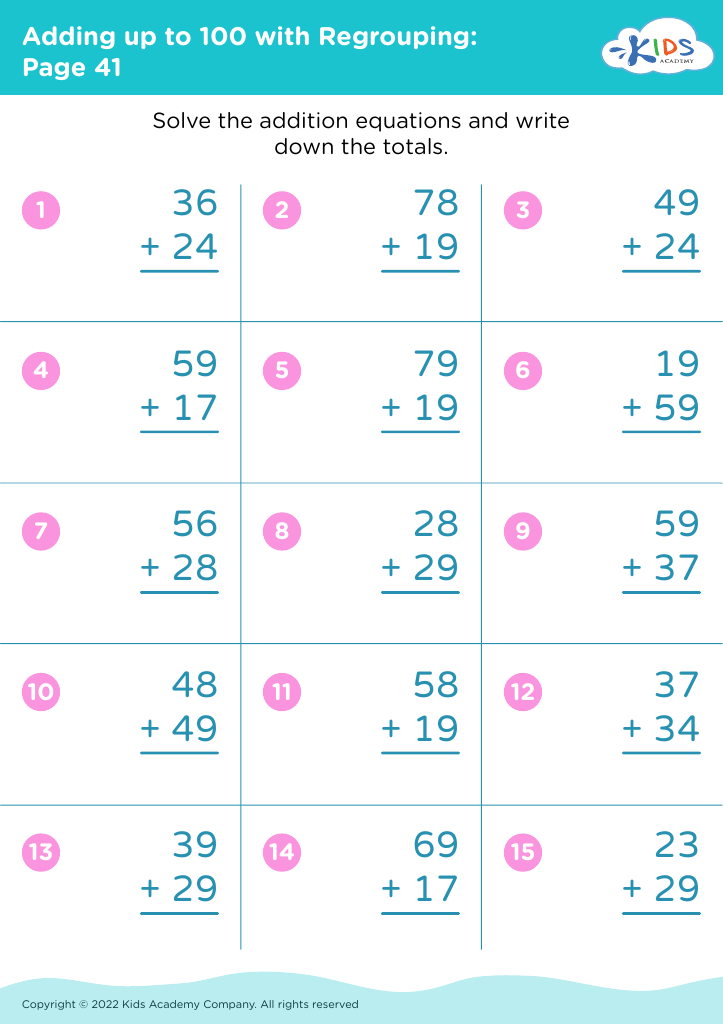
Adding up to 100 with Regrouping: Page 41
Worksheet
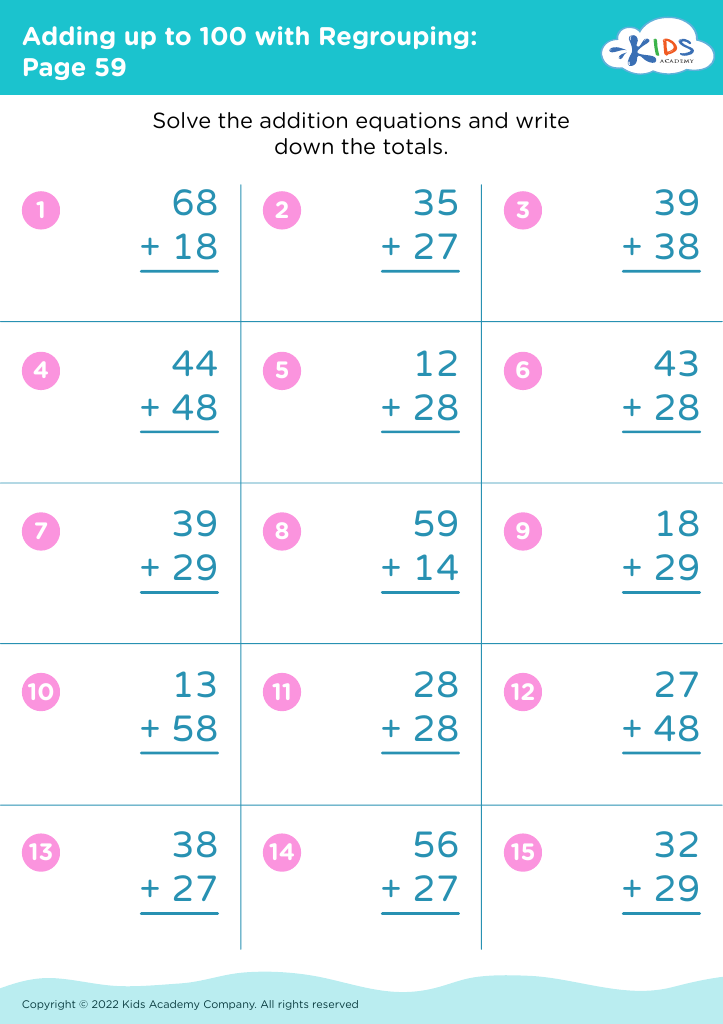
Adding up to 100 with Regrouping: Page 59
Worksheet
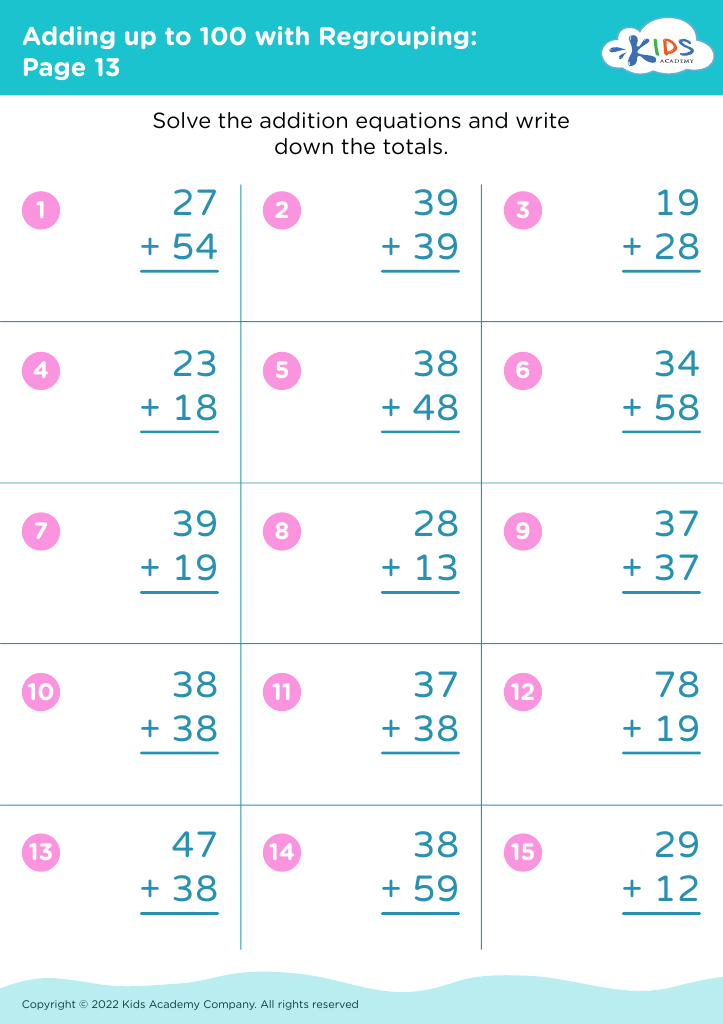
Adding up to 100 with Regrouping: Page 13
Worksheet
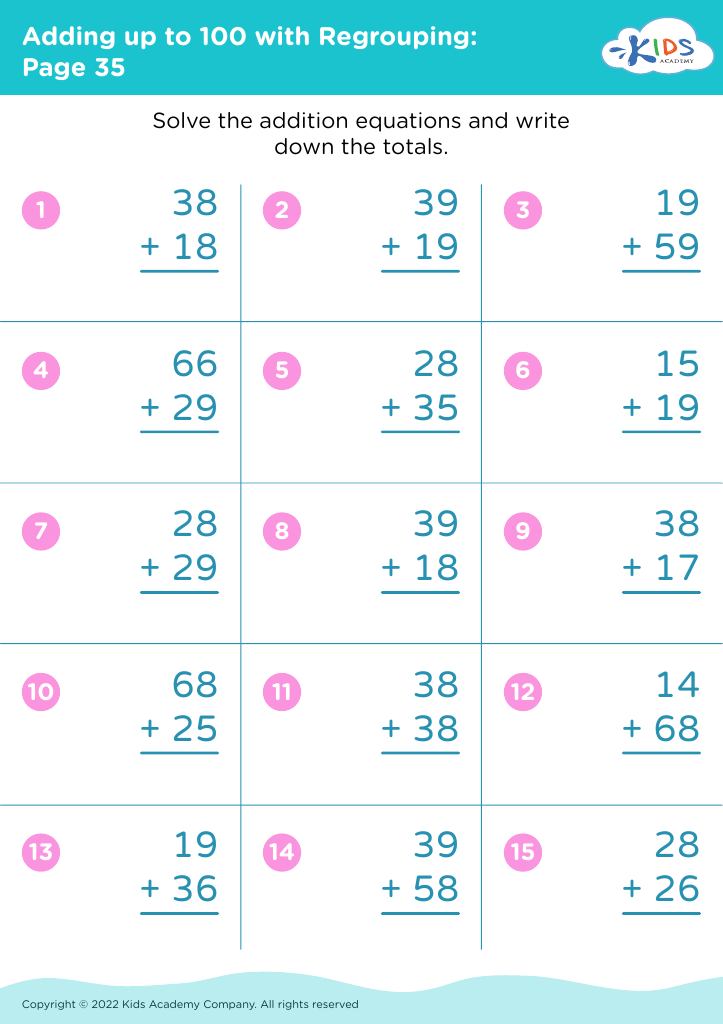
Adding up to 100 with Regrouping: Page 35
Worksheet
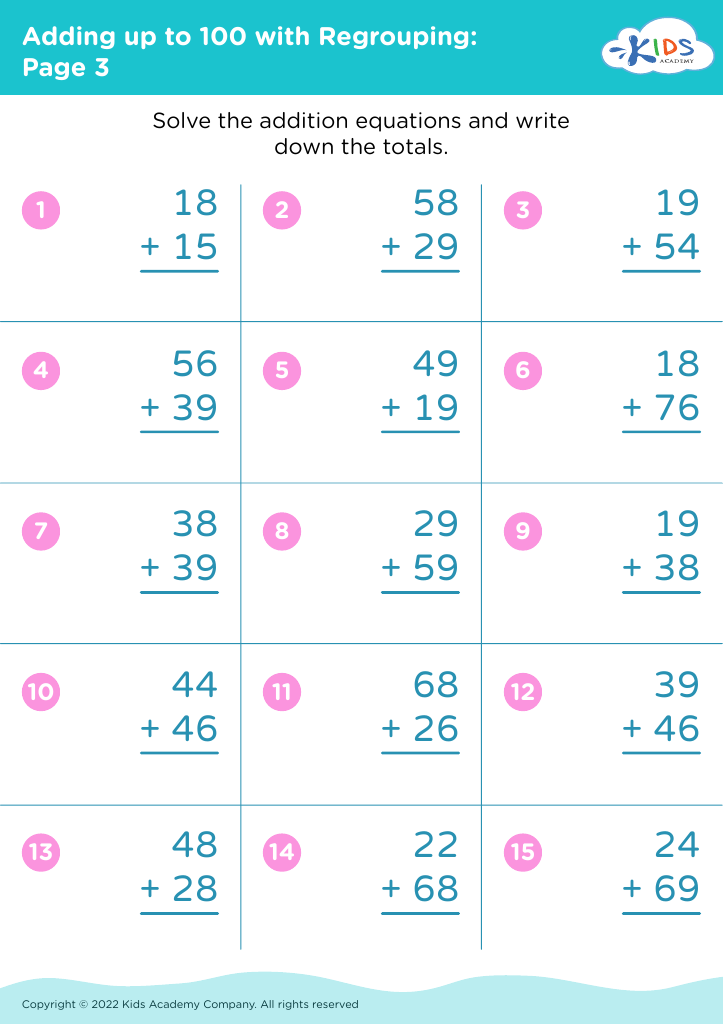
Adding up to 100 with Regrouping: Page 3
Worksheet
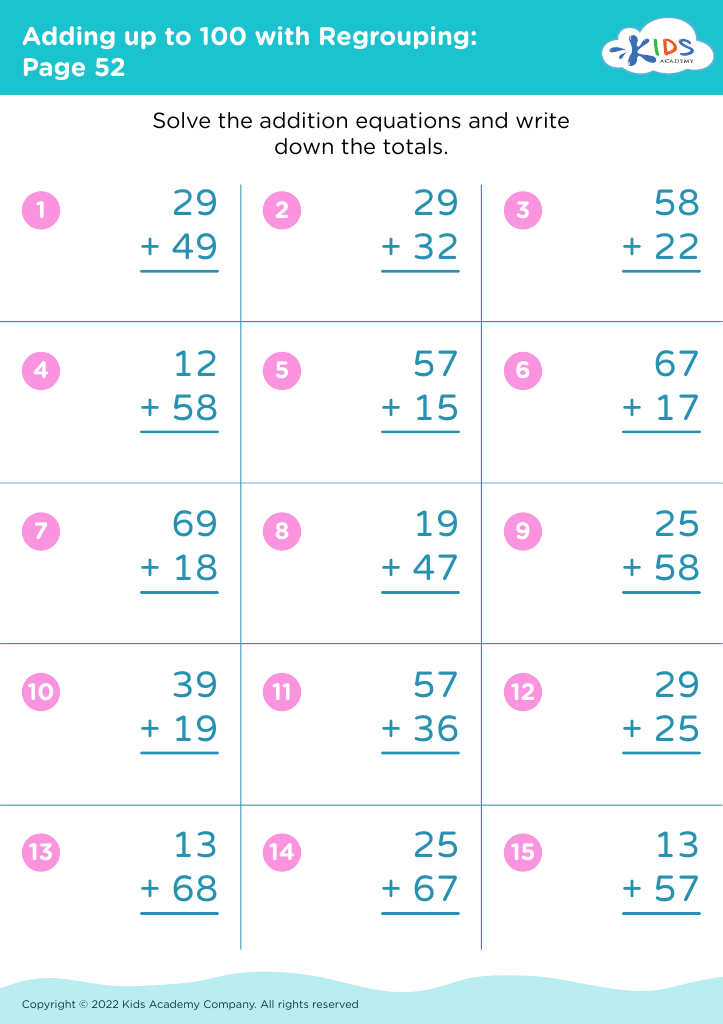
Adding up to 100 with Regrouping: Page 52
Worksheet
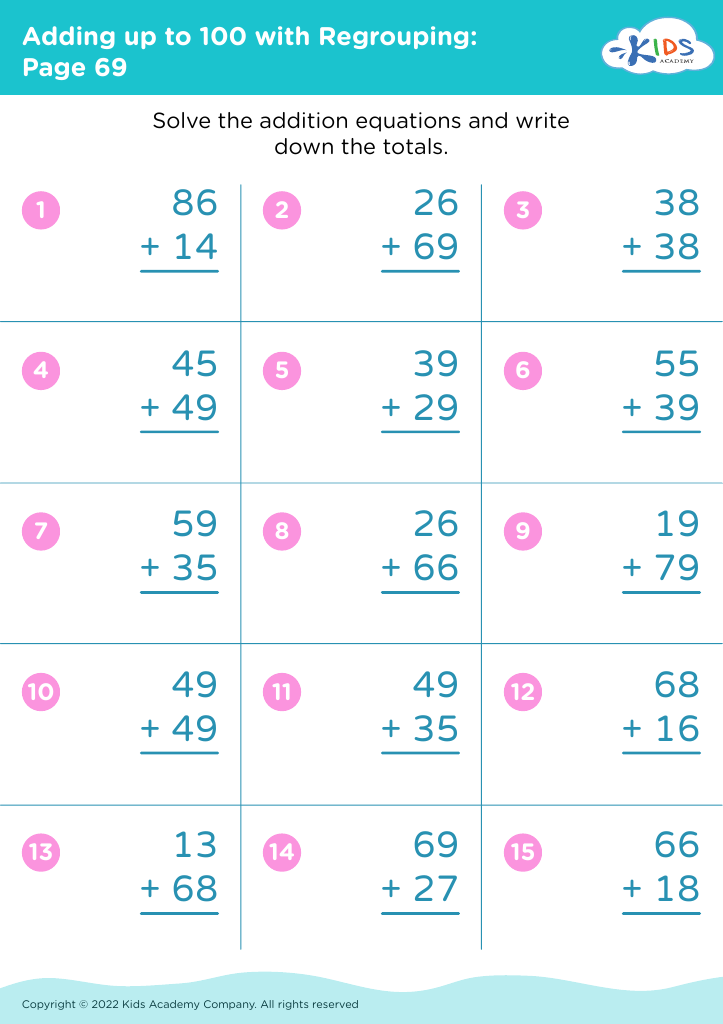
Adding up to 100 with Regrouping: Page 69
Worksheet
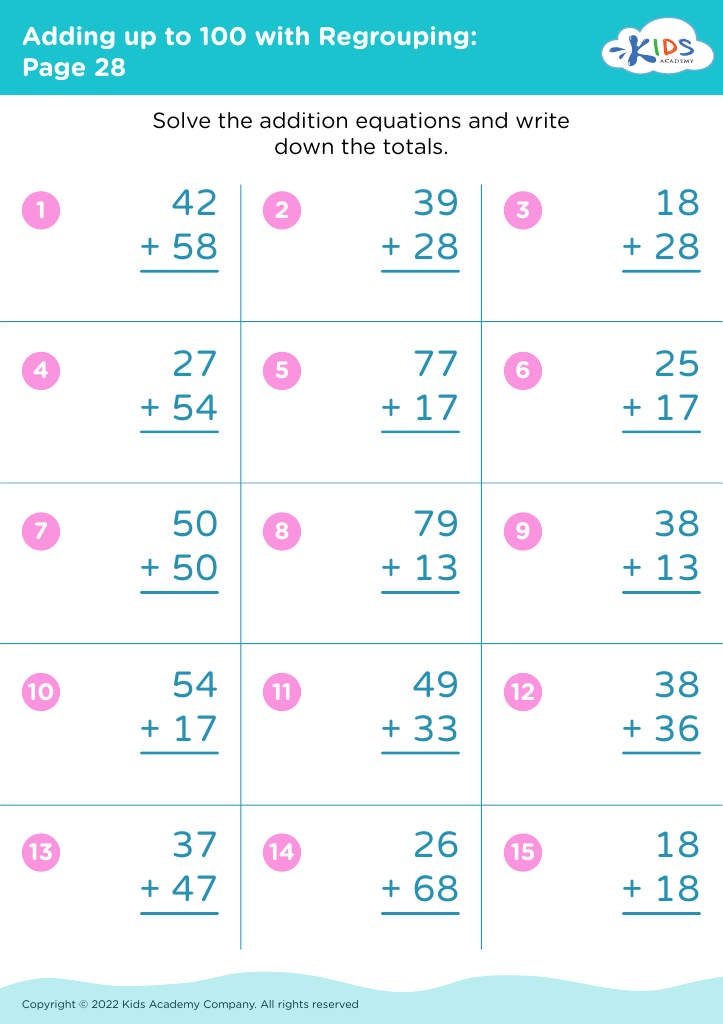
Adding up to 100 with Regrouping: Page 28
Worksheet
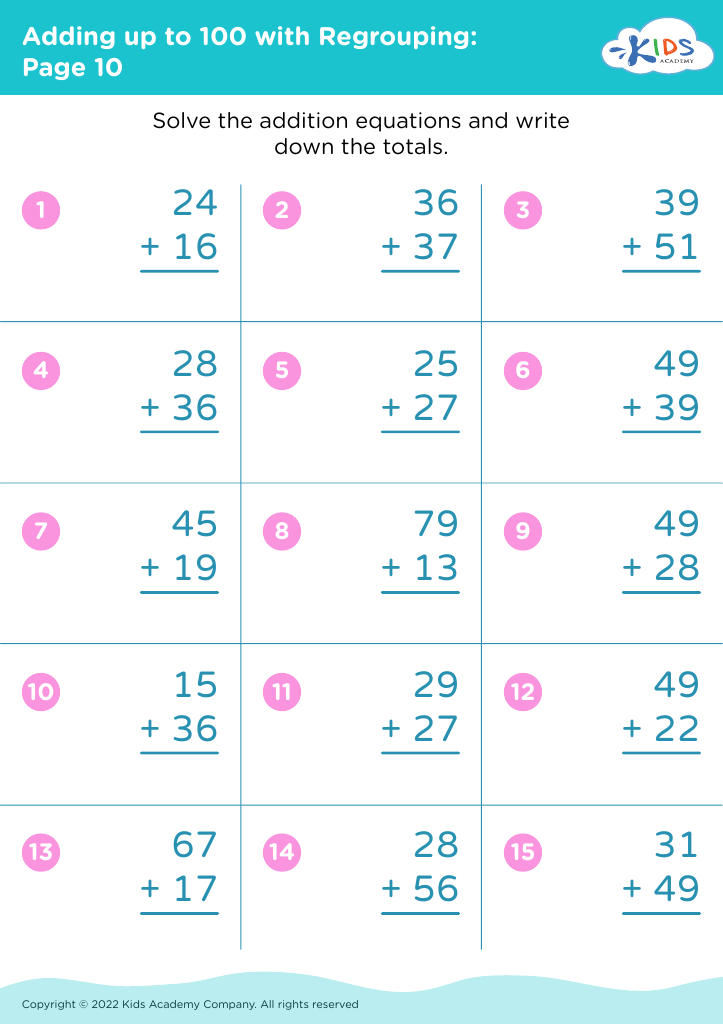
Adding up to 100 with Regrouping: Page 10
Worksheet
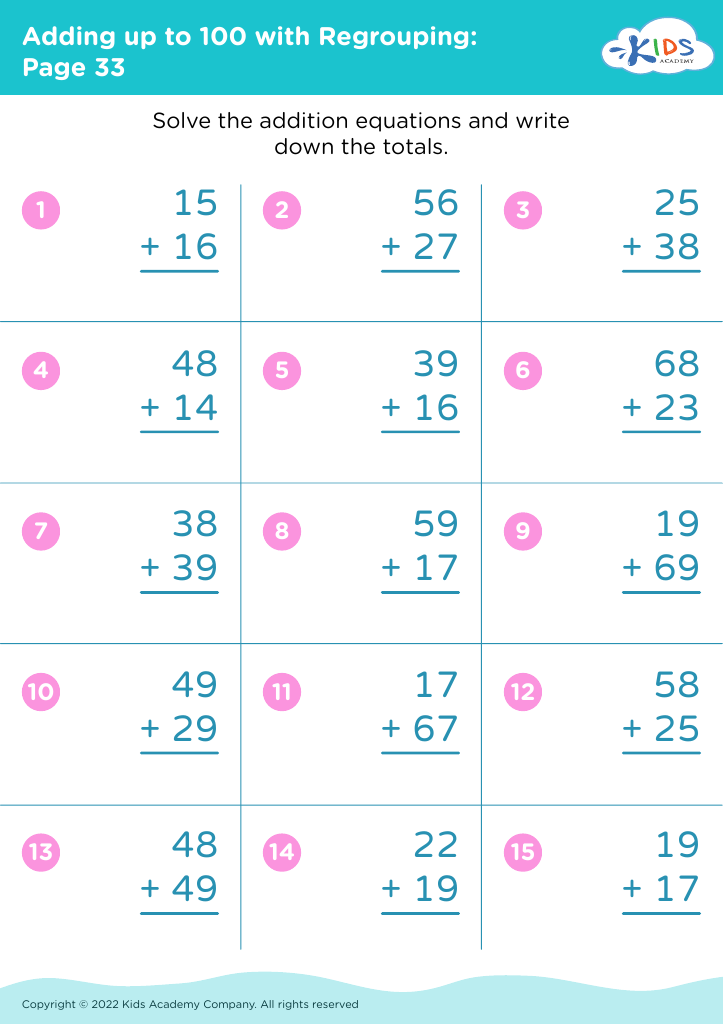
Adding up to 100 with Regrouping: Page 33
Worksheet


Understanding fractions and regrouping in addition up to 100 are foundational skills that parents and teachers should prioritize for children aged 4-7. At this stage, young learners are developing their number sense, which is crucial for future mathematical success.

Learning fractions at an early age helps children understand the concept of parts and wholes, an essential math skill that extends beyond simple arithmetic. It nurtures their ability to think abstractly and prepares them for tackling more complex mathematical concepts like ratios, percentages, and algebra later on.

Adding up to 100 with regrouping (also known as carrying or trading) helps children grasp the place value system, which is fundamental for understanding how numbers work. This skill ensures that kids become proficient in addition and subtraction, common operations they'll encounter daily. It also fosters logical thinking and problem-solving abilities, as children need to figure out how to break down numbers and reassemble them correctly.

Ultimately, early mastery of these concepts promotes confidence and competence in math. By caring about and supporting the development of these skills, parents and teachers set the groundwork for a child's long-term academic success, helping them view math as a manageable and even enjoyable subject.