Understanding symmetry Adding up to 100 with Regrouping Worksheets for Ages 4-7
3 filtered results
-
From - To
Explore the exciting world of symmetry while mastering addition with our "Understanding Symmetry: Adding Up to 100 with Regrouping" worksheets designed for children ages 4 to 7. This engaging resource provides a fun blend of math and art, allowing young learners to grasp the concept of symmetry as they tackle addition problems involving regrouping. Through colorful exercises and interactive activities, kids will enhance their math skills while fostering critical thinking and creativity. Our worksheets cater to diverse learning styles, ensuring every child can build confidence in their abilities. Inspire a love for math and symmetry in your classroom today!
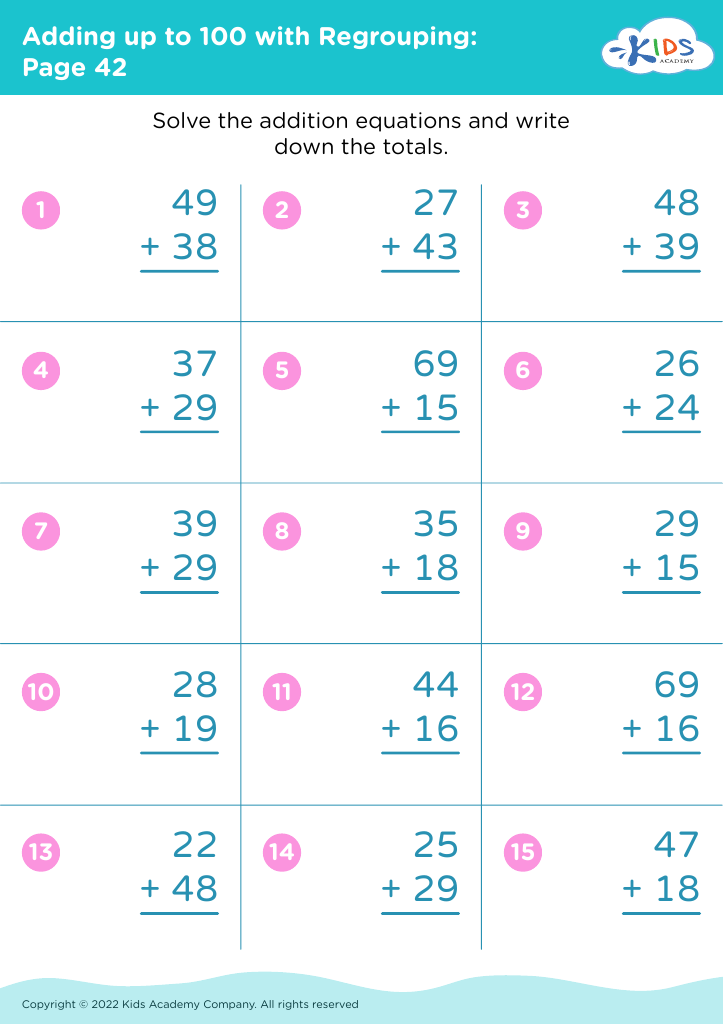
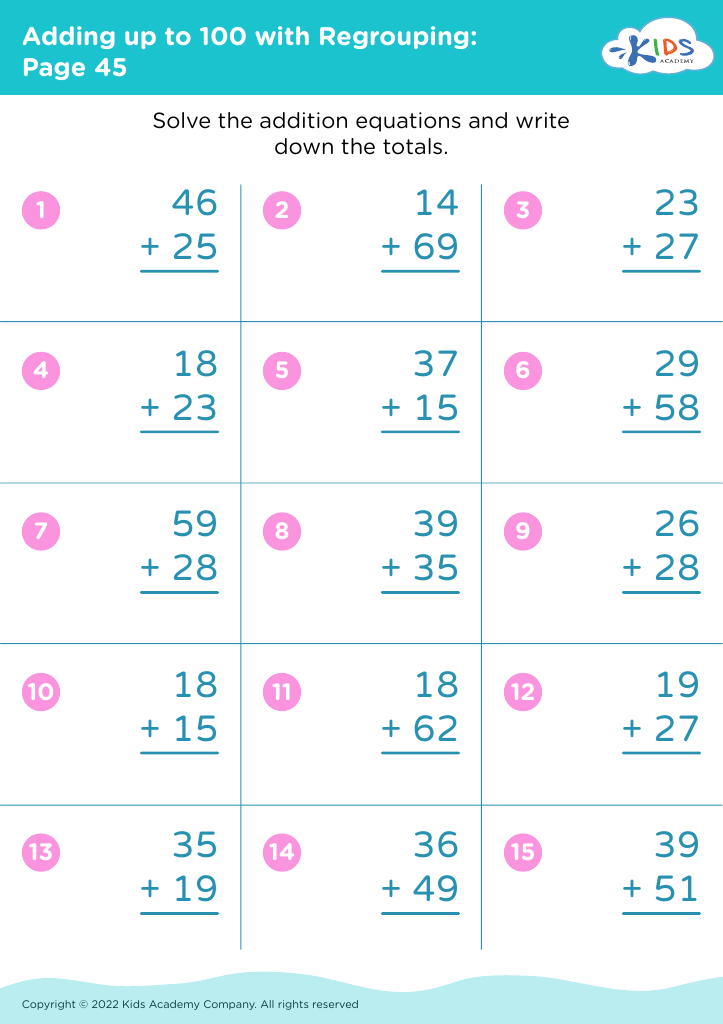
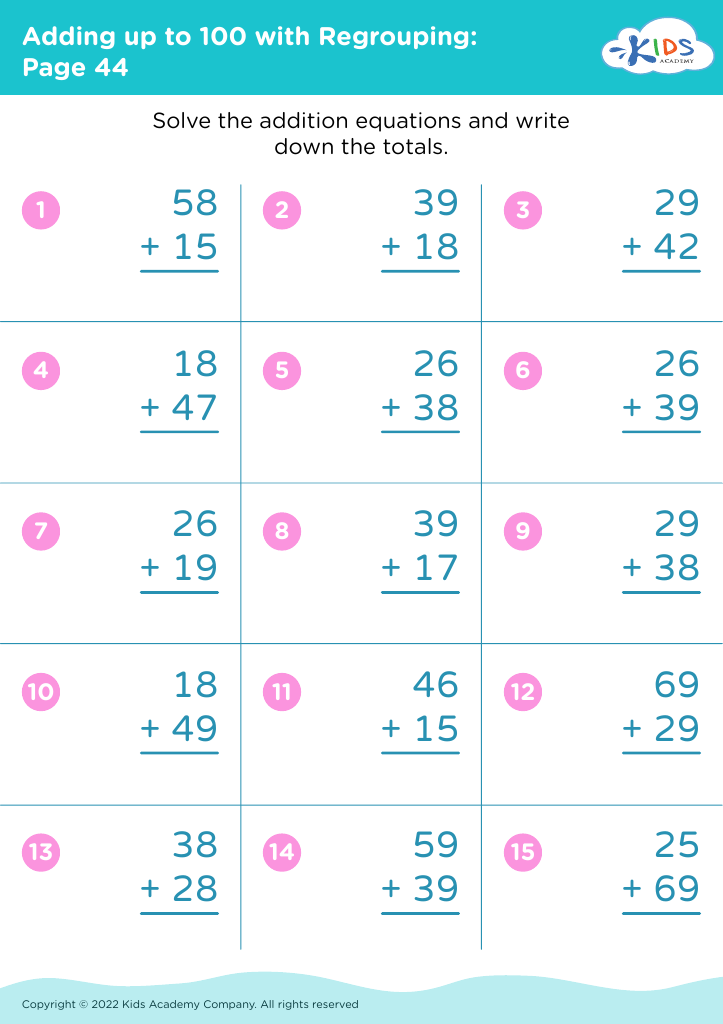




Understanding symmetry and the skill of adding up to 100 with regrouping are essential concepts in early math education, crucial for children aged 4-7. Symmetry helps develop spatial awareness and encourages critical thinking skills. Recognizing symmetrical patterns in shapes and objects lays a foundation for geometry, art, and analytical reasoning. It stimulates children's creativity and enhances their ability to observe the world around them.
Simultaneously, mastering addition strategies like regrouping cultivates numerical fluency. Learning to add up to 100 with regrouping is a pivotal skill that builds confidence and prepares young learners for more complex arithmetic. It encourages problem-solving and reinforces the concept of place value, which is vital for future math success.
Both concepts foster important cognitive and social-emotional skills; understanding symmetry promotes patience and attention to detail, while mastering regrouping instills perseverance as children learn to tackle larger numbers.
Parents and teachers play a key role in integrating these concepts through supportive learning environments, helping children connect math to their everyday lives. Careful nurturing of these foundational skills will not only support lifelong learning but also enable children to approach statistical patterns, measurements, and problem-solving tasks with confidence and enthusiasm.