Comparing Fractions Adding up to 100 Without Regrouping Worksheets for Ages 4-7
11 filtered results
-
From - To
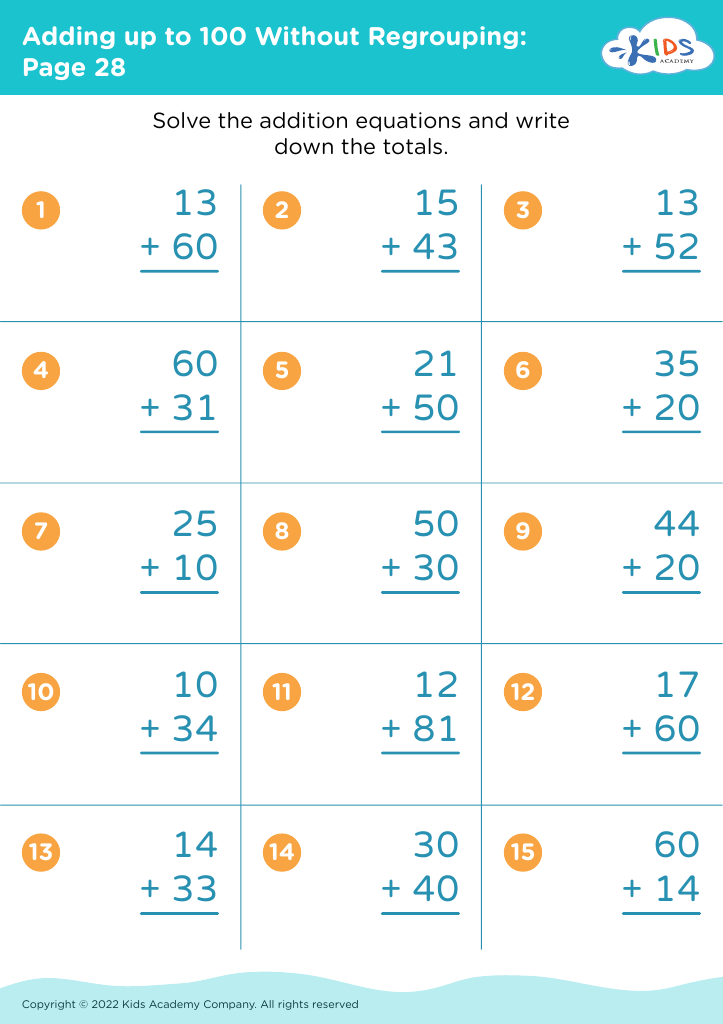
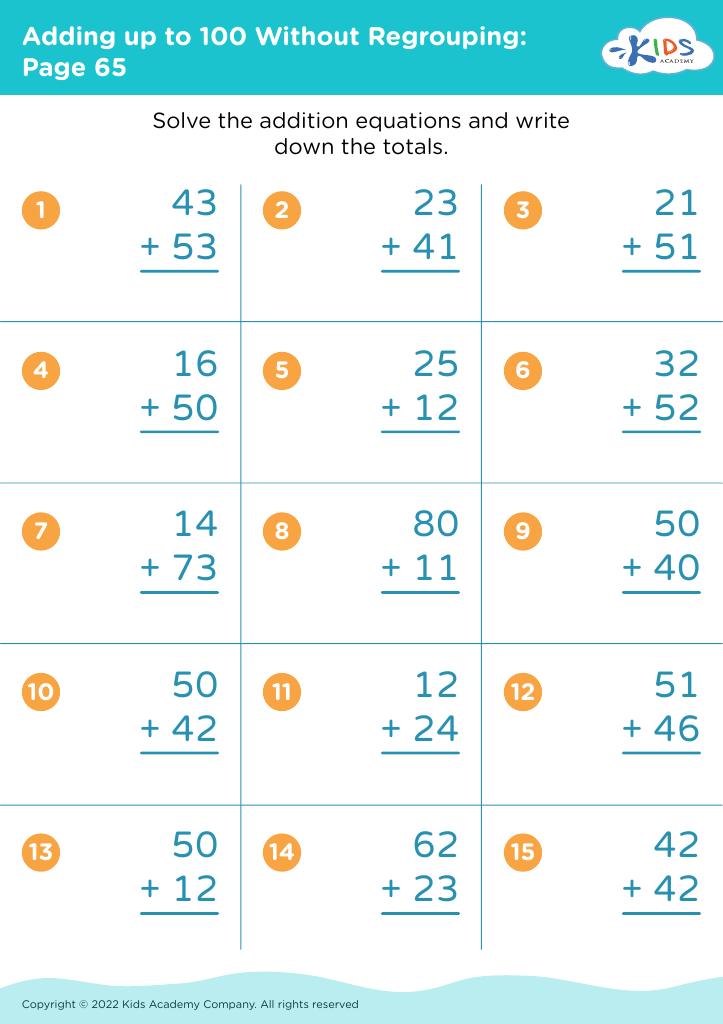
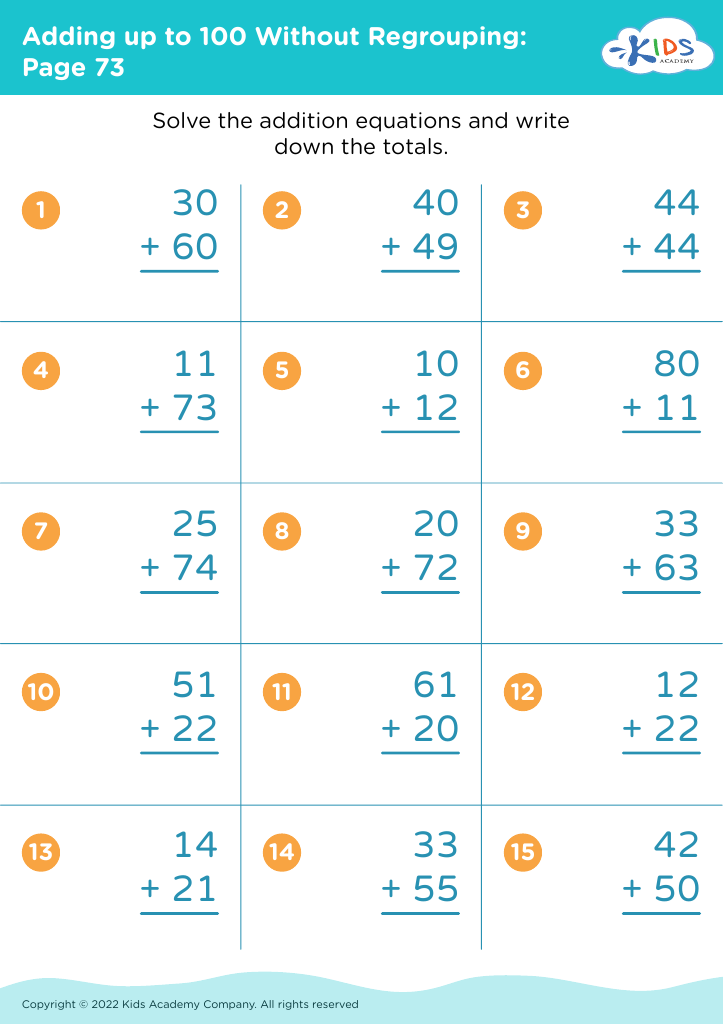
Explore our engaging "Comparing Fractions Adding Up to 100 Without Regrouping Worksheets" designed specifically for children aged 4-7. These worksheets focus on helping young learners develop vital math skills by comparing simple fractions that sum to 100, fostering an early understanding of fractions and their relationships. Through interactive exercises, children will gain confidence in their ability to assess and compare fractions, ensuring a strong foundational knowledge for future math concepts. Perfect for classroom or home use, these worksheets blend fun and education, making math an enjoyable experience. Start your child's math journey today with our readily available resources!
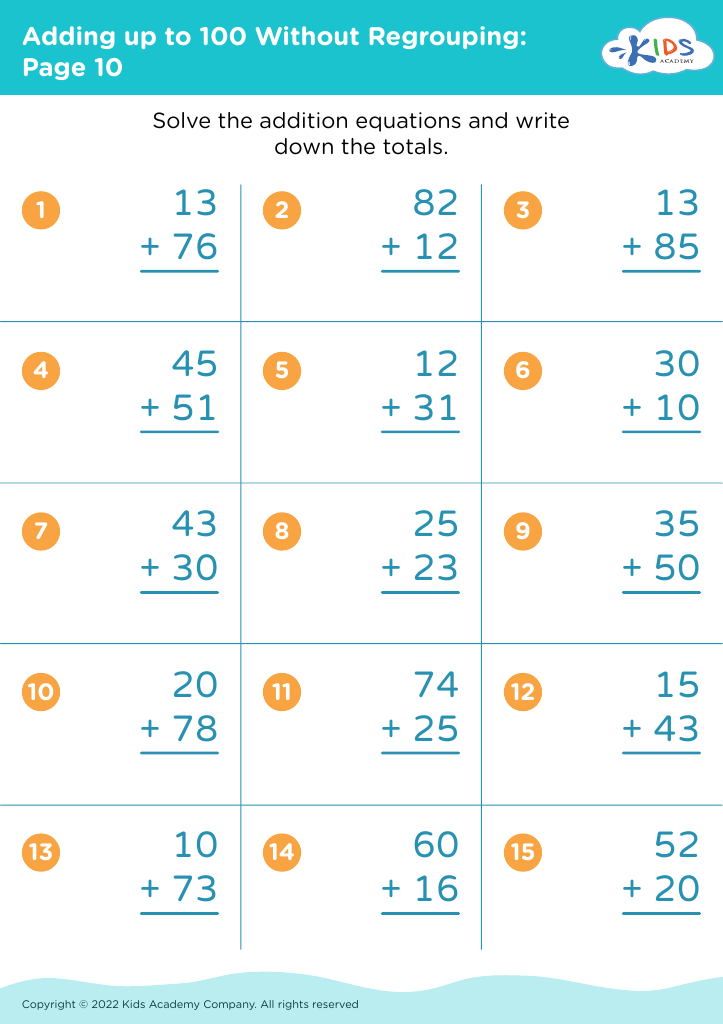
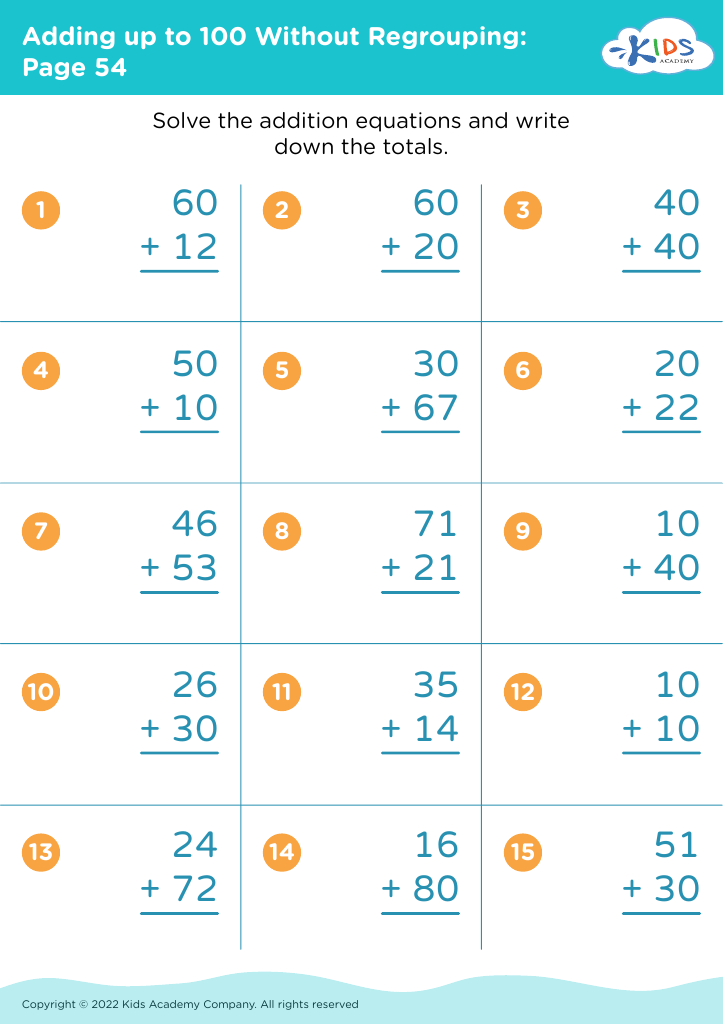
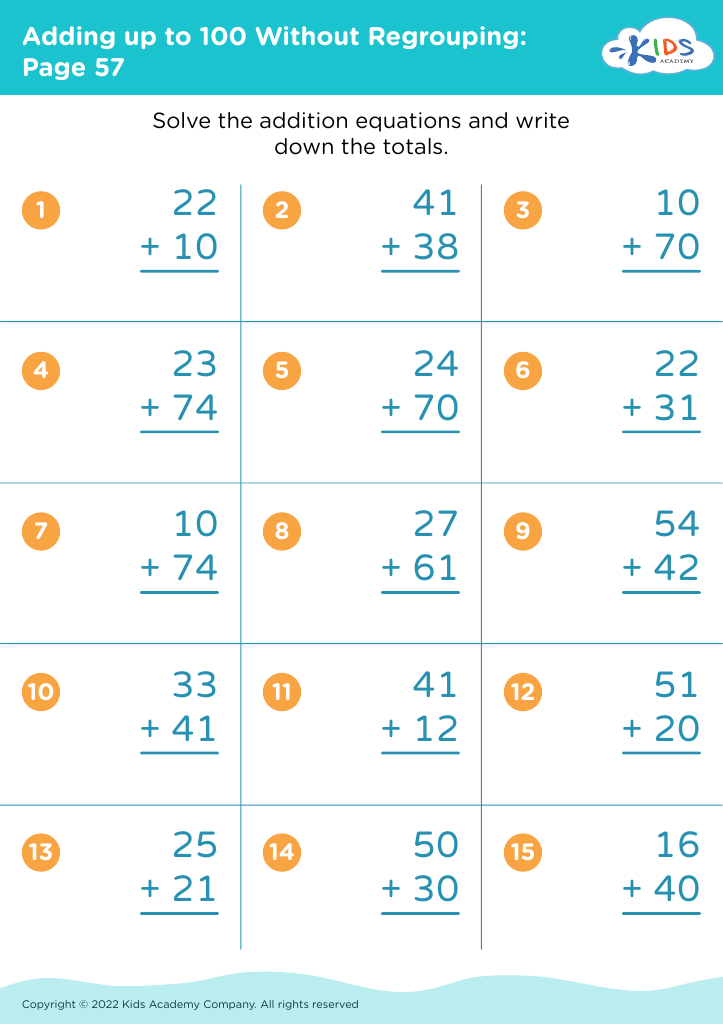
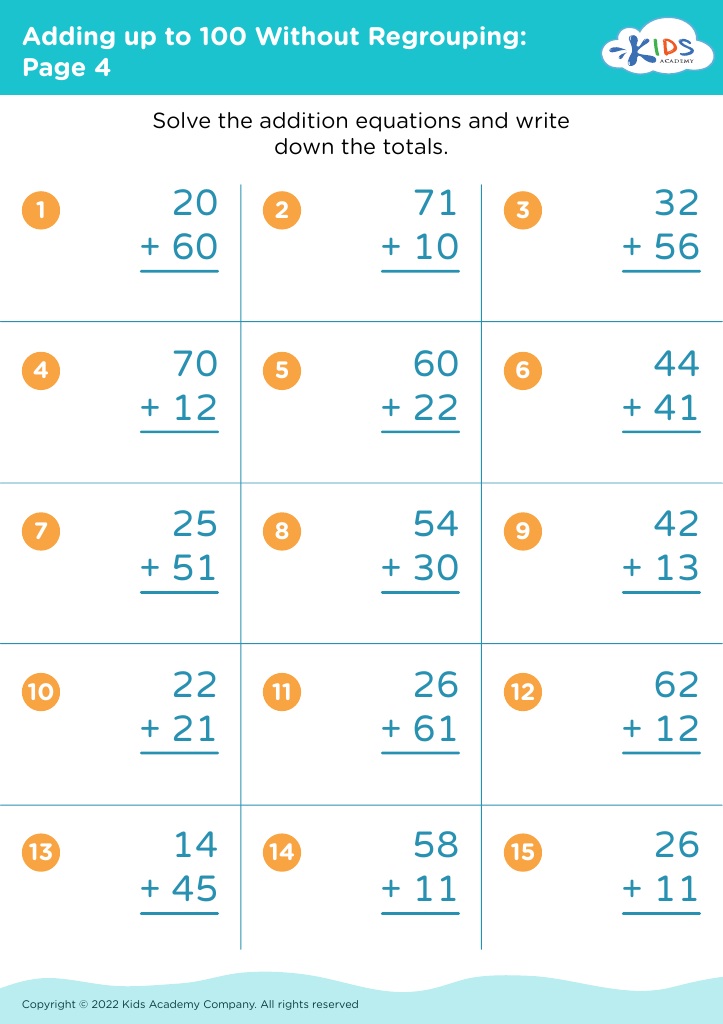
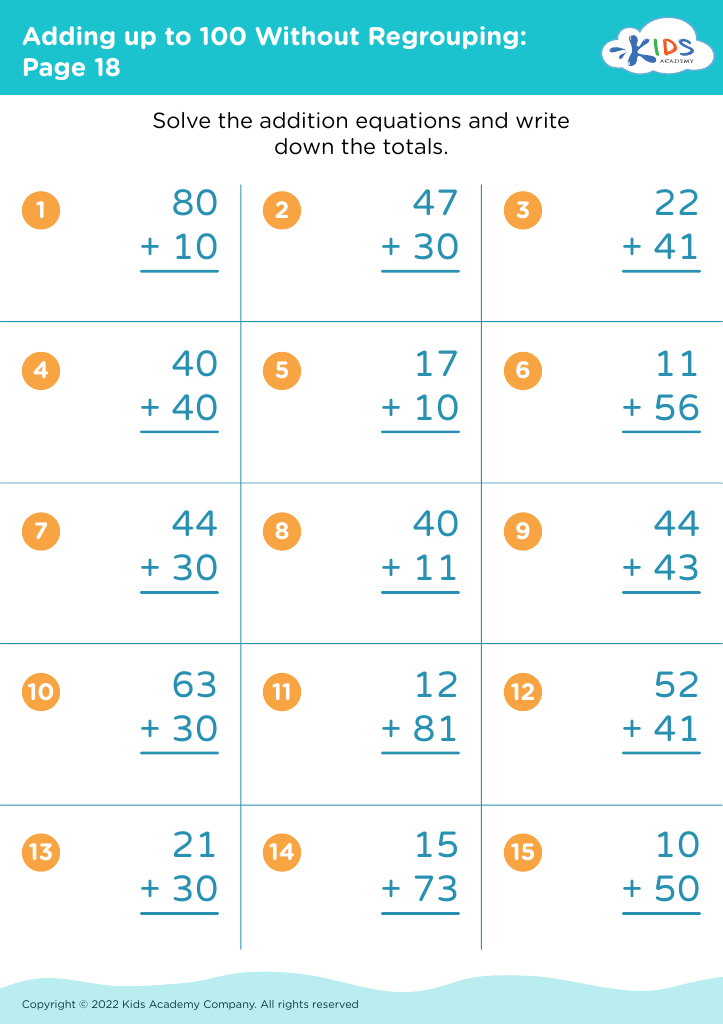
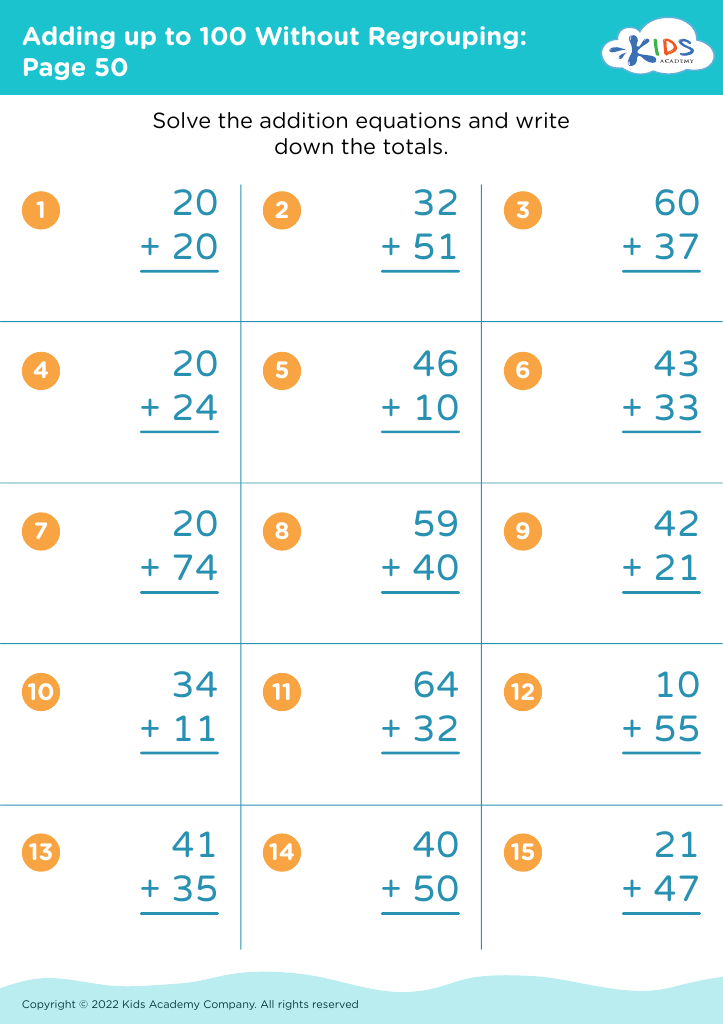
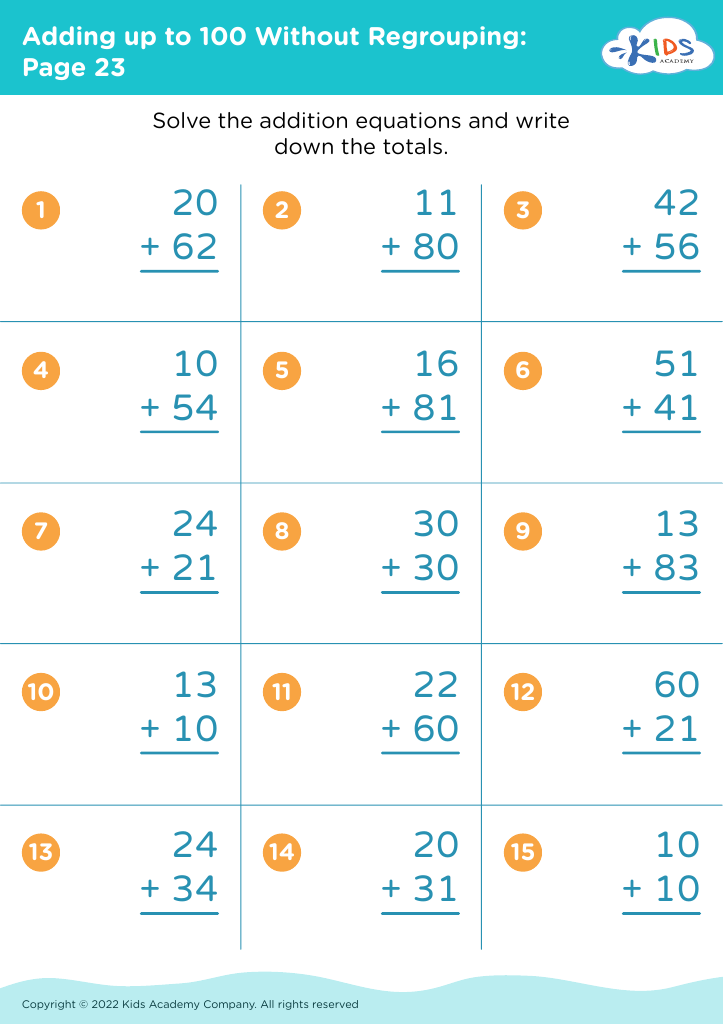
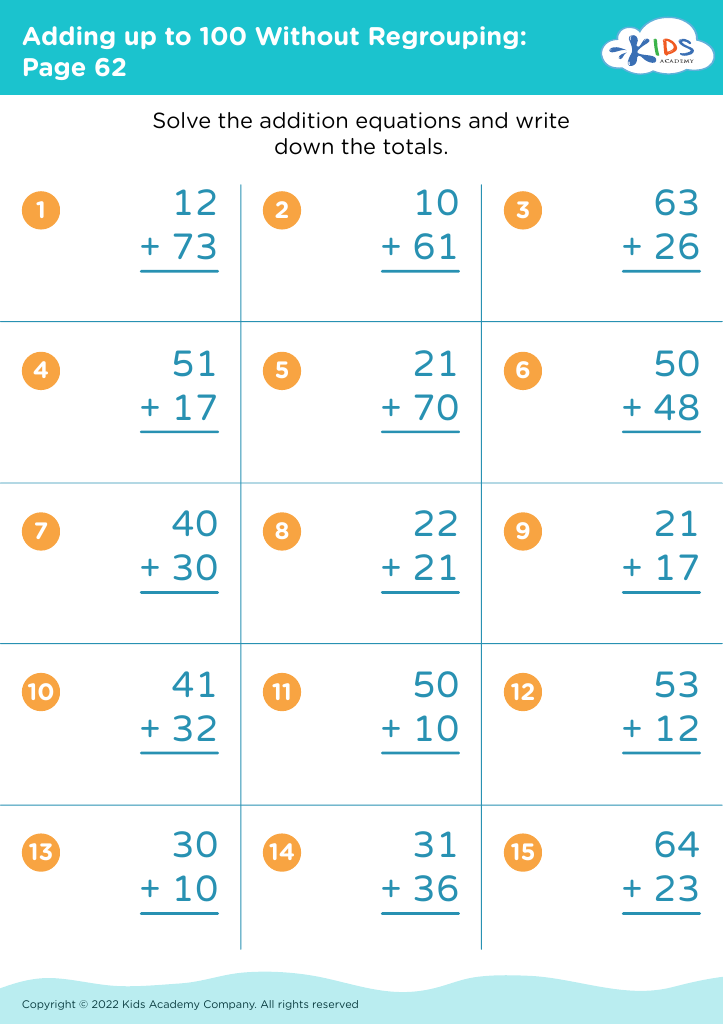




Comparing fractions that add up to 100 without regrouping is a vital skill for young children, as it lays the foundation for their understanding of mathematical concepts they will encounter later in school. For ages 4-7, learning to compare fractions fosters critical thinking and enhances their ability to visualize numbers and relationships between different quantities. Recognizing that two fractions can combine to make a whole encourages children to develop a sense of proportion, essential for future math topics like addition, subtraction, and even basic algebra.
Parents and teachers should care about this topic because developing a solid grasp of comparing fractions helps stimulate cognitive growth, which is crucial during these formative years. Engaging children in activities that involve fractions reinforces their arithmetic skills and gives them practical applications—such as cooking, dividing snacks, or understanding layouts in art.
Moreover, fostering these fundamental skills can build children’s confidence in math. When children understand fractions and can estimate and compare them correctly, they become equipped to tackle more complex math problems in the future. Therefore, investing in these early experiences not only aids immediate learning but also sets the stage for lifelong mathematical competency and enthusiasm.