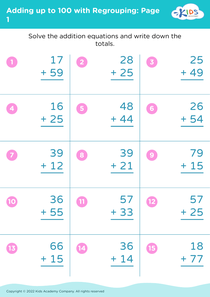
Critical Thinking Adding up to 100 Without Regrouping Worksheets for Ages 4-7
3 filtered results
-
From - To
Enhance your child's critical thinking skills with our engaging "Adding Up to 100 Without Regrouping" worksheets, designed for ages 4-7. These fun and interactive activities help young learners practice addition while encouraging logical reasoning and problem-solving abilities. Children will explore various methods to combine numbers effectively, building a strong mathematical foundation. Our worksheets feature colorful illustrations and user-friendly layouts that capture your child's attention while fostering concentration. Perfect for at-home learning or classroom use, these worksheets not only reinforce addition skills but also promote essential cognitive skills, making math enjoyable and rewarding. Start your child's exciting journey towards mathematical mastery today!
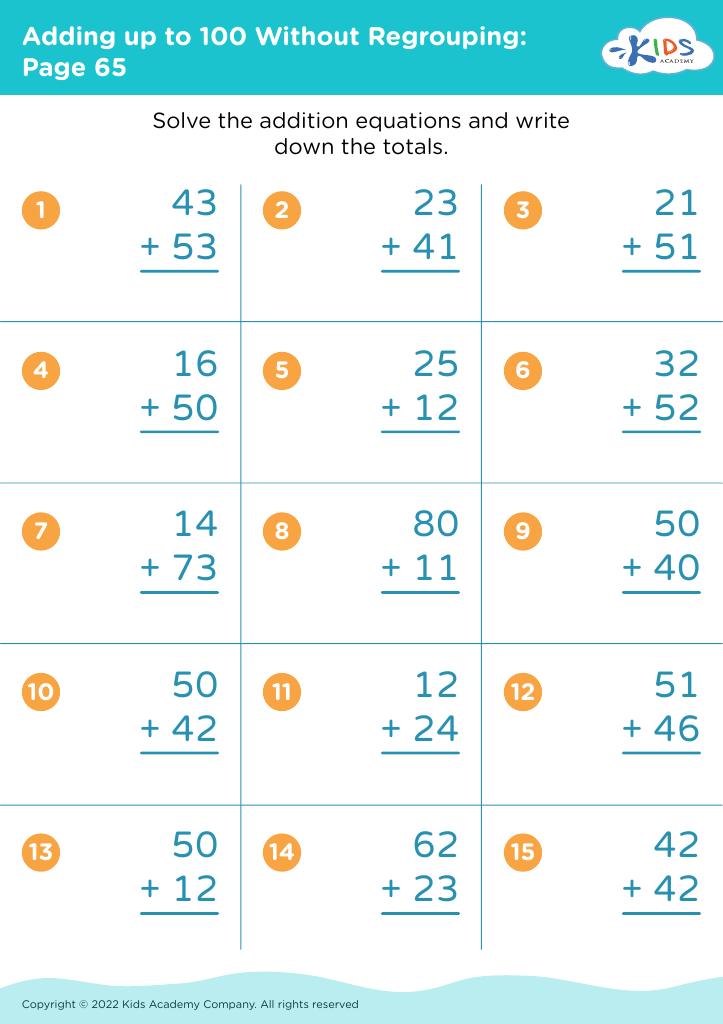
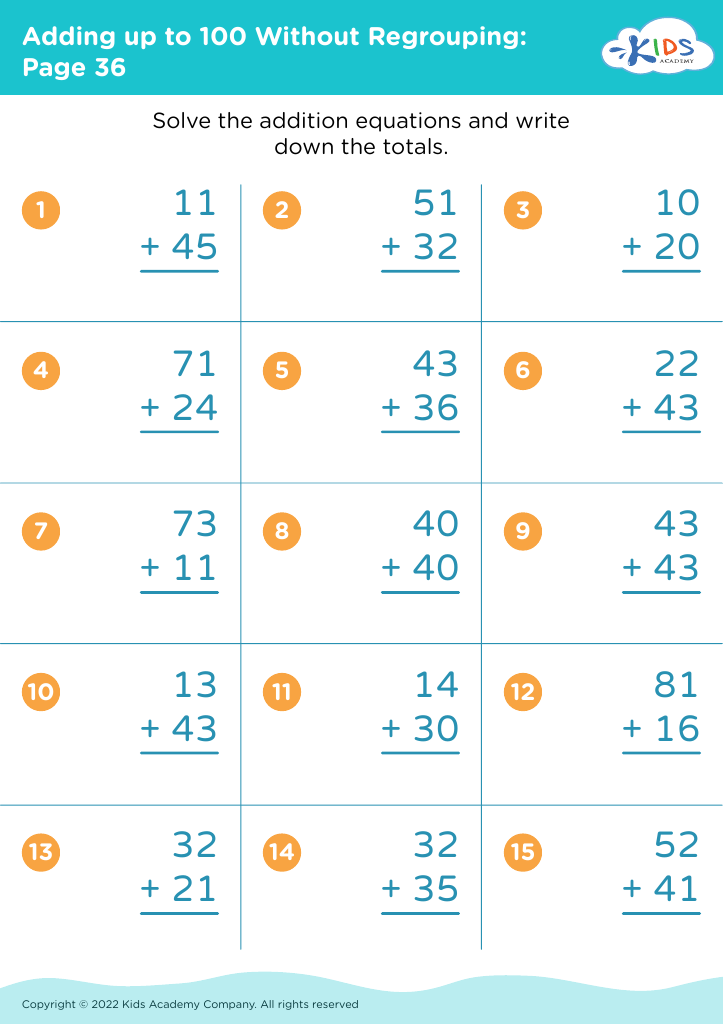
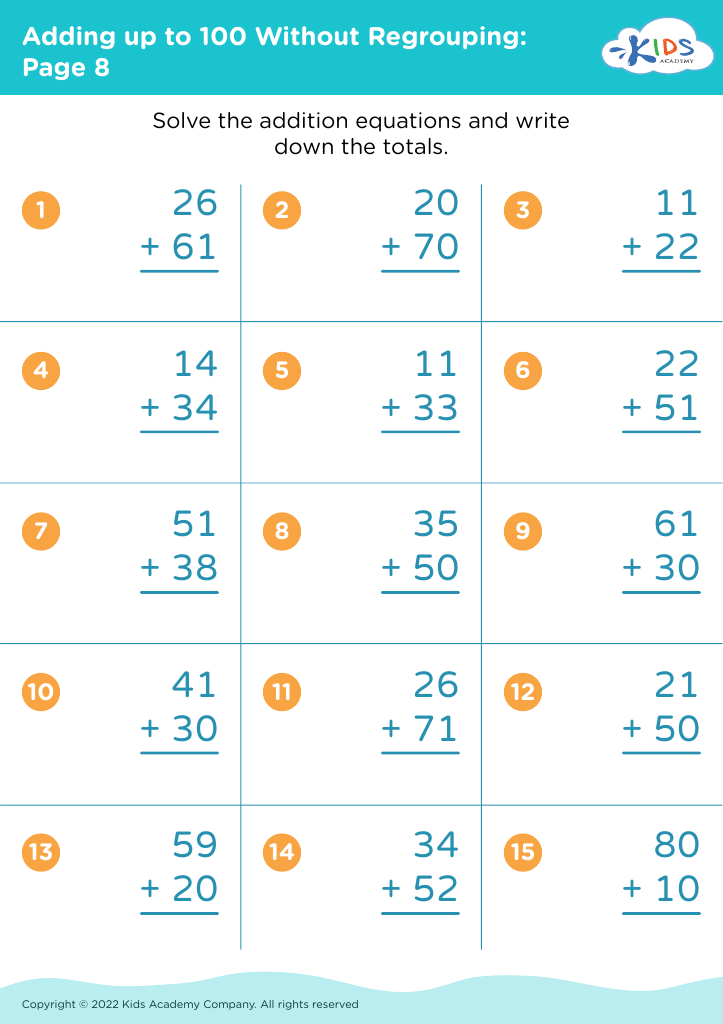




Critical thinking is essential for young learners, particularly when mastering basic math concepts like adding numbers up to 100 without regrouping. For children aged 4-7, this foundational skill fosters logical reasoning, problem-solving, and the ability to analyze situations critically. Parents and teachers should care about this because it lays the groundwork for future academic success.
When children engage in critical thinking while working on addition, they learn to understand the relationships between numbers, recognize patterns, and develop strategies for mental math. This process encourages them to think independently and boost their confidence in their mathematical abilities. Moreover, it enhances their attention to detail and nurtures their curiosity, enabling them to approach learning with an open and analytical mindset.
Promoting critical thinking through enjoyable activities—like games or hands-on exercises—gets children excited about math. It also facilitates communication skills as they discuss their thought processes with peers or adults, impressing upon them that their ideas matter. Ultimately, prioritizing the development of critical thinking in early math prepares children not just for future math challenges but also equips them with vital skills for navigating everyday life and future educational pursuits.