Develop critical thinking Adding up to 100 Without Regrouping Worksheets for Ages 4-7
3 filtered results
-
From - To
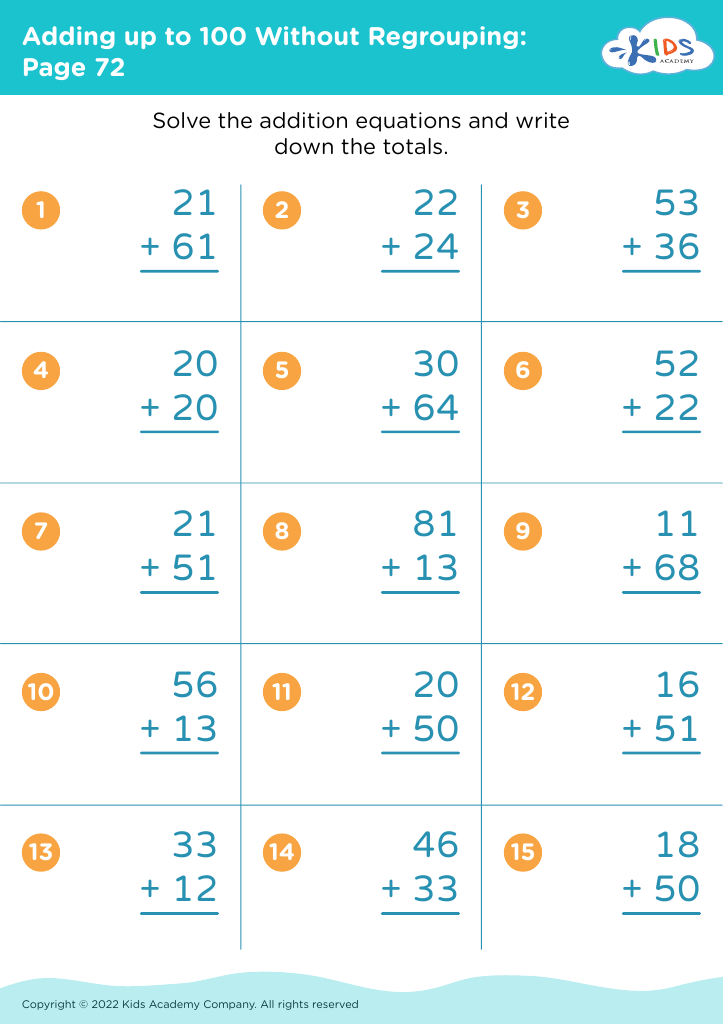
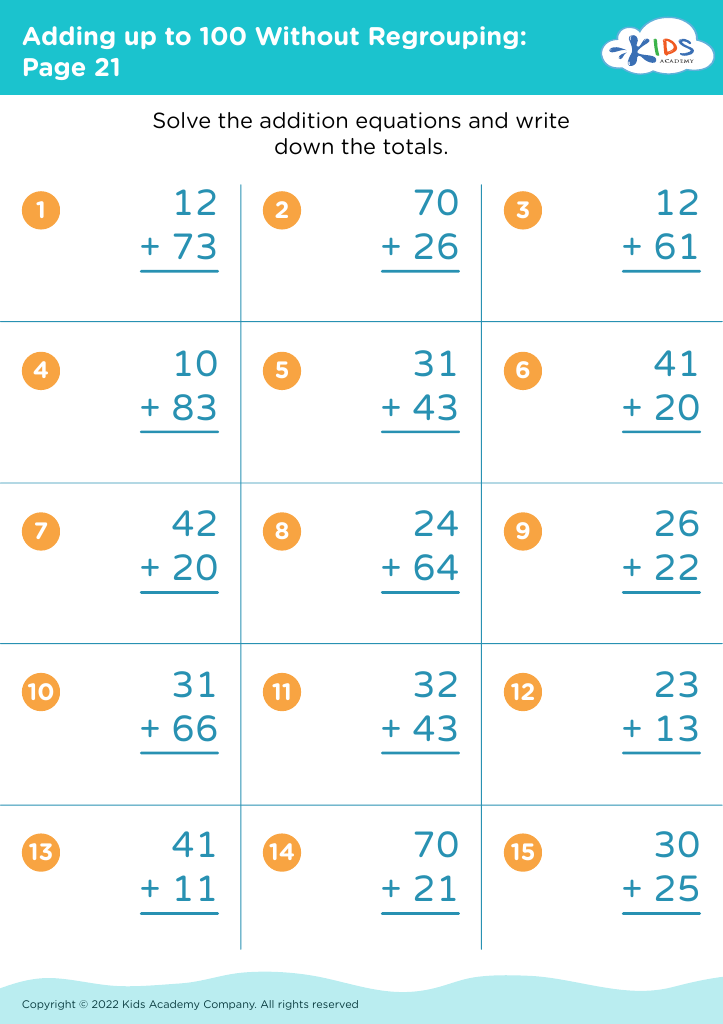
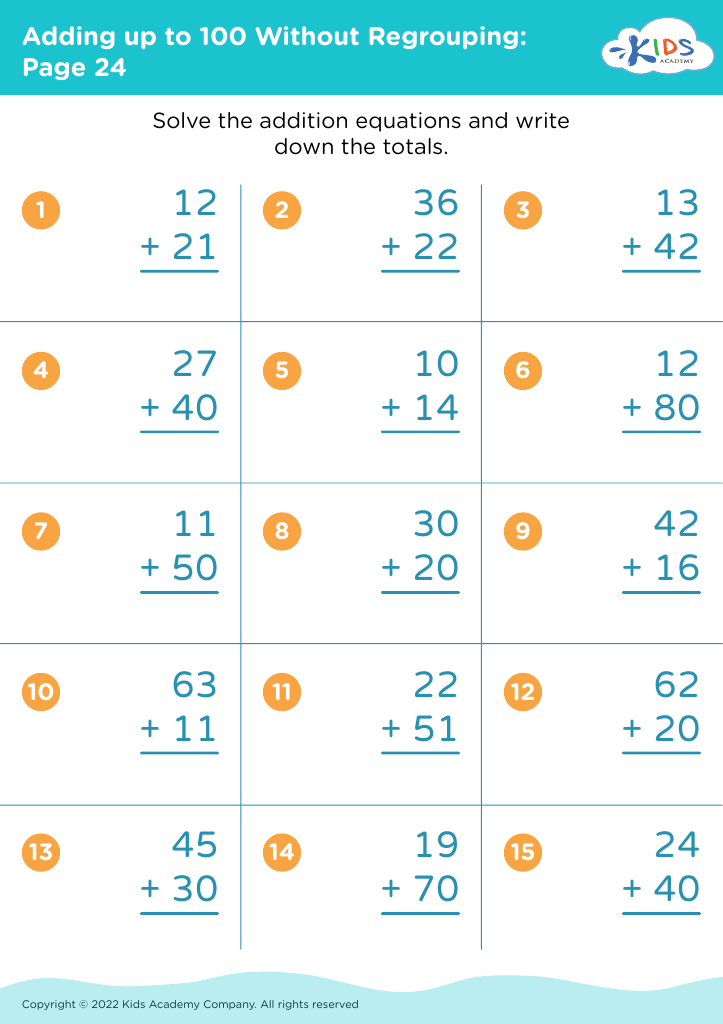
Enhance your child's critical thinking skills with our engaging "Adding Up to 100 Without Regrouping Worksheets" designed for ages 4-7. These worksheets provide a fun and interactive way to master addition while fostering analytical thinking. By solving various problems, children learn to identify patterns, make connections, and apply logical reasoning. Each worksheet encourages curiosity and promotes a deeper understanding of math concepts, ensuring a strong foundation for future learning. Perfect for homeschoolers or classroom settings, our resources support early mathematics education while developing essential critical thinking abilities. Empower your young learners today with these thoughtfully crafted worksheets!




Developing critical thinking skills and foundational math concepts like adding up to 100 without regrouping is crucial for children ages 4-7. At this formative stage, children are naturally curious and eager to explore; fostering critical thinking empowers them to question, analyze, and solve problems intellectually. When teachers and parents encourage these skills, they help lay the groundwork for cognitive development, enabling children to approach challenges confidently and creatively.
Adding up to 100 without regrouping promotes both mathematical fluency and essential critical reasoning. It teaches children to visualize numbers, recognize patterns, and employ strategies for efficient problem-solving. By engaging with simple addition tasks, they build a solid understanding of number relationships and develop the ability to think logically.
Moreover, strong critical thinking skills lead to improved academic performance across subjects, enhancing abilities in reading comprehension, science, and social studies. Encouraging these skills also fosters a growth mindset, where children learn to embrace challenges as opportunities for learning.
In conclusion, parents and teachers should prioritize developing critical thinking alongside early math skills, as it cultivates analytical and problem-solving abilities that serve children well beyond their school years. This holistic approach to education equips them for future success in both academics and life.