Identifying shapes Adding up to 100 Without Regrouping Worksheets for Ages 4-7
4 filtered results
-
From - To
Discover our engaging "Identifying Shapes Adding Up to 100 Without Regrouping Worksheets" designed for children ages 4 to 7! These worksheets seamlessly blend the fun of shape recognition with the essential skill of addition. Designed to enhance cognitive skills, young learners will enjoy identifying various shapes while practicing addition to reach a total of 100, all without regrouping. Ideal for preschool and early elementary students, these engaging activities foster a solid foundation in math and geometry. Perfect for at-home learning or classroom use, our worksheets encourage interactive learning while building confidence in young mathematicians. Get ready for fun and learning combined!
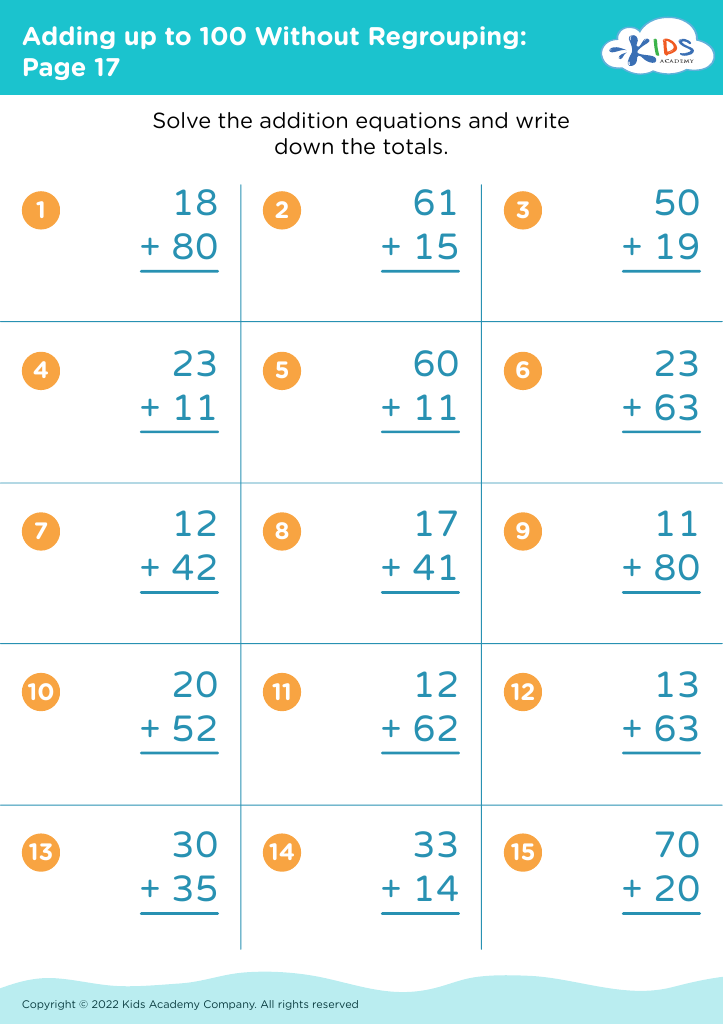
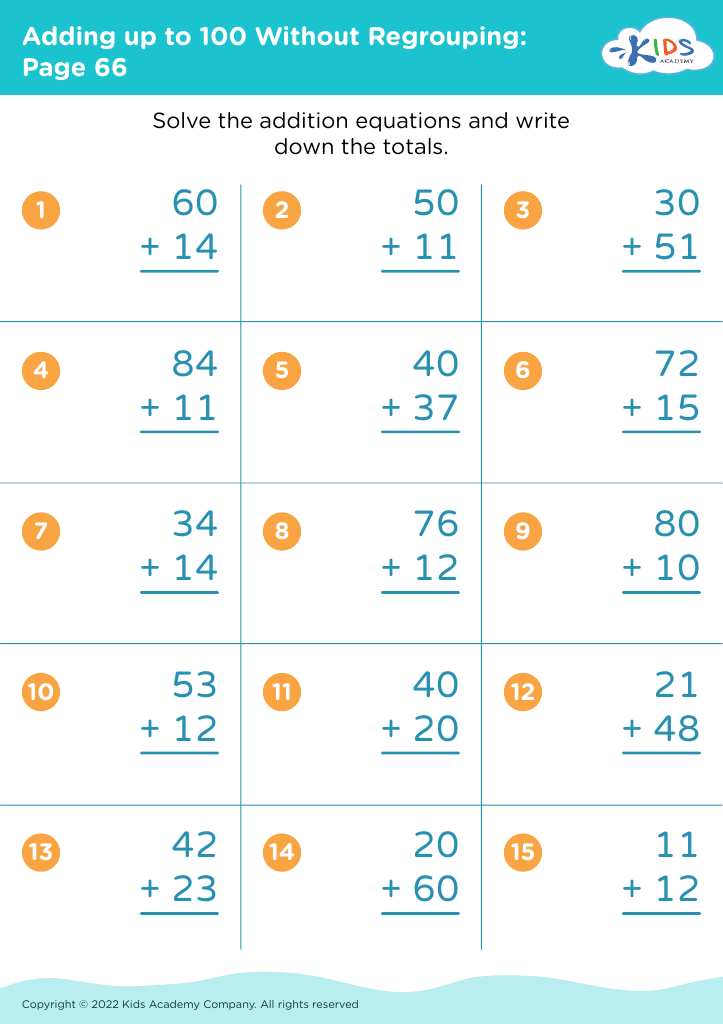
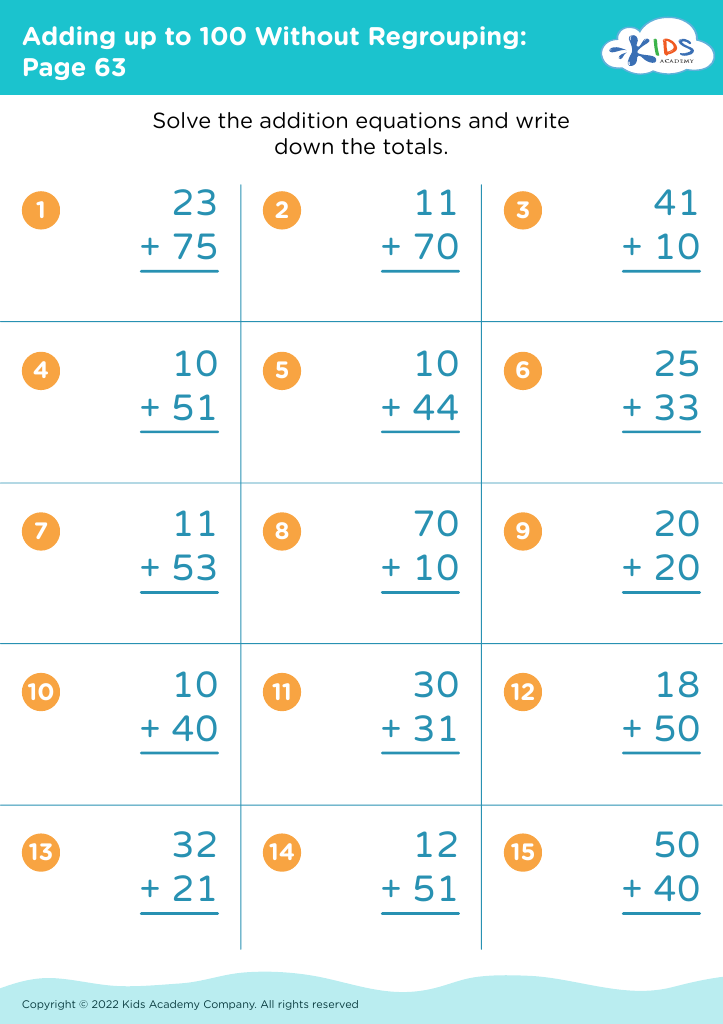
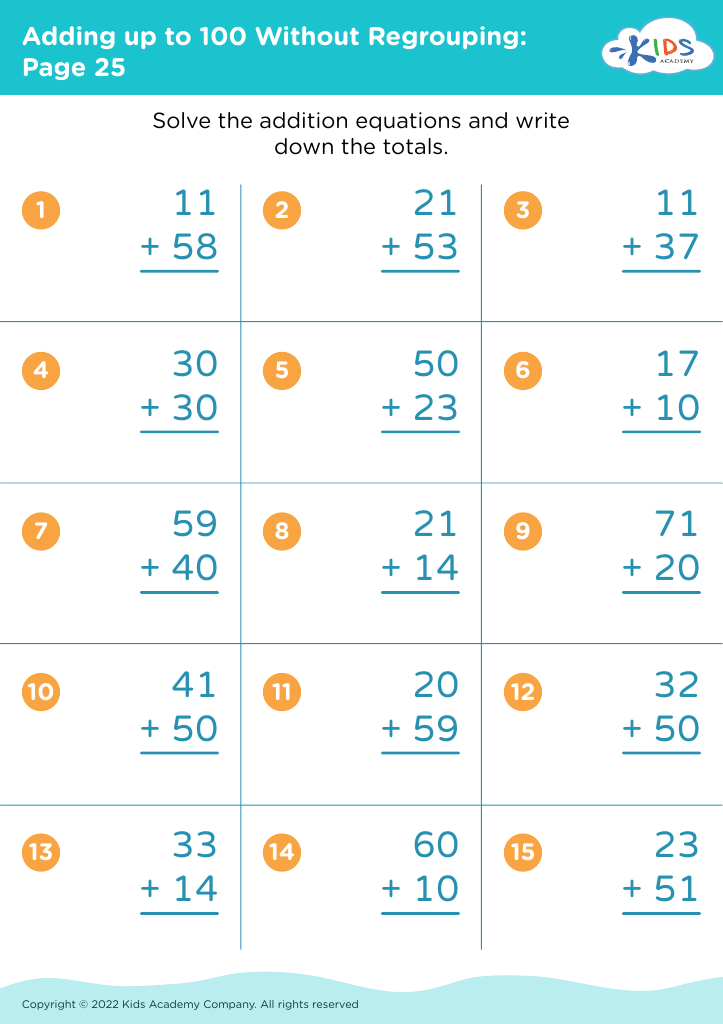




Identifying shapes and practicing addition without regrouping are foundational skills for children ages 4-7 that build early mathematical understanding and cognitive development. For parents and teachers, nurturing these skills is crucial for several reasons.
First, recognizing shapes helps children make sense of the world around them. Understanding basic geometric concepts supports spatial awareness, which is essential for various real-world applications, such as understanding maps and engaging in physical activities. It also lays the groundwork for more advanced mathematical concepts like geometry and fractions later on.
Second, mastering addition up to 100 without regrouping fosters number sense, a critical aspect of early math education. This skill enhances children's ability to perform calculations mentally, contributes to greater confidence in their mathematical abilities, and demonstrates the concept of 'part-whole relationships.'
By focusing on these foundational skills, parents and teachers can create a positive learning environment that promotes critical thinking and problem-solving. Engaging activities involving shapes and addition can serve as building blocks for a child's mathematical journey. Moreover, these skills help develop perseverance and attention to detail, key traits that benefit all areas of learning. Ultimately, fostering these skills benefits children's overall academic success and lifelong learning.