Problem-Solving Skills Adding up to 100 Without Regrouping Worksheets for Ages 4-7
10 filtered results
-
From - To
Unlock your child's potential with our "Problem-Solving Skills Adding Up to 100 Without Regrouping Worksheets," specially designed for kids aged 4-7. These engaging worksheets help young learners practice addition in a fun and interactive way. Through varied problem-solving challenges, children will strengthen their math skills while enhancing critical thinking and reasoning abilities. Perfect for at-home learning or classroom use, our resources promote confidence and mastery in foundational mathematics. Encourage your little ones to explore the world of numbers without the complexity of regrouping, fostering a solid arithmetic foundation that will serve them well in future learning. Get started today!
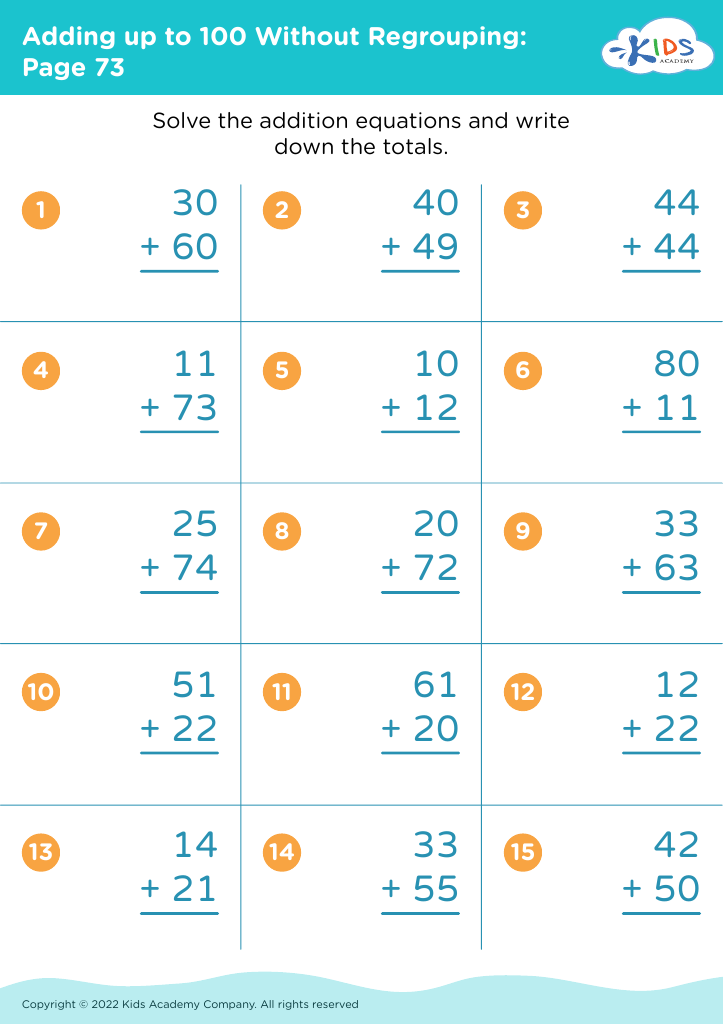
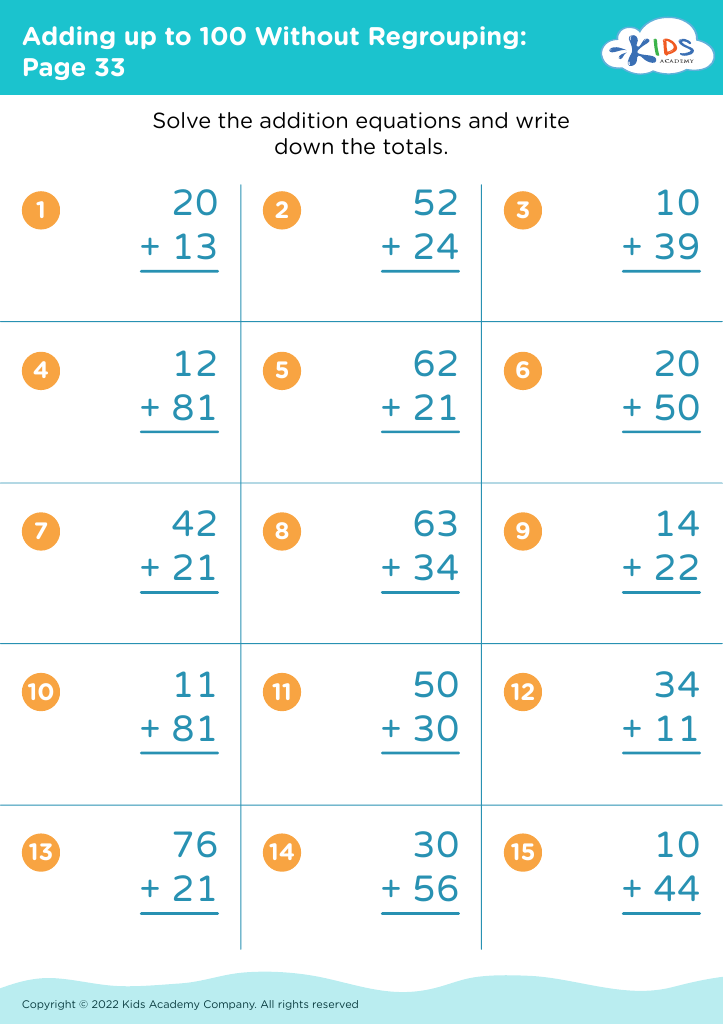
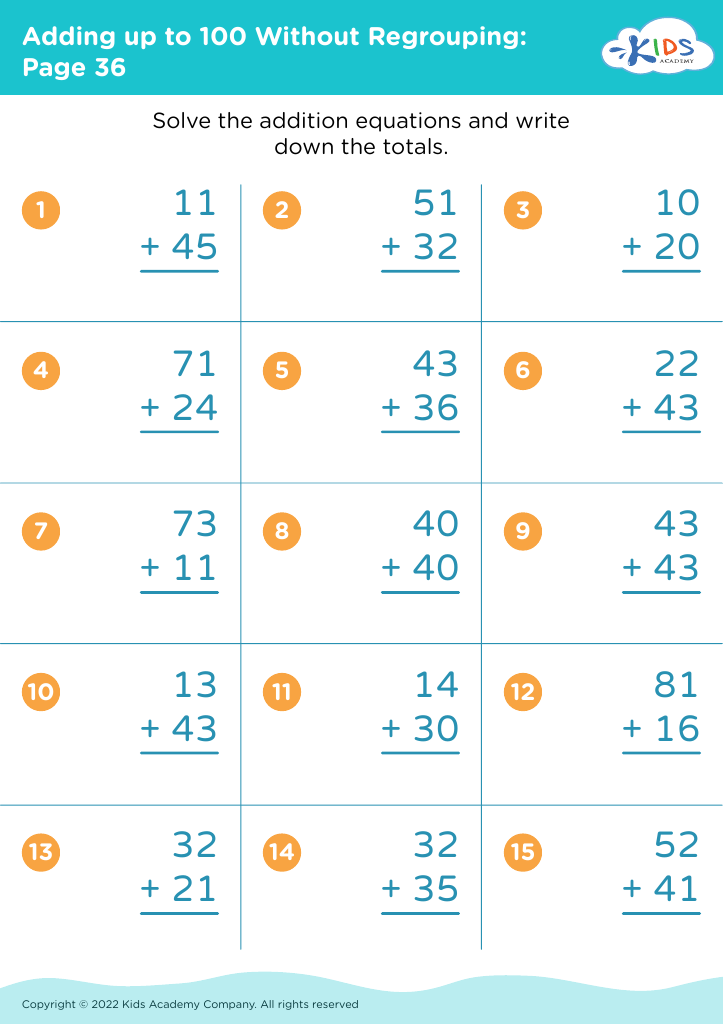
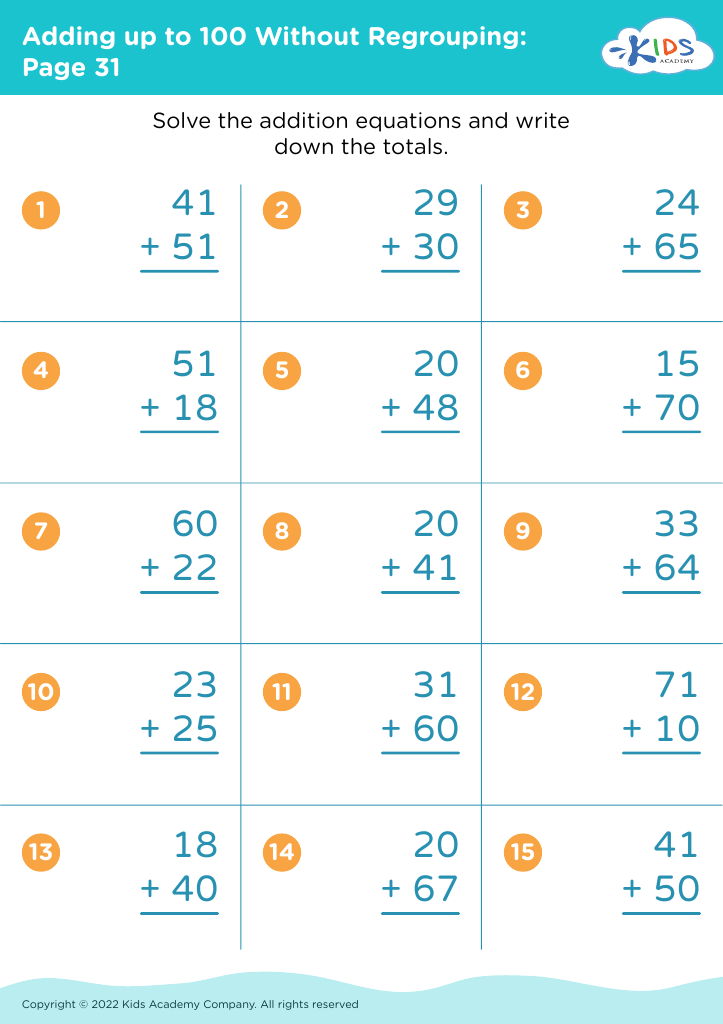
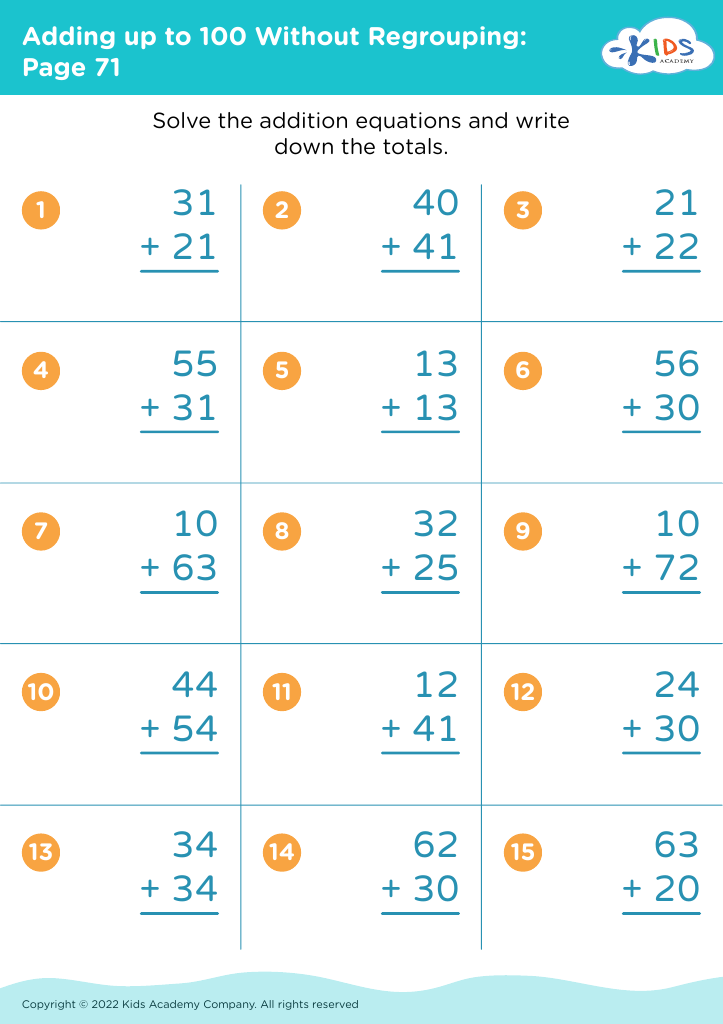
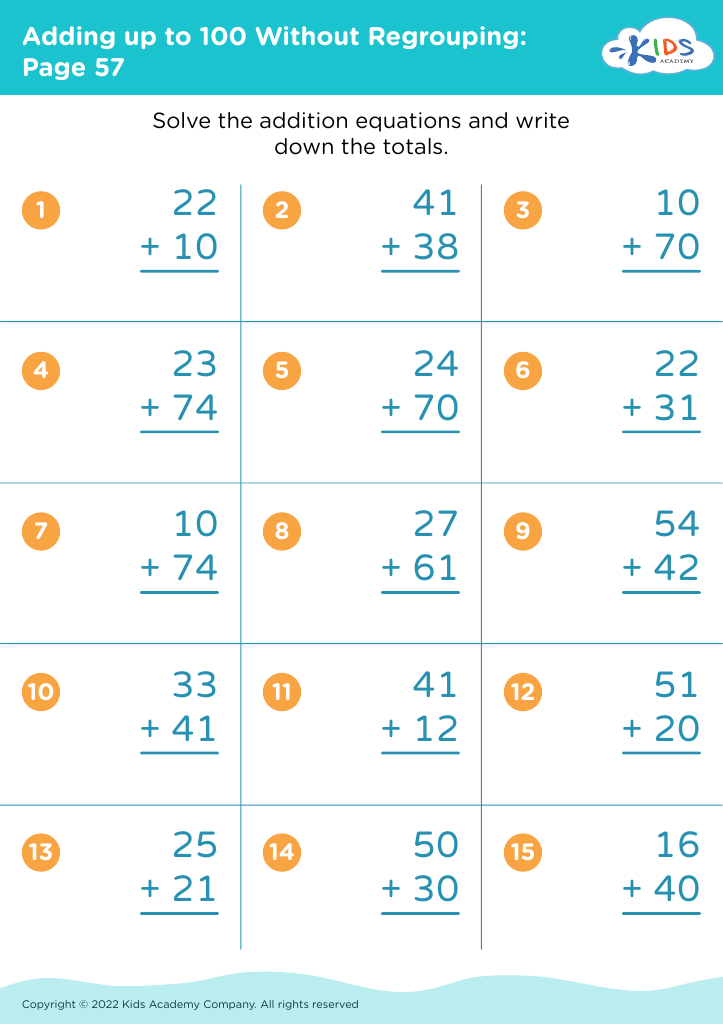
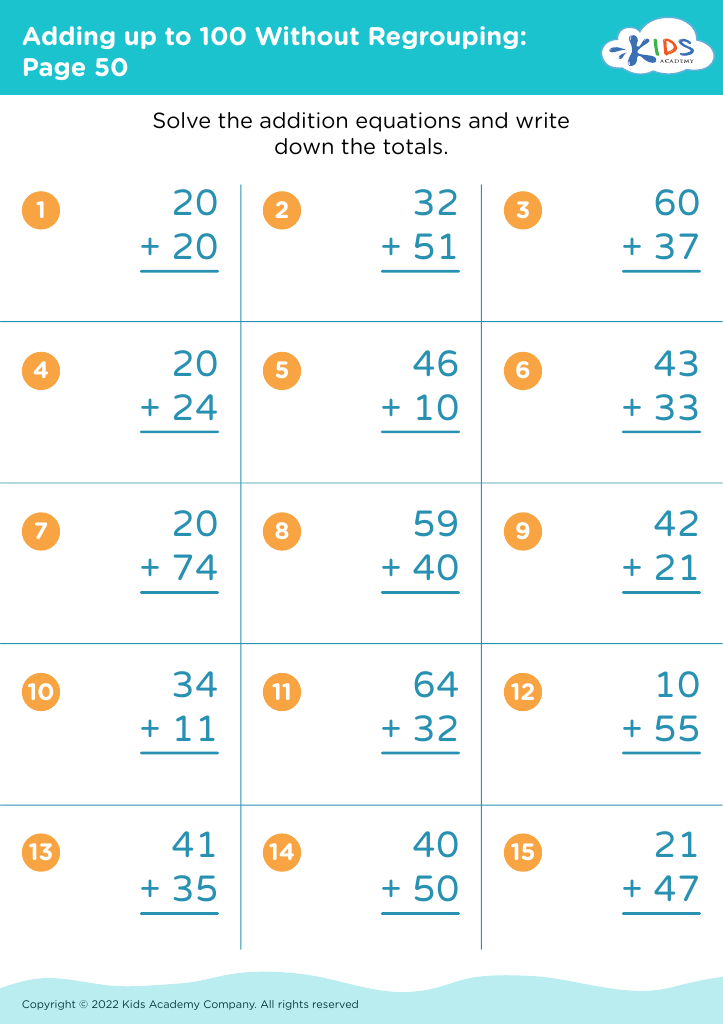
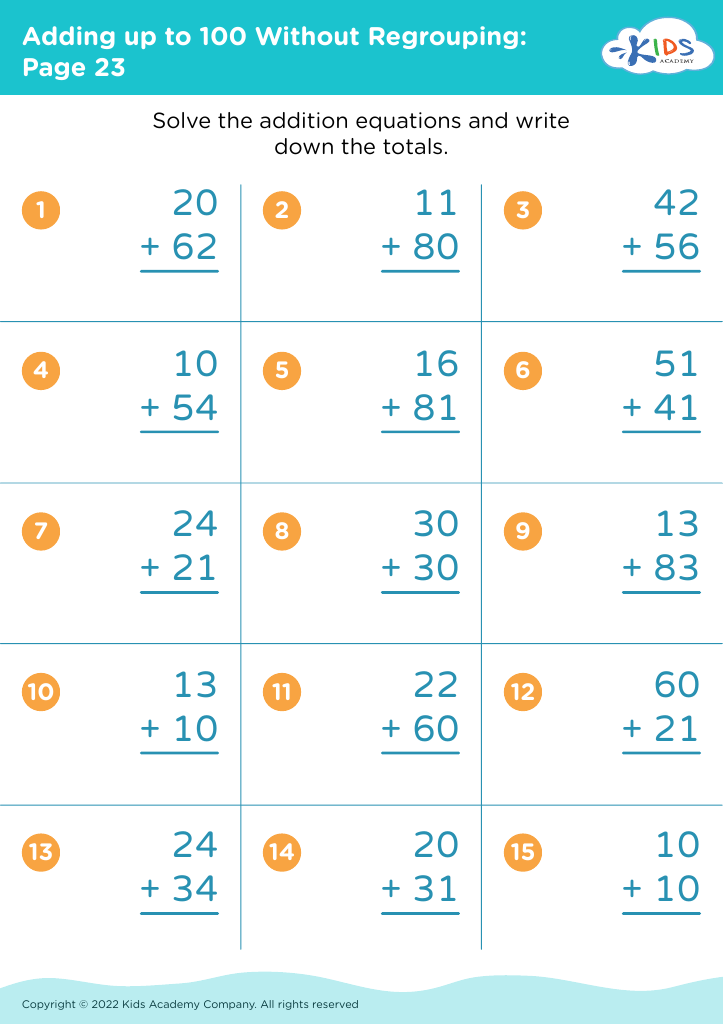
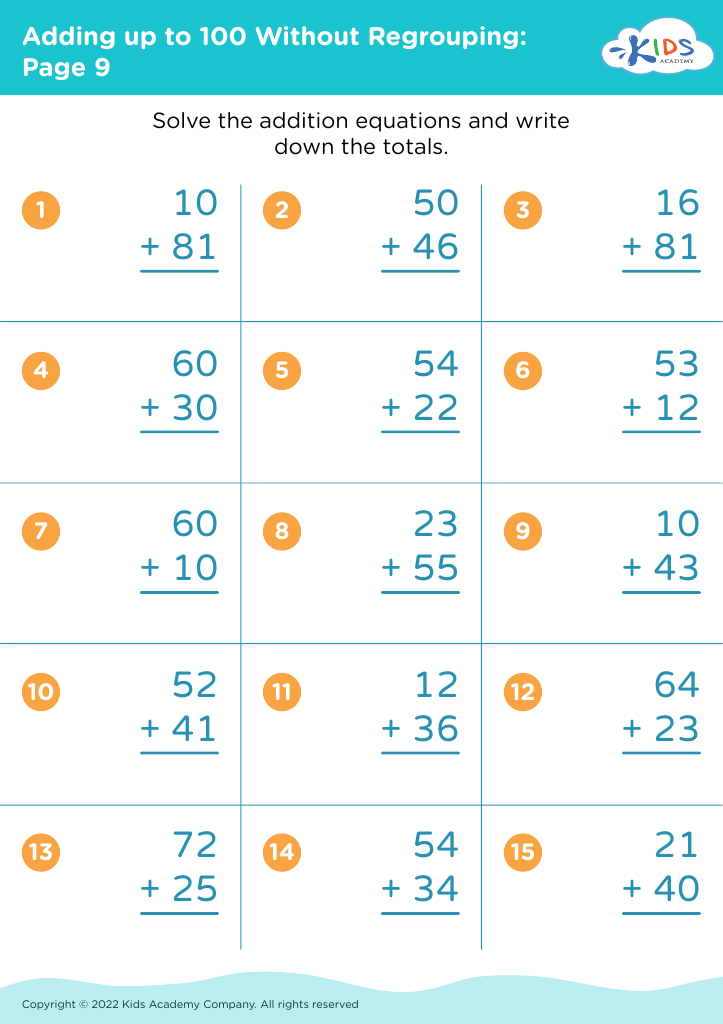
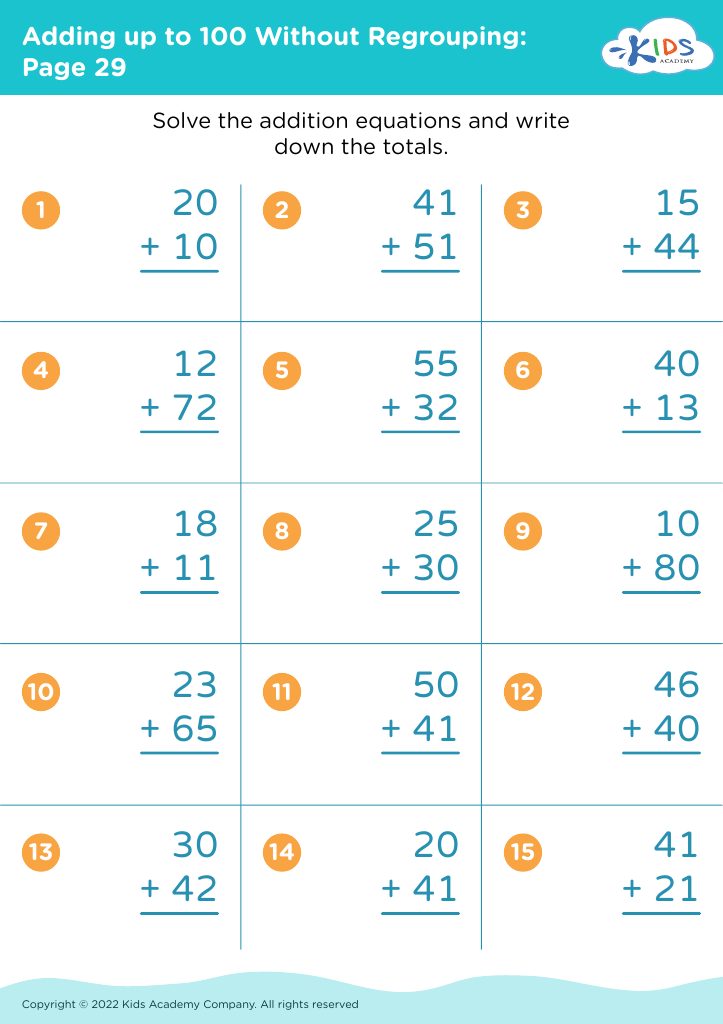




Problem-solving skills, particularly regarding adding up to 100 without regrouping, are vital for young children aged 4-7, as they lay a strong foundation for later mathematical understanding. Developing these skills fosters critical thinking, helping children learn to approach challenges methodically and develop solutions independently.
At this early stage, children engage with numbers in a way that builds confidence and fluency. Understanding addition concepts underpins all later math learning; grasping that 99 + 1 equals 100, for example, helps highlight number relationships and sequences. Learning problem-solving techniques also promotes persistence, resilience, and creativity in finding answers.
Moreover, exposure to these mathematical concepts in a structured environment—home or classroom—encourages a positive attitude towards learning. When parents and teachers actively support these skills, they reinforce the importance of math in everyday life, showcasing its relevance to real-world problems.
Investing time in nurturing problem-solving skills in early learners ultimately equips them with the tools needed for academic success. Encouraging comprehension over mere memorization leads to deeper, longer-lasting understanding, setting the stage for their future educational journeys and everyday functionalities.