Reading comprehension Adding up to 100 Without Regrouping Worksheets for Ages 4-7
3 filtered results
-
From - To
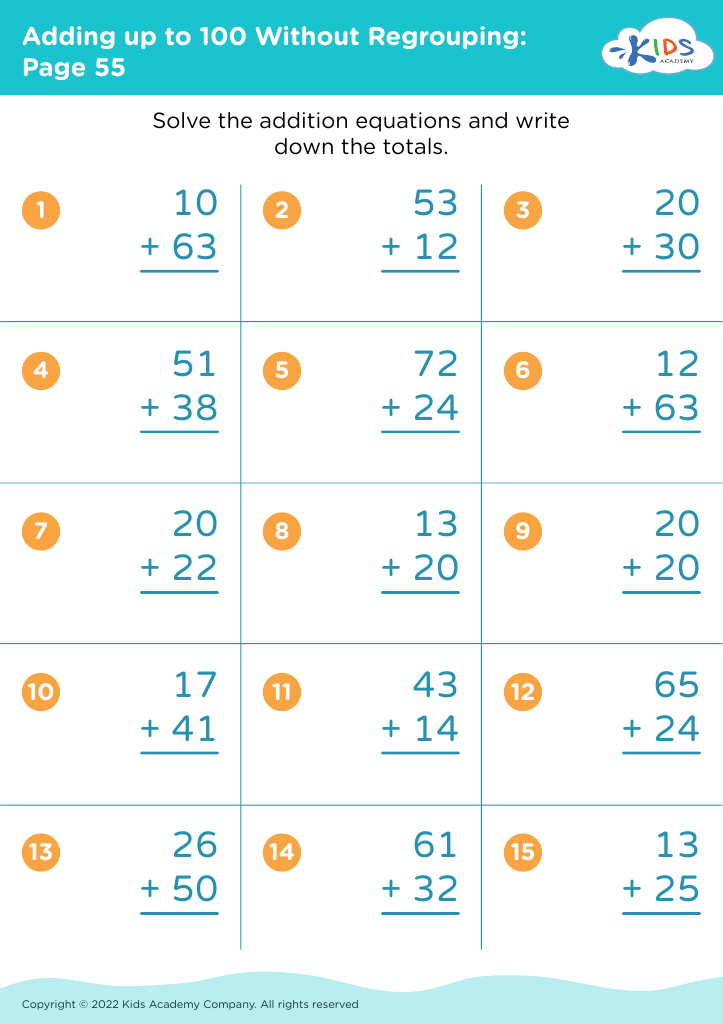
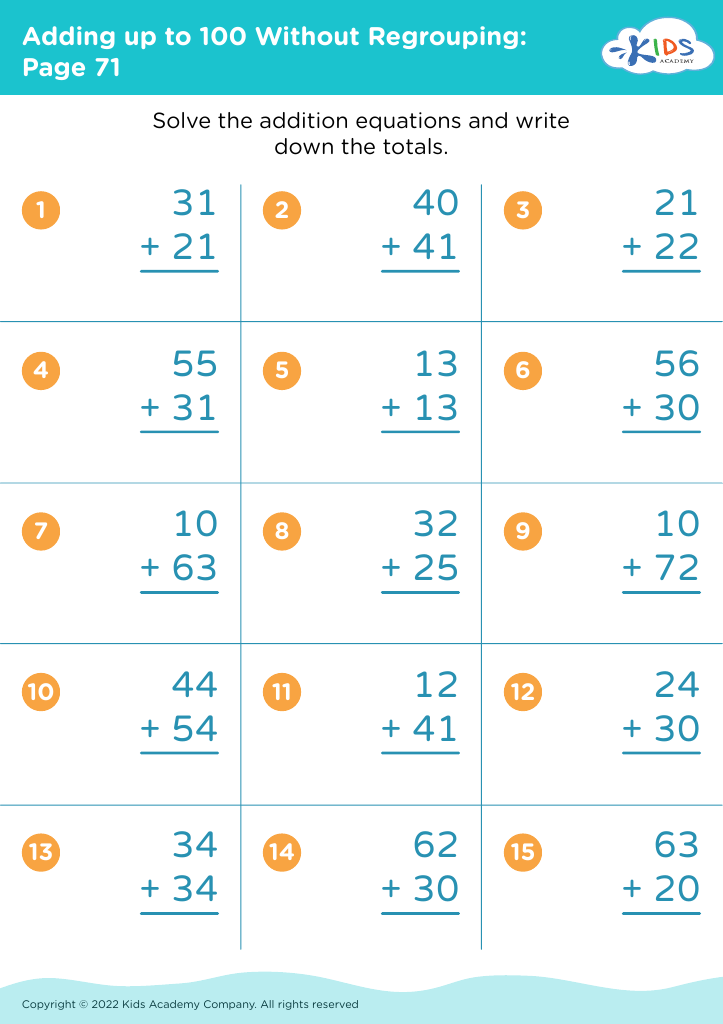
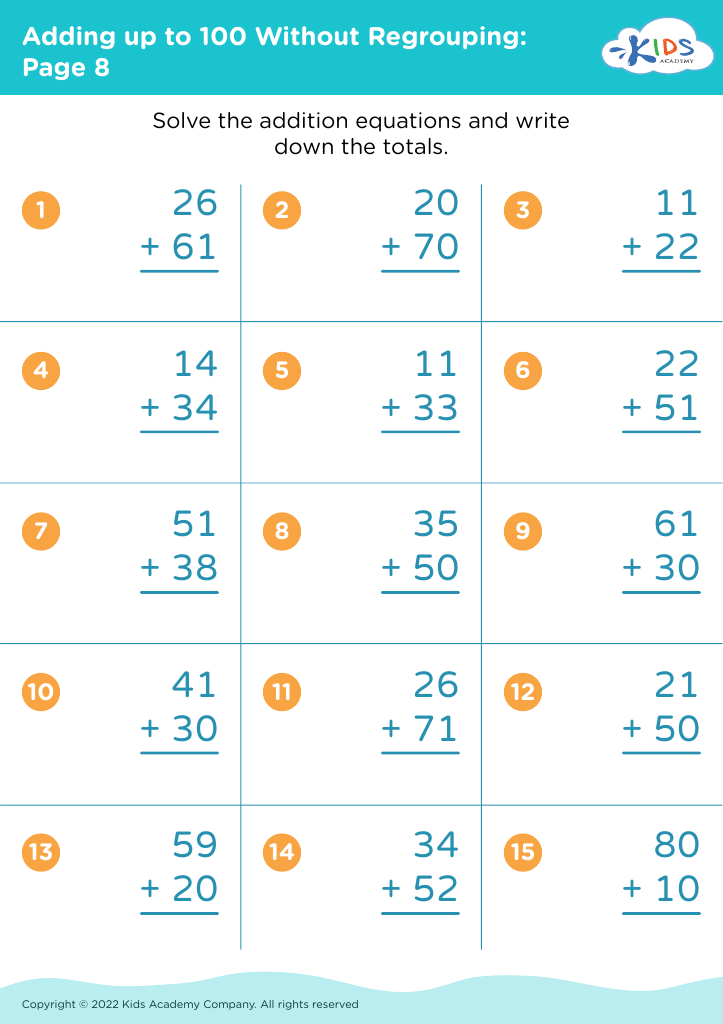
Boost your child's reading comprehension and math skills with our "Adding Up to 100 Without Regrouping" worksheets, designed specifically for ages 4-7. These engaging and interactive printables help young learners grasp fundamental addition concepts while enhancing their understanding of reading instructions. Each worksheet features age-appropriate problems that encourage critical thinking and problem-solving. Ideal for at-home practice or classroom activities, these resources ensure your child becomes confident in addition without regrouping, ultimately laying the foundation for future math success. Download today and watch your child excel in both reading and mathematics! Perfect for early learners ready to explore numbers.




Reading comprehension and addition skills are crucial for children aged 4-7, laying the foundation for their academic success. Parents and teachers should prioritize these areas for several reasons.
Firstly, strong reading comprehension allows children to understand and engage with stories, enhancing vocabulary and critical thinking. From these early experiences, kids develop a love for reading, which is essential for lifelong learning. When they grasp the ideas and themes in books, they also learn to connect concepts, fostering creativity and imagination.
Secondly, mastering addition without regrouping builds essential mathematical skills. At this age, developing the ability to add numbers seamlessly contributes to their confidence in math. It promotes logical thinking and instills problem-solving skills vital for everyday life. By giving children tools to solve basic math equations, we prepare them for more complex concepts in the future.
Combining reading comprehension with foundational math skills nurtures a holistic learning approach. It encourages children to see relationships between language and numbers, further easing their transition into more advanced subjects. For parents and teachers, investing in these skills means nurturing well-rounded individuals prepared for the challenges ahead in both literacy and numeracy.