Understanding multiplication Adding up to 100 Without Regrouping Worksheets for Ages 4-7
5 filtered results
-
From - To
Discover engaging and educational "Understanding Multiplication Adding up to 100 Without Regrouping Worksheets for Ages 4-7" designed to enhance young learners' math skills. These expertly crafted worksheets focus on helping children grasp multiplication concepts and improve their addition skills without regrouping. Perfect for early learners, each activity reinforces fundamental math principles, ensuring a solid foundation. Our colorful and interactive resources make learning math fun and effective, encouraging confidence and proficiency in young students. Ideal for parents and teachers, these printables are a fantastic tool for both classroom instruction and home practice. Start your child's math journey today!
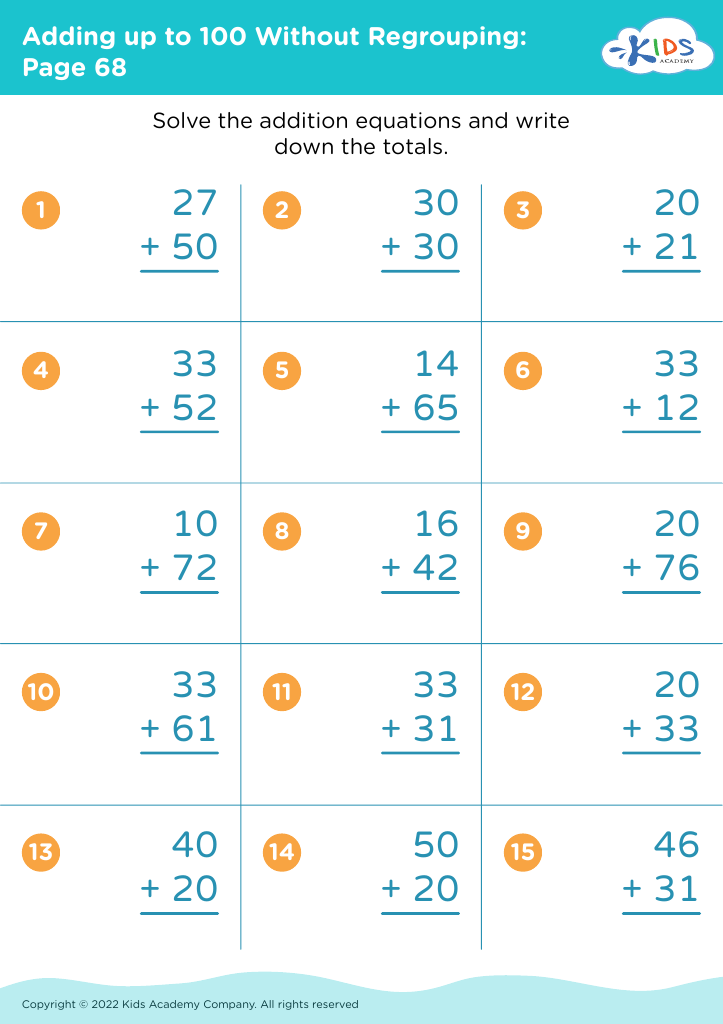
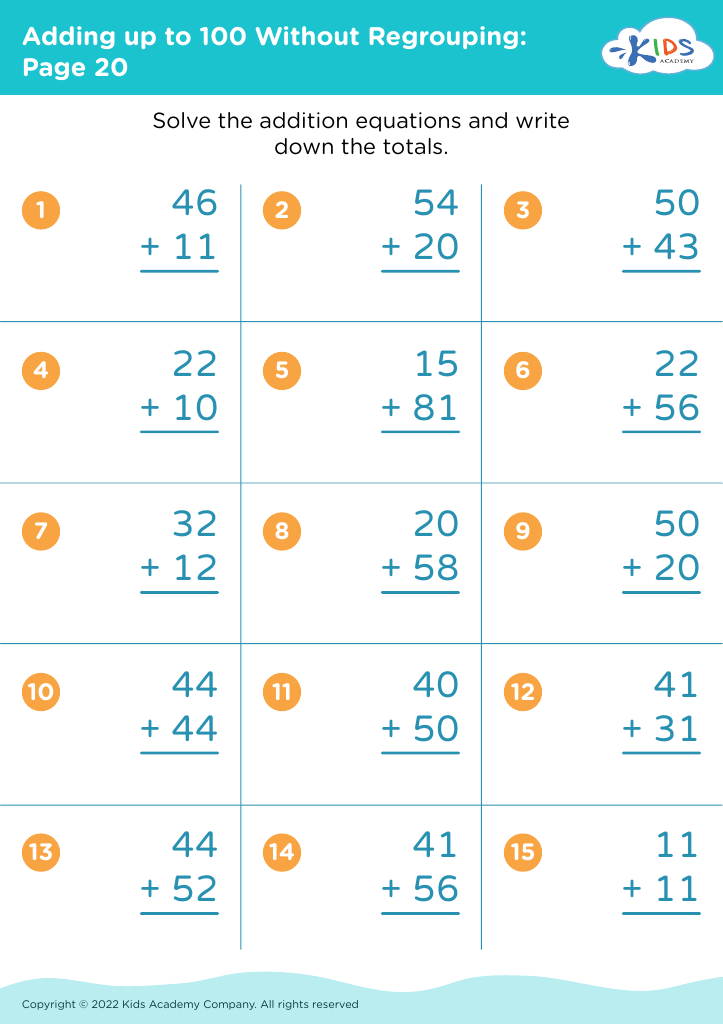
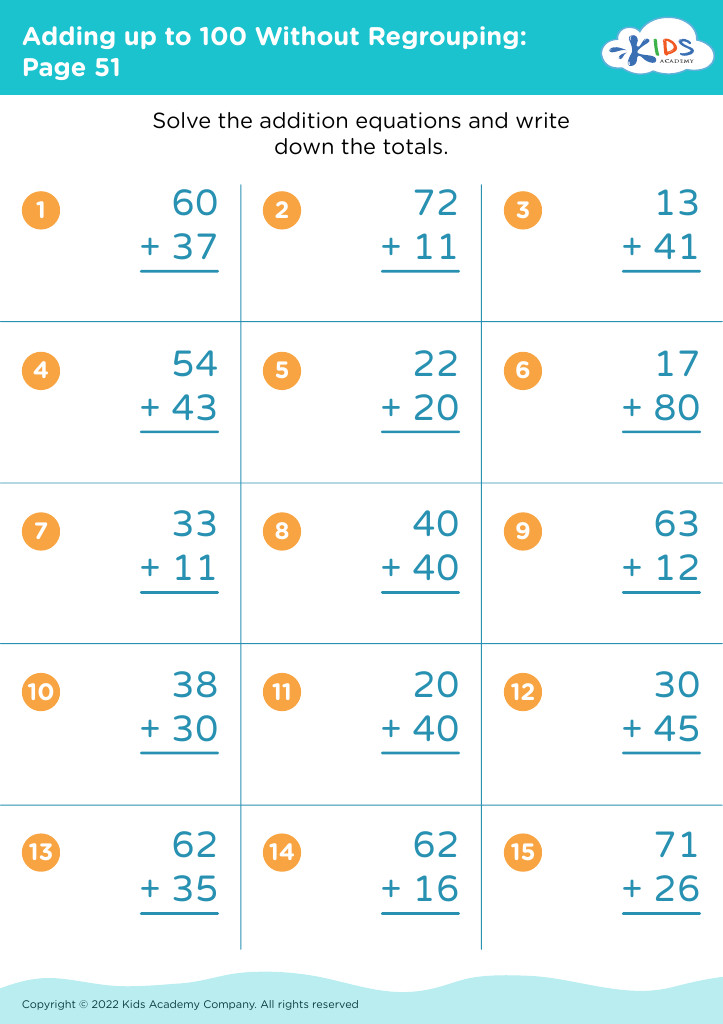
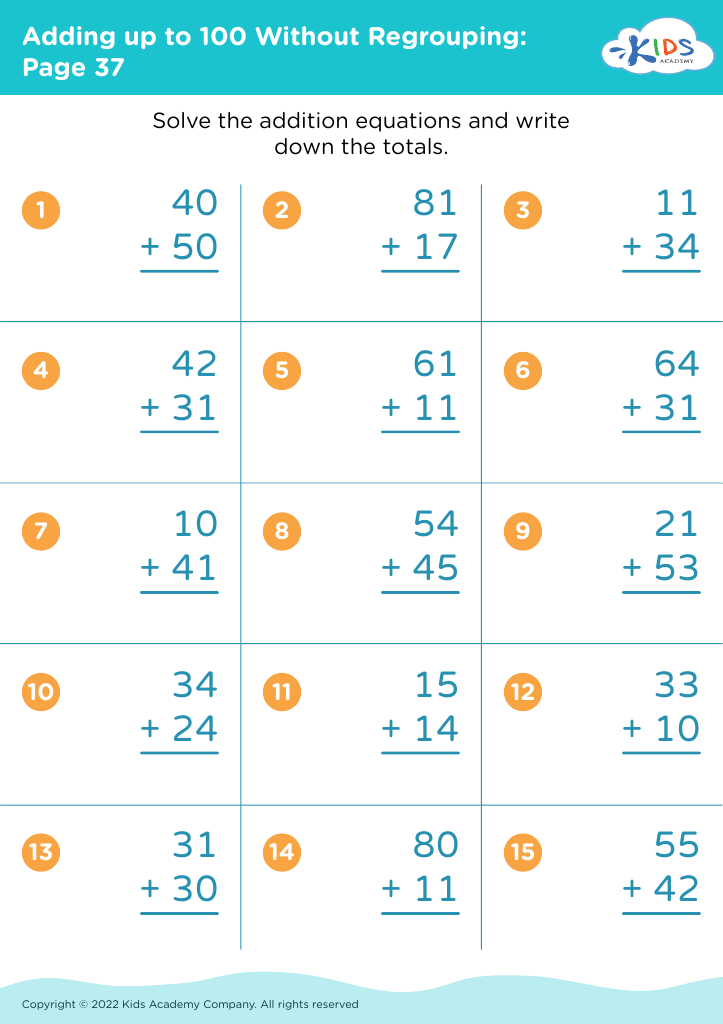
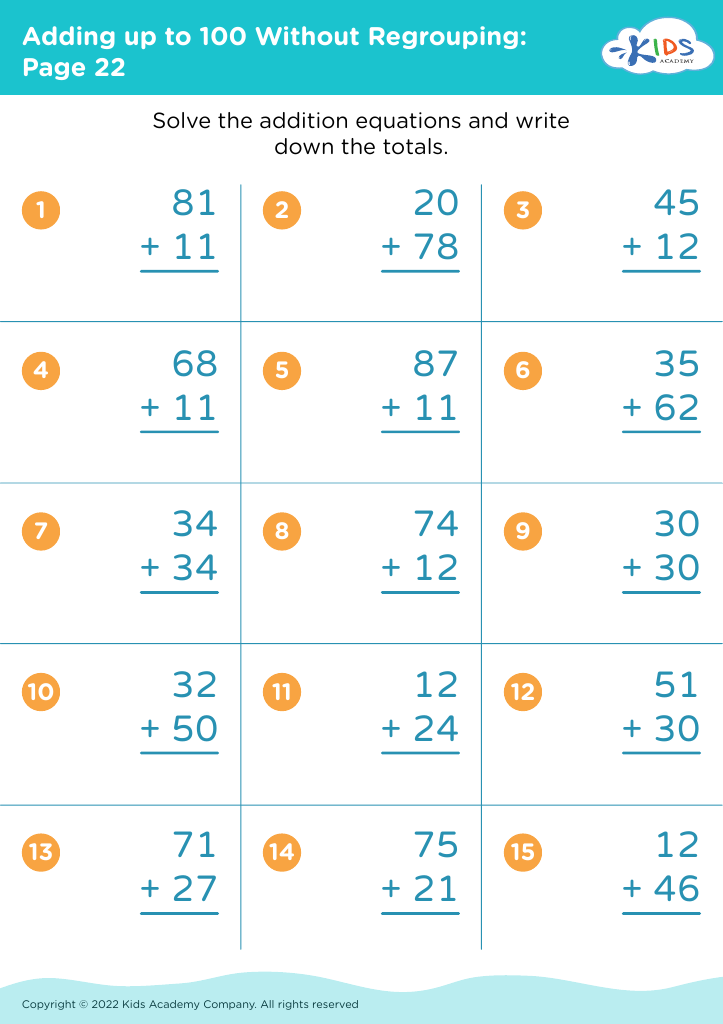




Understanding multiplication and being able to add numbers up to 100 without regrouping are foundational math skills that benefit young learners significantly, and parents and teachers of children aged 4-7 should prioritize these skills for various reasons.
Firstly, these concepts enhance number sense. When children comprehend how multiplication works and can add numbers efficiently, they develop a stronger grasp of number relations, patterns, and sequences. This foundational understanding is crucial as it will support their ability to tackle more complex math topics in later years.
Second, these skills promote problem-solving abilities. By learning multiplication and addition, children engage in critical thinking and use logical steps to resolve various problems. This cognitive exercise is invaluable in both academic settings and everyday situations.
Third, mastering these skills fosters confidence. When kids can successfully accomplish arithmetic tasks, it boosts their self-esteem and encourages a positive attitude toward learning. This confidence is vital, as it can motivate them to take on new challenges without fear of failure.
Finally, these math concepts are practical and widely applicable. Understanding basic math operations equips children with the ability to manage real-life tasks, such as counting money, telling time, or measuring objects. By establishing a strong mathematical foundation early in life, parents and teachers can ensure that children are well-prepared for future academic pursuits and everyday responsibilities.