Addition Practice Adding up to 1000 Misc Worksheets for Ages 4-7
5 filtered results
-
From - To
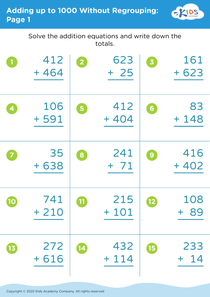
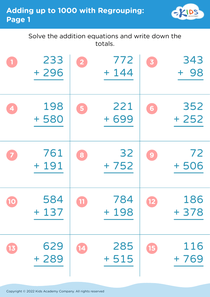
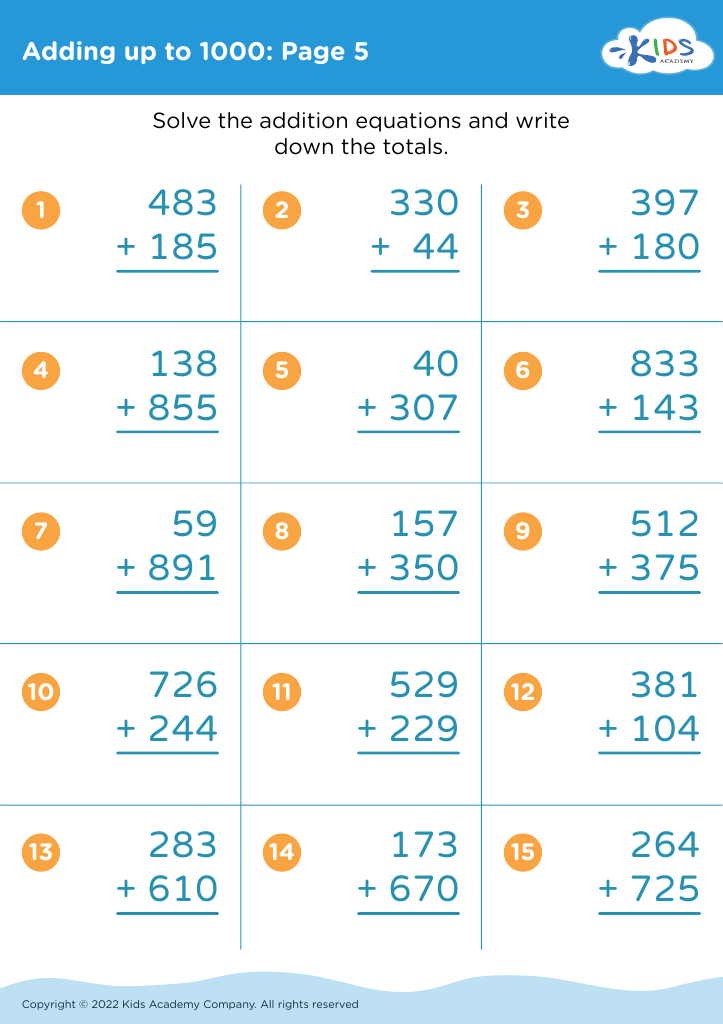
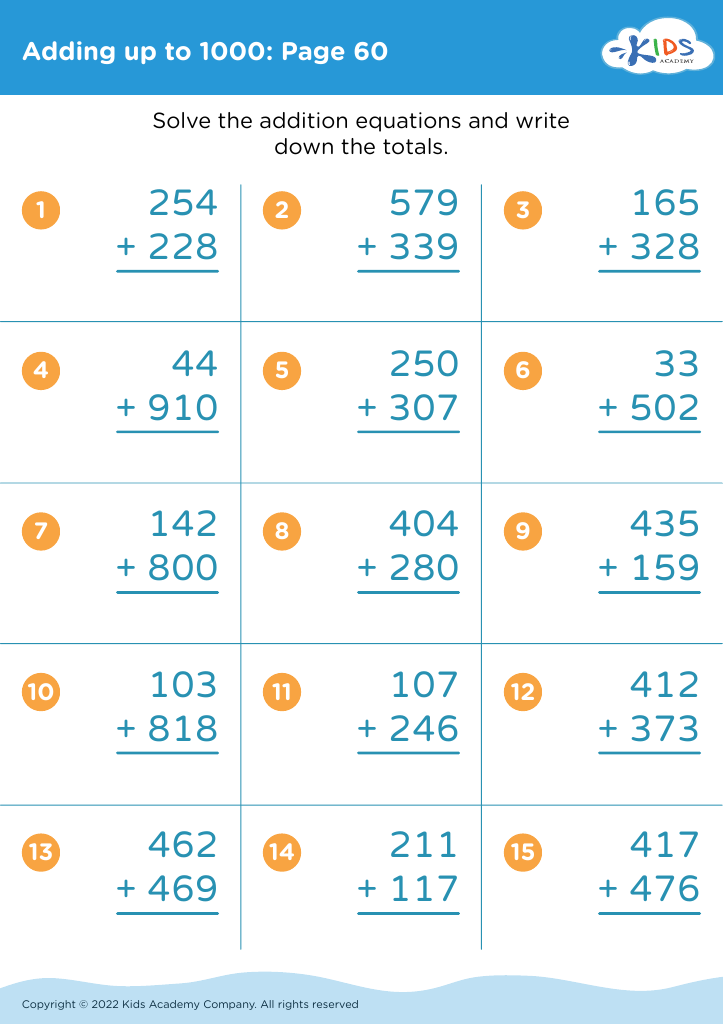
Welcome to our Addition Practice worksheets, designed for children aged 4-7! These engaging and interactive resources focus on helping young learners master addition skills while exploring numbers up to 1000. Offering a variety of fun and varied exercises, our worksheets encourage children to practice adding in diverse ways, ensuring they build a solid foundation in mathematics. With colorful illustrations and age-appropriate challenges, these materials are perfect for home study or classroom use. Watch your child gain confidence and excitement in their math skills as they engage with these captivating addition activities. Start your child's math journey today!
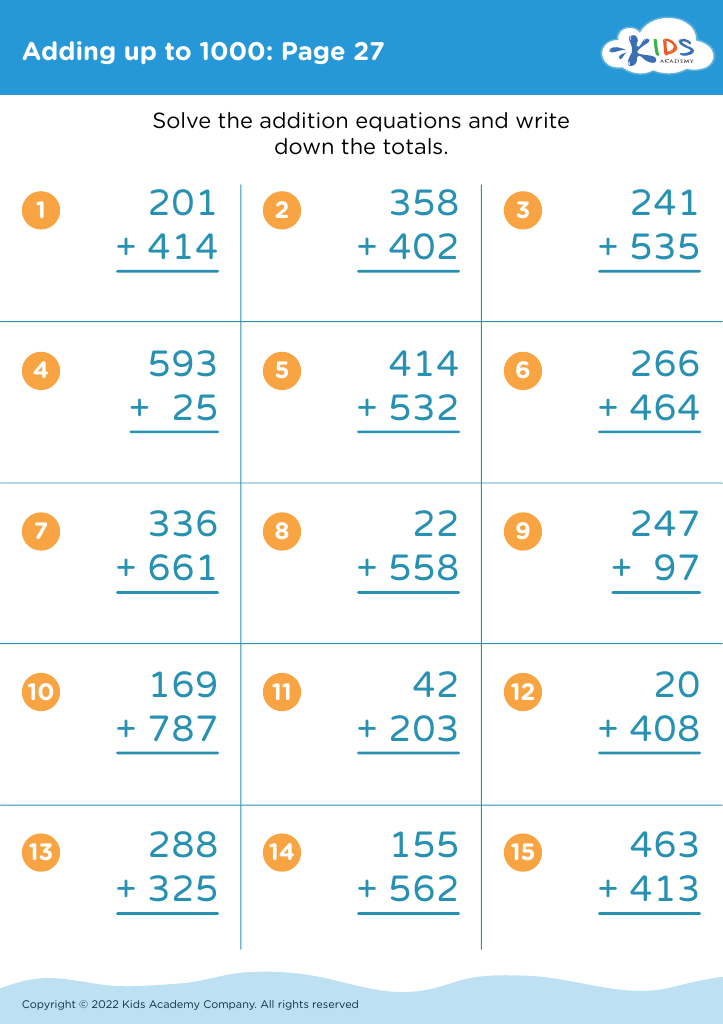
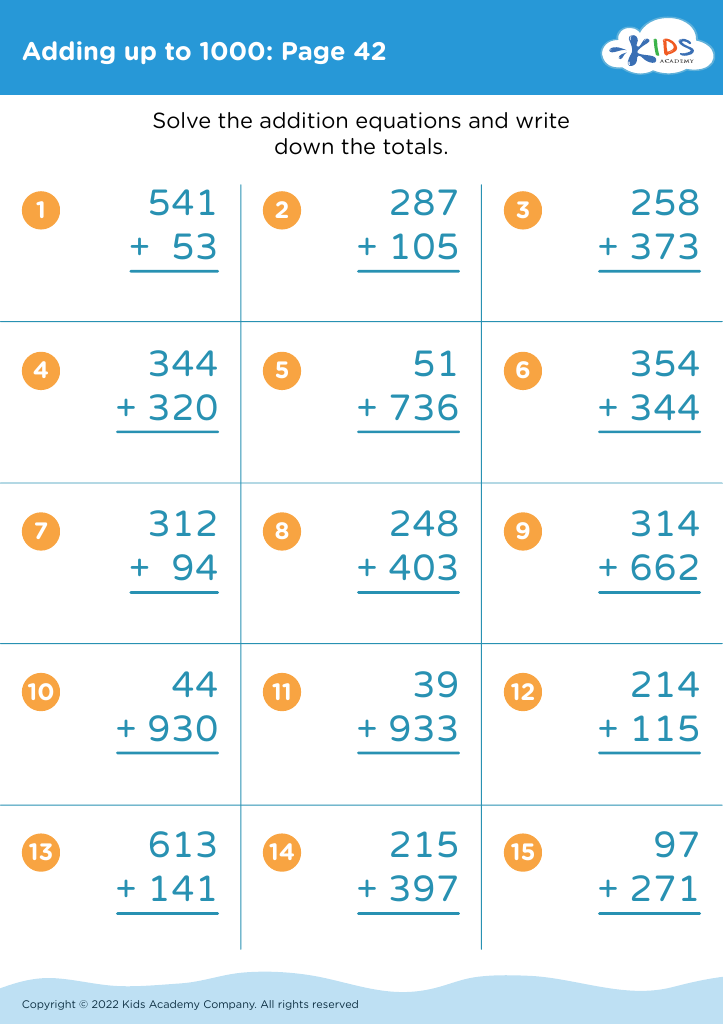
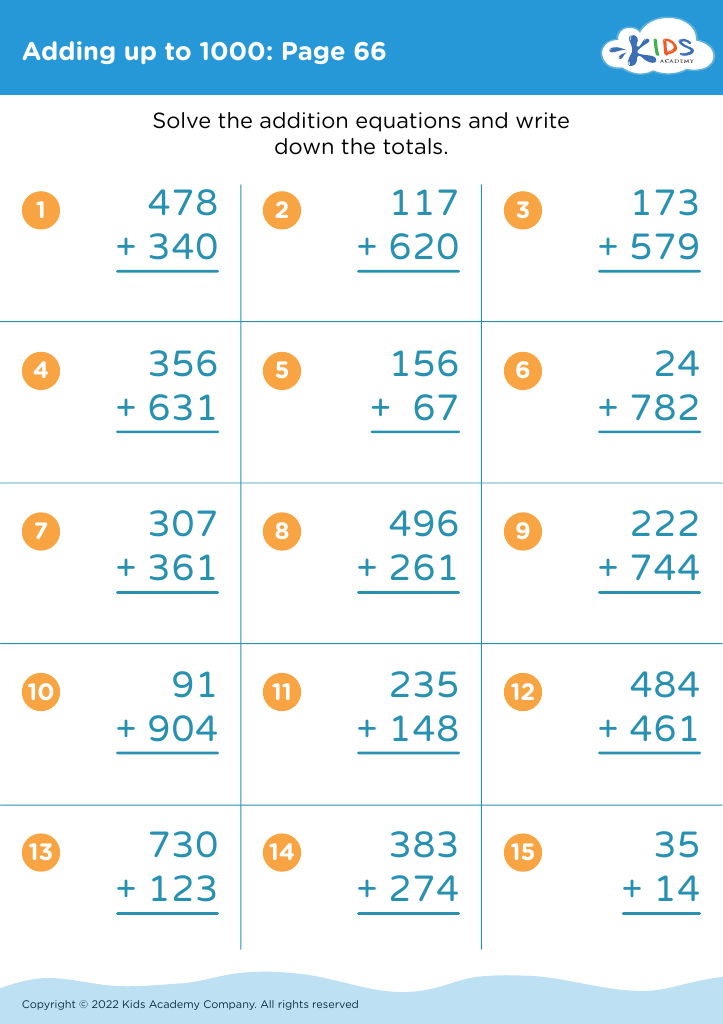


Parents and teachers should prioritize Addition Practice Adding up to 1000 Misc for children aged 4-7 due to its foundational importance in early mathematics. Mastery of basic addition skills builds confidence and sets the stage for more complex mathematical concepts later on. Engaging children with a variety of addition problems enhances their critical thinking and problem-solving abilities, essential skills that extend beyond math.
At this age, children are developing their cognitive abilities, and practicing addition helps improve their concentration and attention span. Exploration of different addition scenarios encourages flexibility in thinking, as children learn to approach problems from various angles. Moreover, incorporating real-life examples of addition fosters a deeper understanding of its practical applications, which enhances their learning experience.
Beyond academics, strong math skills contribute to better performance in other subjects. As numeracy is closely linked to literacy and daily life skills, proficiency in addition can improve overall educational outcomes. Lastly, collaborative addition activities can boost social skills, allowing children to work together and support each other. Overall, consistent practice in addition not only boosts mathematical abilities but also supports holistic development in young learners.