Counting skills Adding up to 1000 Misc Worksheets for Ages 4-7
8 filtered results
-
From - To
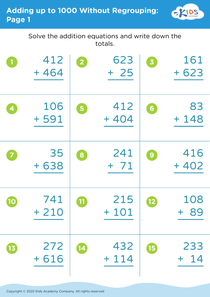
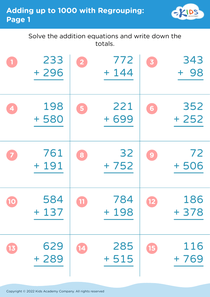
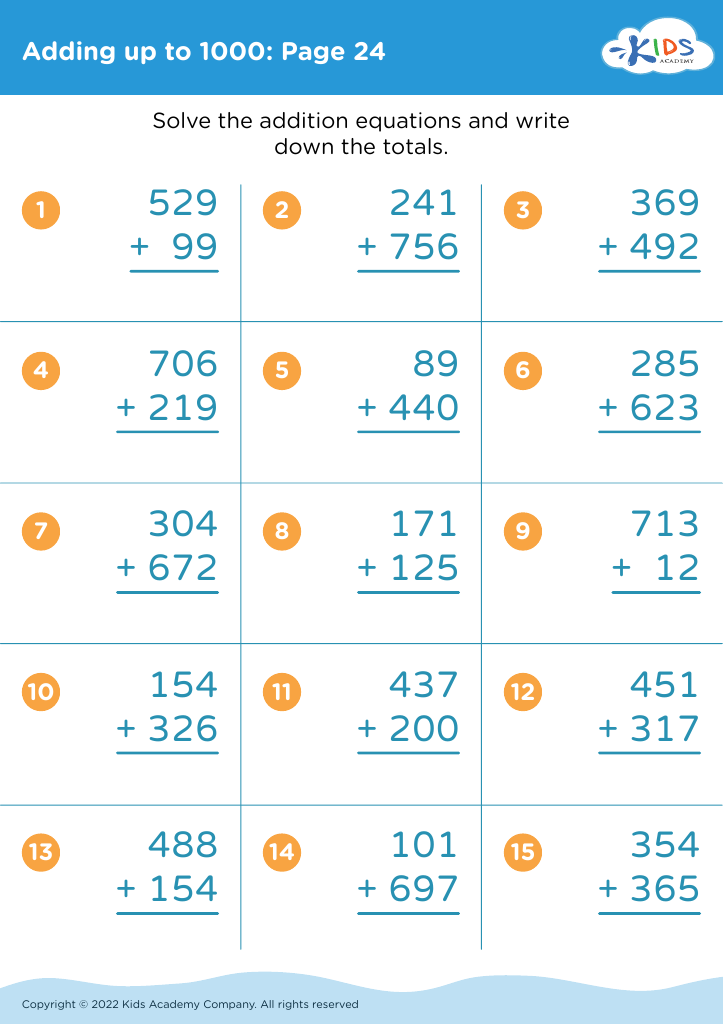
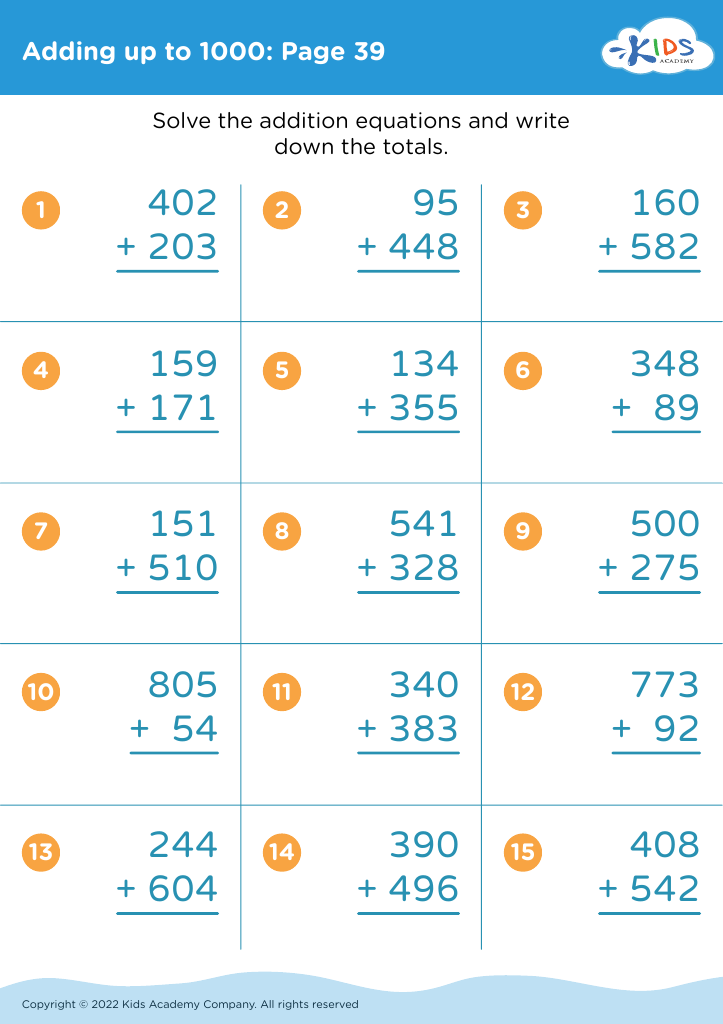
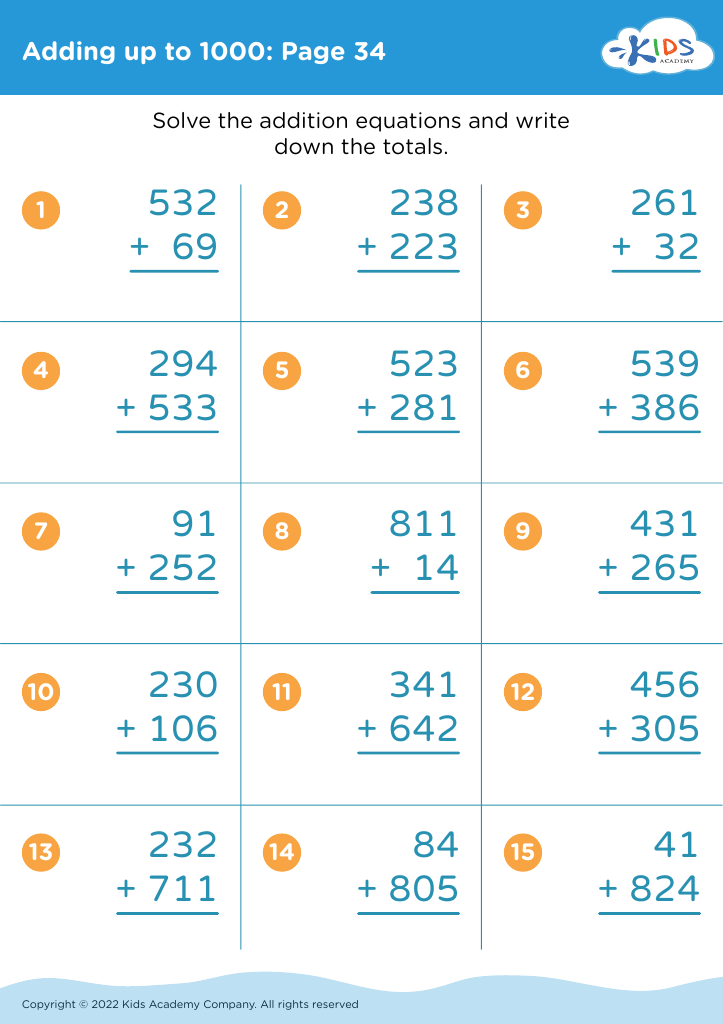
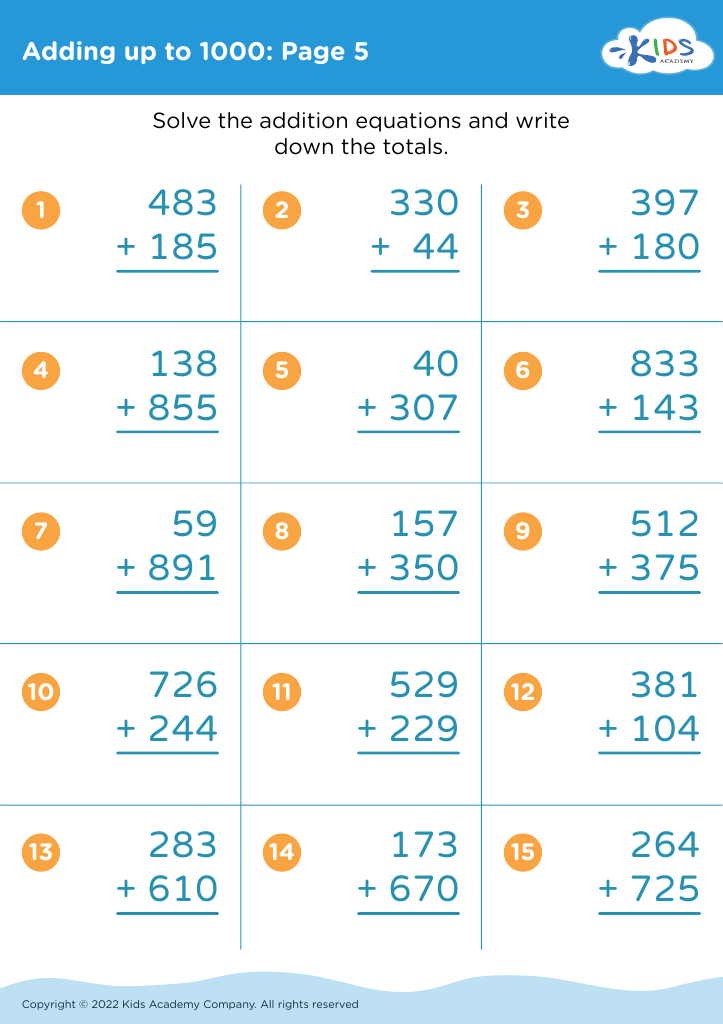
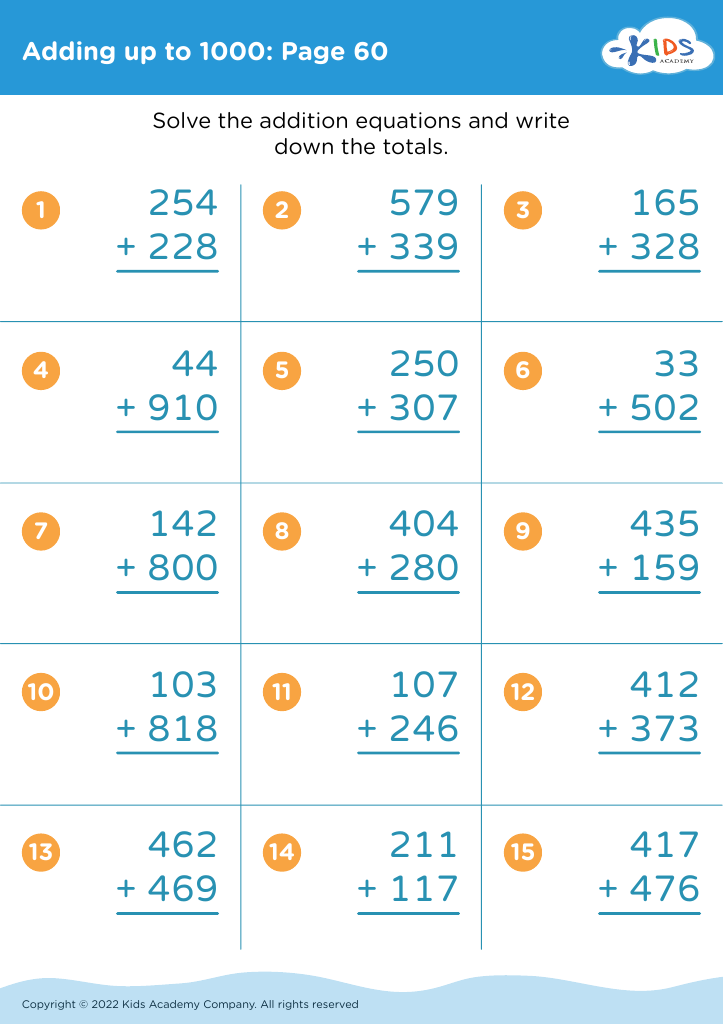
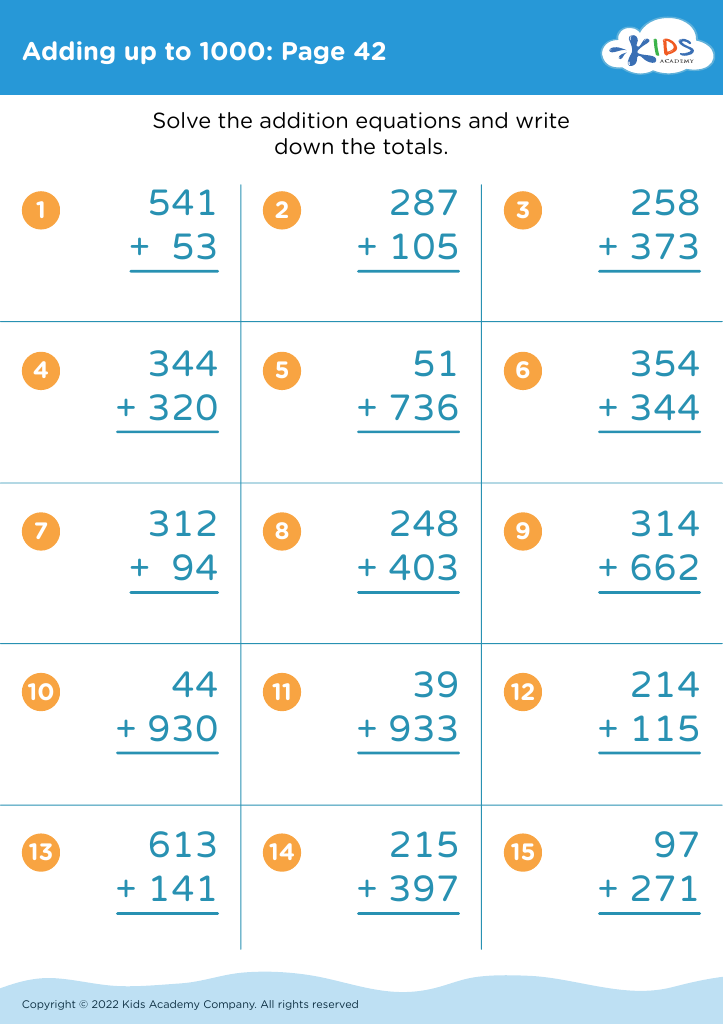
Boost your child's counting and addition skills with our "Counting Skills: Adding up to 1000" worksheets designed for ages 4-7. Perfect for young learners, these engaging activities help children practice addition in a fun and effective way. Each worksheet is crafted to build confidence in math by gradually increasing difficulty. With colorful illustrations and interactive tasks, kids will enjoy mastering counting and summing numbers up to 1000. Help your child excel in math, enhance their problem-solving abilities, and foster a love for learning with our comprehensive collection of printable worksheets. Explore and download today!
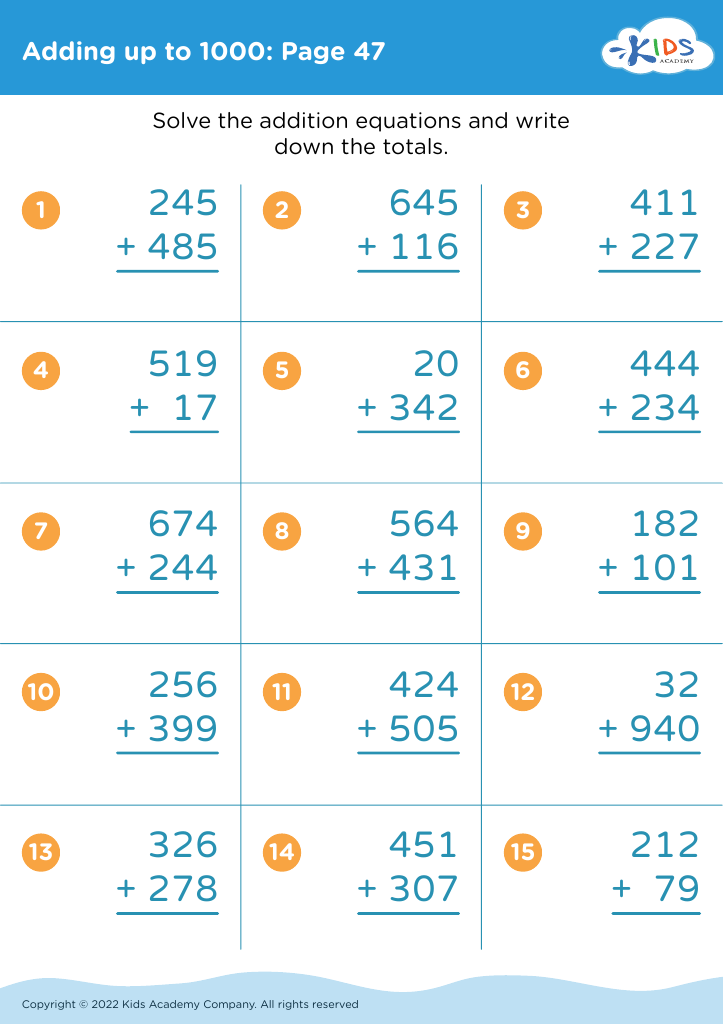
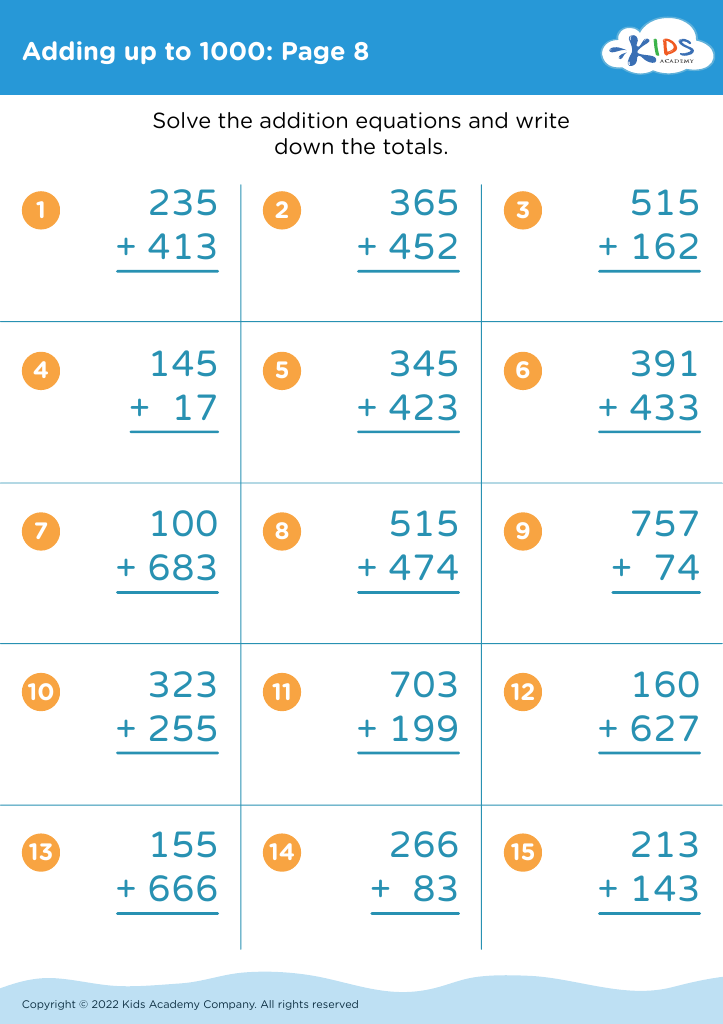


Counting skills and basic arithmetic are foundational to a child's mathematical understanding and are crucial during the ages of 4 to 7. Parents and teachers should prioritize these skills for several reasons. Firstly, developing counting skills and the ability to add numbers up to 1000 fosters numerical literacy, paving the way for more complex math concepts encountered in later years such as multiplication, division, and fractions. Proficiency in these basic operations helps build confidence in a child’s mathematical abilities, reducing math anxiety as they progress in their education.
Secondly, these skills have practical implications in everyday life. Simple tasks like counting toys, calculating change, or distributing items evenly among friends are everyday applications that require basic arithmetic competence. This real-world relevance demonstrates to children the practicality of math, enhancing their motivation to learn.
Moreover, early mastery of counting and addition also supports cognitive development, promoting logical thinking and problem-solving skills. Each time a child figures out an addition problem, they are employing critical thinking strategies that blanket many other areas of learning.
Lastly, engaging young learners in counting and adding exercises can be an enjoyable and interactive experience. Numerous educational games, apps, and activities can make learning fun and cultivates a positive attitude towards math from an early age. Therefore, nurturing these skills is integral for a child’s overall development and helps lay a strong educational foundation.