Mathematical reasoning Adding up to 1000 Misc Worksheets for Ages 4-7
5 filtered results
-
From - To
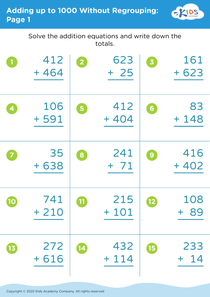
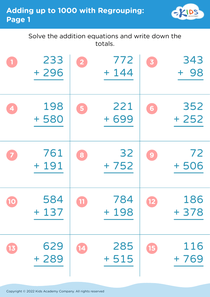
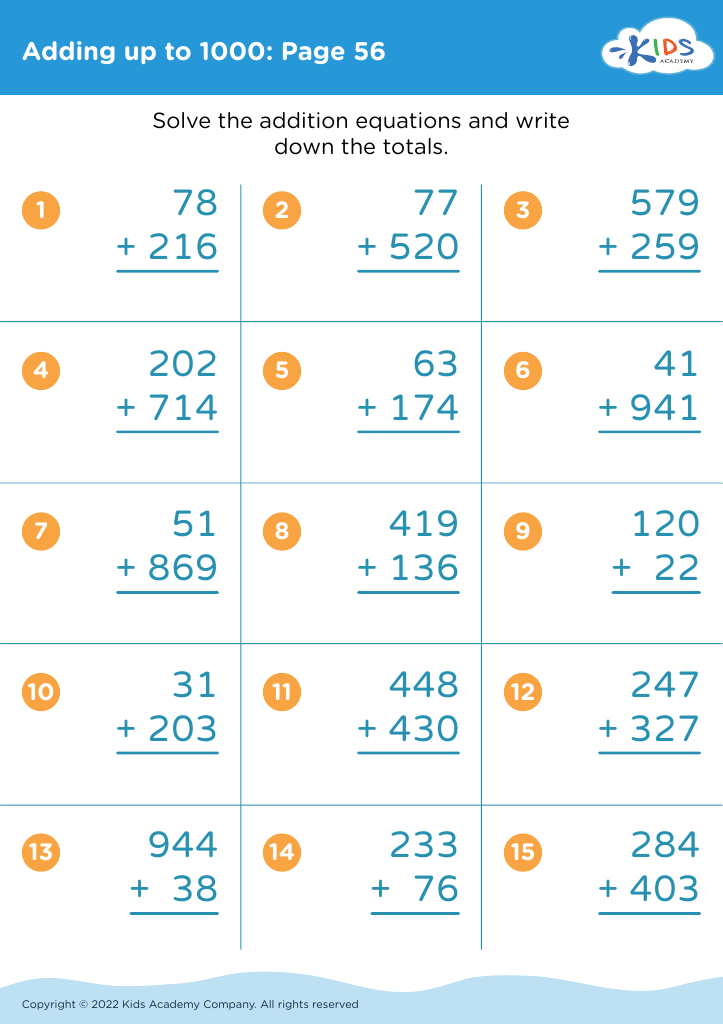
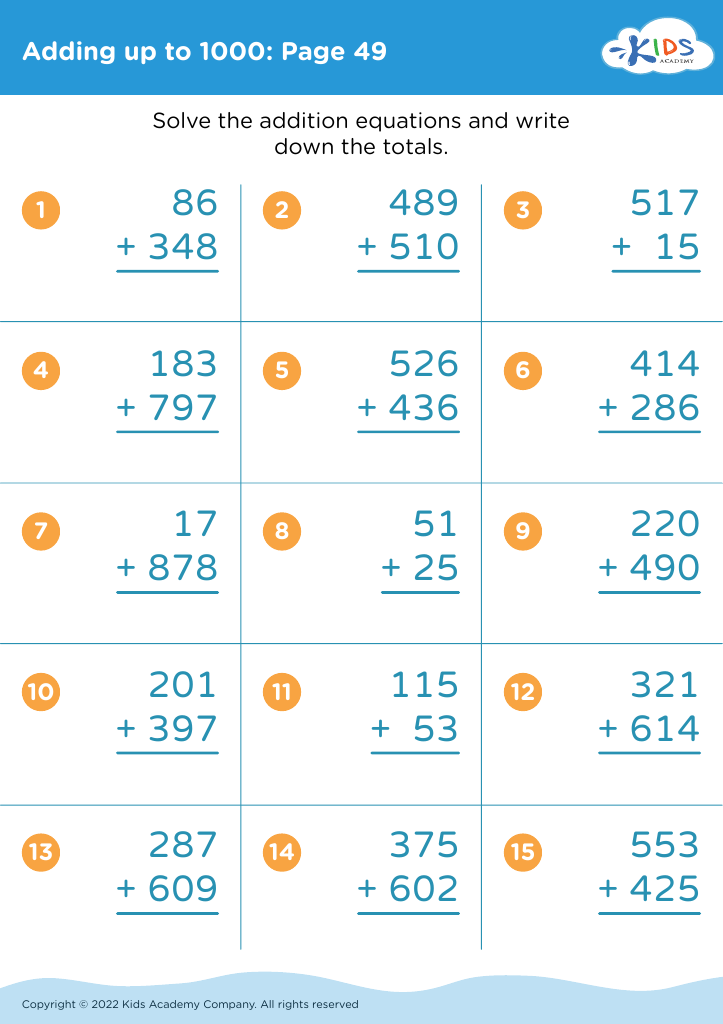
Explore our "Mathematical Reasoning: Adding Up to 1000" worksheets designed for children aged 4-7. These engaging and interactive printable worksheets enhance young learners' mathematical skills through a variety of fun exercises. Kids will practice addition, develop number sense, and build confidence in problem-solving as they tackle diverse problems that challenge their reasoning abilities. Incorporating visually stimulating activities, these resources make learning enjoyable while reinforcing fundamental concepts. Ideal for parents and teachers, our worksheets ensure a comprehensive understanding of basic math. Download now and support your child's journey towards mastering addition in an entertaining and educational way!
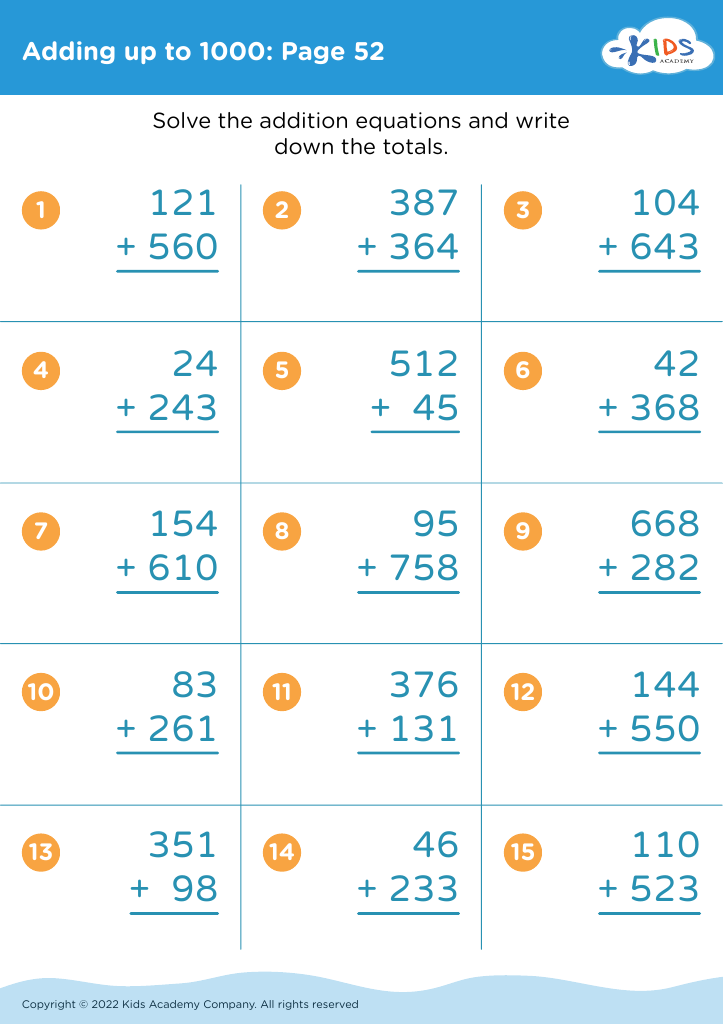
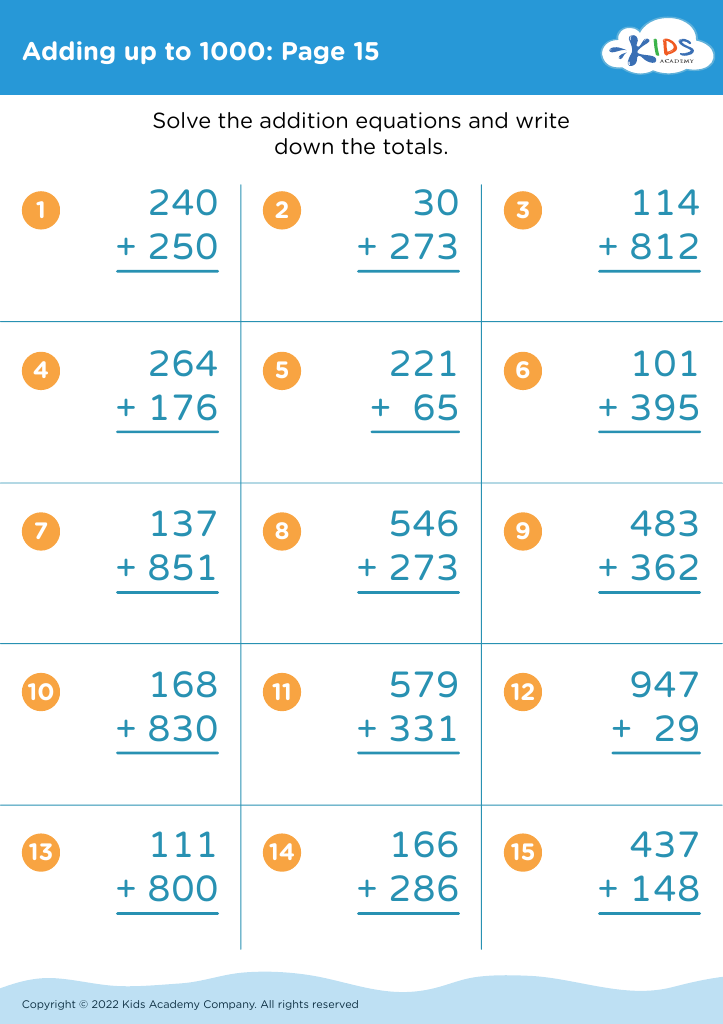
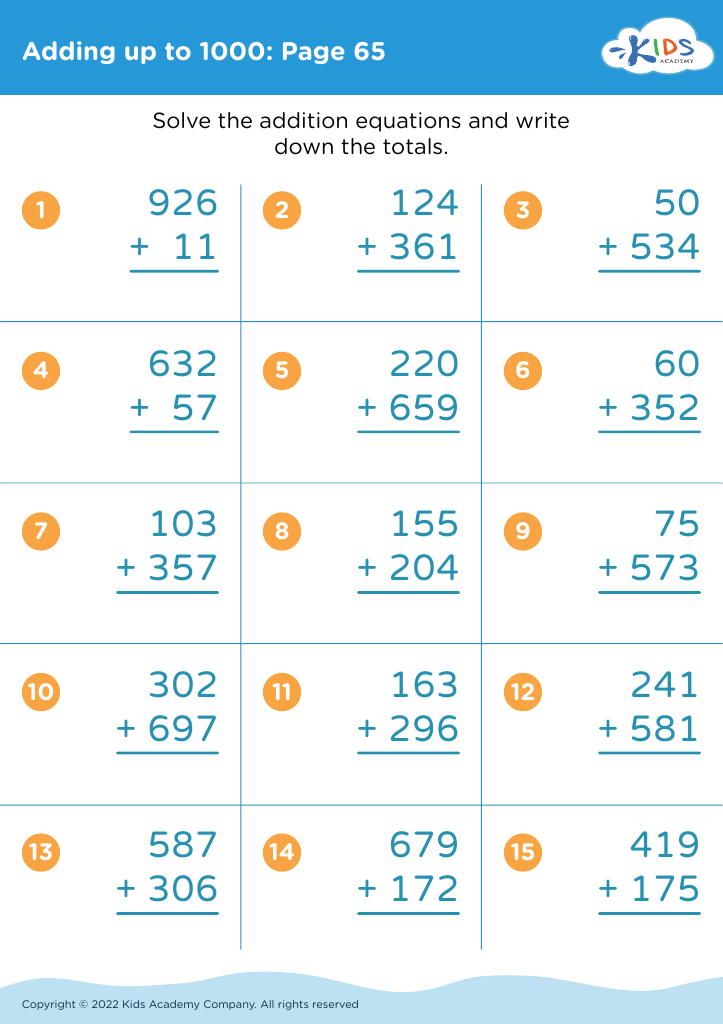


Mathematical reasoning, particularly the concept of "Adding up to 1000," is crucial for children aged 4-7 as it lays the groundwork for their future cognitive and problem-solving skills. During these formative years, children develop essential numeracy abilities that will stick with them throughout their academic journey. By focusing on mathematical reasoning, parents and teachers foster a deeper understanding of numbers, allowing children to explore addition, subtraction, and other operations in a meaningful way.
Encouraging young learners to collaborate around mathematical problems helps them build confidence and perseverance. It enables them to understand that numbers can be manipulated and results can be varied based on the approach taken. This further encourages a growth mindset, showing children that tackling challenges in mathematics is not just rote memorization but an opportunity for creativity and exploration.
Additionally, strong reasoning skills develop critical thinking, which is transferable to other subjects and everyday scenarios. As children begin to see relationships between numbers and patterns, their overall mathematical fluency improves, setting a strong foundation for more complex topics in future grades. Ultimately, fostering mathematical reasoning empowers children, equipping them with a vital skill set that supports their academic development and lifelong learning.