Recognizing shapes Adding up to 1000 with Regrouping Worksheets for Ages 4-7
4 filtered results
-
From - To
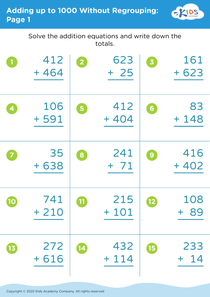
Recognizing shapes and adding up to 1000 with regrouping worksheets for ages 4-7 help young learners build both geometric and basic arithmetic skills in an engaging way. These printable worksheets from Kids Academy are designed to enhance children's understanding of shapes while simultaneously improving their addition skills through fun activities. Carefully crafted for early learners, these exercises support cognitive development and mathematical confidence by challenging kids to identify shapes and practice addition with regrouping. With colorful illustrations and age-appropriate problems, these resources ensure a solid foundation in both geometry and arithmetic for young minds, making learning an enjoyable adventure.
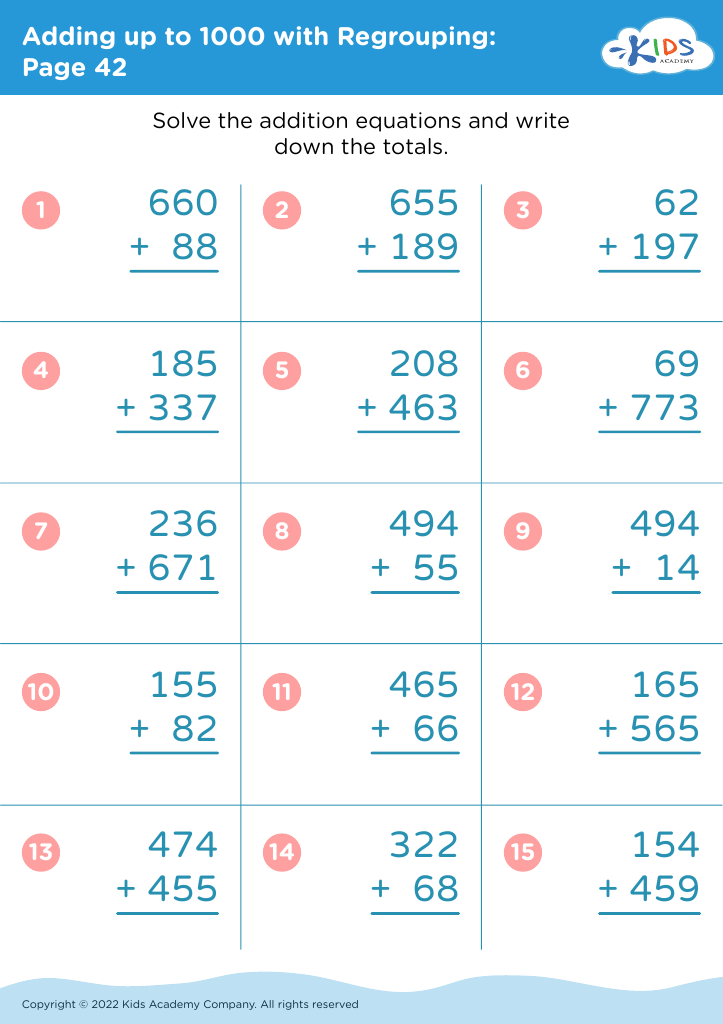
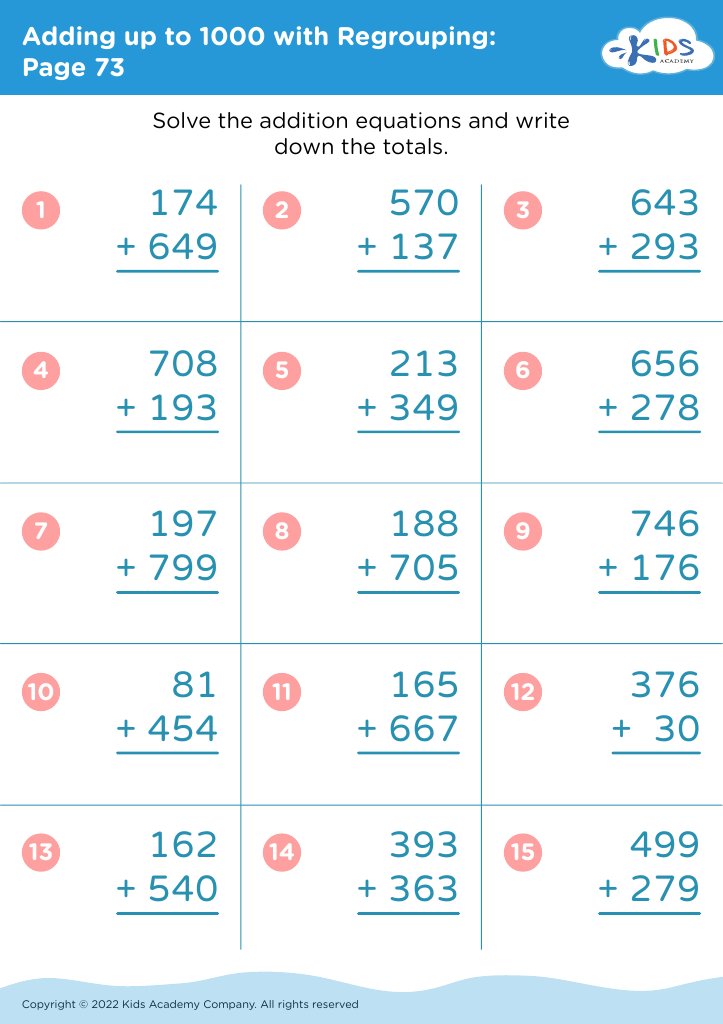
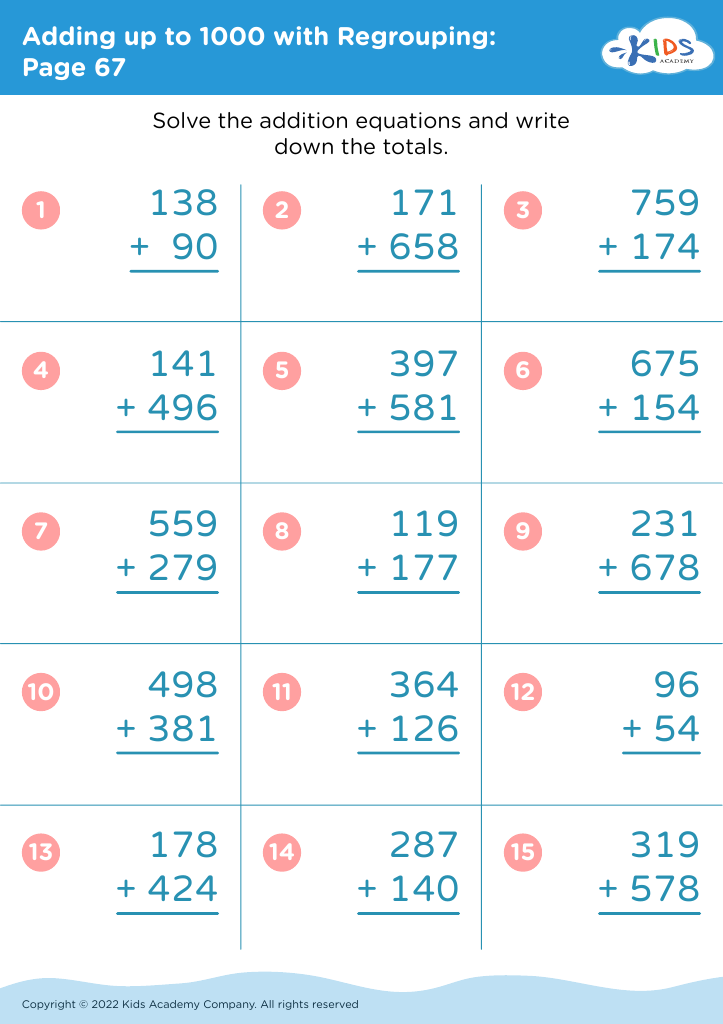
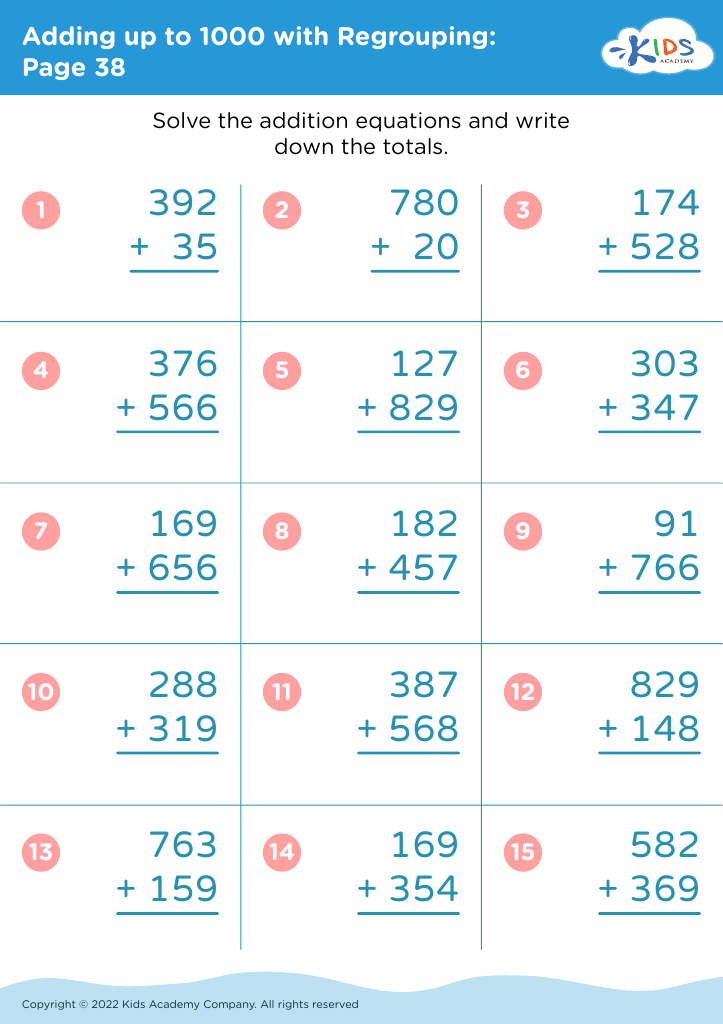


Parents and teachers play an essential role in fostering the cognitive development of children, aged 4–7, by introducing foundational math concepts, such as recognizing shapes and adding up to 1000 with regrouping. Recognizing shapes is a fundamental skill that enhances spatial awareness, critical thinking, and visual perception. Familiarity with shapes also feeds into other essential skills like reading and writing, as children learn to distinguish different letters and objects based on their shapes.
Adding up to 1000 with regrouping involves more than basic arithmetic; it teaches children about the base-10 system, place value, and the importance of organized thinking. Mastery of these skills lays a crucial groundwork for more advanced mathematical concepts and problem-solving abilities. Engaging with these ideas at an early age will help children to build confidence and enjoyably interact with math.
Moreover, early mastery of these skills correlates with better performance in later academic years. For educators and parents, understanding the importance of these skills allows them to provide appropriate strategies, games, and activities that nurture a child's love and curiosity for math. Through these efforts, children can develop solid academic foundations, ultimately leading to better lifelong learning outcomes.