Improve counting skills Adding up to 1000 Without Regrouping Worksheets for Ages 4-7
4 filtered results
-
From - To
Enhance your child's counting skills with our "Adding Up to 1000 Without Regrouping" worksheets, specially designed for ages 4-7! These engaging resources provide a fun and interactive way for young learners to grasp the fundamentals of addition without the complexity of regrouping. By practicing with colorful, age-appropriate exercises, children will build confidence in their numerical abilities and develop a strong foundation for future math concepts. Our worksheets are perfect for classroom activities or home learning, ensuring that kids not only improve their counting skills but also enjoy the process! Discover the joy of learning with our enriching math resources today!
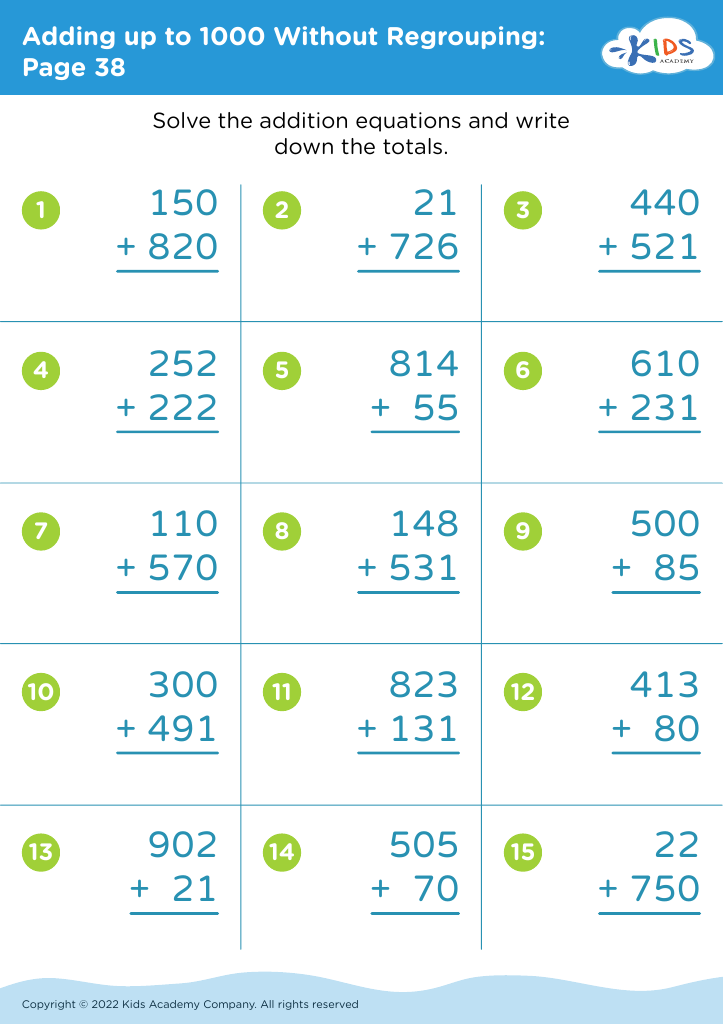
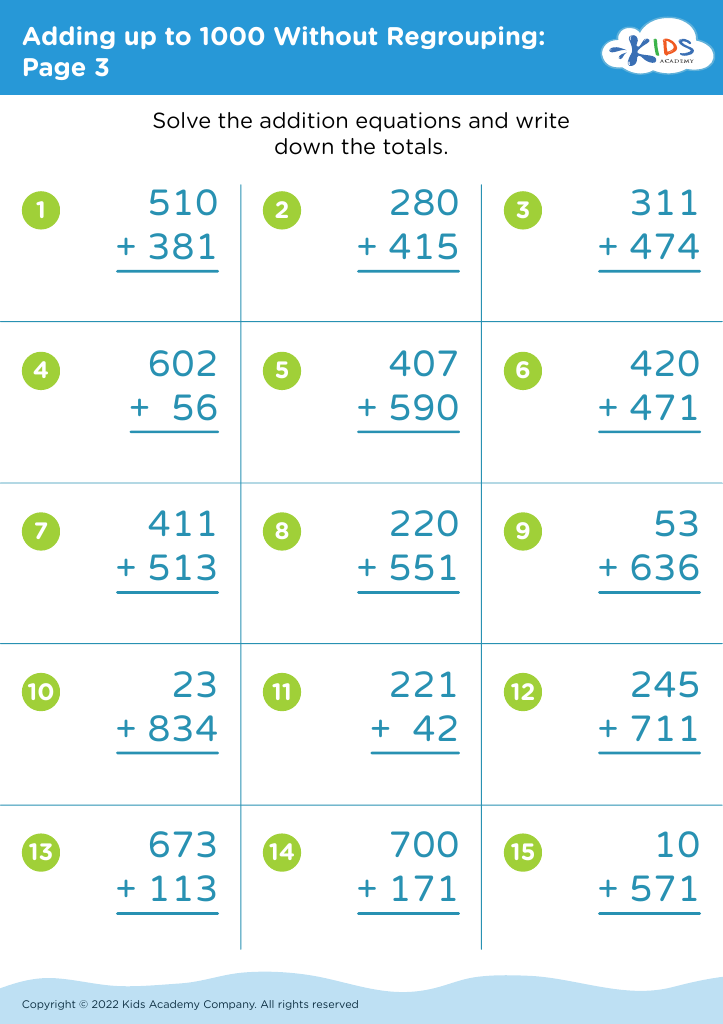
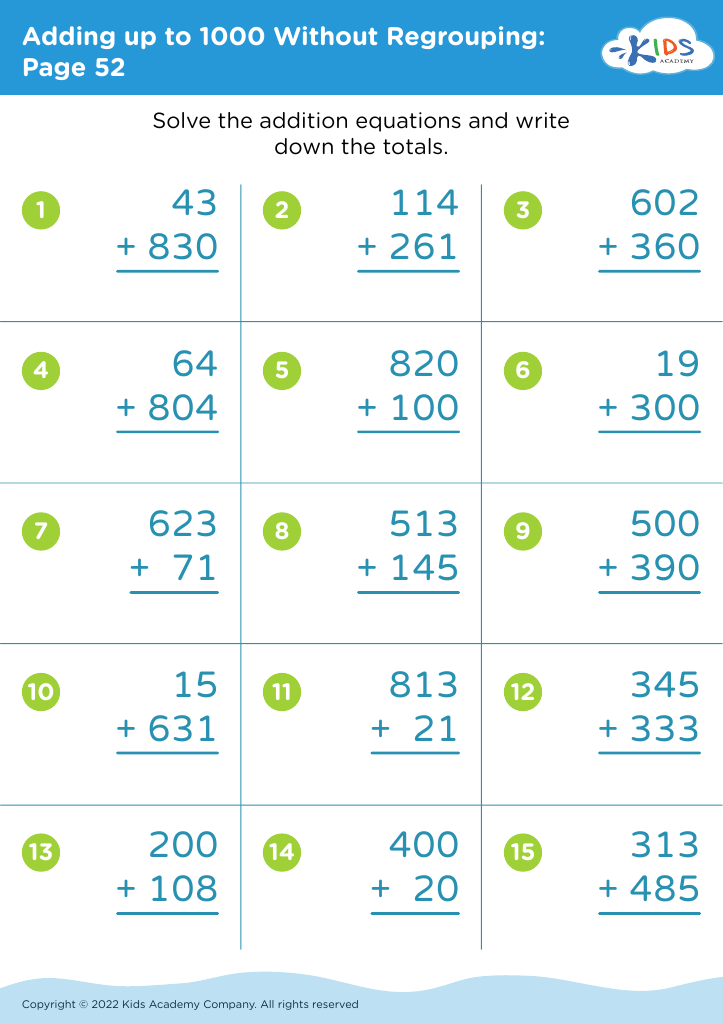
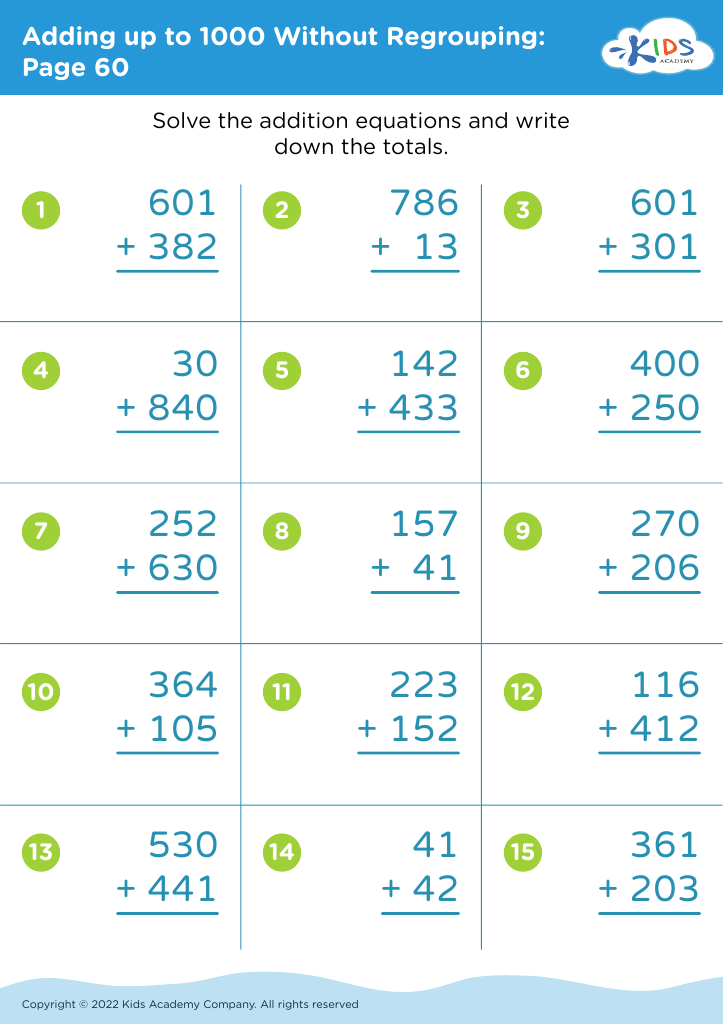


Improving counting skills, especially the ability to add up to 1000 without regrouping, is crucial for children aged 4-7, as it lays a strong mathematical foundation for their future learning. At this age, kids are developing their number sense, and activities that engage them in counting foster their understanding of numerical relationships and problem-solving skills.
Parents and teachers should care because mastering these skills enhances children's confidence in their abilities and promotes a positive attitude towards mathematics. It also equips them with the tools to tackle more complex concepts later on, such as subtraction, multiplication, and division.
Additionally, activities that focus on counting prepare children for real-life situations—like handling money, measuring items, or determining quantities—which enrich their daily experiences and support their overall cognitive development.
Furthermore, engaging in fun counting games and activities encourages collaboration and social interaction, promoting communication and teamwork among peers. This age is marked by curiosity and exploration, and supportive environments at home and in the classroom can nurture a lifelong love for learning math. A strong foundation in counting stimulates critical thinking and encourages children to develop perseverance and resilience through challenging tasks in the future.