Problem-Solving Skills Adding up to 1000 Without Regrouping Worksheets for Ages 4-7
6 filtered results
-
From - To
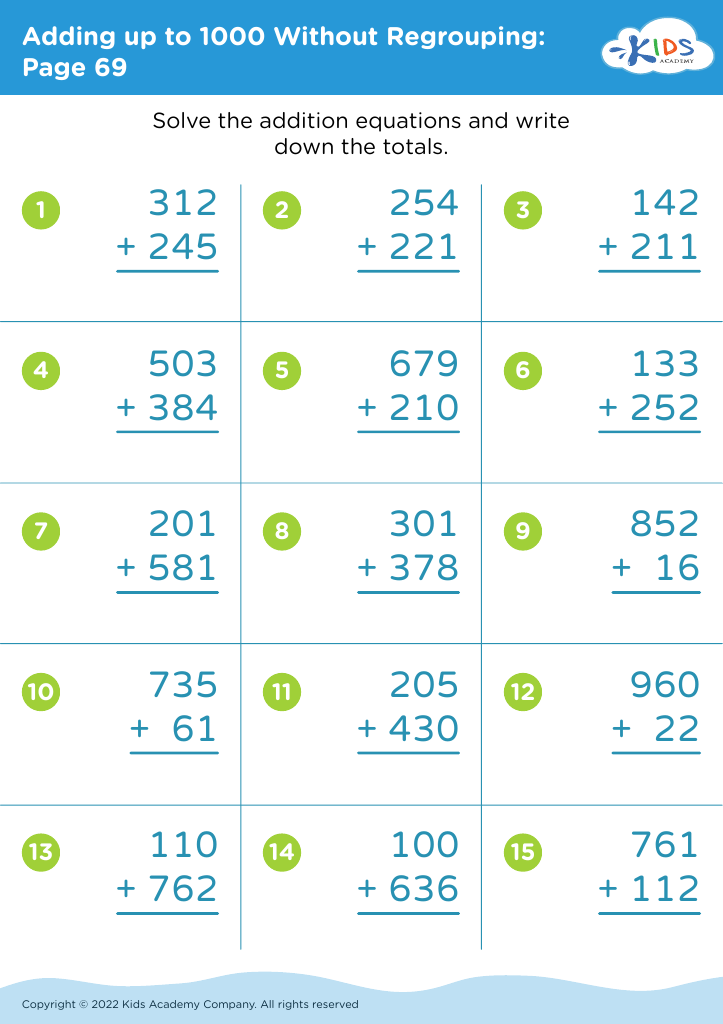
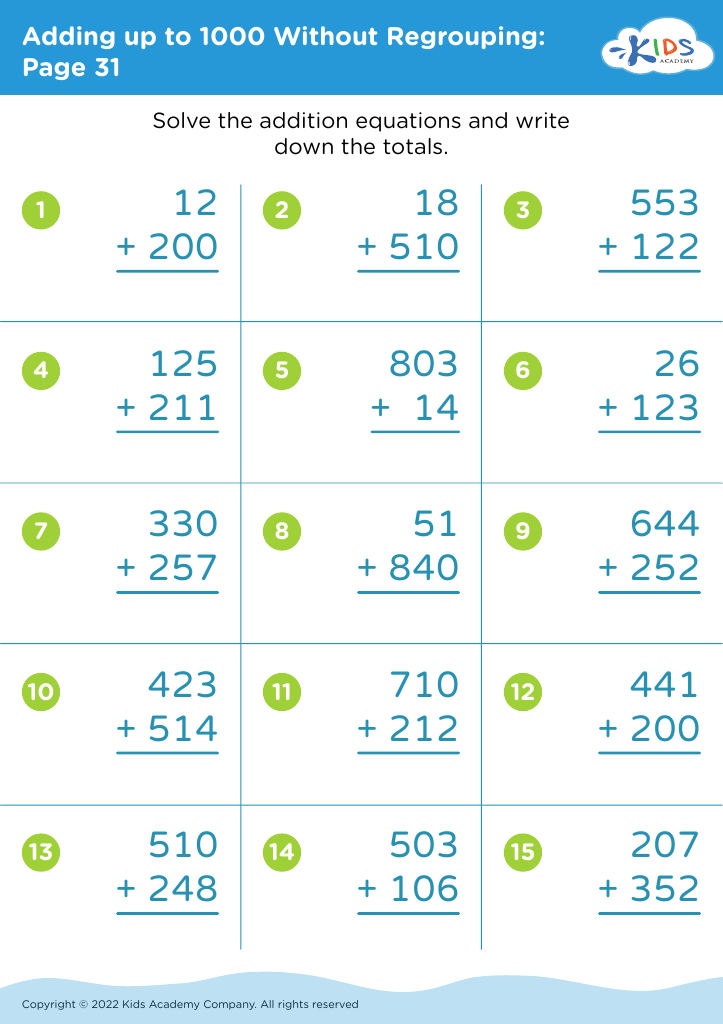
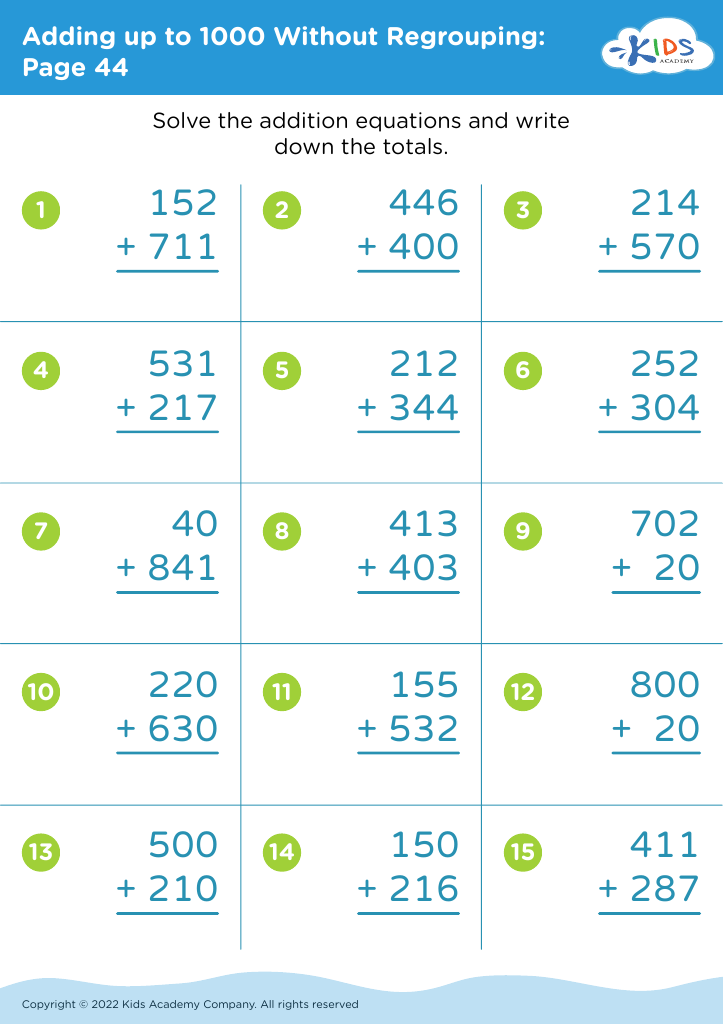
Enhance your child's problem-solving skills with our engaging worksheets designed for ages 4-7, focused on adding up to 1000 without regrouping. These printable resources provide a fun and interactive way for young learners to strengthen their math abilities while building confidence in their problem-solving techniques. Children will practice mental math, improve their number sense, and learn to approach challenges methodically. Our worksheets feature colorful illustrations and age-appropriate exercises that make learning enjoyable. Perfect for classroom use or home study, these resources support early math education and help children develop essential skills for future mathematical concepts. Start your child’s math journey today!
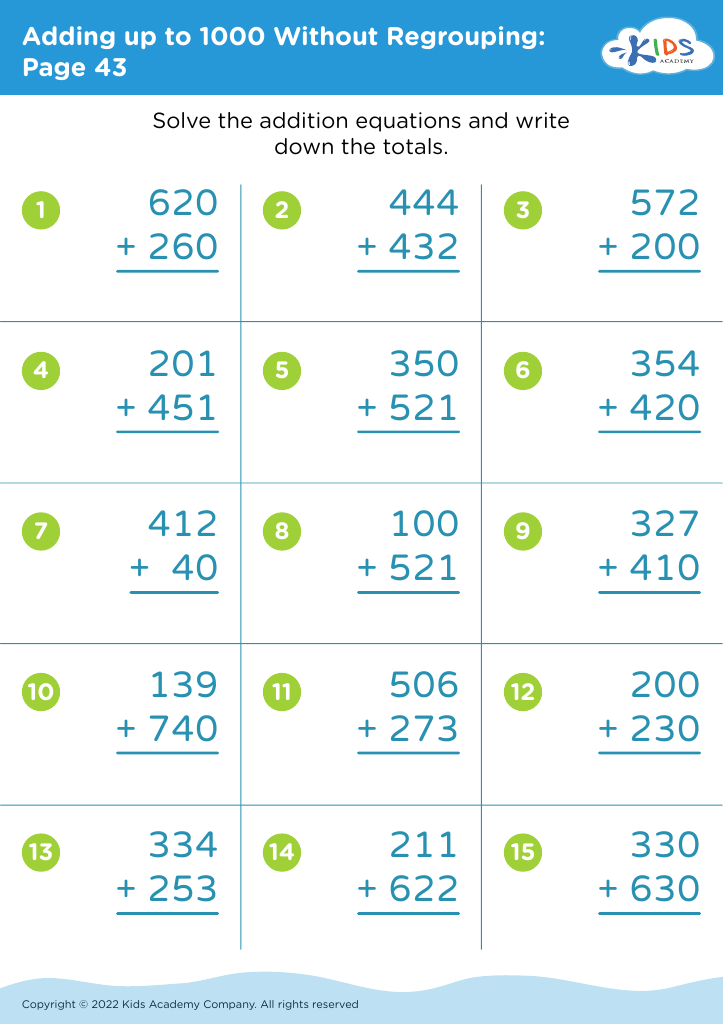
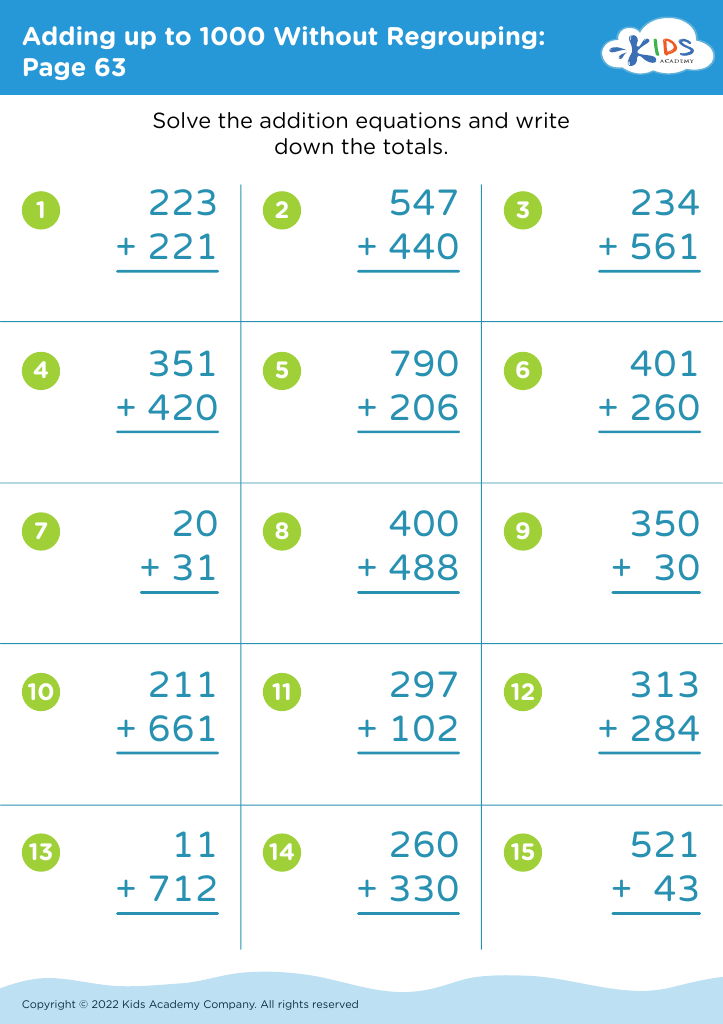
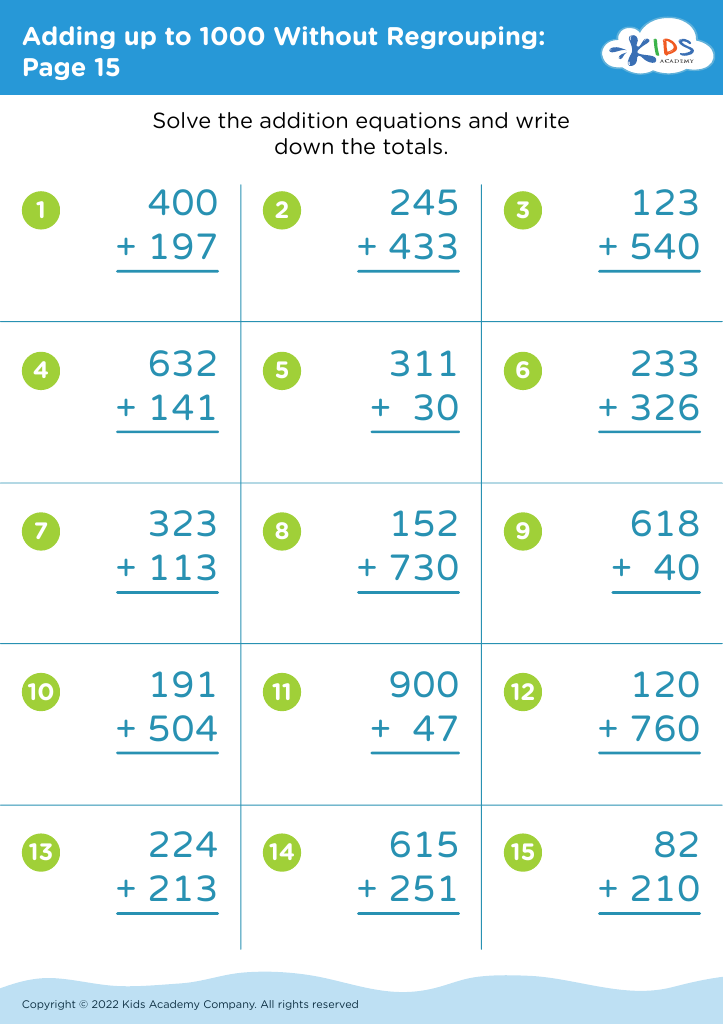


Problem-solving skills, particularly in the area of addition without regrouping, are crucial for children ages 4-7 for several reasons. First, these skills lay the foundation for future mathematical competence. Early experiences with addition help students understand basic number concepts, which will assist them in tackling more complex operations later on.
When children learn to solve problems that require them to add numbers to reach 1000 without regrouping, they enhance their ability to perform mental calculations and develop strategic thinking. This builds confidence, as they learn to manipulate numbers and recognize patterns, both of which are essential for successful problem-solving across subjects.
Moreover, this form of early math education encourages critical thinking, allowing children to figure out different ways to combine numbers and achieve a total. Parents and teachers foster a supportive environment by prioritizing these skills, creating opportunities for children to explore and engage with mathematical concepts creatively.
Attention to problem-solving impacts social skills, too, encouraging collaboration when kids work together on math activities. As such, nurturing these skills in children not only elevates their academic performance but also prepares them for everyday real-world situations, ultimately benefiting their overall development.