Following instructions Adding up to 1000 Worksheets for Ages 4-7
5 filtered results
-
From - To
Discover our comprehensive "Following Instructions Adding up to 1000 Worksheets" designed specifically for children ages 4-7! These engaging and interactive worksheets help young learners hone their math skills by adding numbers up to 1000 while emphasizing the importance of following instructions accurately. Tailored to meet early educational standards, our resources encourage critical thinking and improve attention to detail. Each worksheet features fun illustrations and age-appropriate challenges, making math practice enjoyable. Perfect for classroom or home use, these worksheets are a valuable tool for developing essential math fluency and comprehension skills in a playful and supportive learning environment. Download now and watch your child's confidence and abilities grow!
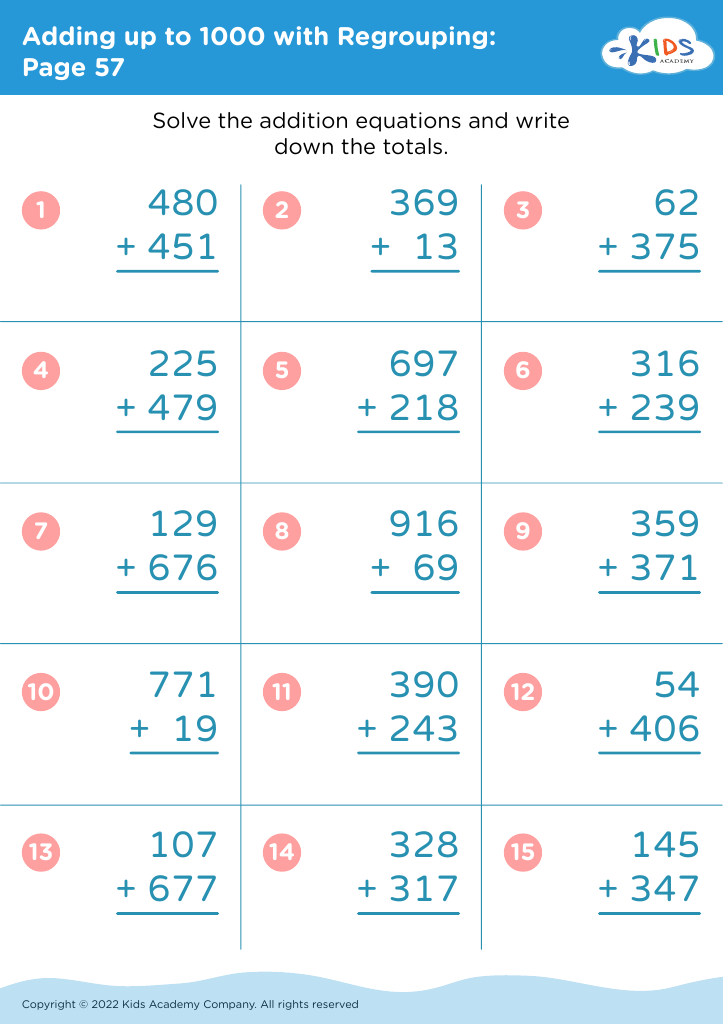
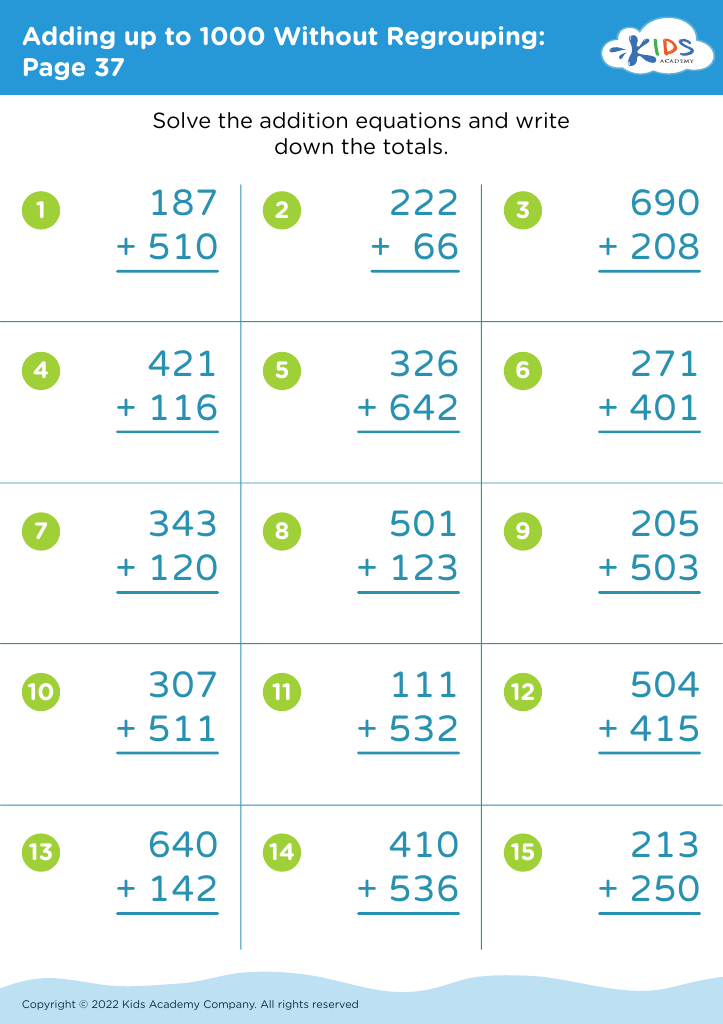
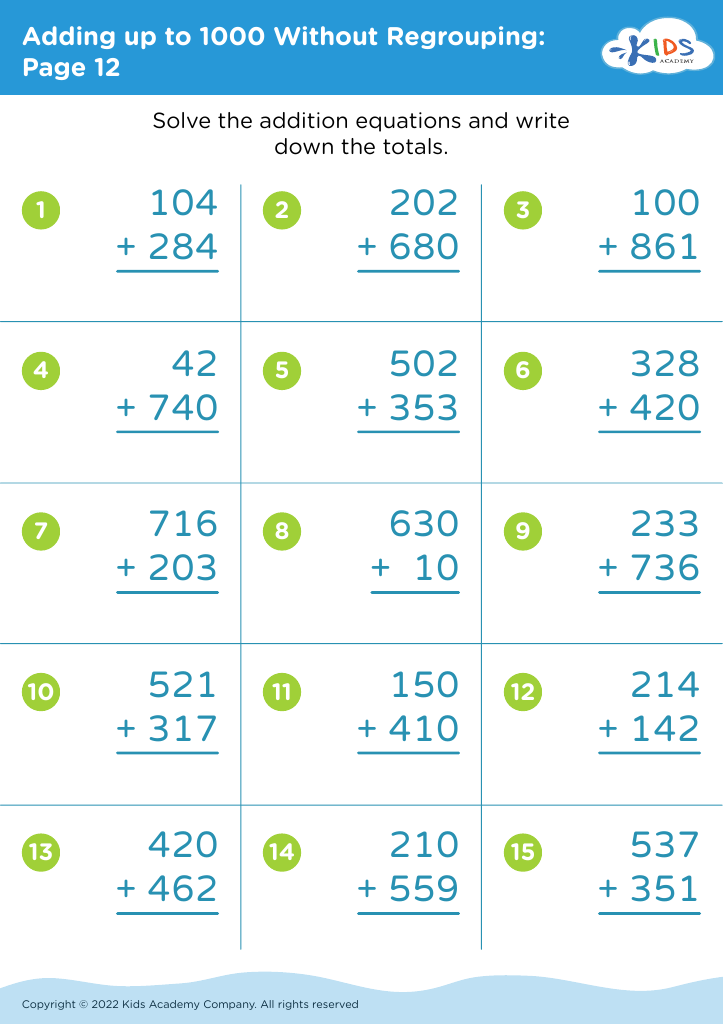
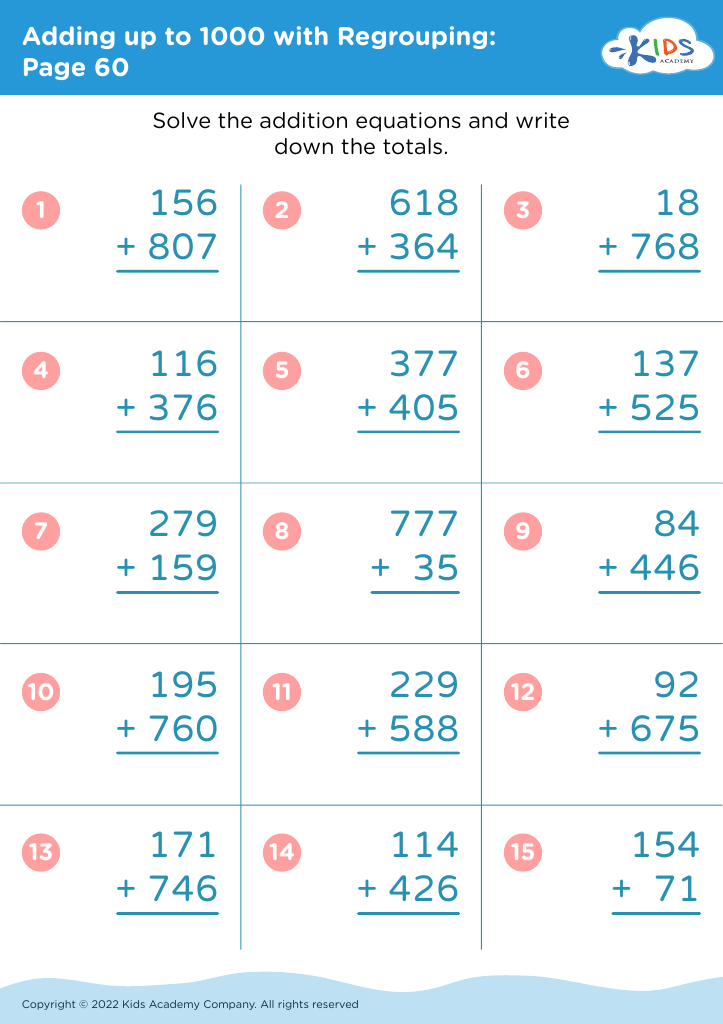
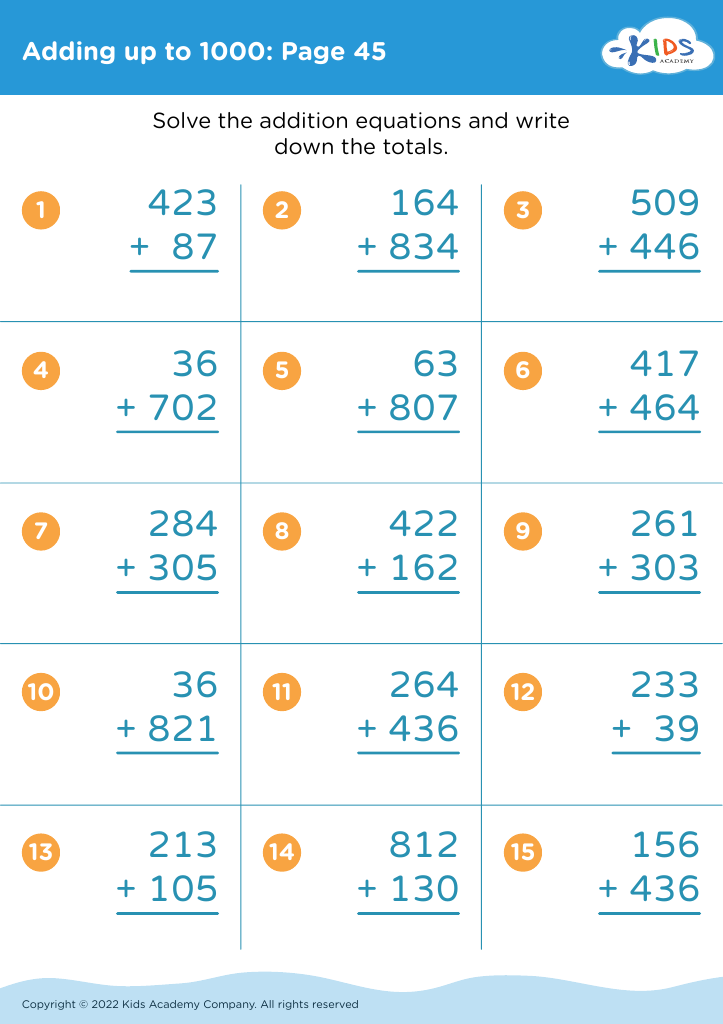



Following instructions, especially in the context of adding up to 1000, is crucial for children aged 4-7 for several reasons. First, mastering this skill enhances their cognitive development. Early arithmetic lays a foundational understanding of numbers and their relationships, empowering them to tackle more complex mathematical concepts in the future.
Next, following instructions cultivates essential life skills, such as critical thinking and problem-solving. As children learn to interpret and act upon these instructions, they develop perseverance, boost their confidence, and gain a sense of accomplishment. This independence and familiarity with instructions also promote patience and concentration—valuable traits in any learning environment.
Moreover, emphasis on structured tasks helps create a positive learning experience, as children find joy in completing activities accurately and efficiently. Both parents and teachers should encourage practices that teach children the importance of listening and responding to directions, fostering a toolkit of essential skills for lifelong learning.
Ultimately, nurturing these abilities aids in a child's academic success and equips them to navigate daily challenges, making it imperative for adults involved in their development to prioritize instruction-following in a supportive and engaging manner.








