Fraction comparison Adding up to 1000 Worksheets for Ages 4-7
13 filtered results
-
From - To
Discover our engaging "Fraction Comparison Worksheets for Ages 4-7," designed to make learning fun and easy! These worksheets help young learners grasp essential math concepts by comparing fractions within the framework of adding up to 1000. Each activity encourages children to visualize and understand the relationships between different fractions, building their confidence in math. Perfect for classroom settings or at-home learning, these printable worksheets align with early education standards. They’re colorful, user-friendly, and ideal for fostering critical thinking skills in young students. Explore the world of fractions with your child and pave the way for their mathematical success!
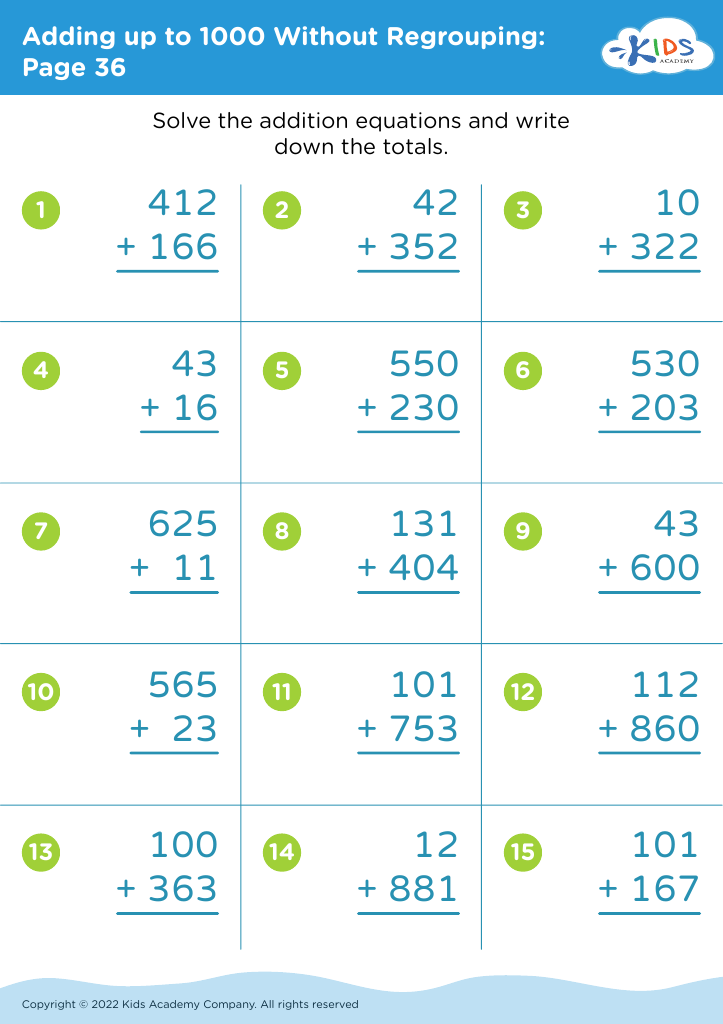
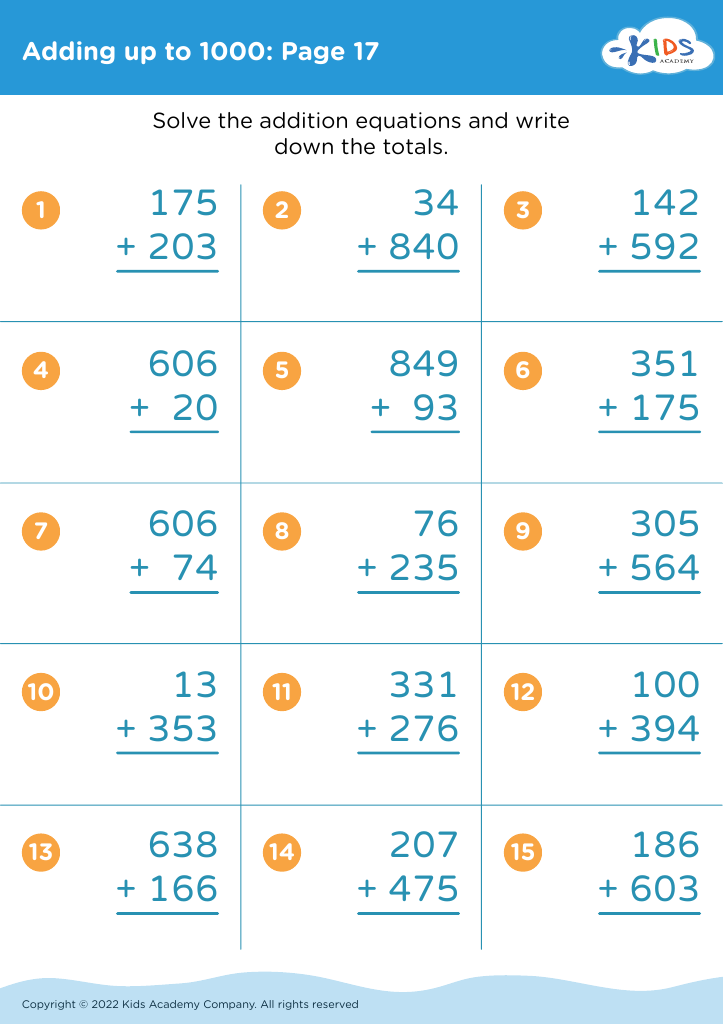
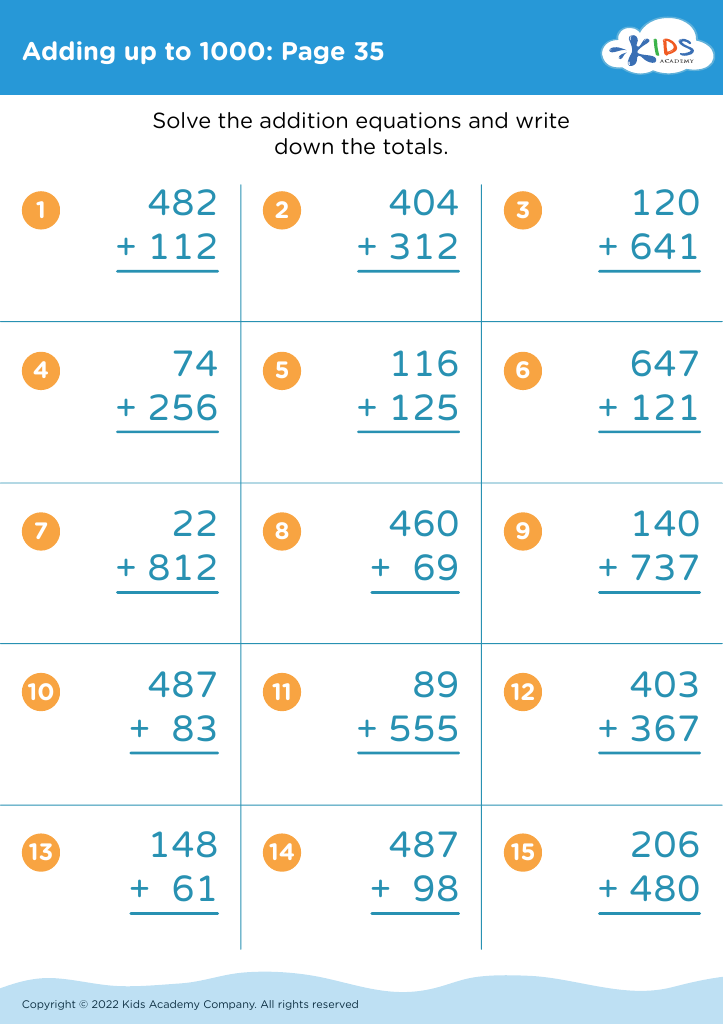
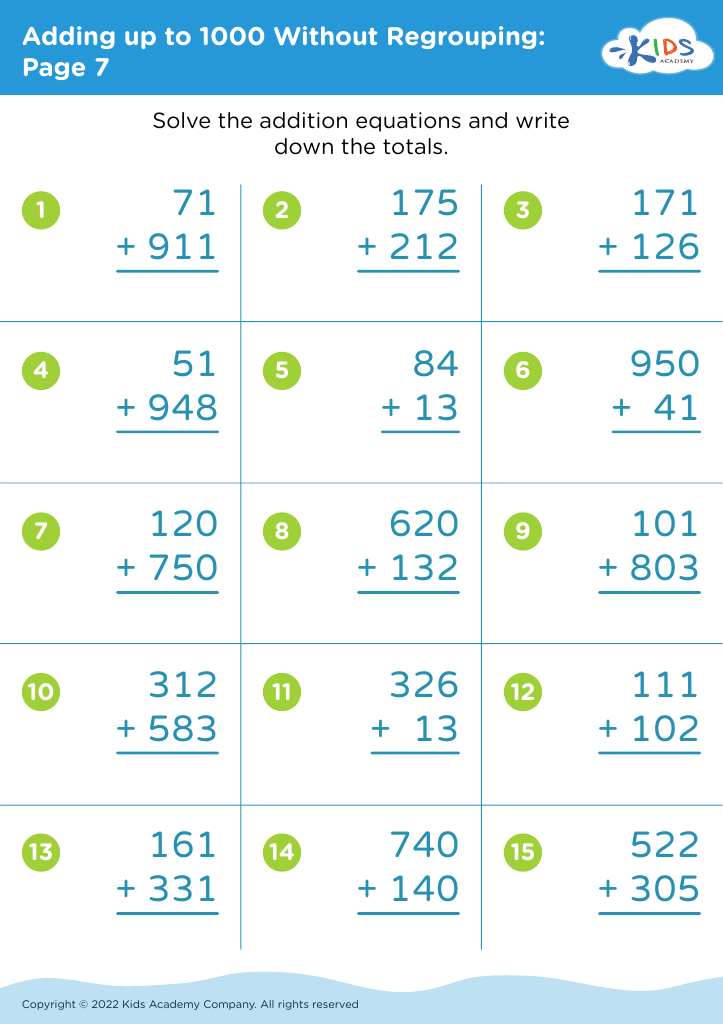
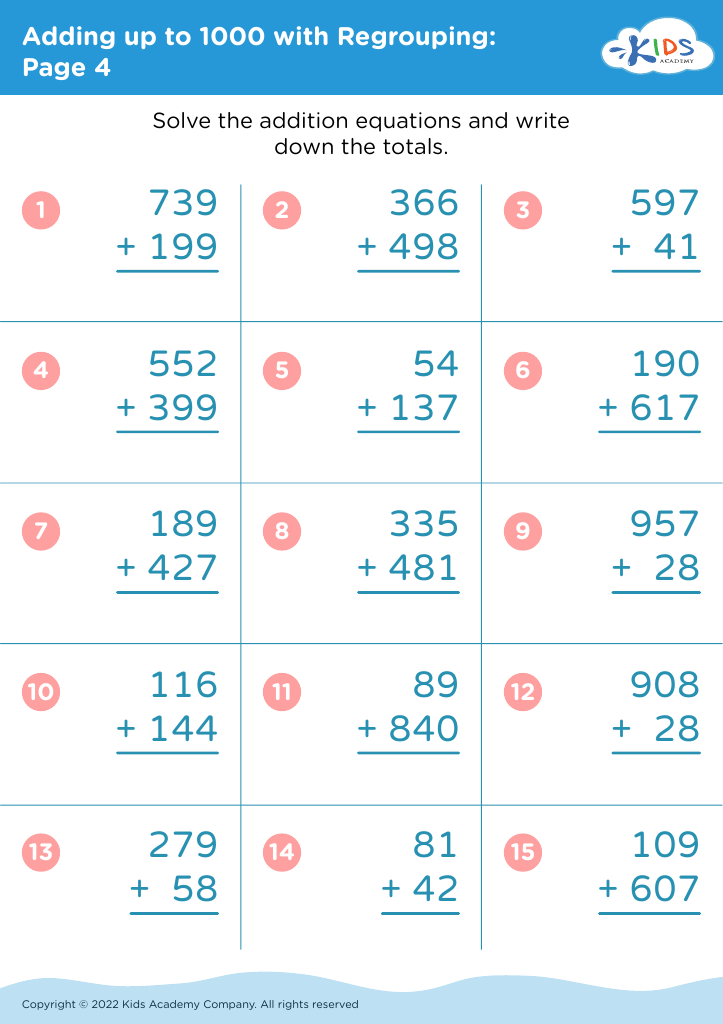
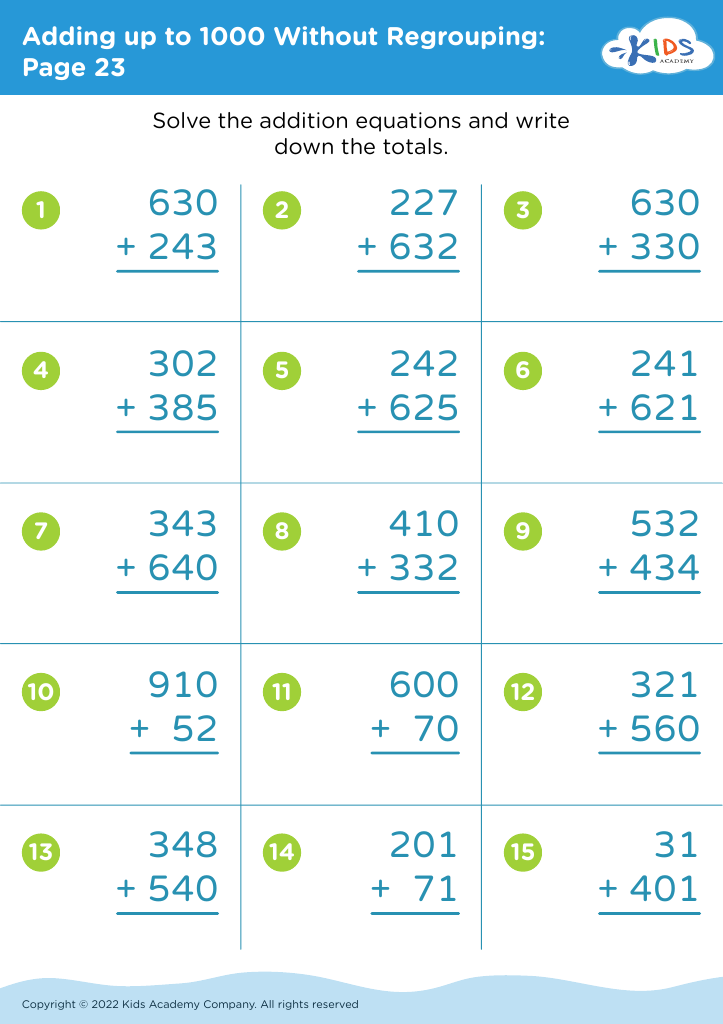
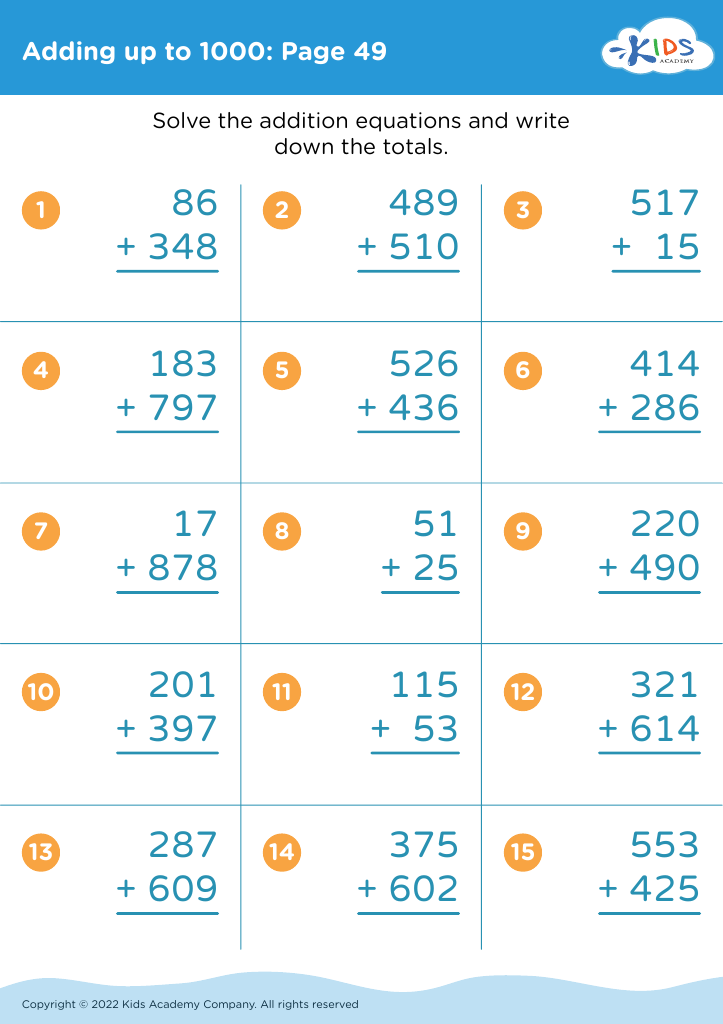
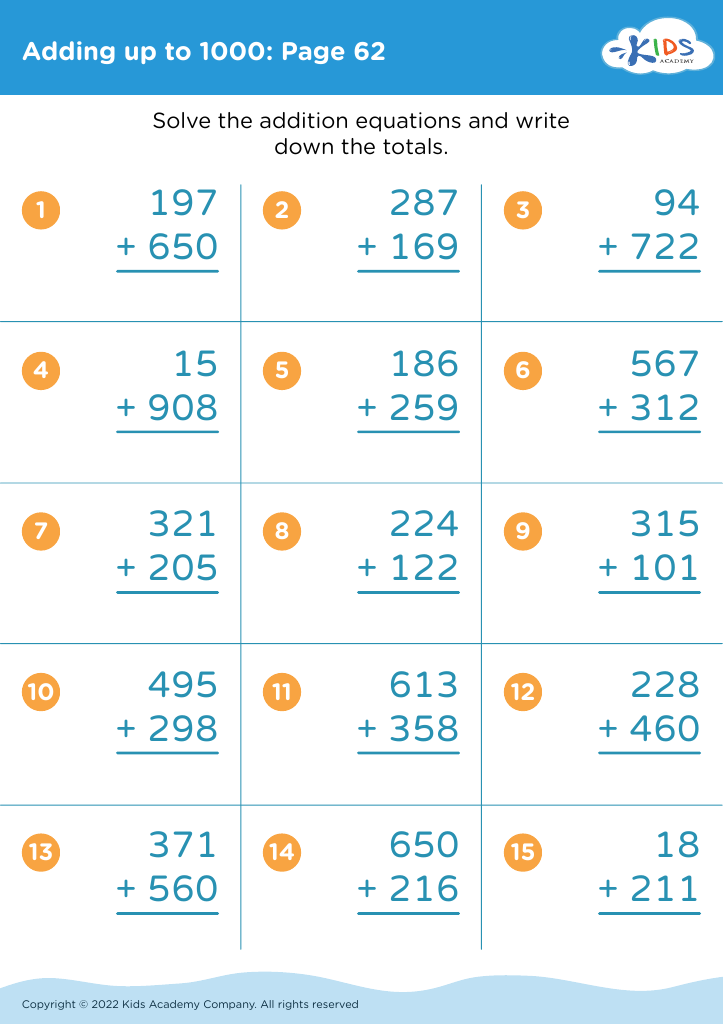
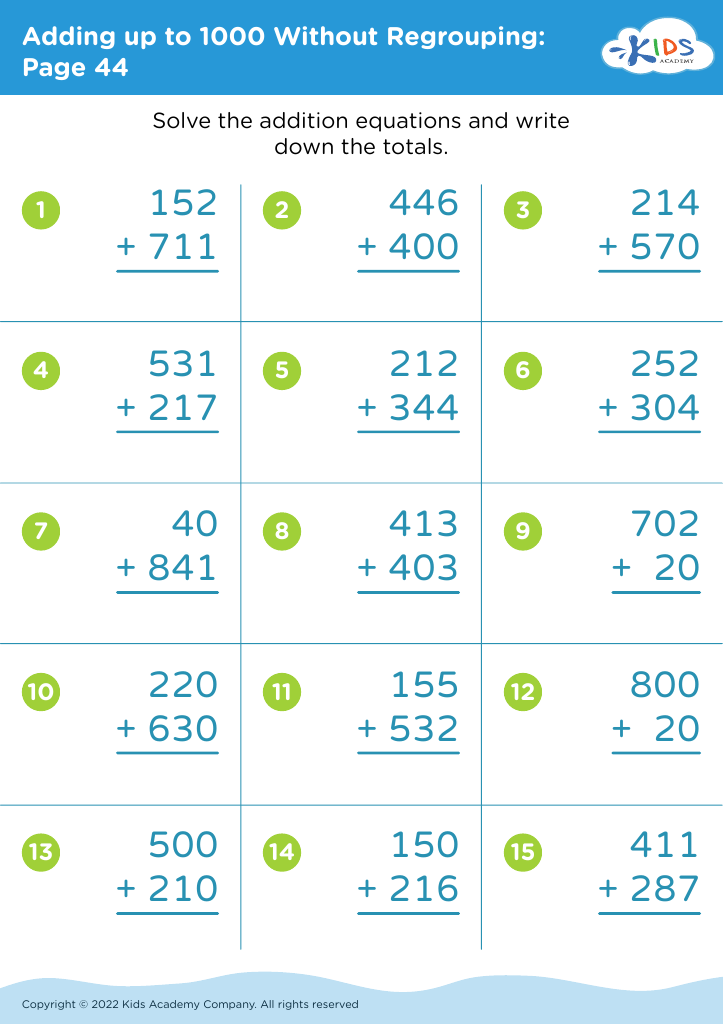
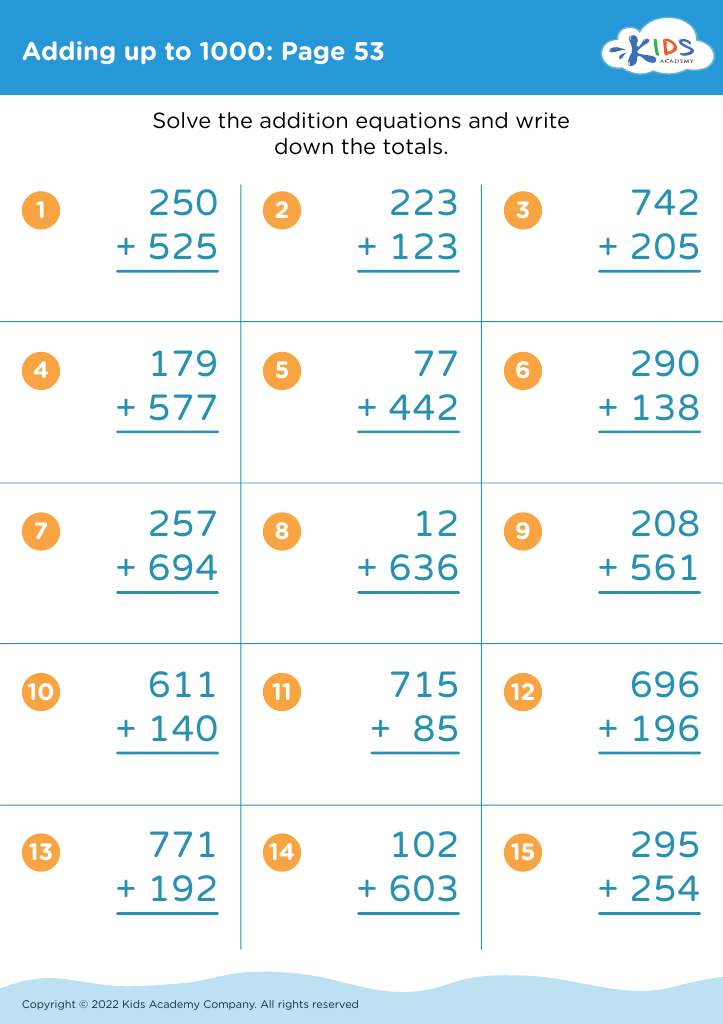
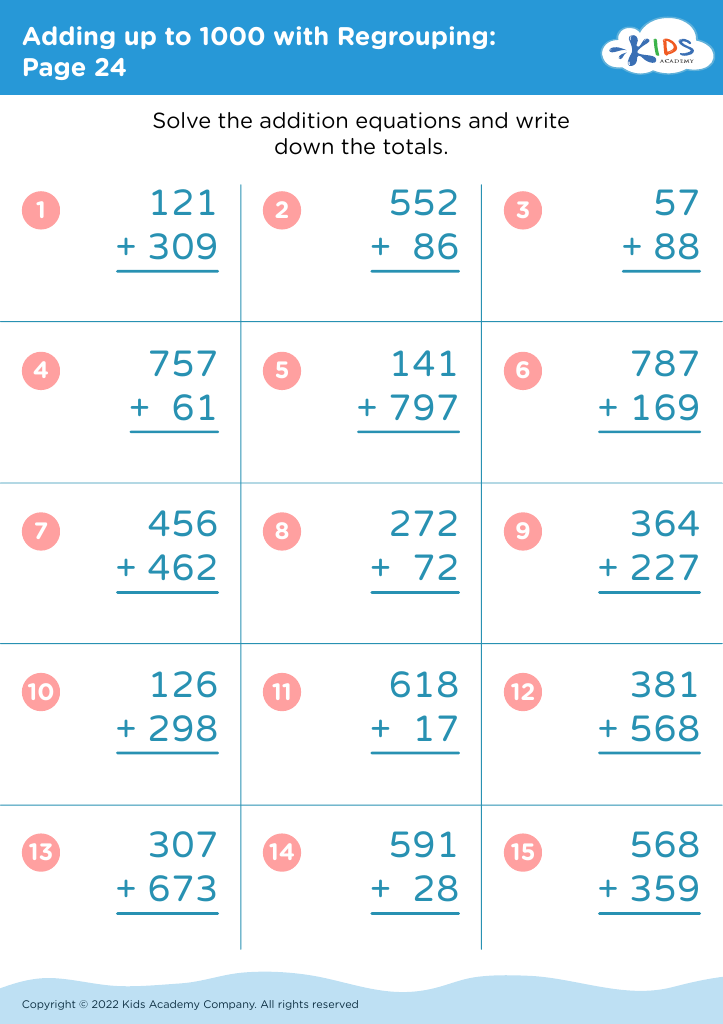
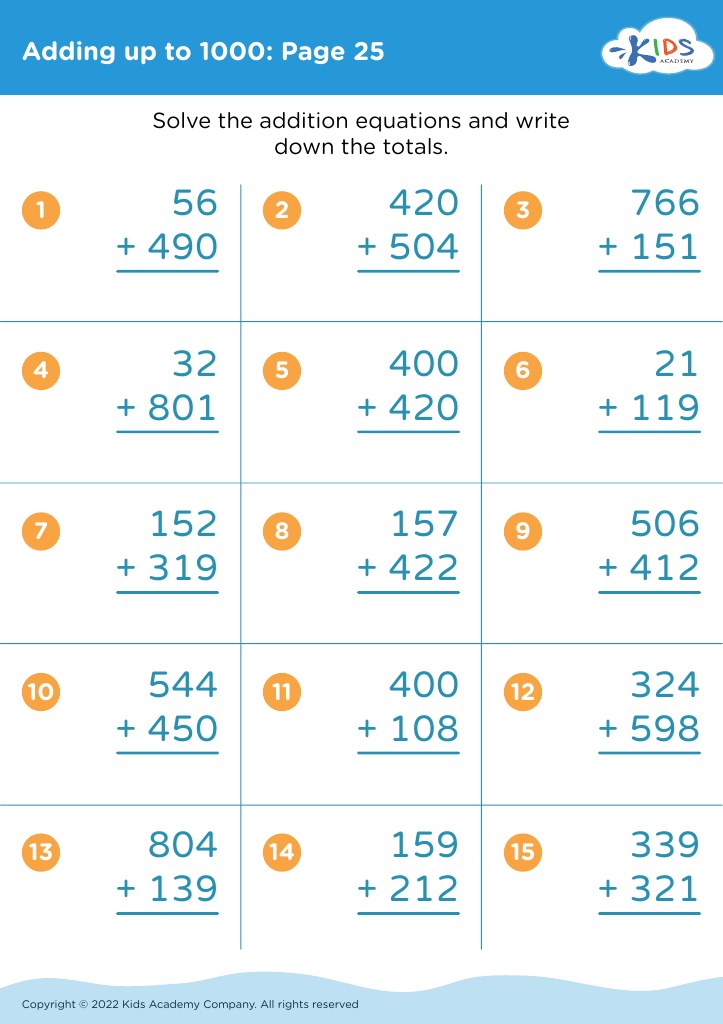
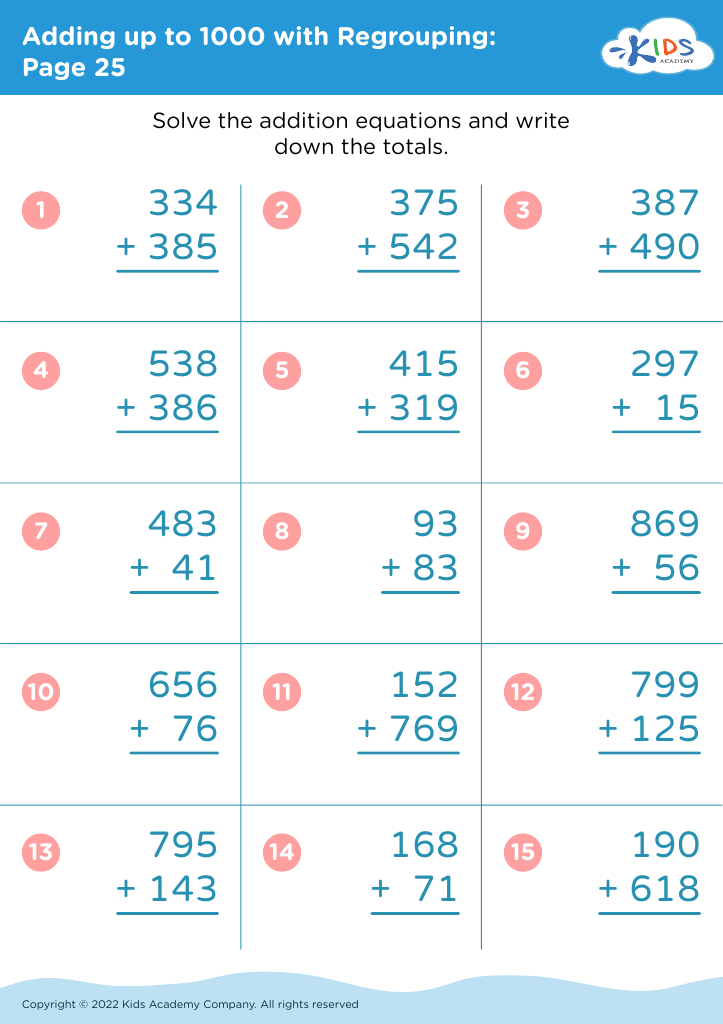



Understanding fraction comparison is crucial for children aged 4-7 as it lays the foundation for their mathematical abilities and critical thinking skills. At this stage, introducing concepts like fractions helps young learners develop an intuitive sense of quantity and relationships between numbers. Comparing fractions fosters analytical thinking—children learn to evaluate sizes and make informed decisions based on their observations.
Furthermore, introducing fractions in a fun and engaging way can spark a lifelong interest in math. It enables kids to connect mathematical concepts to real-life situations, such as sharing food, dividing toys, or understanding recipes, thus making learning relatable and enjoyable. Additionally, mastery of comparison will support their progression in math, especially as they tackle more complex concepts involving multiplication, division, and even basic algebra later on.
For parents and teachers, facilitating this understanding creates a more confident learner. Encouraging fraction comparison also promotes discussions about teamwork and fairness, as children often work on problems collaboratively. Investing effort in this area at an early age not only prepares them for advanced math but also fosters an environment where they feel comfortable expressing their thoughts and collaborating with peers in all subjects. Ultimately, understanding fractions can lead to better problem-solving skills and a positively reinforced mathematical experience.








