Recognizing Patterns Adding up to 1000 Worksheets for Ages 4-7
6 filtered results
-
From - To
Unlock your child's mathematical potential with our "Recognizing Patterns Adding up to 1000" worksheets, designed specifically for ages 4 to 7! These engaging activities help young learners identify and understand numerical patterns, making math fun and interactive. Through colorful illustrations and hands-on exercises, children will develop essential skills in addition and pattern recognition, laying a strong foundation for future math success. Each worksheet aims to inspire curiosity and confidence, turning learning into an enjoyable adventure. Dive into our resourceful collection and watch your little one excel in their mathematical journey while mastering the concept of adding up to 1000!
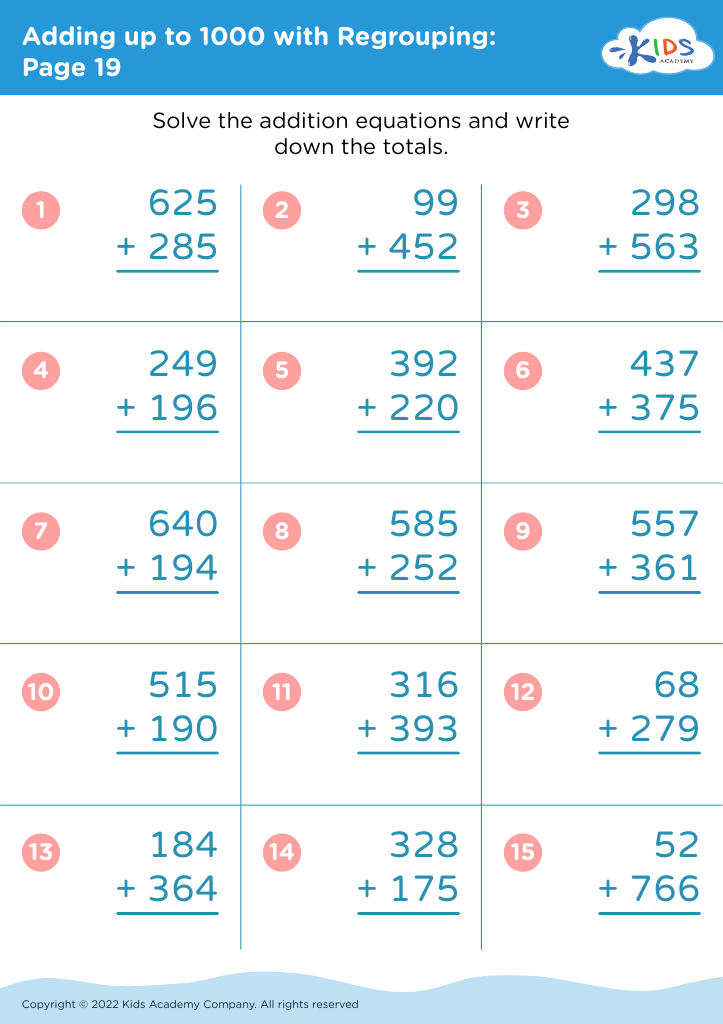
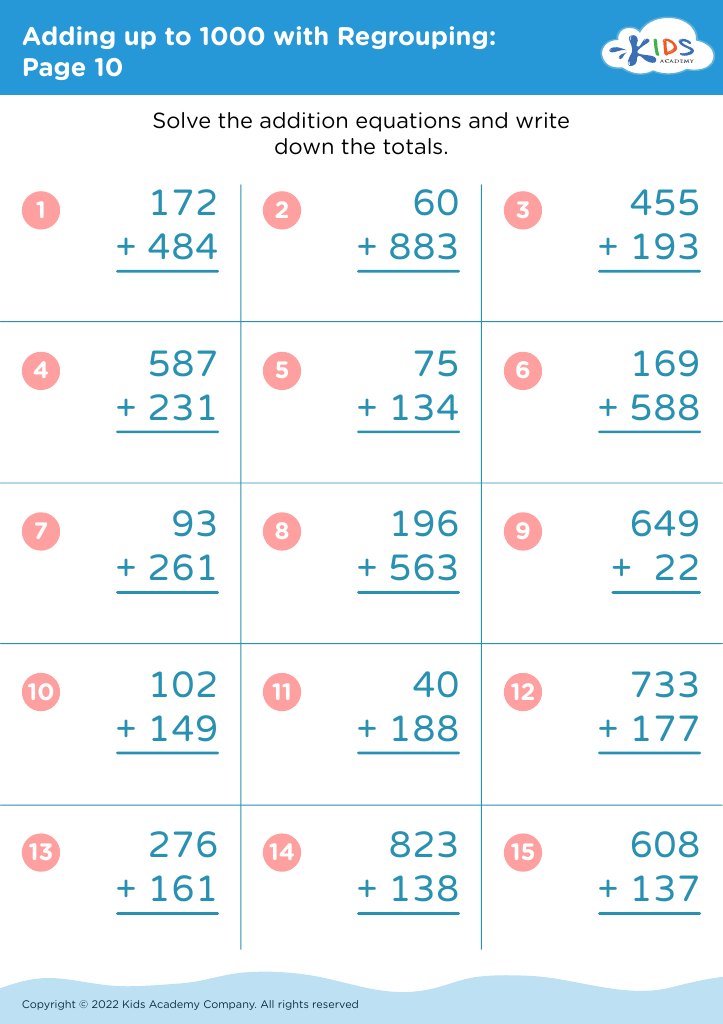
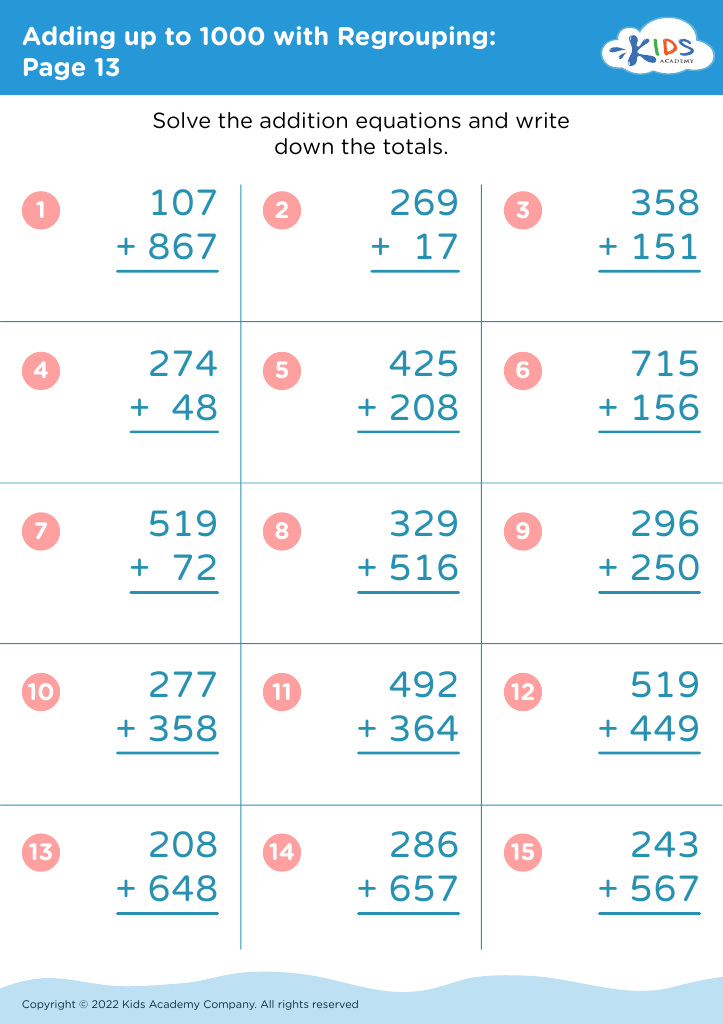
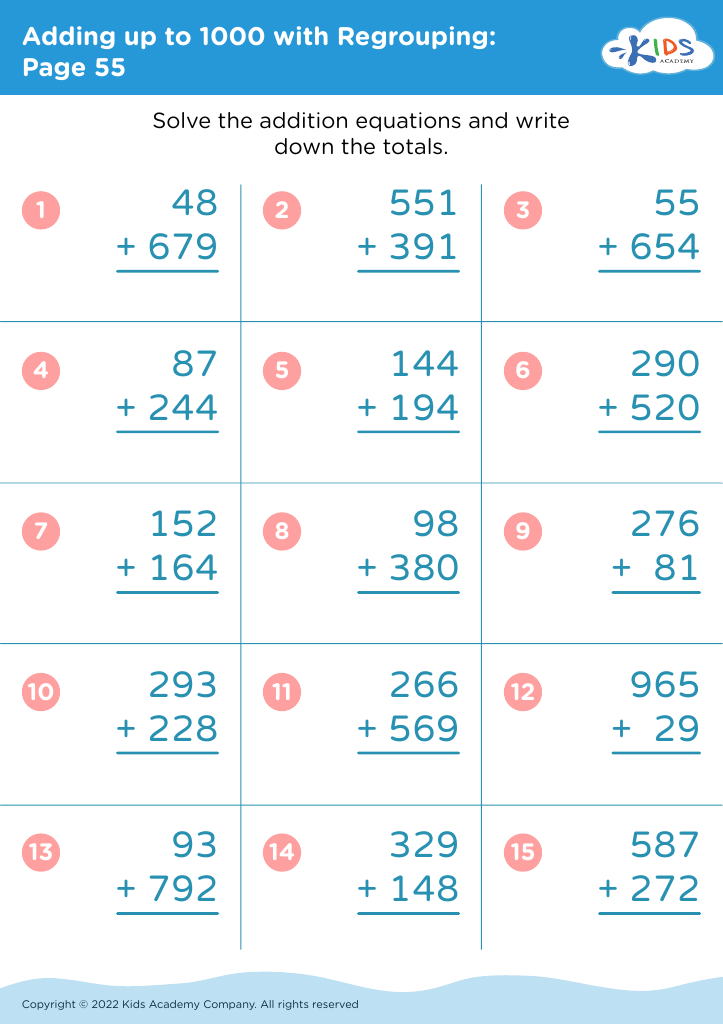
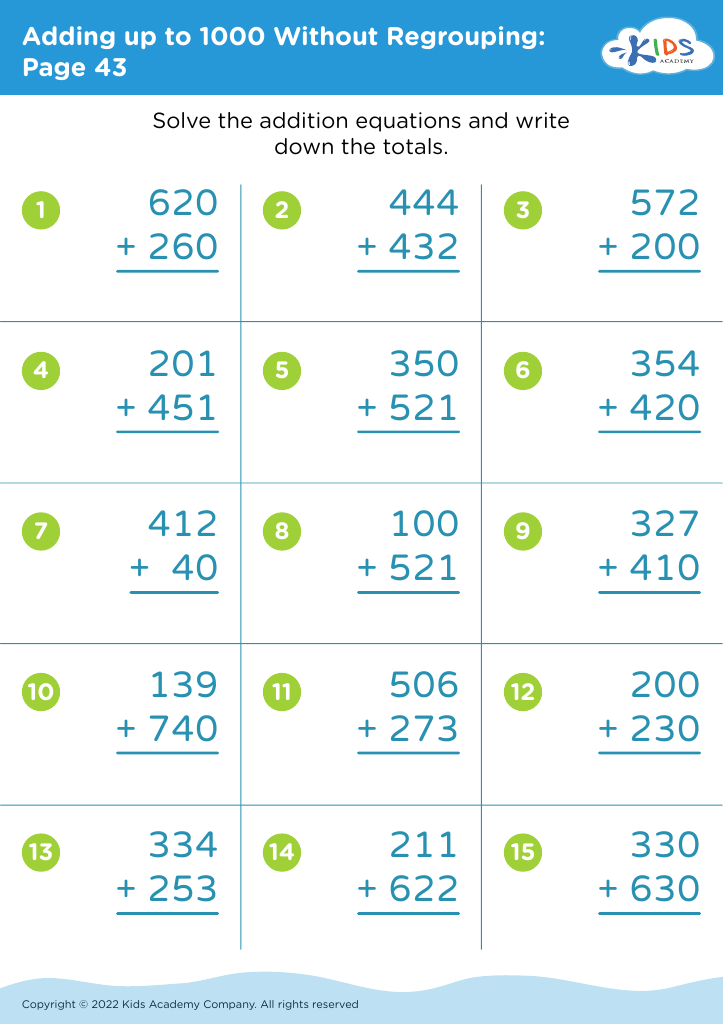
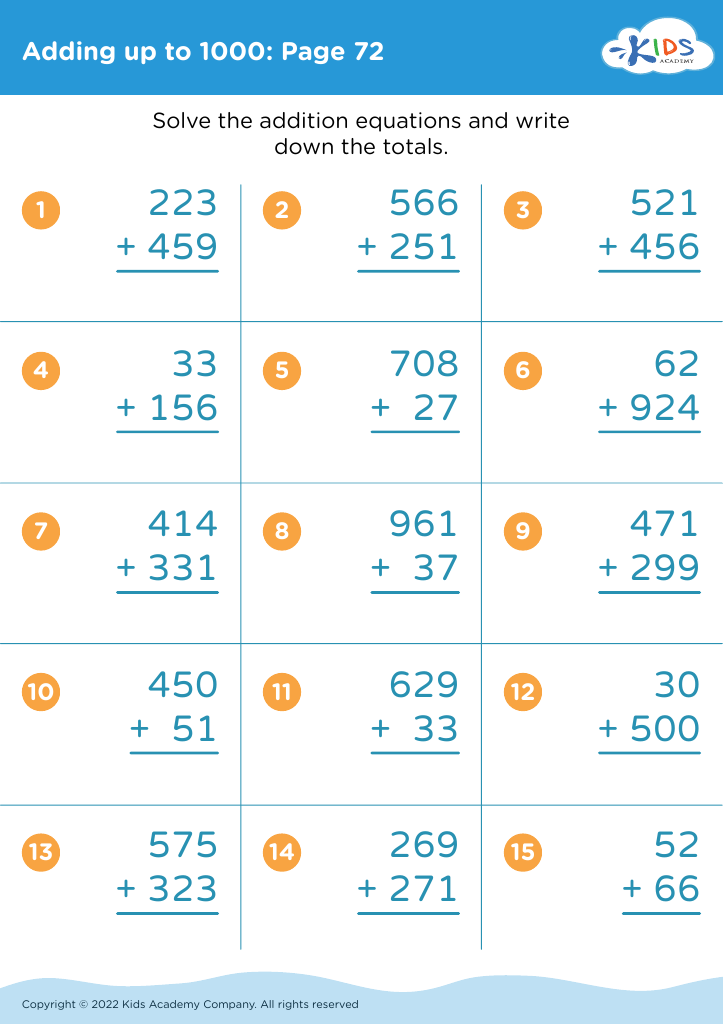



Recognizing patterns is foundational in early mathematics for children aged 4-7, especially when learning to add up to 1000. Understanding patterns helps children make sense of numbers, promoting critical thinking and problem-solving skills. When kids recognize patterns, they can effectively apply these skills to various mathematical concepts and develop mental strategies that enhance their addition skills.
For parents and teachers, fostering this ability is essential to build a strong mathematical foundation. It helps students notice sequences in numbers, enabling them to anticipate the result of additions and comprehend the relationships between numbers better. This skill not only aids in performing calculations efficiently but also empowers children to tackle more complex mathematical concepts in the future, such as multiplication and division.
Moreover, recognizing patterns facilitates engagement in engaging mathematical explorations, making learning more enjoyable. As children connect patterns with real-life scenarios, such as telling time or counting objects, they gain confidence and a deeper understanding of mathematics. Ultimately, teaching and nurturing pattern recognition contributes to a child's overall academic success and prepares them for a future where numeracy skills are increasingly vital. Investing time in these skills is a gift that promotes lifelong learning and problem-solving capabilities.








