Filters

44 filtered results

Clear all filters
Favorites
With answer key
Interactive

44 filtered results

Difficulty Level

Grade


Check out this FREE Trial Lesson on Adding up to 1000 for age 4-7!

Z

Favorites
With answer key
Interactive
  • 4-7
  • Understanding fractions
  • Adding up to 1000
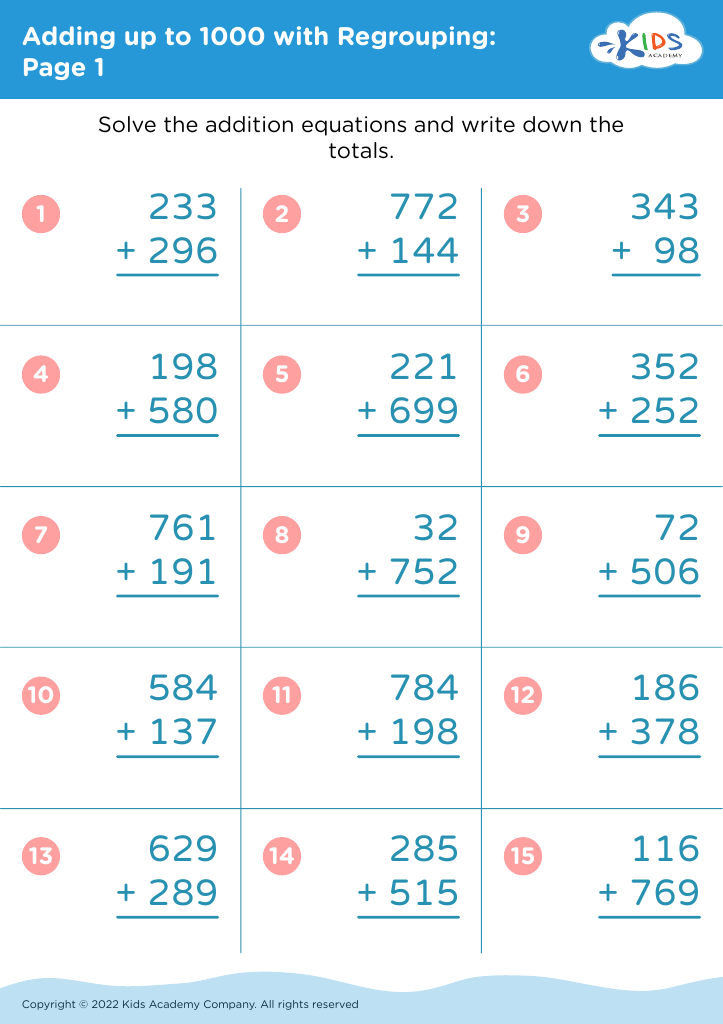
Adding up to 1000 with Regrouping: Page 1
Worksheet
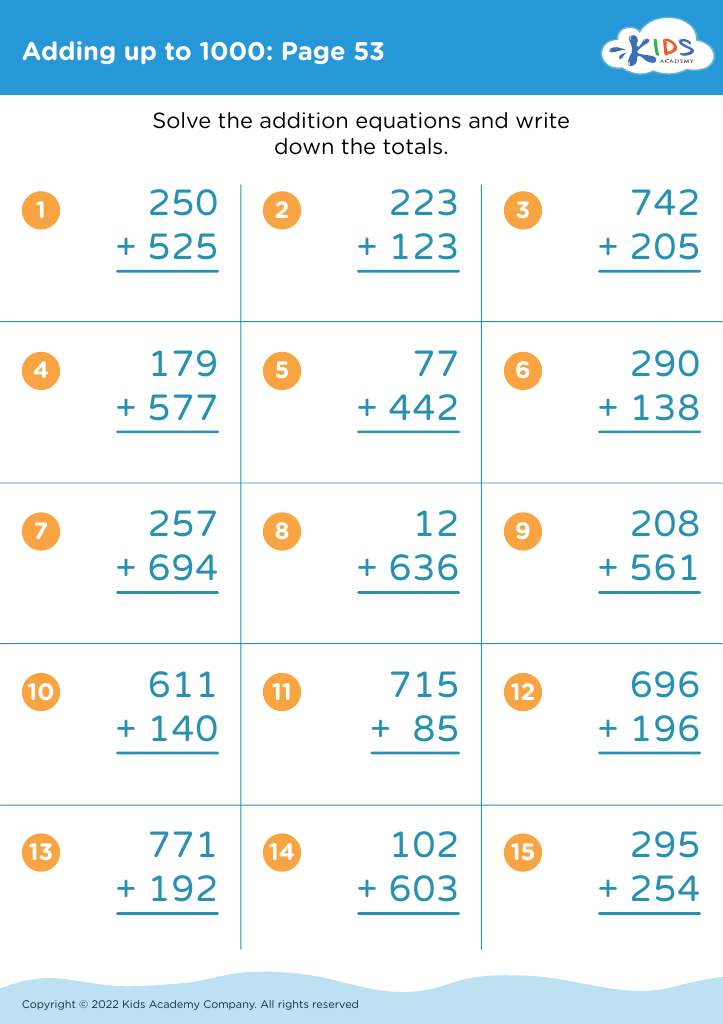
Adding up to 1000: Page 53

Adding up to 1000: Page 53

Adding up to 1000: Page 53
Worksheet
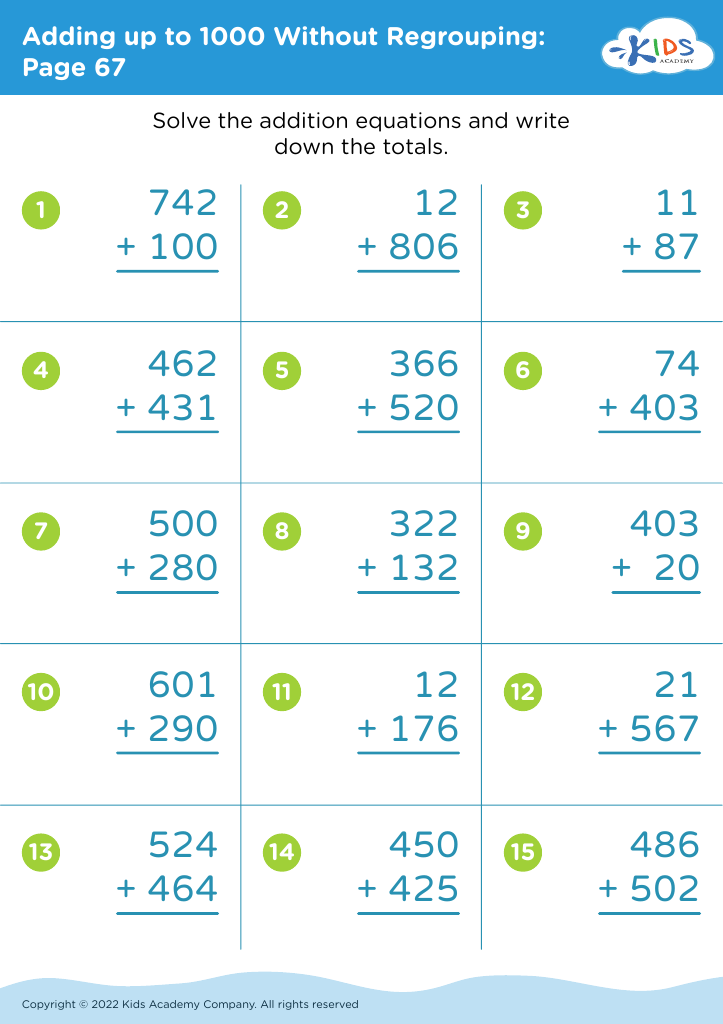
Adding up to 1000 Without Regrouping: Page 67
Worksheet
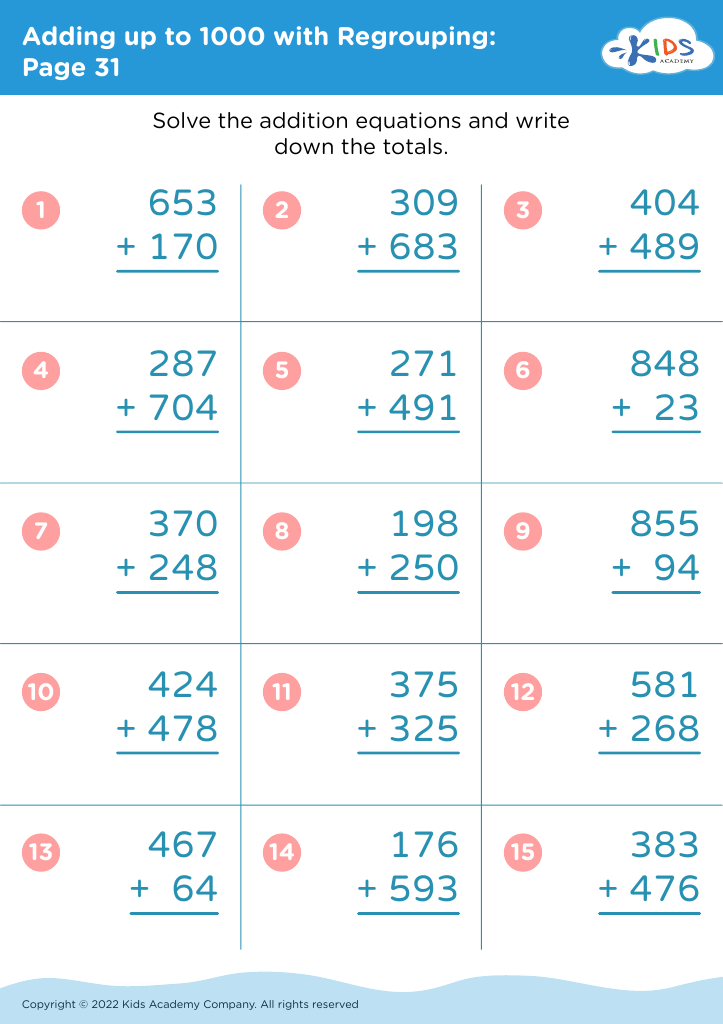
Adding up to 1000 with Regrouping: Page 31
Worksheet
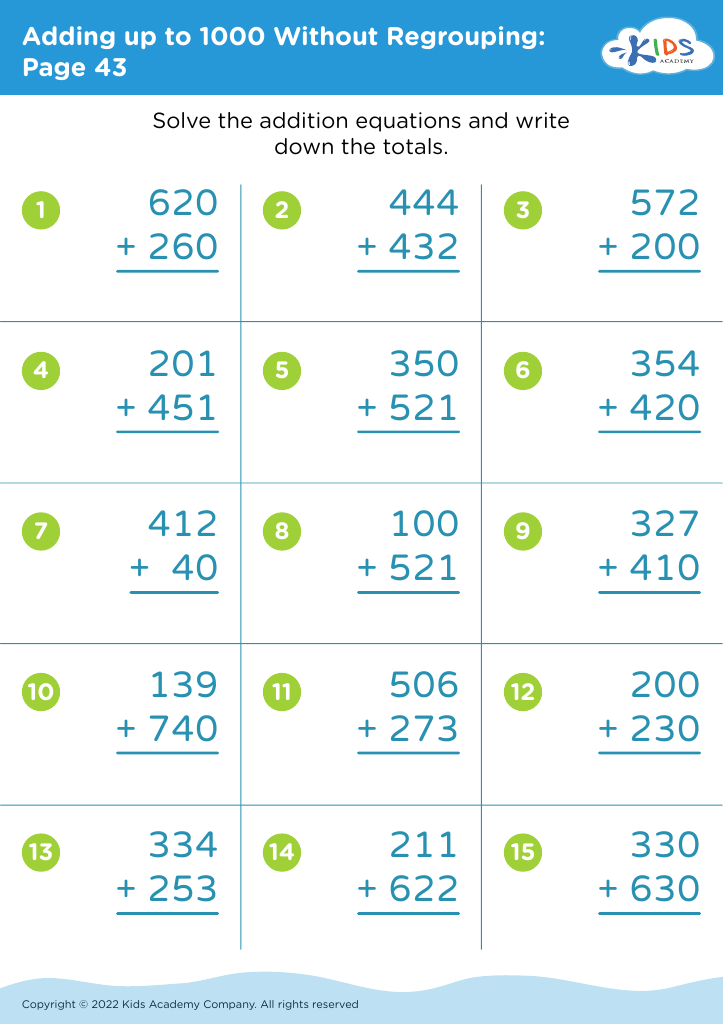
Adding up to 1000 Without Regrouping: Page 43
Worksheet
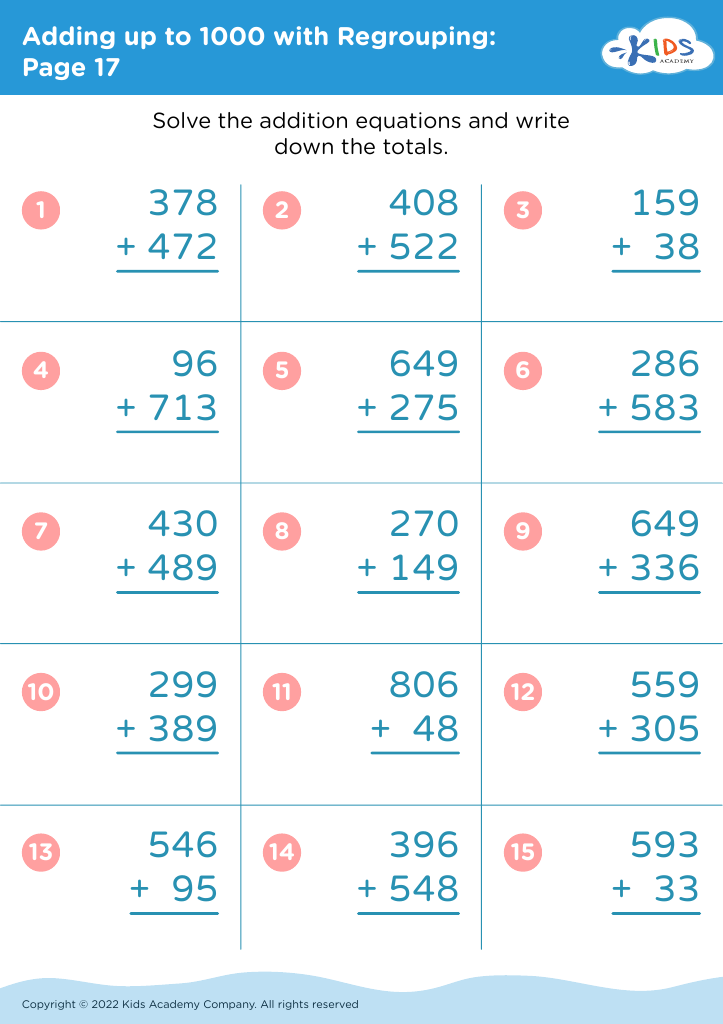
Adding up to 1000 with Regrouping: Page 17
Worksheet
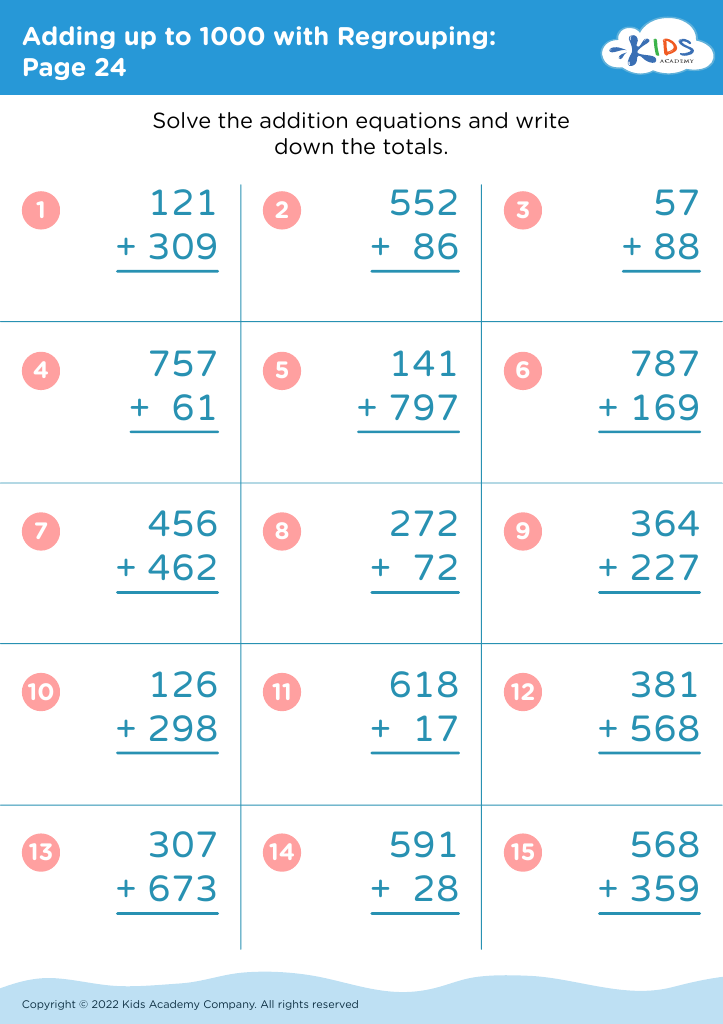
Adding up to 1000 with Regrouping: Page 24
Worksheet
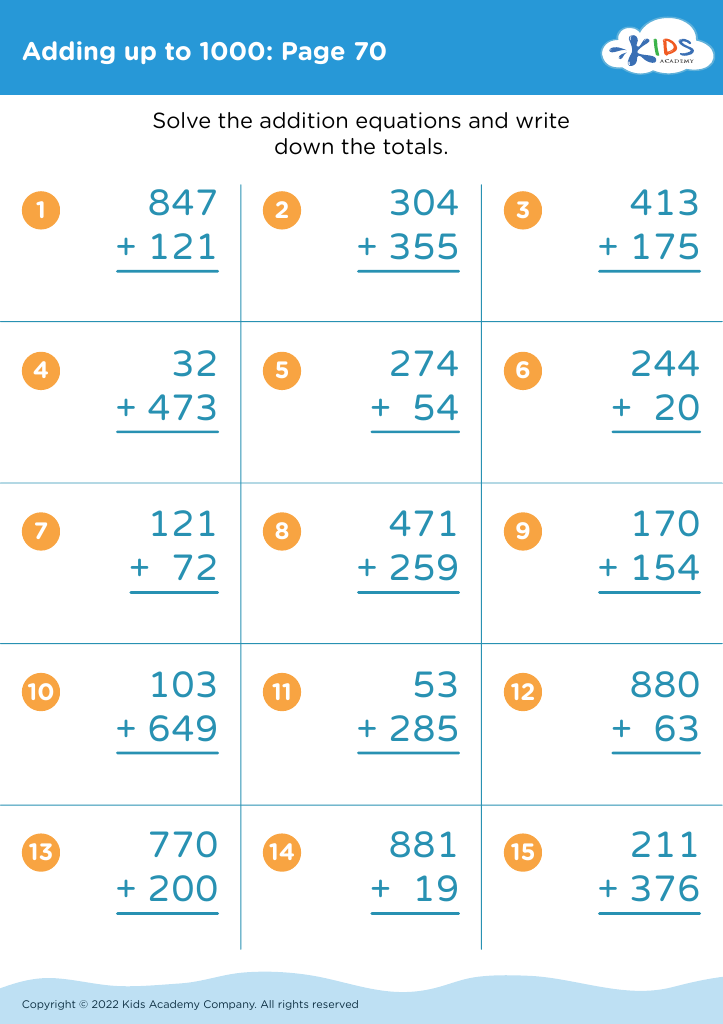
Adding up to 1000: Page 70

Adding up to 1000: Page 70

Adding up to 1000: Page 70
Worksheet
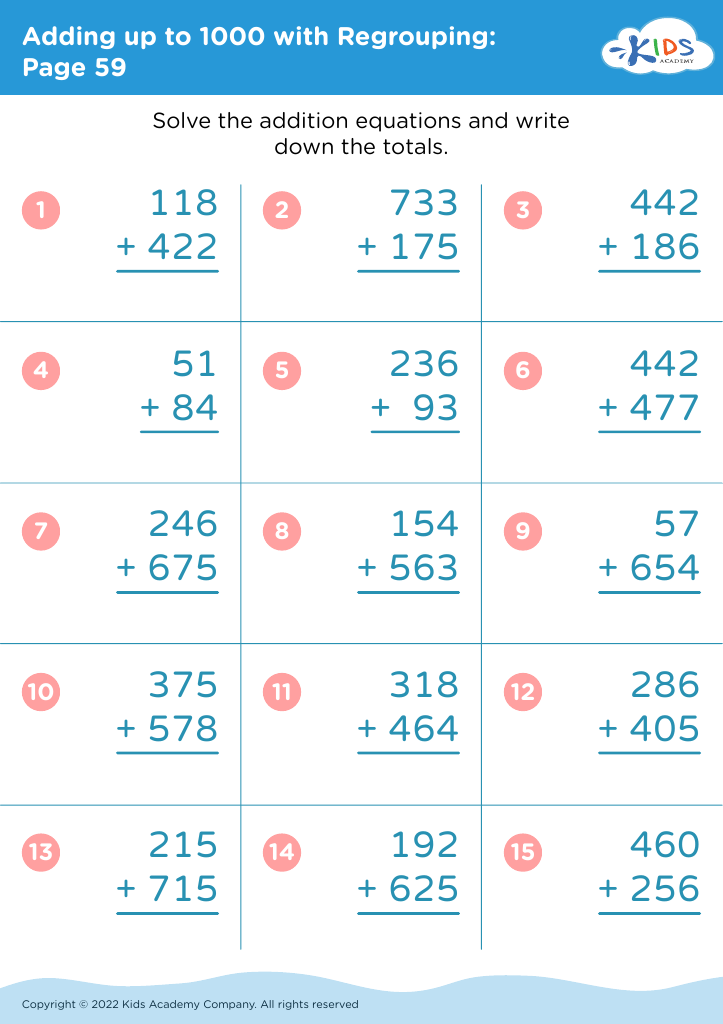
Adding up to 1000 with Regrouping: Page 59
Worksheet
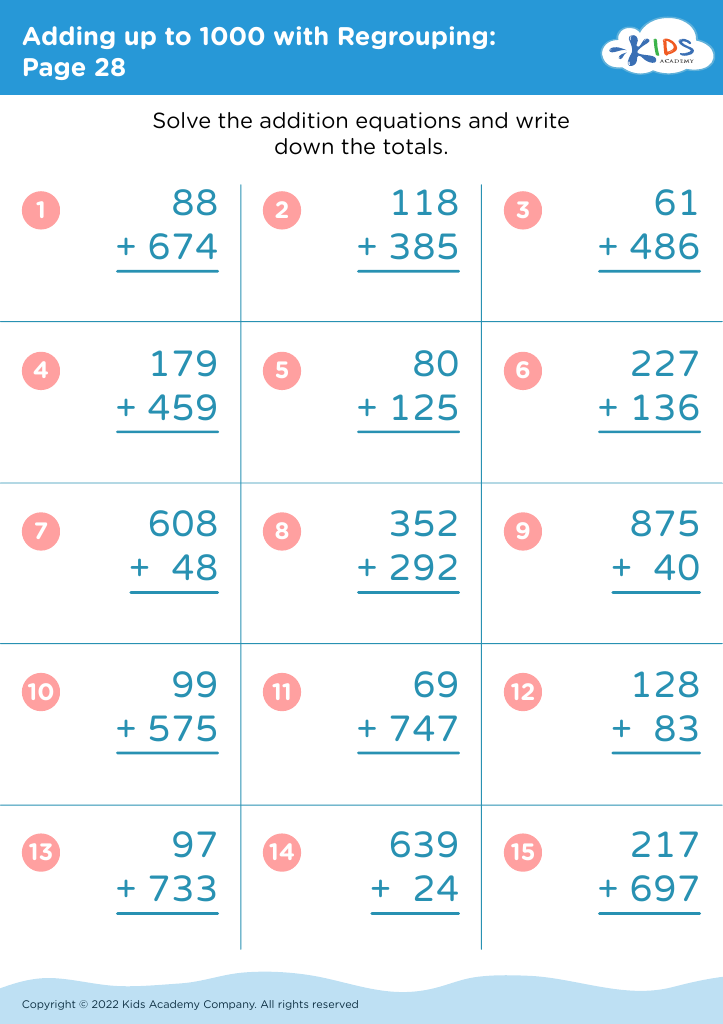
Adding up to 1000 with Regrouping: Page 28
Worksheet
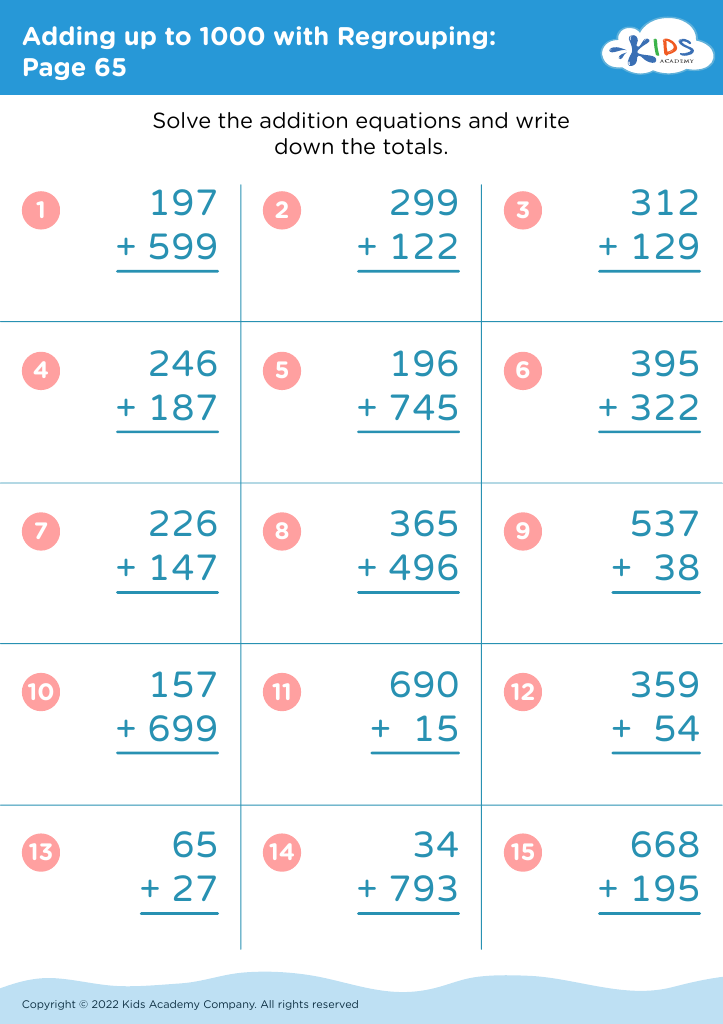
Adding up to 1000 with Regrouping: Page 65
Worksheet
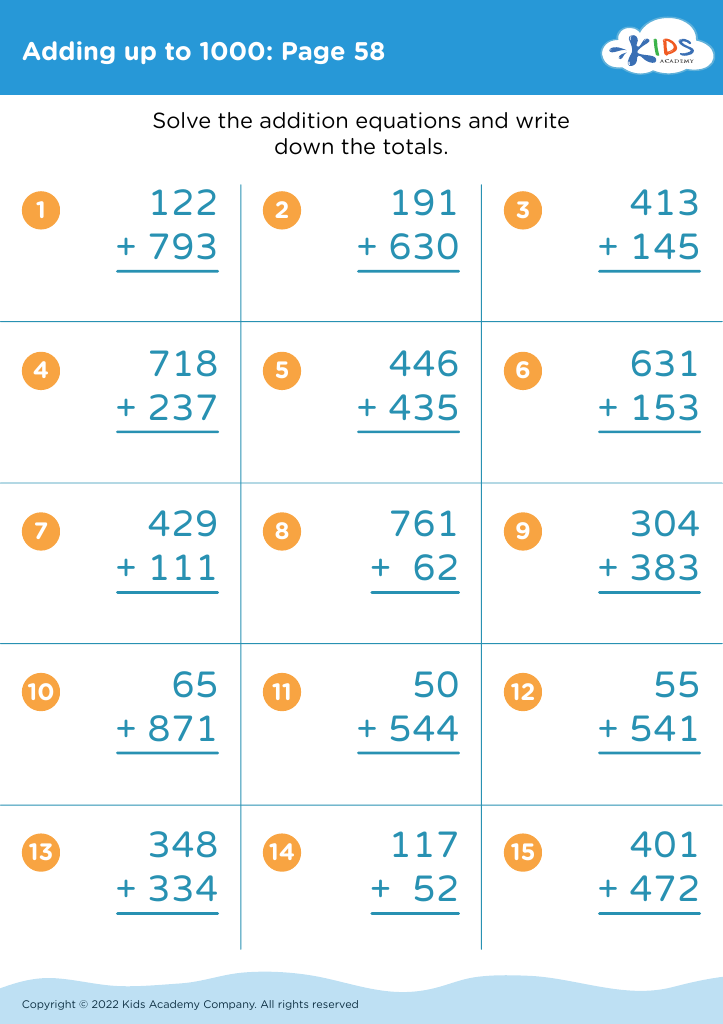
Adding up to 1000: Page 58

Adding up to 1000: Page 58

Adding up to 1000: Page 58
Worksheet
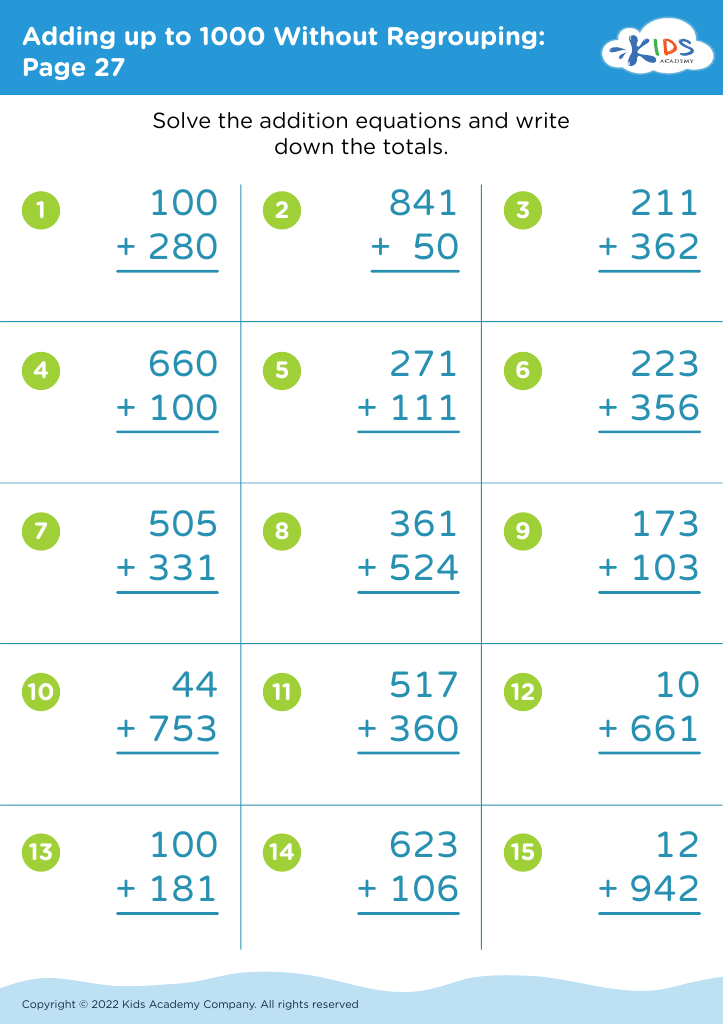
Adding up to 1000 Without Regrouping: Page 27
Worksheet
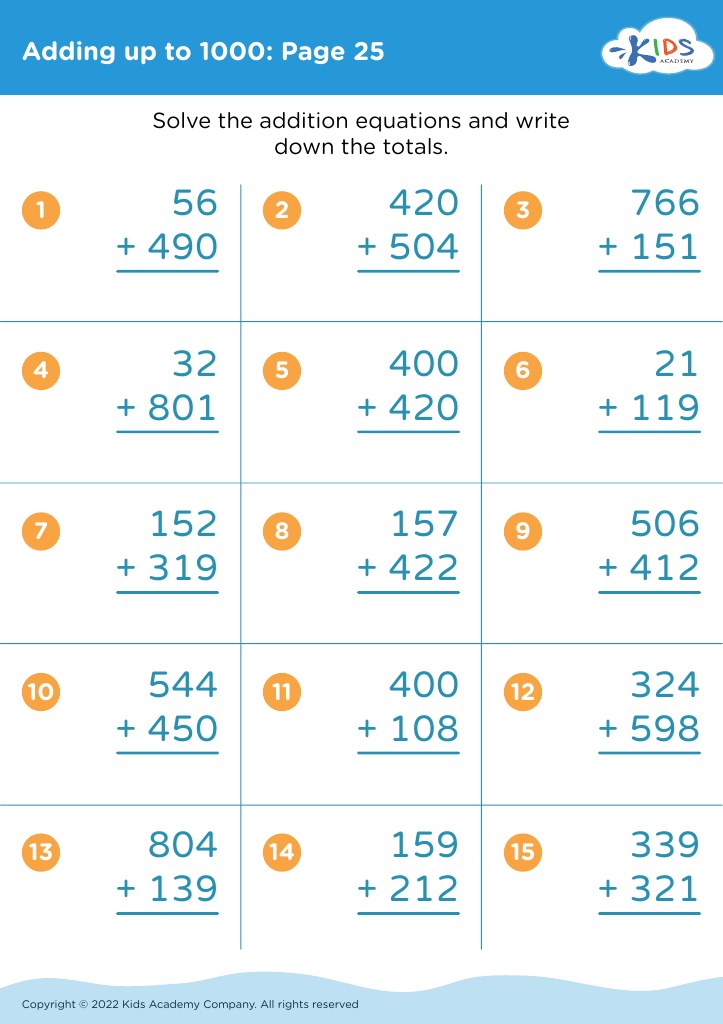
Adding up to 1000: Page 25

Adding up to 1000: Page 25

Adding up to 1000: Page 25
Worksheet
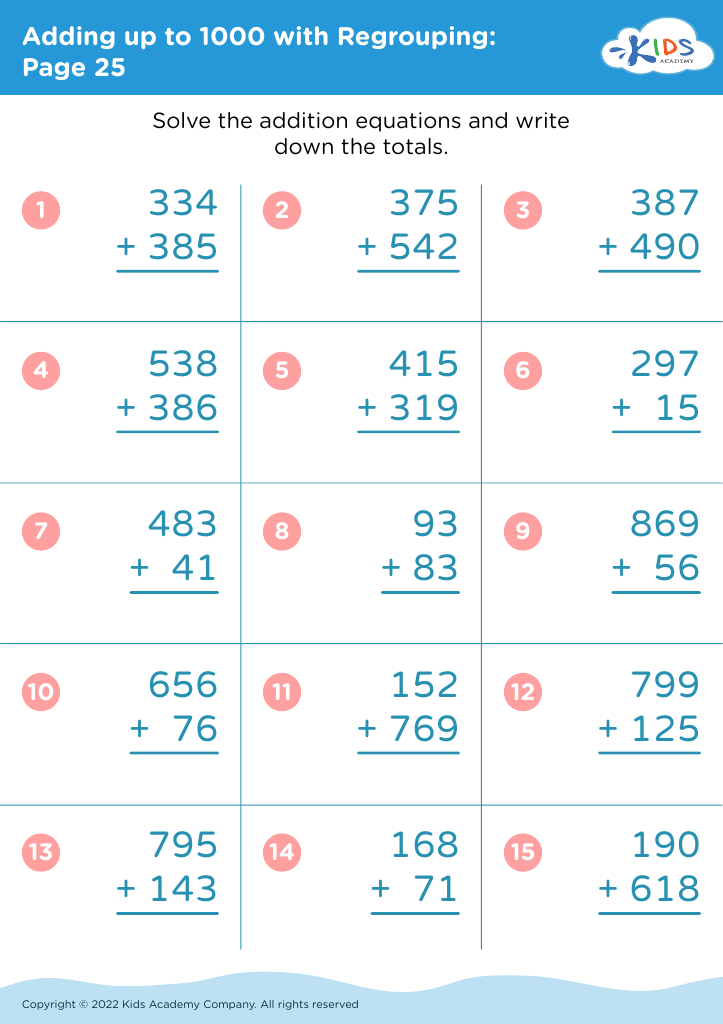
Adding up to 1000 with Regrouping: Page 25
Worksheet
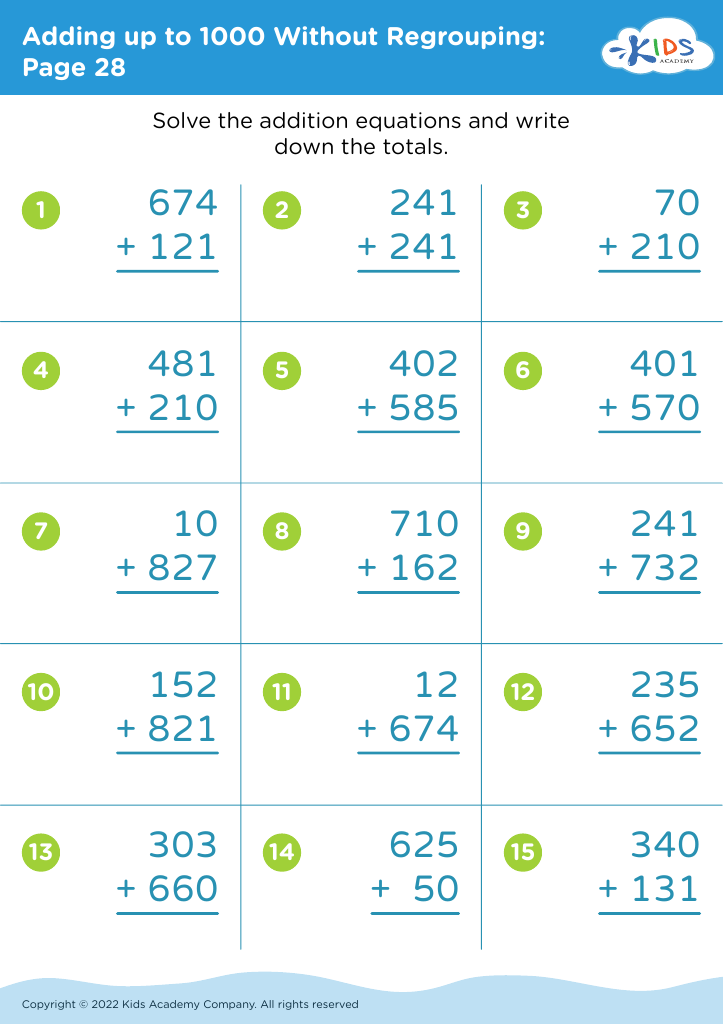
Adding up to 1000 Without Regrouping: Page 28
Worksheet
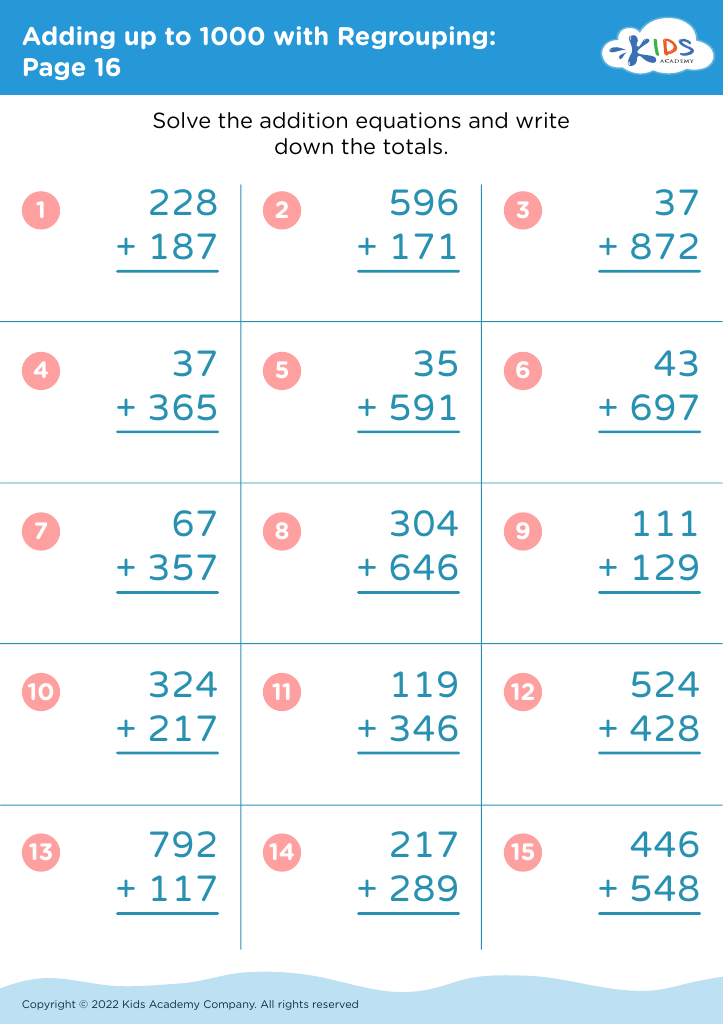
Adding up to 1000 with Regrouping: Page 16
Worksheet
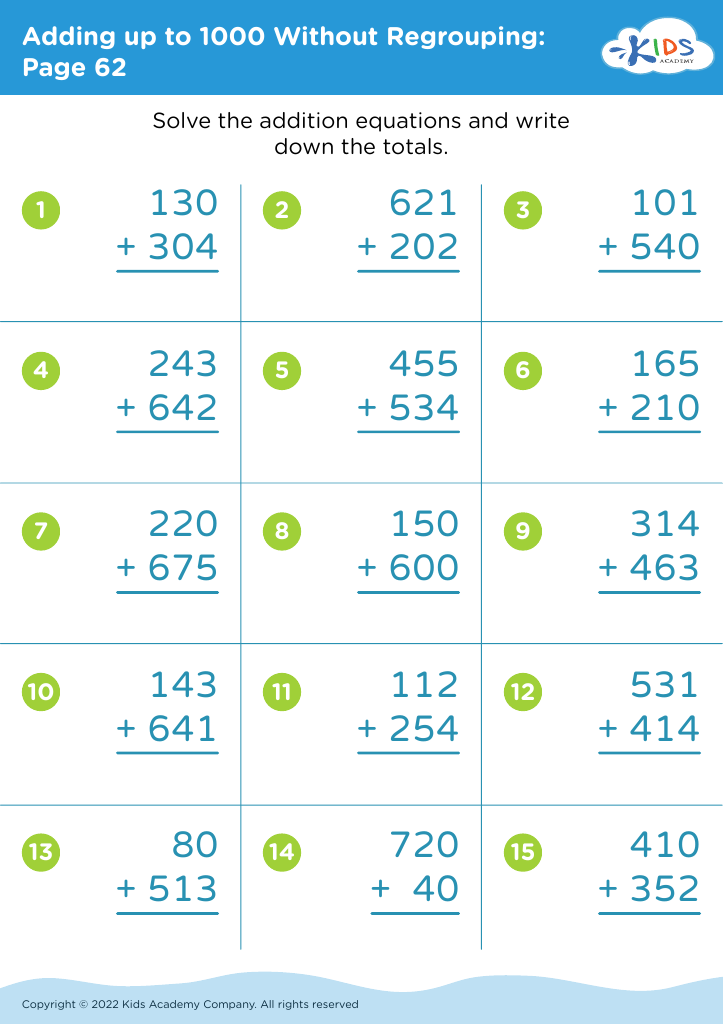
Adding up to 1000 Without Regrouping: Page 62
Worksheet
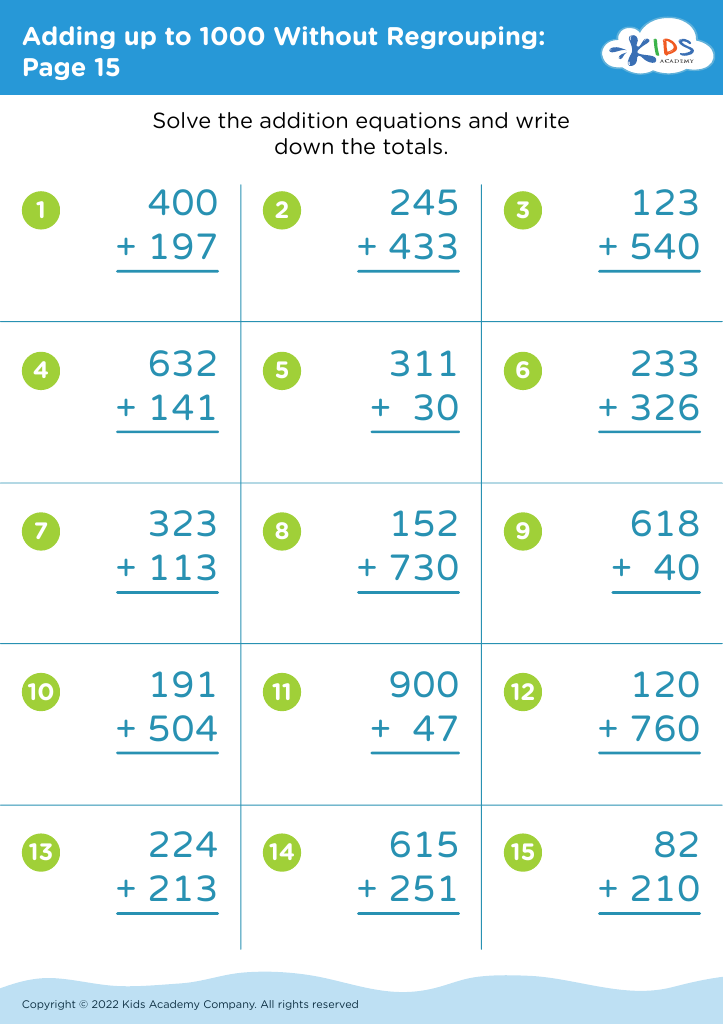
Adding up to 1000 Without Regrouping: Page 15
Worksheet
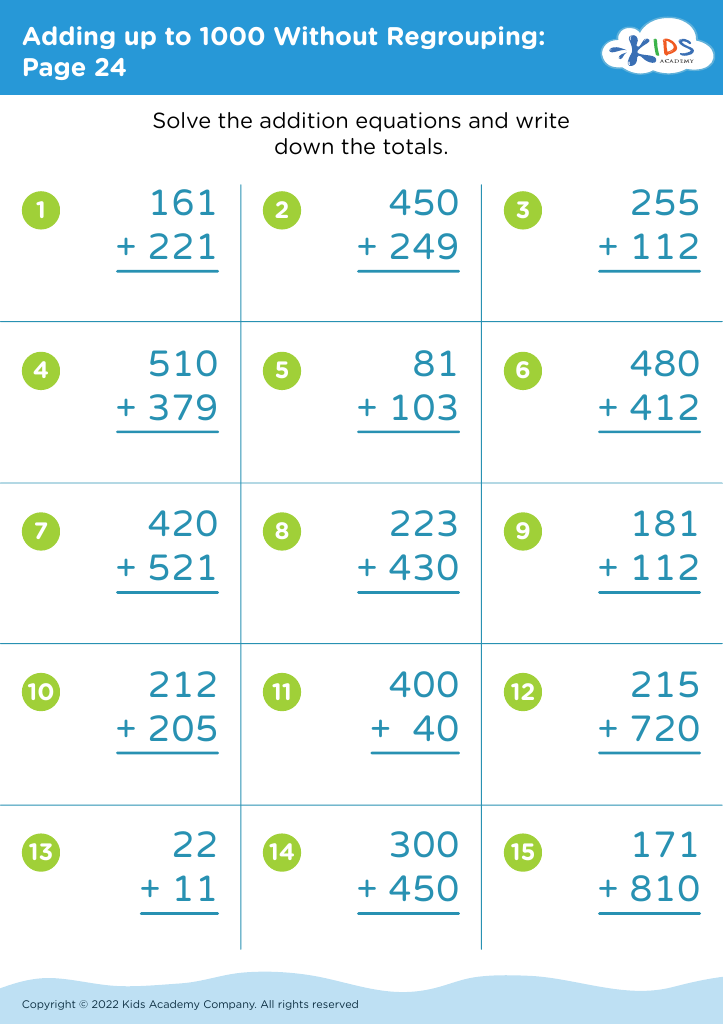
Adding up to 1000 Without Regrouping: Page 24
Worksheet


Understanding fractions is a fundamental building block in early mathematics, making it crucial for parents and teachers to engage children aged 4-7 with these concepts. Mastering fractions aids in the development of critical thinking and problem-solving skills, which are essential for lifelong learning. At this age, children are naturally curious and can grasp abstract ideas through hands-on activities and visual aids.

Introducing fractions through the lens of something relatable, such as sharing food or toys, helps make the concept tangible. Additionally, focusing on adding fractions up to 1000 paves the way for an understanding of how numbers interact, establishing foundational skills for later mathematical concepts like addition, subtraction, and even more complex fractions.

Moreover, early exposure to fractions fosters confidence in math, encouraging positive attitudes toward the subject. A strong grasp of fractions contributes to overall numerical understanding and is vital for everyday activities, from understanding time and money to cooking. By supporting children’s learning of fractions, parents and teachers empower them to view math as an exciting and applicable part of life, laying the groundwork for future academic success and practical skills.